
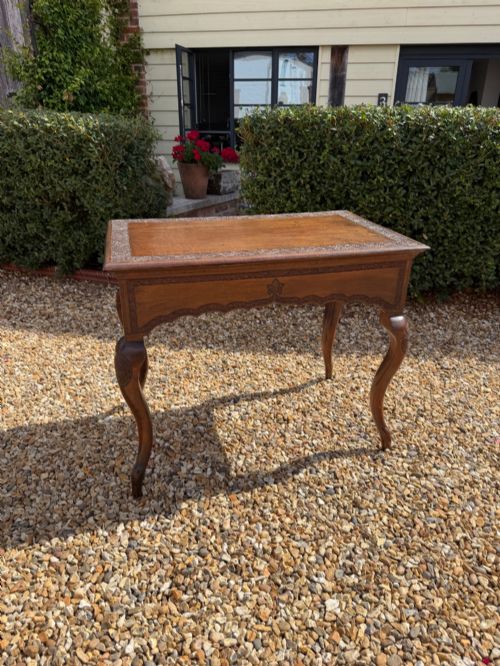
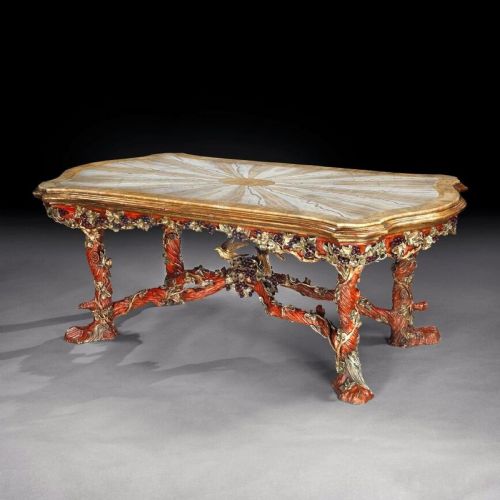
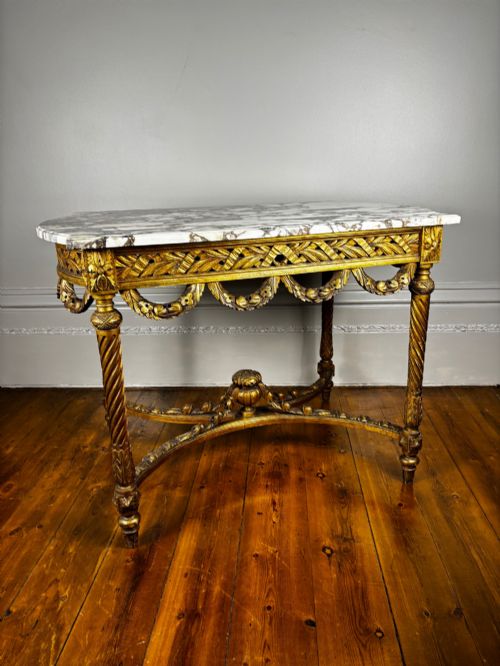
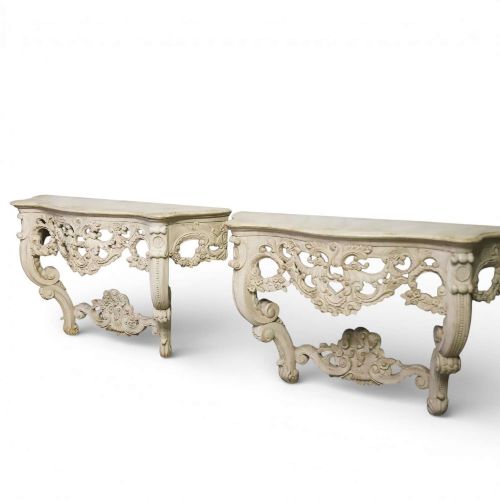


Ornate Carved Console Table
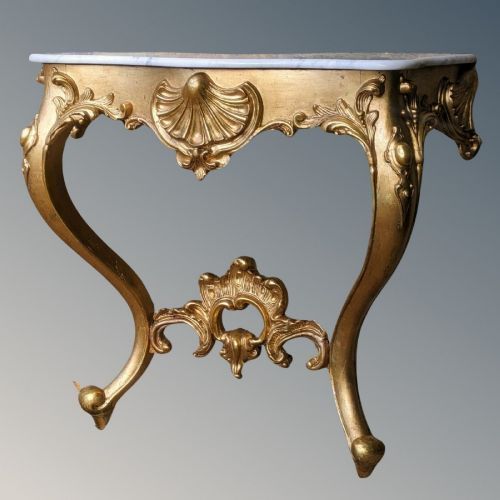
An ornate carved console table brings high theatrical drama to an entrance hall, bearing heavy marble tops with effortless architectural grace.
Ornate Carved Console Table
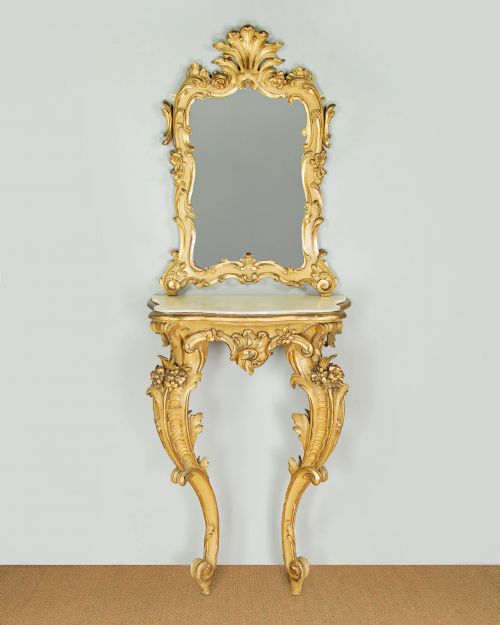
An ornate carved console table is a wall-fixed or freestanding pier piece designed to anchor a room, most frequently encountered in continental European designs from the eighteenth and nineteenth centuries. These items appear across various styles, including French Rococo, Italian revivals, and Victorian interpretations, frequently paired with matching wall mirrors.
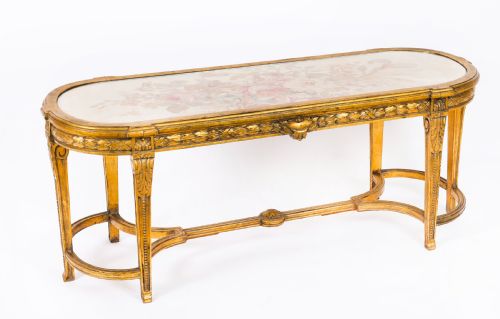
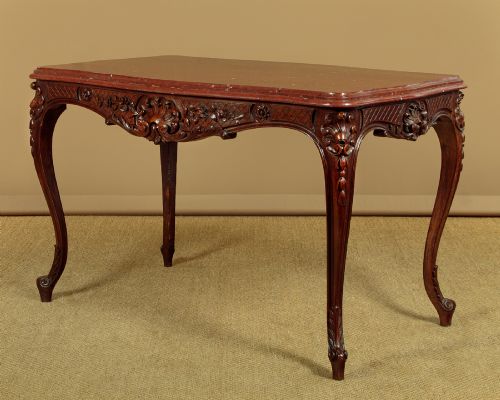
Makers produced these tables in diverse configurations ranging from grand gilded reception room furnishings to smaller wall-mounted ledges, alongside related side tables and centre tables. Walnut, rosewood, and giltwood provide the primary structures for these domestic statement pieces.
The survival of eighteenth-century examples alongside nineteenth-century revivals demonstrates a persistent demand for exuberant carved woodwork and substantial stone surfaces. Buyers select these objects to establish a formal focal point against a principal wall.
Materials and Construction
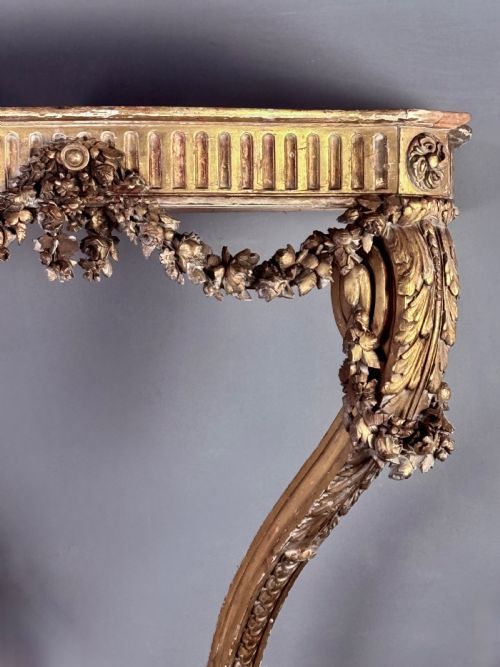
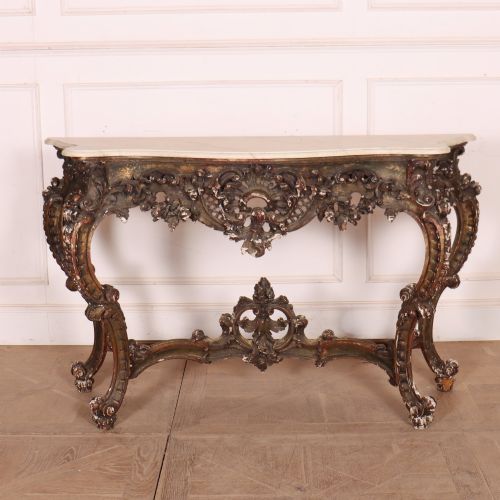
Craftsmen built these tables using carved wood frameworks, frequently applying gesso, gold leaf, or paint to walnut, mahogany, and gessoed pine bases. The structural carving involves deep relief work, showing scrolls, foliage, and figurative elements.
Tops consist predominantly of heavy stone, utilising white Carrara, rouge, onyx, or Sienna marble fitted directly to the wooden rails. Artisans shaped these stones with moulded edges to follow the serpentine or straight contours of the supporting frame.
Carved wooden dolphins occasionally hold up the marble tops of nineteenth-century Italian tables.
Judging Quality
The distinction between ordinary and exceptional examples rests upon the depth, crispness, and spirit of the carved detail. Master carvers produced undercut foliage and expressive figures that retain sharp definition beneath layers of historic gilding.
Material selection dictates the upper tier of the market, where thick slabs of figured marble and heavy gold leaf denote substantial workshop investment. Lesser examples rely on simplified surface finishes and thinner secondary timbers.
Felix-Alfred Ternisien·Amleto Bertoni
The Ornate Carved Console Table Glossary
- Giltwood
- Wood coated with gold leaf applied over a prepared gesso ground. This finish provides a brilliant reflective surface susceptible to rubbing over centuries.
- Console Table
- A table designed to stand against a wall, traditionally supported at the front by legs or scrolls with the rear fixed to the masonry. This form maximised floor space in grand hallways.
- Pier Table
- A table specifically made to stand against the wall beneath a pier glass or mirror. They form a unified decorative scheme within formal reception rooms.
- Serpentine Front
- A table front characterised by a wavy outline featuring a central convex curve flanked by concave sections. This shape demands precise stone-cutting and joinery.
- Gesso
- A plaster mixture applied to wood surfaces to provide a smooth base for gilding or painting. It accepts fine detail work before the application of gold leaf.
Ornate Carved Console Table: Frequently Asked Questions
How do I secure a wall console table?
These tables rely on wall fixings for stability because their marble tops create significant top-heavy weight. Brackets secure the rear rail directly to solid masonry to prevent tipping.
Historic pieces often retain original iron wall straps behind the back apron for this specific structural purpose.
Are marble tops removable?
Marble slabs rest unattached by glue upon the wooden frames, held in place entirely by their own substantial weight. This loose fit allows the stone to be lifted clear during transport.
Care must be taken when moving the table to lift the stone separately rather than sliding the assembled piece.
What is the difference between a console and a side table?
Console tables were traditionally designed to be permanently secured against a wall at the back, sometimes featuring only two front legs. Side tables are fully freestanding four-legged items that can stand anywhere in a room.
Many antique console tables retain flat back edges intended to sit flush against wainscoting or plaster.