

Carved Gilt Wall Table
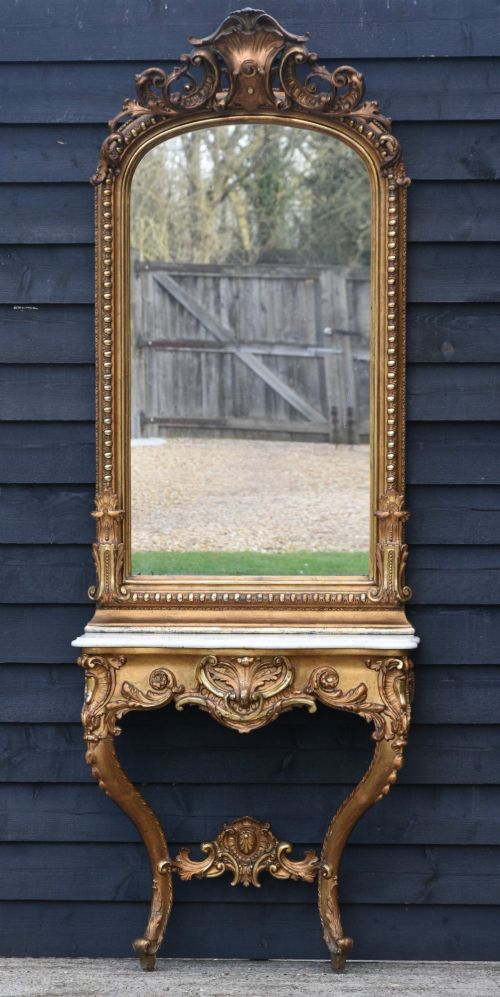
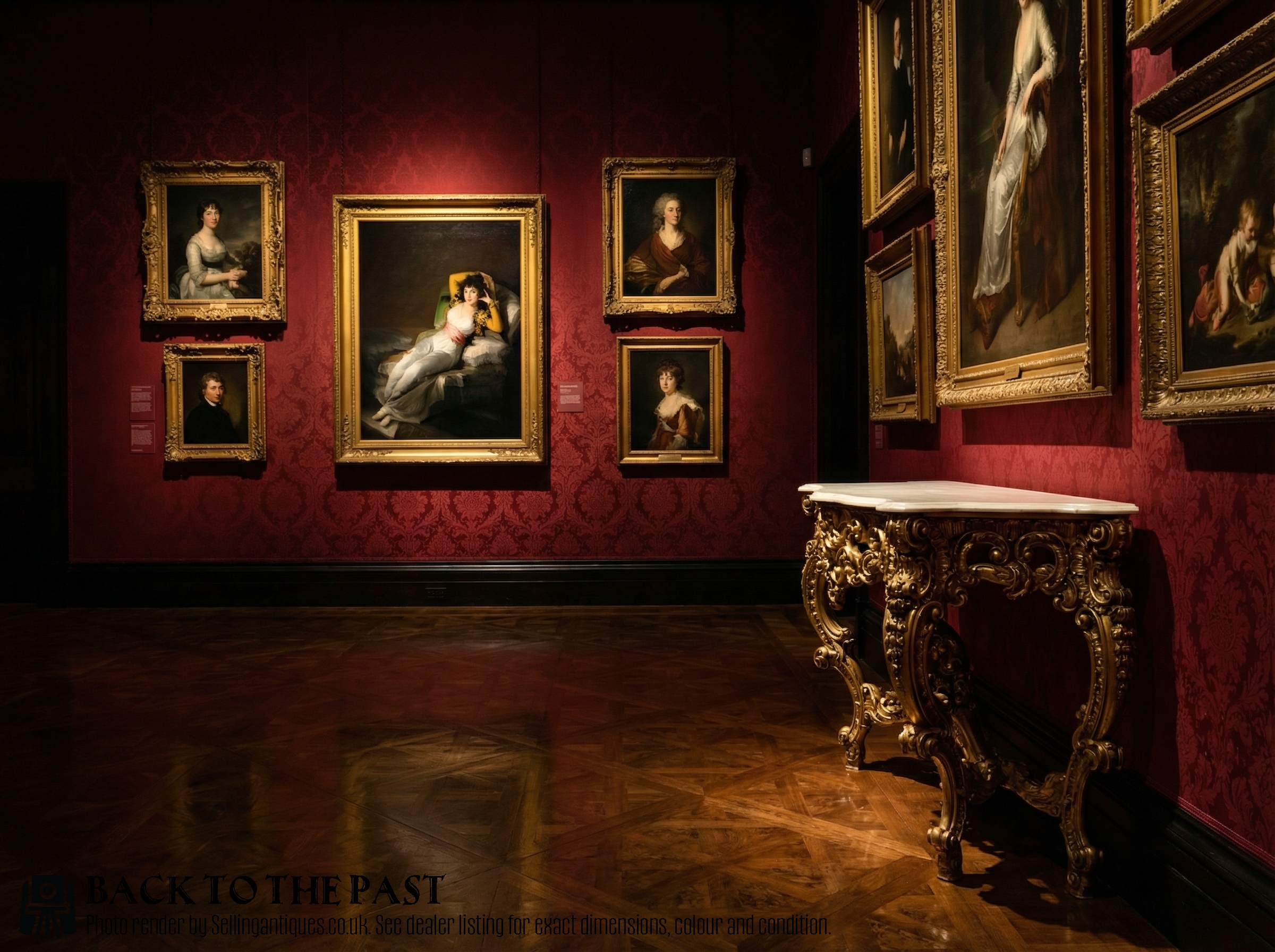
When you search for a carved gilt wall table, you are looking at console tables designed to anchor a room against a wall, often paired with pier mirrors.
Carved Gilt Wall Table
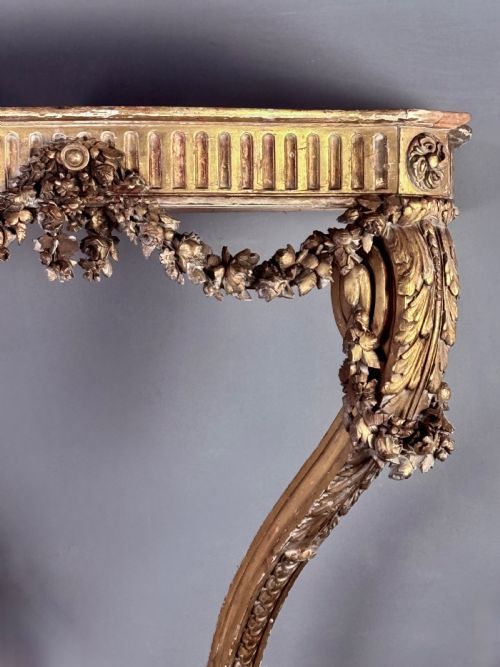
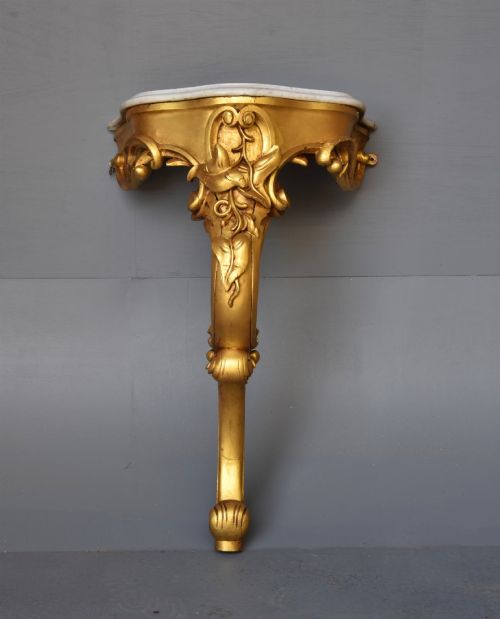
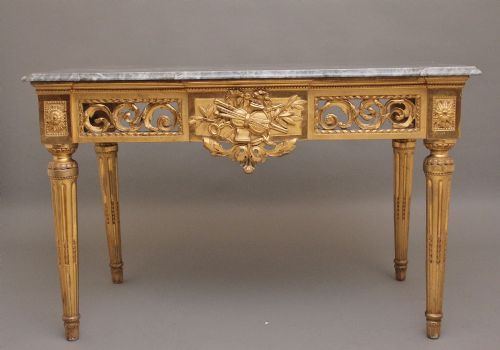
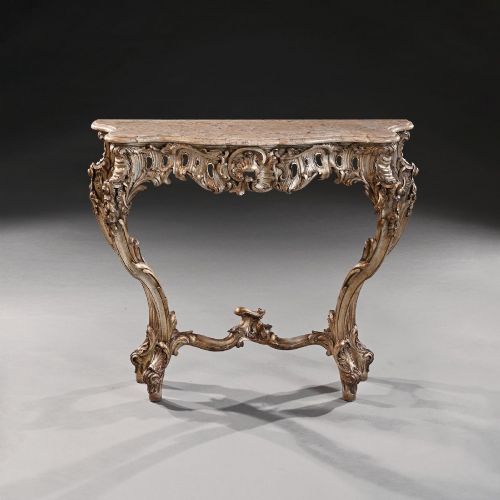
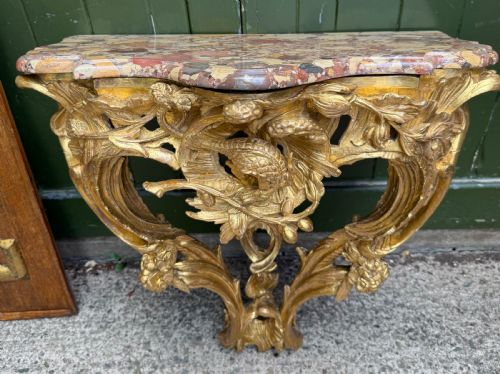
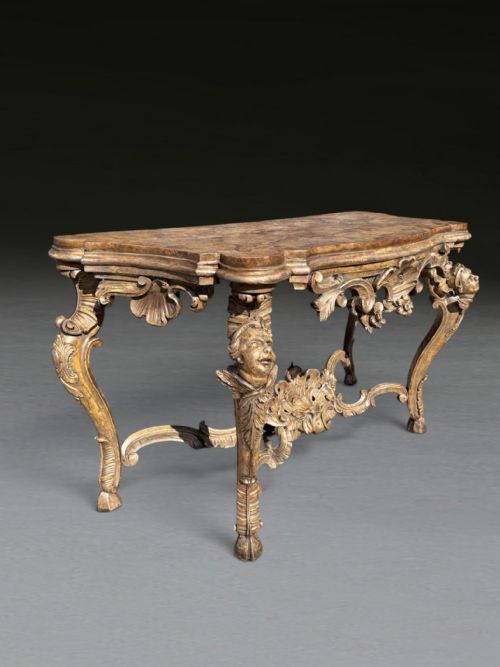
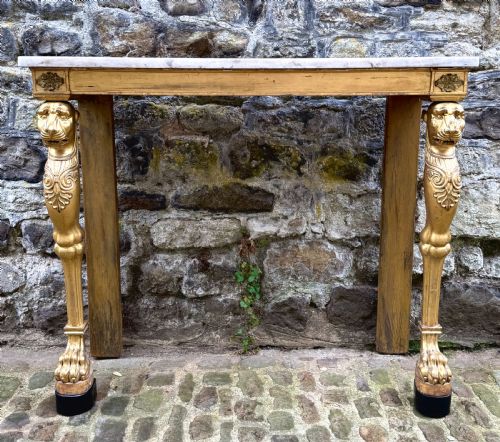
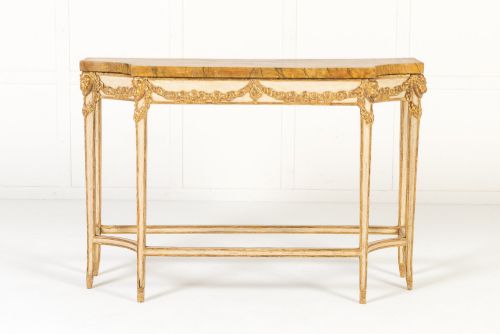
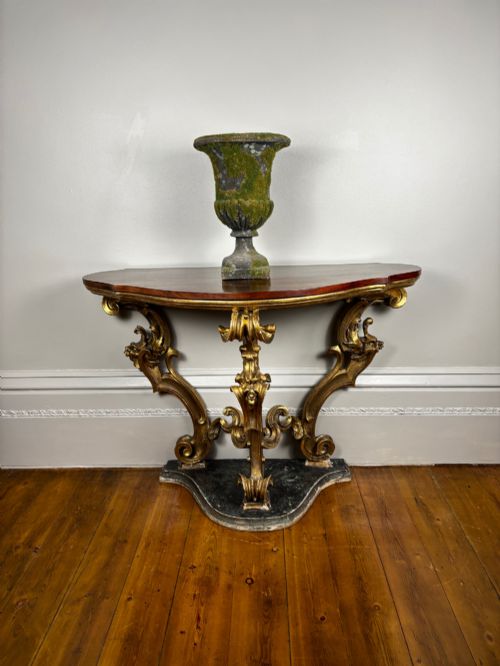
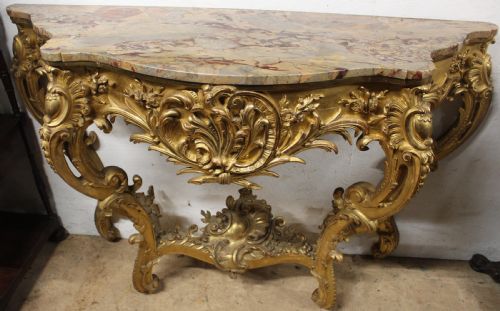
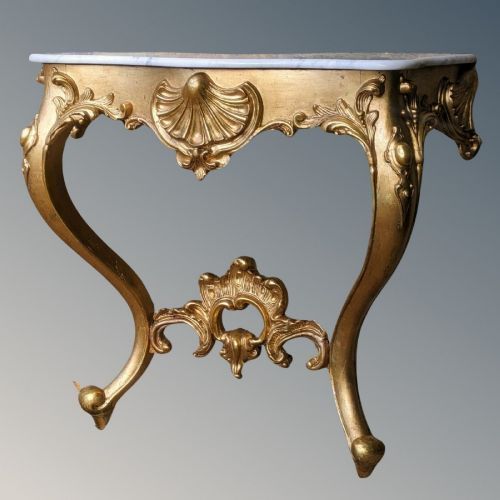
A carved gilt wall table is typically a console or side table designed to be mounted against or placed flush with a wall, frequently featuring a shaped marble top. These items emerge across the eighteenth and nineteenth centuries, spanning French, Italian, and English workshops.
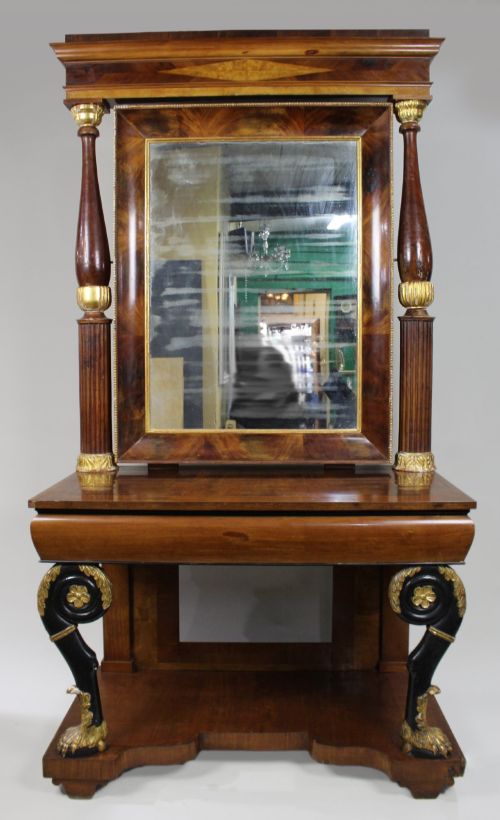
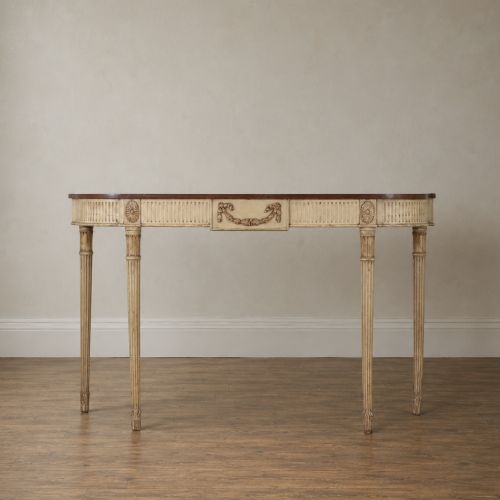
The selections encountered here range from compact nineteenth-century examples to grand eighteenth-century Italian giltwood pieces and matching console and pier mirror sets. Forms vary from simple painted and parcel-gilt surfaces to elaborate baroque revival and neoclassical designs supported by carved woodwork.
Materials and Construction
Construction relies heavily on timber, specifically wood, gesso, and carved giltwood or silver gilt, finished with gold leaf or paint. Artisans applied gesso layers over carved wooden bases to create crisp relief details before applying leaf or paint.
Listings span the eighteenth century, the nineteenth century, and the early twentieth century, incorporating Regency and Victorian eras.
Factors of Quality
The standard of a carved gilt wall table depends largely on the crispness and depth of the wood carving. Finer pieces demonstrate intricate hand-carved relief work in the gesso and wood, whereas simpler items rely on painted surfaces or shallower detailing.
The integration of the marble top relative to the wooden base also distinguishes fine examples. Heavier, figured marble slabs fitted precisely to serpentine or shaped frames indicate a higher grade of craftsmanship.
Felix-Alfred Ternisien
The Carved Gilt Wall Table Glossary
- Console table
- A table designed to be fixed against a wall, traditionally supported by two legs at the front with the back secured to the wall.
- Giltwood
- Wood that has been coated with gold leaf or gold paint. This technique provides a luminous metallic finish popular in eighteenth and nineteenth-century interiors.
- Gesso
- A plaster mix applied to wood surfaces as a base for paint or gold leaf. It allows artisans to carve intricate relief ornaments before gilding.
- Pier mirror
- A large tall mirror designed to hang on the wall space between windows, frequently paired directly above a console table.
- Breccia marble
- A type of marble composed of angular rock fragments embedded in a fine-grained matrix. It yields a rich, variegated pattern on table tops.
Carved Gilt Wall Table: Frequently Asked Questions
How were carved gilt wall tables used?
These tables served primarily as decorative furniture in formal halls and reception rooms, often positioned beneath pier mirrors.
They provided a surface for display items rather than heavy domestic use.
Are these tables freestanding?
Most examples require attachment to the wall for stability, as many console designs utilise two front legs with the rear fastened directly into the masonry.
Some larger nineteenth-century variations stand independently on four legs.
How do I identify eighteenth-century pieces?
Eighteenth-century examples often display hand-carved giltwood frames reflecting Rococo or Neoclassical movements without machine-cut uniformity.
Construction details, timber shrinkage, and the type of gesso application also help distinguish earlier work from later revivals.
What marble types appear on these tables?
Surviving tables commonly feature white Carrara, breccia, or figured marble tops cut to follow the serpentine or straight contours of the wooden base.
The stone provides a heavy, durable surface contrasting with the gilded framework.