
Antique Marble Entry Table
An antique marble entry table brings solid stone surfaces and grand proportions into a hall, setting a tone of grounded luxury.
Antique Marble Entry Table
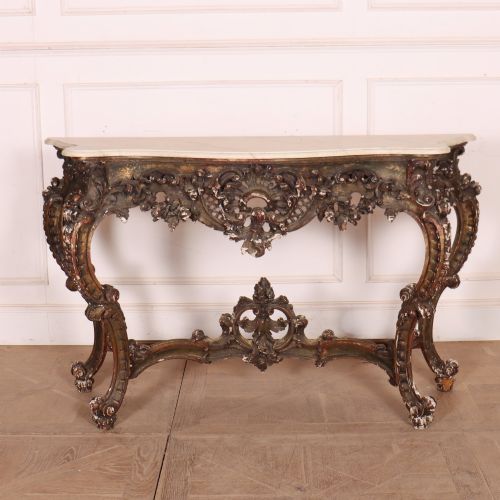
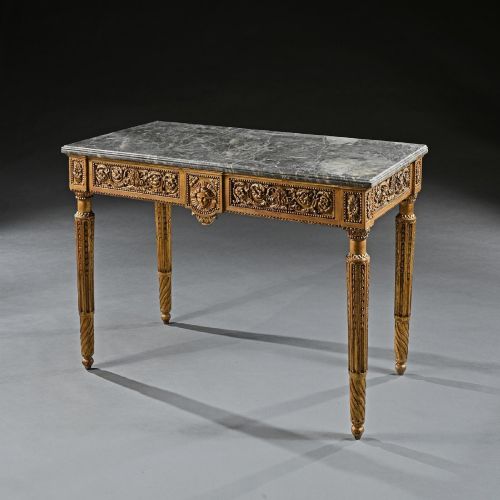
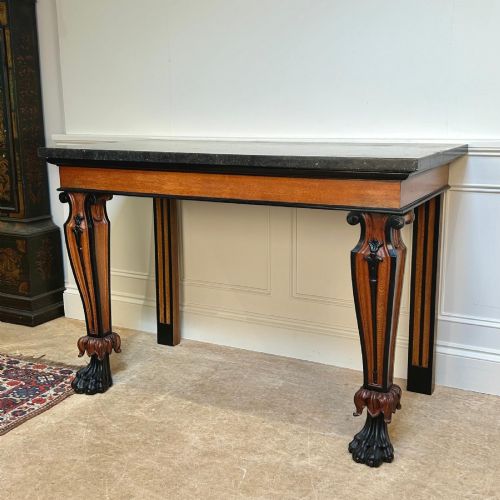
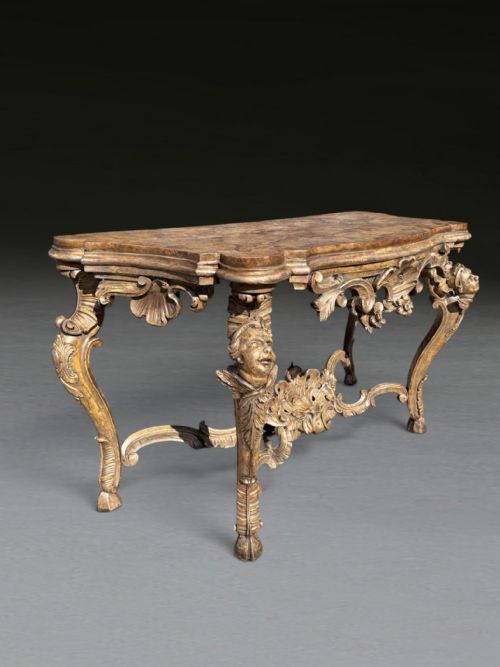
An antique marble entry table typically takes the form of a console or pier table, designed to sit flush against a wall in a hallway or reception room.
The selections here span centuries, though pieces from the nineteenth century and the eighteenth century appear most frequently, alongside later examples from around nineteen twenty.
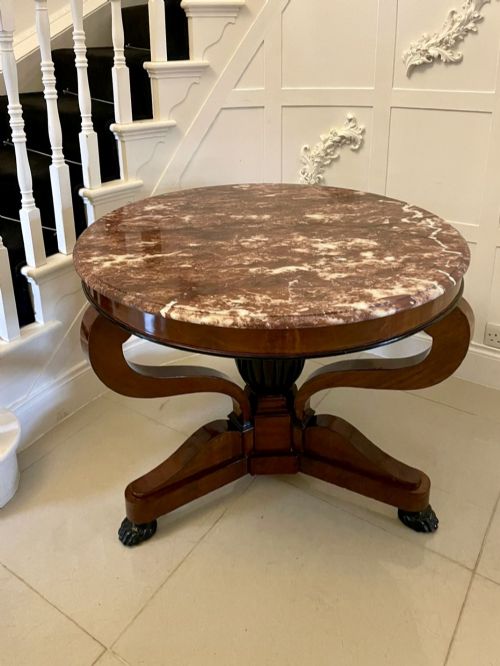
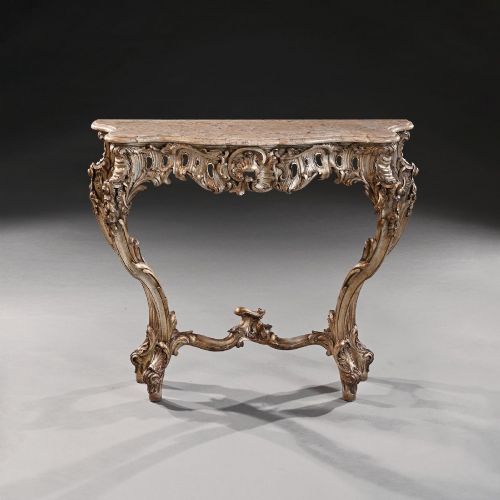
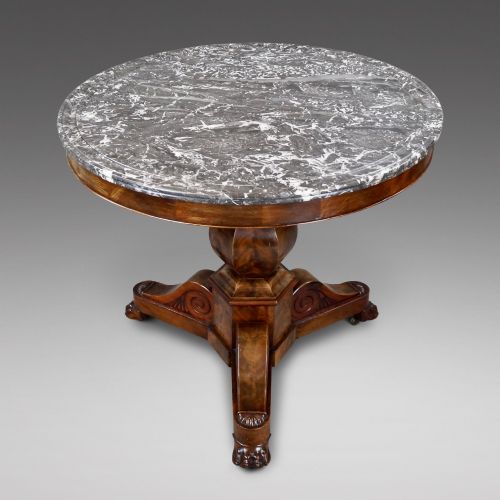
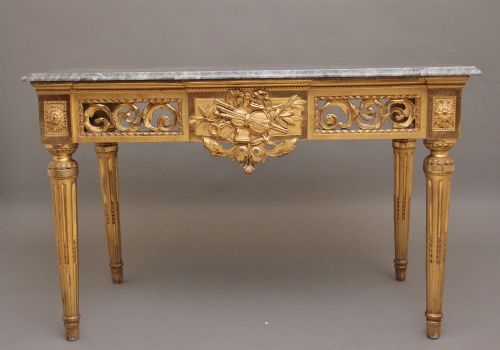
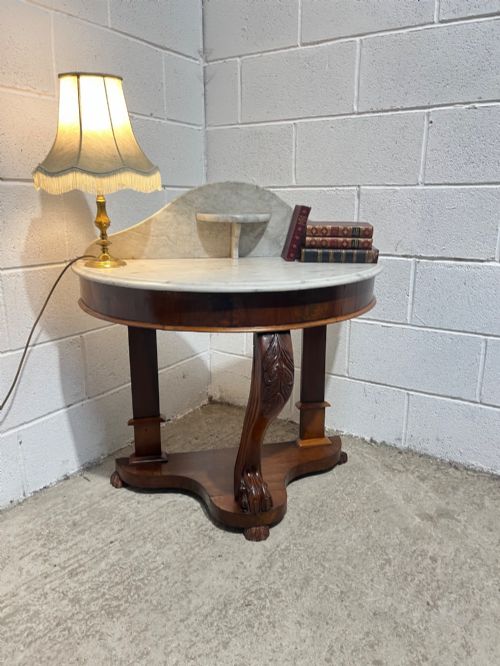
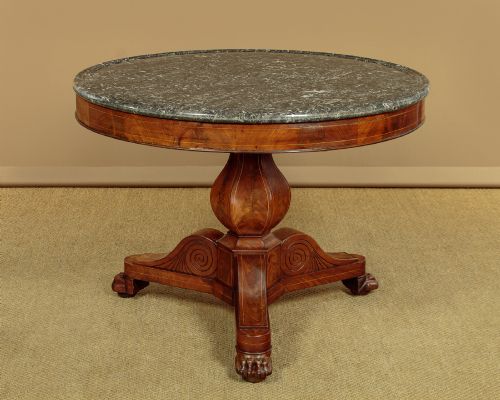
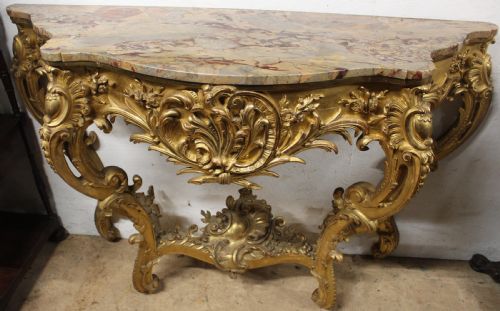
Origin points are diverse, encompassing French Rococo, Italian Neoclassical, and Regency designs, often paired with matching mirrors or configured as round centre tables.
Materials and Structural Craft
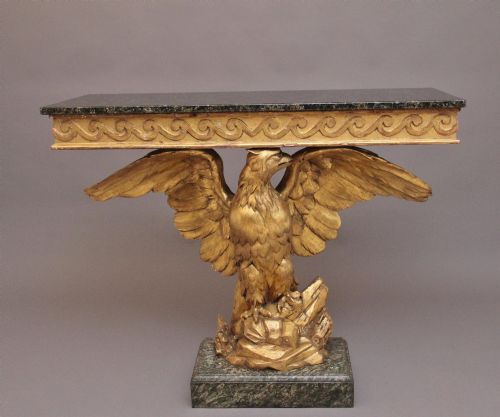
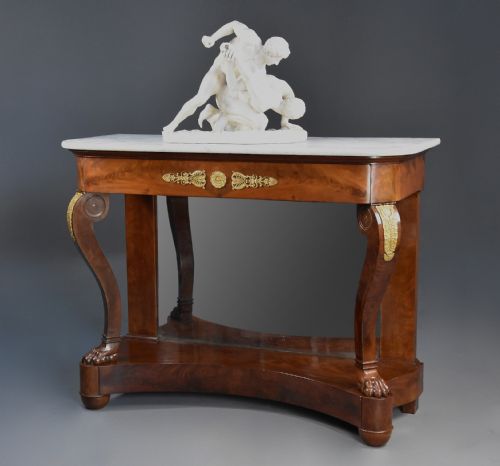
The primary material combination unites heavy marble slabs with carved wooden frames of mahogany, oak, rosewood, or kingwood.
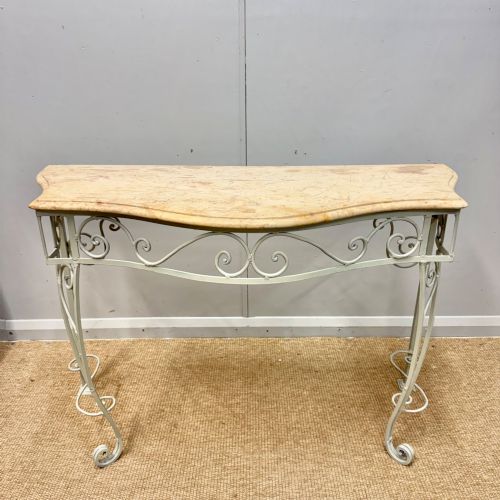
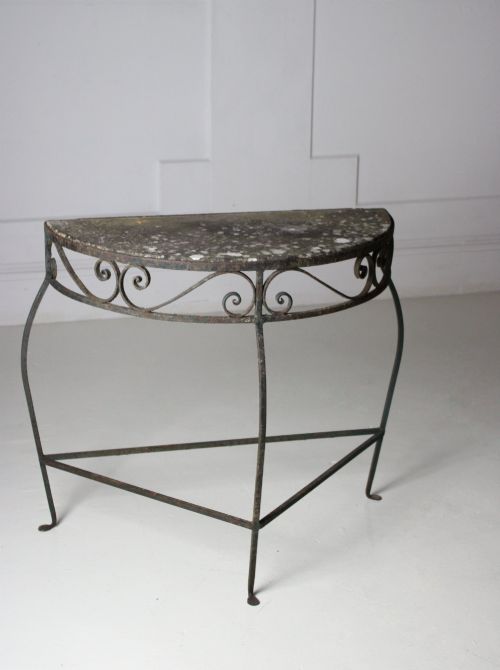
Giltwood, gesso, and paint frequently finish the wooden supports, while alternative pieces utilise wrought iron for a different structural weight.
Cabinetmakers and gilders joined these elements to support thick stone tops, securing stability for heavy marble surfaces.
The listings here include diverse regional styles, featuring Italian Neoclassical giltwood and French Empire mahogany alongside country house oak.
Distinctions in Execution
Quality rests in the depth and crispness of the carving on the wooden or gilt frames, distinguishing hand-carved Italian and French pieces from simpler forms.
The integration of the stone top with the base shows the maker's intent, where precise fitting and substantial weight separate standard examples from finer commissions.
The Antique Marble Entry Table Glossary
- Console table
- A table designed to be fixed against a wall, often supported by two legs and secured with wall brackets.
- Gueridon
- A small circular table, frequently with a marble top, originating in seventeenth-century France.
- Giltwood
- Timber that has been coated with a thin layer of gold leaf over gesso, common in elaborate Italian and French furniture.
- Pier table
- A table designed specifically to stand against the wall space between two windows, frequently accompanied by a matching mirror.
- Serpentine front
- A furniture front curved in a concave-convex-concave shape, popular in eighteenth-century and nineteenth-century designs.
Antique Marble Entry Table: Frequently Asked Questions
Where should an antique marble entry table go?
These tables find their natural home in hallways, entrance passages, and reception rooms where their narrow depth allows them to sit against a wall without obstructing movement.
They also serve well beneath large wall mirrors or paintings, providing a solid surface for decorative objects upon entering a home.
How do I clean a marble top?
Maintenance requires simple warm water and a soft cloth, avoiding acidic cleaners or harsh chemicals that etch the polished stone surface.
Permanent coasters protect the porous marble from spills, preserving the finish across daily use.
Are these tables fixed to the wall?
Many historical console tables rely on wall fixings or brackets for total stability because their heavy stone tops rest on slender legs.
Heavier freestanding centre tables and sturdy oak or mahogany frames stand independently without wall attachment.
What is the difference between a console and a centre table?
Console tables feature a flat back designed to abut a wall, often featuring unadorned rear legs or wall fixings.
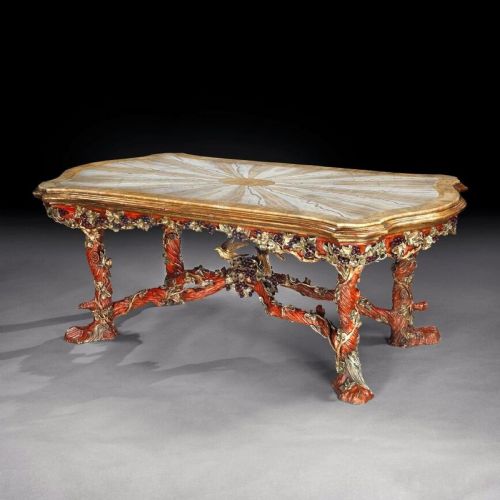
Centre tables stand finished on all sides for placement in the middle of a room, functioning as freestanding focal points.