


White Marble Pier Table
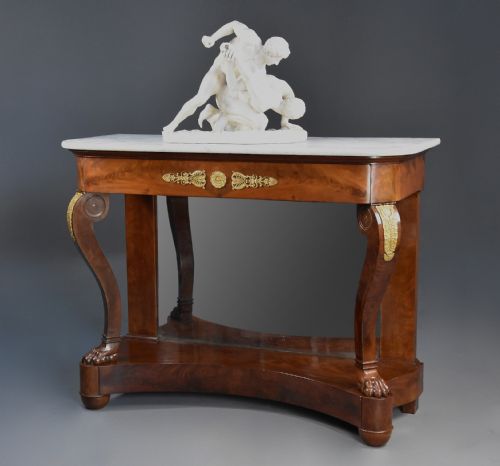
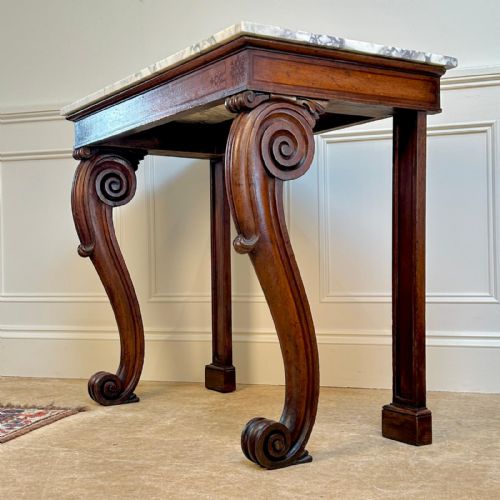
A white marble pier table brings architectural presence to a hallway, defined by heavy stone tops and decorative timber or gilded frames.
White Marble Pier Table
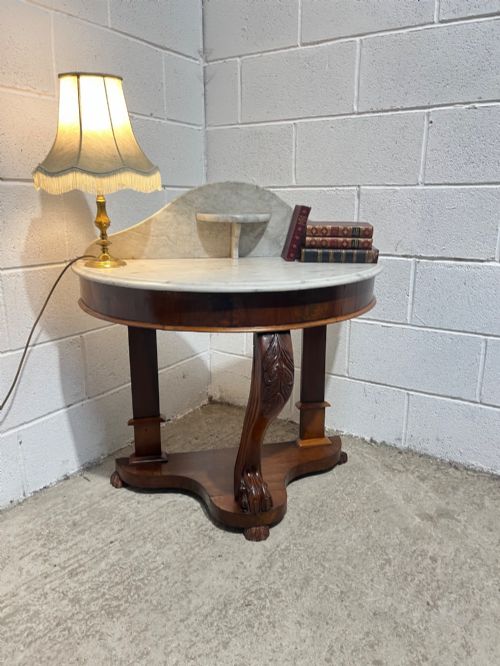
A white marble pier table is a console or side piece designed to stand flat against a wall, frequently between windows or beneath a mirror. These surfaces appear predominantly in nineteenth-century British and French domestic interiors, spanning periods from the Regency era through to late Victorian production. While formal pier tables form the core of the selection, the category extends to include related console forms and washstands fitted with stone tops.
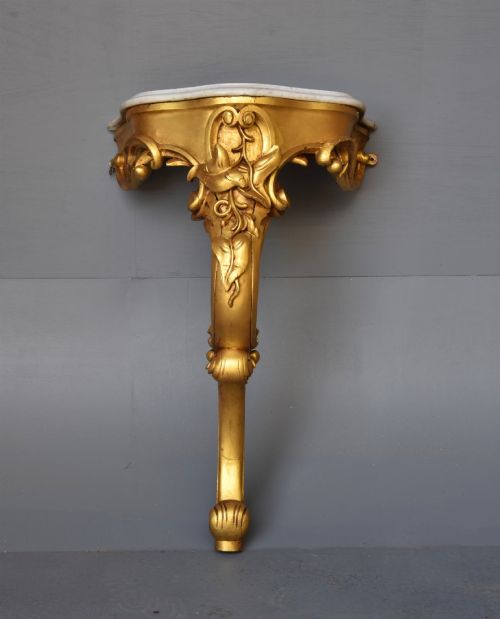
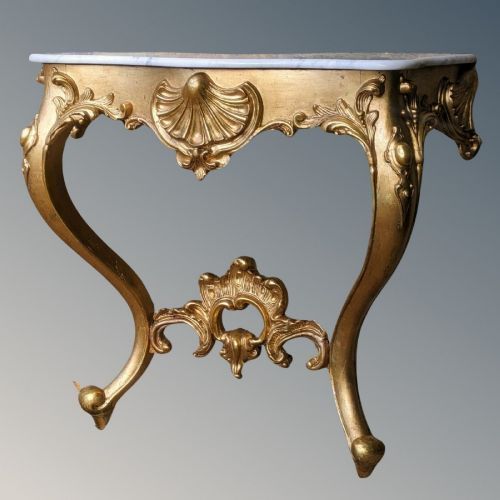
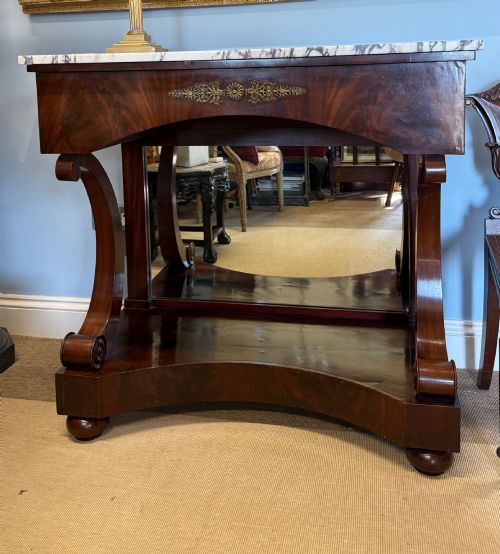
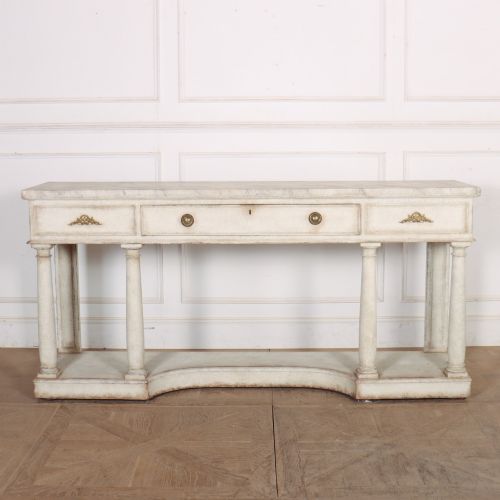
The heavy marble slab serves as the defining functional element, paired with bases shaped in styles ranging from restrained mahogany frames to elaborate French Rococo and Victorian giltwood carvings. Examples originate across Europe, incorporating English pine and oak alongside continental painted and gilded finishes. Buyers encounter everything from compact hall pieces to large scale gilt-carved designs with serpentine marble profiles.
Materials and construction methods
Makers constructed these tables by combining solid stone with supportive timber frames, utilising heavy white marble for the upper surface to withstand daily hall use. Bases were built from native and exotic timbers including mahogany, oak, and pine, often shaped with curved aprons and sturdy legs. Structural support had to accommodate the considerable weight of the stone slab above.
Decorative surfaces relied on specialist finishing techniques such as hand carving in wood, application of gesso, and gilding with gold leaf. French and English workshops also employed paint finishes, simulated rosewood, and parcel gilding to achieve formal visual effects. Ironwork appears in specific iterations, demonstrating diverse manufacturing approaches across the nineteenth century.
Materials documented across the selection include solid mahogany, oak, pine, giltwood, gesso, iron, and painted finishes supporting heavy stone slabs.
Distinctions in execution and design
Quality in a white marble pier table rests upon the ambition of the carved frame and the purity of the stone slab. Finely worked giltwood and gesso pieces with deep relief carving represent a higher standard of craftsmanship than plain pine or simpler painted carcases. The thickness and figuring of the white marble top further distinguish finer examples from standard utility pieces.
Proportion and execution of detail dictate the standing of each piece within its period. Elaborate Rococo revival scrolls and precise architectural elements like Corinthian capitals show superior workshop skill compared to repetitive or heavy-handed joinery. The integration between the stone top and the supporting frieze reveals the original maker's intent and care.
Gillows
The White Marble Pier Table Glossary
- Pier table
- A side table designed to fit against a wall, typically positioned between two windows beneath a pier glass mirror.
- Giltwood
- Timber that has been coated with a thin layer of gold leaf over a prepared gesso base. This finish provides a bright metallic sheen characteristic of formal nineteenth-century reception rooms.
- Serpentine
- A furniture outline characterised by a central convex curve flanked by concave sweeps. This flowing shape frequently defines the front edge of marble tops and wooden aprons on Rococo revival pieces.
- Gesso
- A plaster-like mixture applied to wood surfaces as a smooth preparation layer for gilding or painting. It allows craftsmen to carve crisp decorative details before applying gold leaf.
- Parcel gilt
- A finish where only specific carved elements or details are highlighted with gold leaf while the remaining timber surface shows its natural or painted grain.
White Marble Pier Table: Frequently Asked Questions
What is a white marble pier table used for?
These tables were traditionally placed in entrance halls or between windows to provide a decorative surface for ornaments and lighting. Their shallow depth allowed them to sit flush against walls without obstructing thoroughfares.
Today they serve similar decorative and functional roles in modern hallways and living spaces, offering a durable stone surface that requires minimal maintenance.
How do I date a pier table?
Dating relies on stylistic clues such as the presence of Regency architectural restraint, Victorian proportions, or exuberant French Rococo carving. The choice of primary timbers, from early nineteenth-century mahogany to later pine and oak, also indicates the period of manufacture.
Hardware, construction joints, and the method of securing the marble top provide further physical evidence for assigning a decade or era.
Are the marble tops original to the tables?
Many tables retain their original thick white marble slabs, which were cut specifically to fit the dimensions of the wooden base. Heavy stone tops were often loose-fitted into a rebated frame to allow for movement and transport.
Inspect the underside of the stone and the supporting frieze to check for consistent weathering, historical fit marks, and matching proportions that confirm original pairing.
How do I care for a marble top?
White marble is porous and sensitive to acidic substances like wine, citrus, and vinegar, which can etch the polished surface. Cleaning requires only a soft cloth dampened with warm water and mild, pH-neutral soap.
Avoid abrasive cleaners or scouring pads that can dull the smooth sheen accumulated over centuries of use.