
Marble Top Entry Table
A marble top entry table brings solid stone and rich timber into a hallway, offering a sturdy surface for daily comings and goings.
Marble Top Entry Table
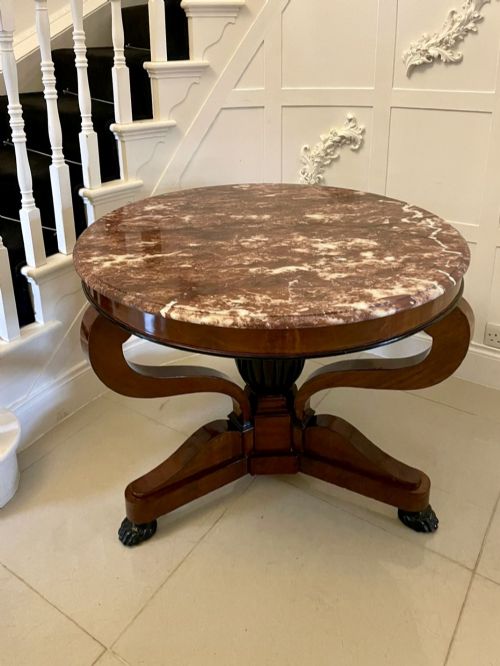
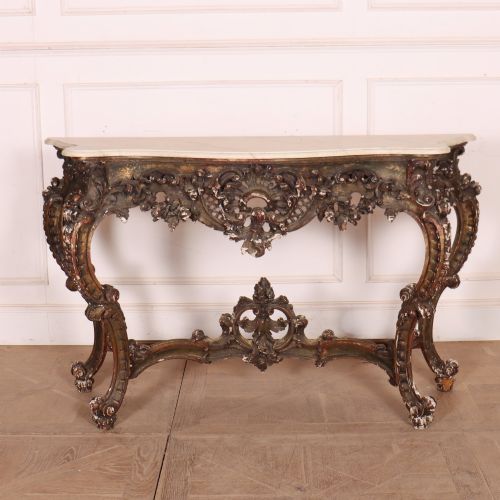
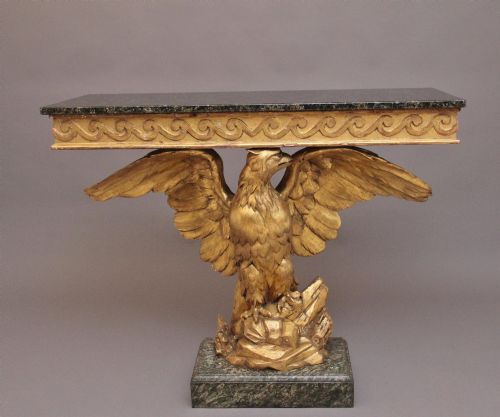
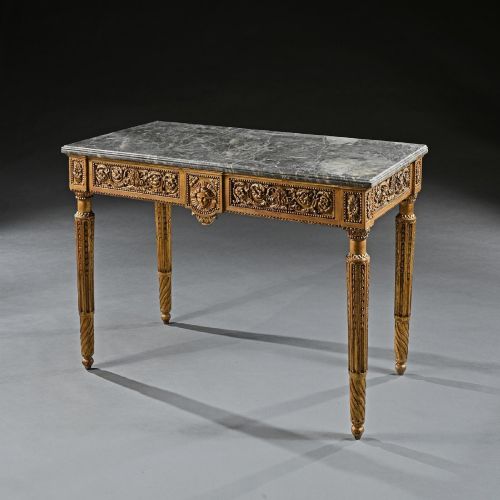
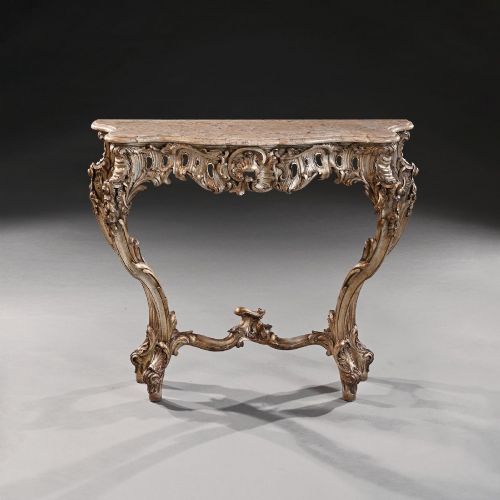
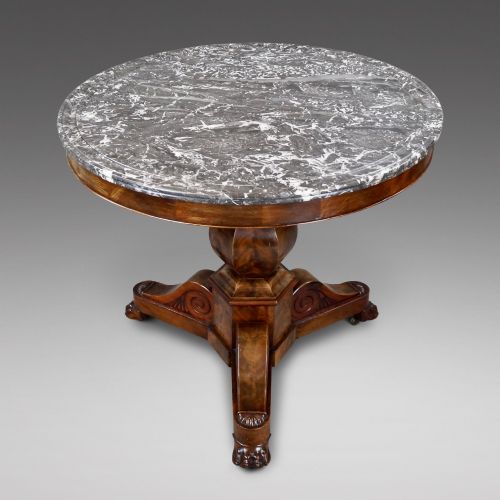
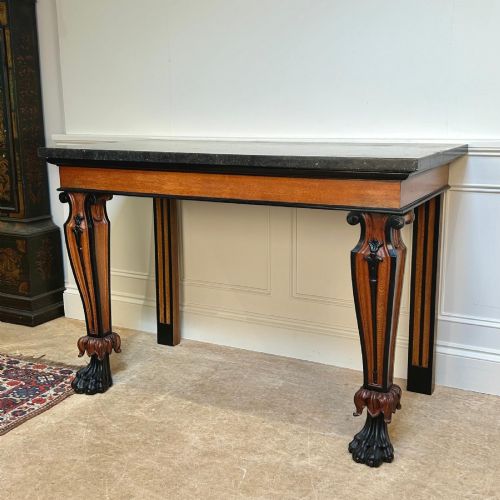
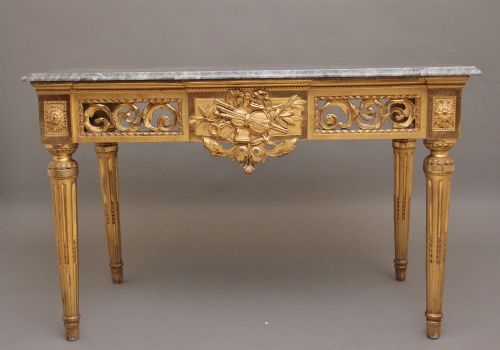
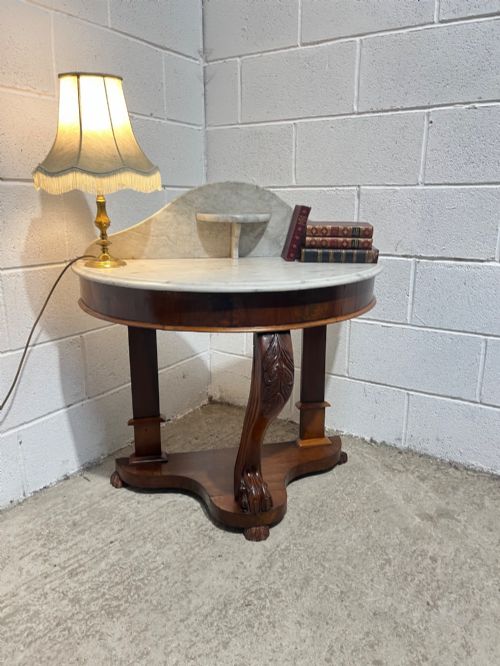
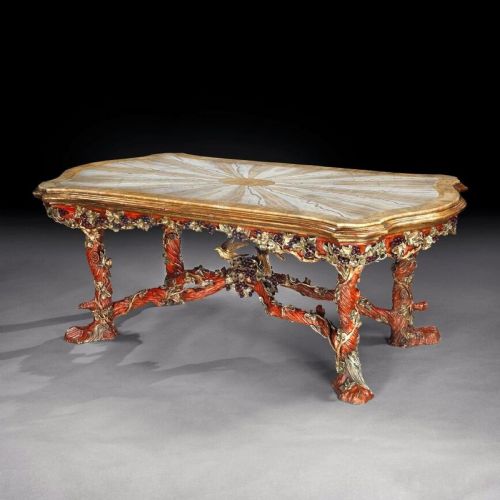
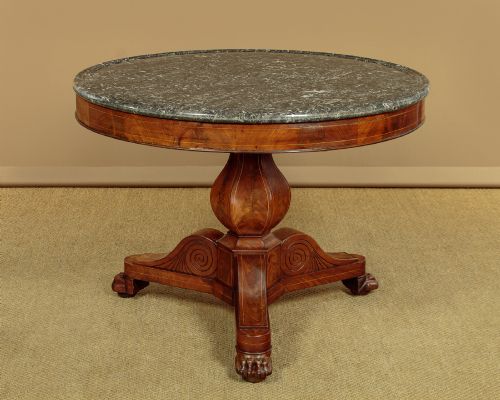
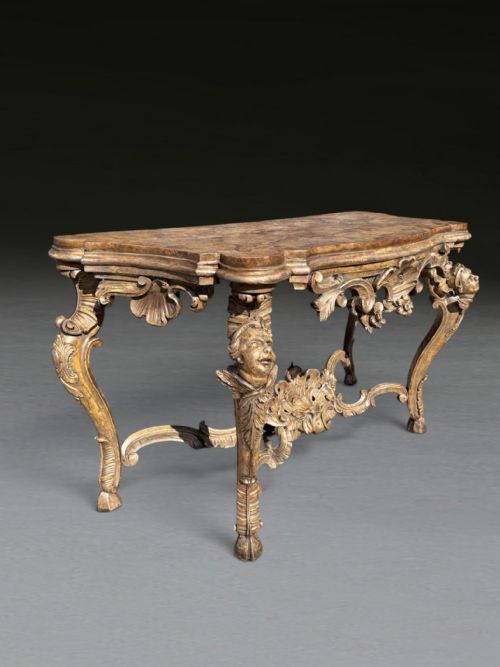
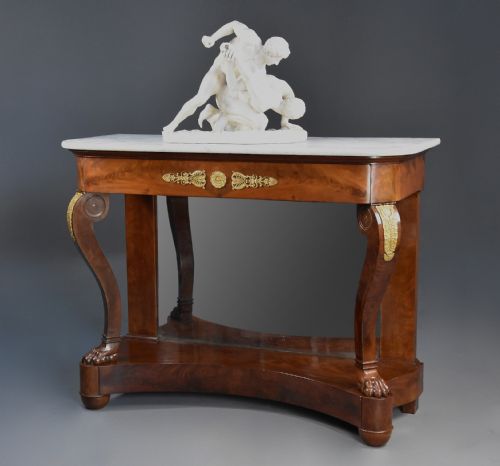
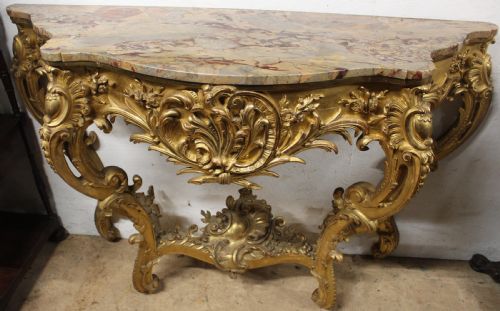
A marble top entry table typically takes the form of a console table, a centre table, or a pier table designed to stand against a wall or sit centrally in a room. These pieces appear frequently from the eighteenth century through to the early twentieth century, spanning periods such as Regency, William IV, and various French and Italian stylistic movements.
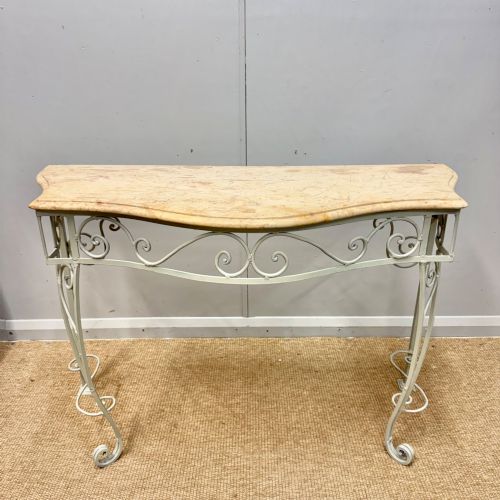
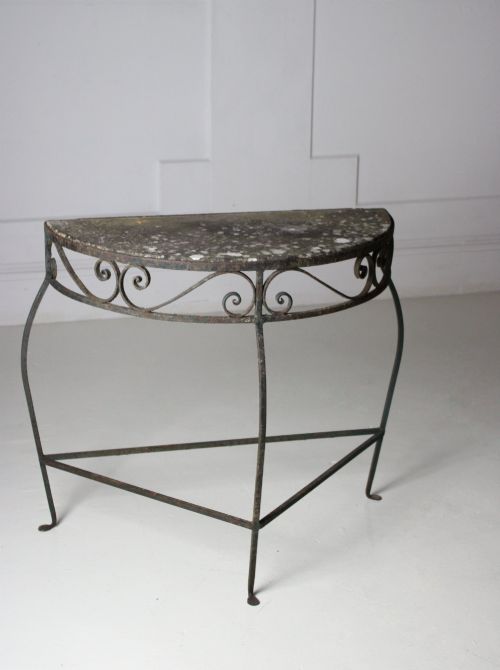
The materials paired with the stone top range from flame mahogany, oak, and rosewood to heavily carved giltwood, gesso, wrought iron, and painted surfaces. Many examples combine rich timbers or gilded frames with inset marble, onyx, or faux porphyry tops, creating a formal silhouette suited to hallways and reception spaces.
Materials and construction
Makers shaped these tables using dense hardwoods like mahogany, kingwood, and oak for the structural frames, often applying elaborate gilding, paint, or gesso over carved wood or wrought iron. The heavy stone slabs resting upon these bases required robust joinery and solid undercarriages to support the weight of the marble or onyx.
Surface decoration involved intricate hand carving, silver and gold gilding, inlay, and polished wood veneers. Stone tops were cut, levelled, and polished to a smooth finish, sometimes utilising decorative varieties such as Siena marble or purple marble to contrast with the timber or gilded base below.
Marble Top Entry Table Retail Price Guide 2026
Typical asking prices for marble top entry table among the pieces listed under this phrase on Sellingantiques today, from the lower quarter to the upper quarter. They describe what is for sale here now, not the wider market.
Materials span marble, giltwood, mahogany, gesso, brass, glass, paint, oak, rosewood, and wrought iron across console, pier, and centre table forms.
Assessing craftsmanship
Quality rests in the depth and crispness of the hand carving on the wooden or giltwood frames, alongside the selection of cabinet timbers such as flame mahogany or kingwood. Lesser examples rely on simpler turned legs and modest pine carcases, whereas superior pieces display finely detailed French Rococo, Italian Neoclassical, or Empire motifs.
The integration of the stone top also dictates distinction, with thicker, rarer marble varieties properly fitted to the rebated frame. Superior construction ensures the heavy weight is balanced evenly across the joints without strain to the apron or legs.
Amleto Bertoni
The Marble Top Entry Table Glossary
- Console table
- A table supported by brackets or console legs against a wall, frequently topped with marble. These pieces are designed to stand flush in narrow spaces like entryways.
- Gueridon
- A small circular table, often featuring a marble top and a central pedestal support. French examples from the nineteenth century are common.
- Giltwood
- Timber that has been coated with a thin layer of gold leaf or gold paint. This finish appears widely on eighteenth and nineteenth-century Italian and French frames.
- Pier table
- A table designed to sit against the wall beneath a mirror, often sharing a matched design with the glass above. They share similar proportions to standard console tables.
- Sienna marble
- A decorative yellow-gold marble featuring dark grey or purple veins, originating from Italy. It appears on Regency and later nineteenth-century tables.
Marble Top Entry Table: Frequently Asked Questions
Where should I place a marble top entry table?
These tables suit narrow hallways, landings, and entrance spaces where a shallow console can stand against a wall without blocking foot traffic. Their durable stone surfaces handle everyday items like keys and post with ease.
Taller mirror-backed variants also work well in reception rooms to reflect light and create a sense of greater space. Ensure the floor is level so the heavy stone sits securely on the wooden or iron base.
How do I care for the marble top?
Clean the stone surface using a soft, damp cloth and mild, pH-neutral soap rather than acidic household cleaners. Wipe away spills promptly to prevent staining, especially on porous marbles and onyx.
Polish the wooden or gilded base separately with a dry duster, avoiding harsh polishes that might damage historic finishes. Regular, gentle maintenance preserves the original polish of the stone.
How can I tell the period of these tables?
Examine the timber species, joinery methods, and decorative motifs to determine the age of the piece. Eighteenth-century examples often feature deep hand-carved giltwood, while nineteenth-century pieces frequently utilise flame mahogany, kingwood, or rosewood veneers.
Stylistic cues such as French Rococo curves, Regency brass mounts, or Italian Neoclassical symmetry help narrow down the decade of production. Compare the construction of the carcase against known period manufacturing techniques.
Are centre tables different from console tables?
Centre tables are freestanding pieces designed to be viewed from all sides, often featuring circular marble tops and pedestal or multi-legged supports. Console tables are built to sit flat against a wall, finished primarily on the front and sides.
Both forms utilise stone tops, but a centre table functions in the middle of a room or grand hallway whereas a console table hugs the perimeter.