


Carved Pier Table
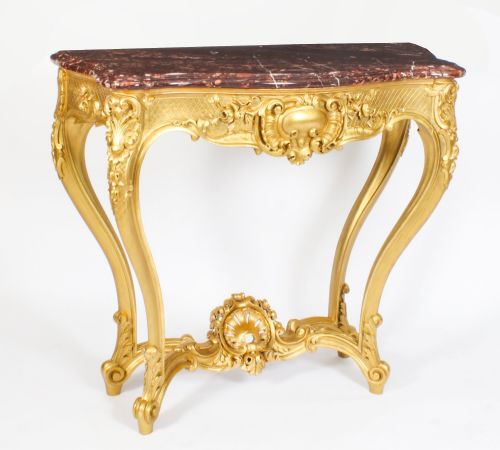
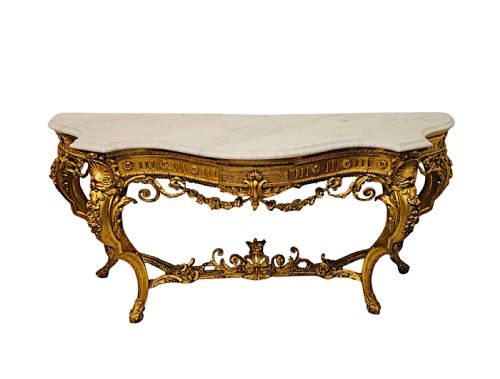
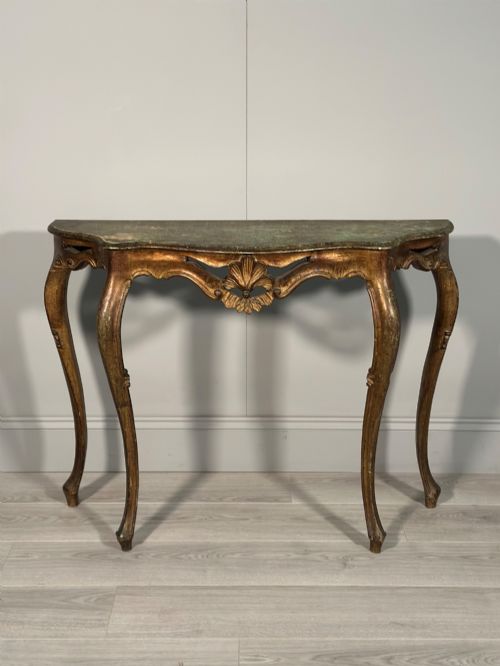
A carved pier table anchors a room against a wall, often beneath a matching mirror, bringing classical proportion and heavy timber or gilded carving to domestic interiors.
Carved Pier Table
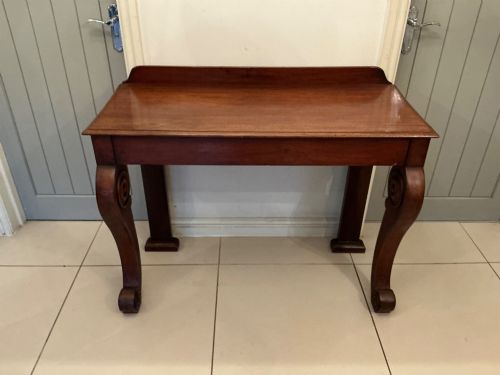
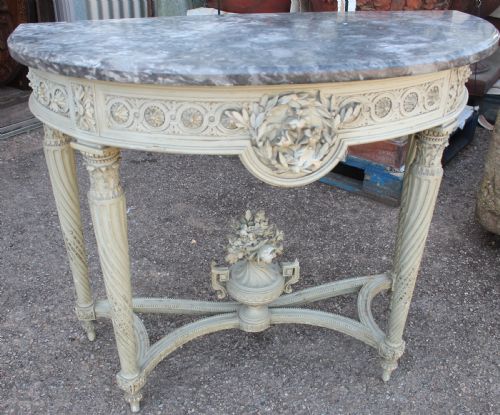
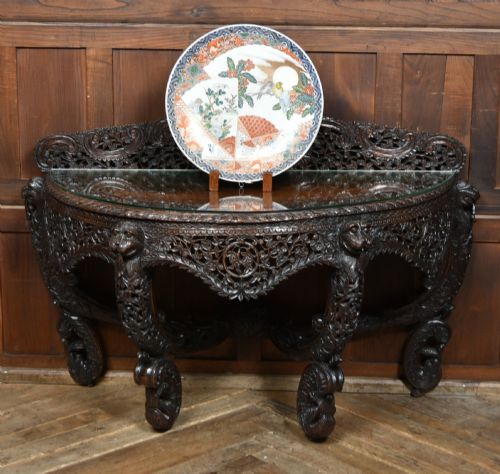
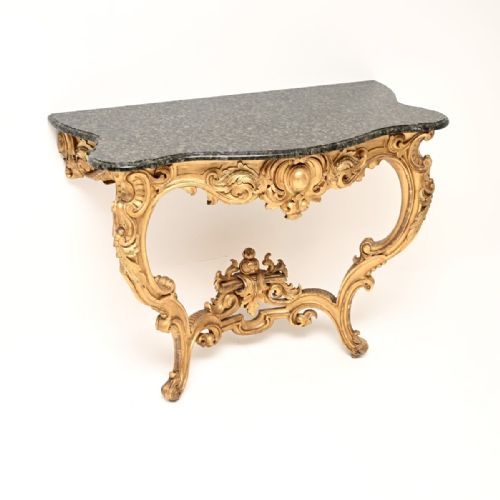
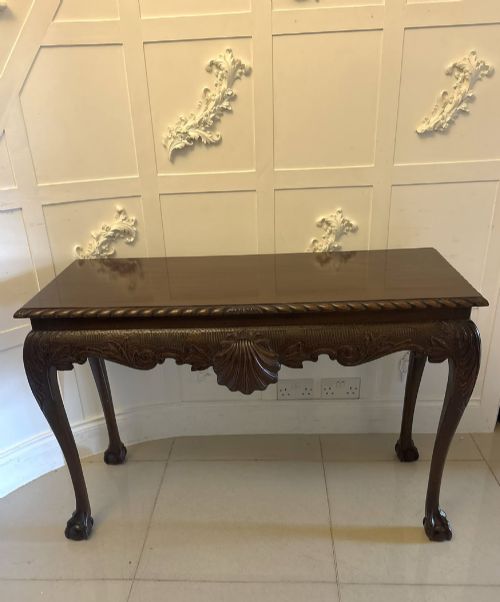
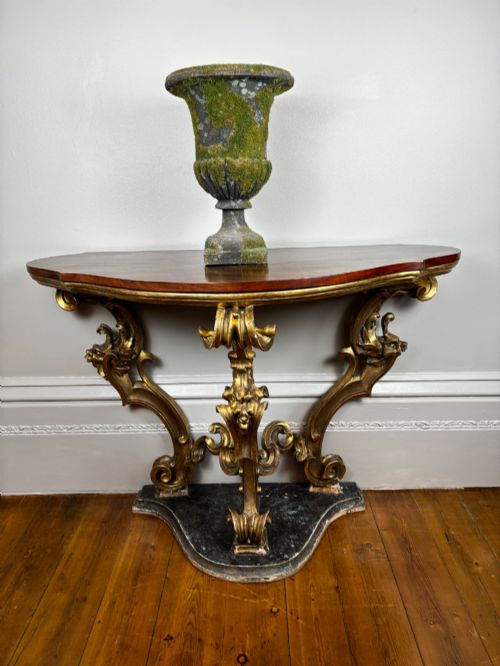
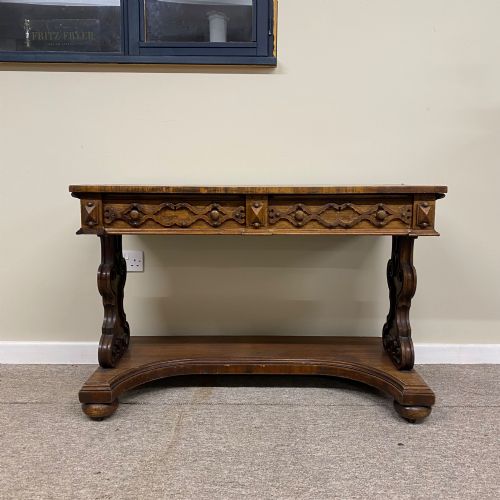
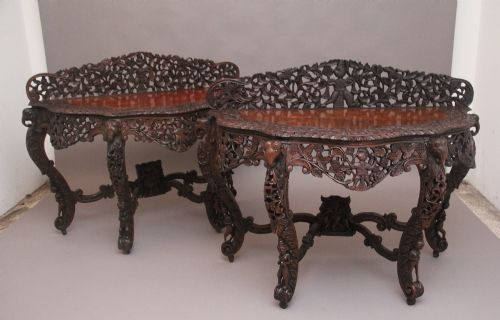
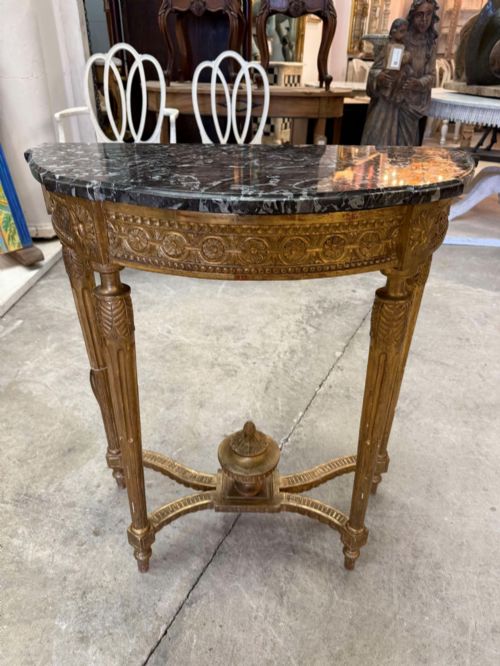
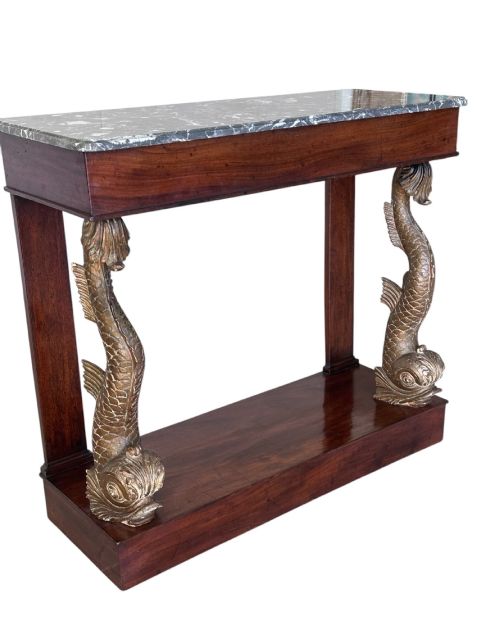
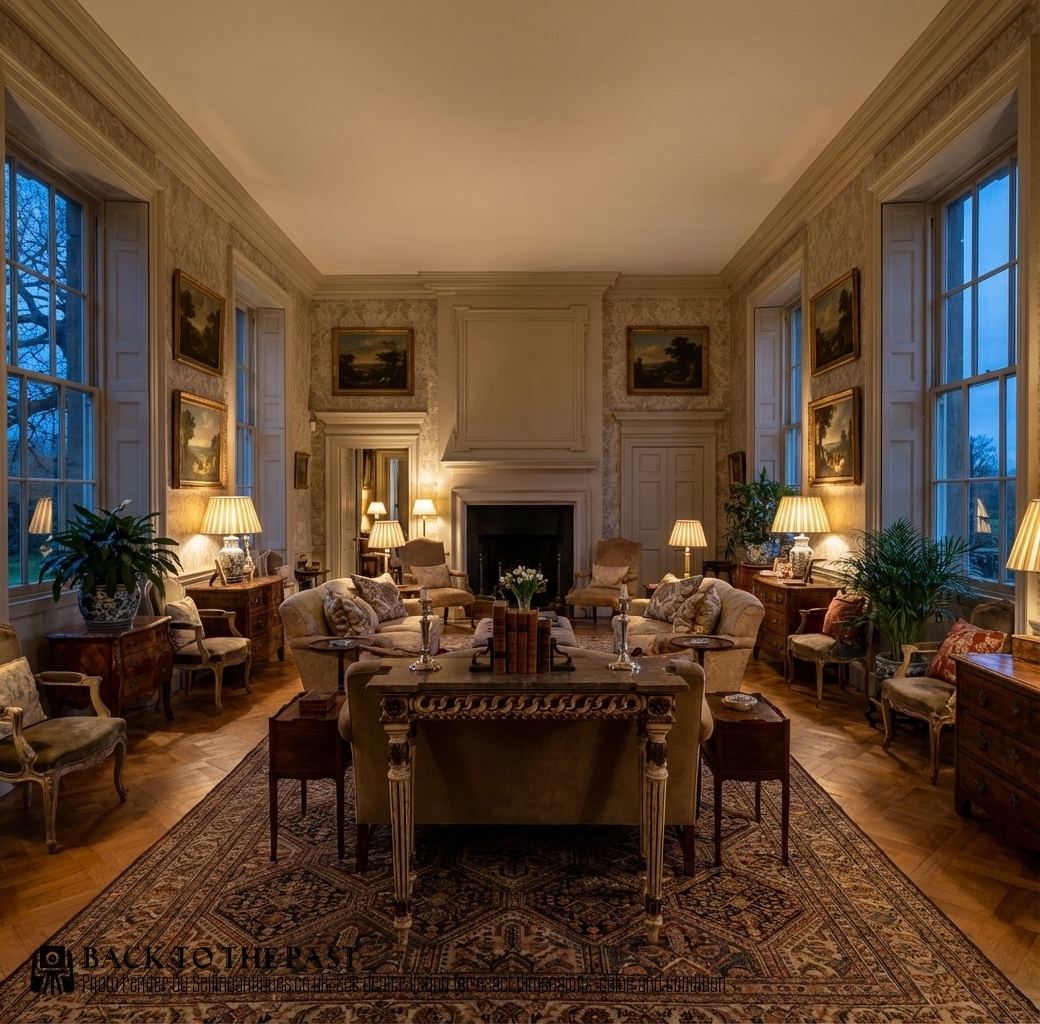
A carved pier table sits flush against the wall between architectural windows or beneath a glass plate, serving as a formal display surface in grand reception rooms. The pieces gathered here span from the eighteenth century through the art deco period, taking the shape of console tables, demilune side tables, and rectangular serving pieces.
Italian and French workshops supply many of the giltwood and gesso examples from the eighteenth and nineteenth centuries, while English makers favour dense mahogany and walnut. Regional variations shift from the restrained lines of Gustavian and Adam styles to the exuberant curves of French Rococo and Victorian revivals.
Buyers meet both monumental pairs intended for formal salons and smaller demilune hall tables designed for domestic corridors. These tables frequently incorporate marble slabs inset into their timber frames, providing a cool, hard-wearing surface for lamps and ornamental urns.
Materials and construction methods
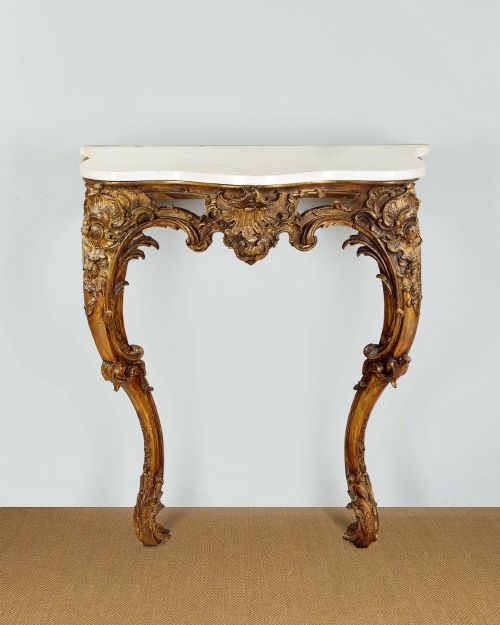
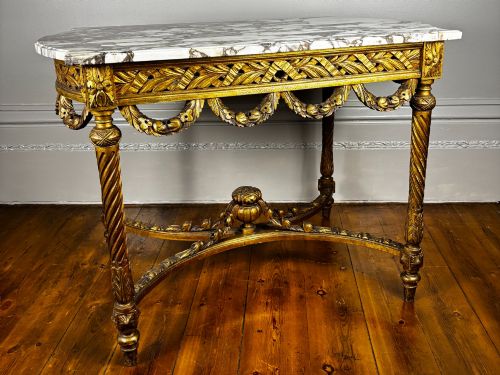
Cabinetmakers built the structural carcases of these tables from dense hardwoods like mahogany, walnut, oak, and teak, often shaping the timber into serpentine or demilune fronts by hand. Giltwood and gesso pieces rely on carved pine or lime-wood as a base, receiving layers of chalk preparation before the application of gold leaf.
Heavy marble slabs, including breche d'alep, rest directly upon the timber frames or gilt bases, sometimes secured by shaped mouldings. Metal elements such as brass and copper inlay appear on specific cross-cultural forms, while parcel gilding highlights the relief-carved acanthus leaves, scrolls, and neoclassical motifs.
Carved Pier Table Retail Price Guide 2026
Typical asking prices for carved pier table among the pieces listed under this phrase on Sellingantiques today, from the lower quarter to the upper quarter. They describe what is for sale here now, not the wider market.
Listings feature walnut, mahogany, and giltwood frames paired with heavy marble slabs across the eighteenth, nineteenth, and early twentieth centuries.
Distinctions in craftsmanship and design
The depth and crispness of the hand-carving separate standard production from exceptional studio work, particularly in the rendering of gesso foliage and wooden scrollwork. Sharp, undercut details in the timber reveal a confident hand, whereas softened or muddy relief indicates mechanical shaping or excessive sanding during later restoration.
The selection of materials dictates the standing of the piece, from figured walnut veneers and heavy marble tops to simple polished pine or oak. Original mercury gilding or intact gold leaf carries greater integrity than later repainting, while the harmony between the carved base and its stone top determines visual balance.
Felix-Alfred Ternisien
The Carved Pier Table Glossary
- Console table
- A table supported by wall-fixed brackets or console legs rather than four independent vertical posts. They are specifically proportioned to stand flat against a wall.
- Demilune
- A semicircular shape resembling a half-moon, frequently utilised for hall and pier tables designed to project minimally into narrow walkways.
- Giltwood
- Timber, usually lime or pine, coated with gold leaf over layers of gesso and size. It creates a brilliant reflective surface popular in neoclassical and rococo interiors.
- Gesso
- A plaster-like mixture applied to wooden table frames as a smooth base for gilding or painting. It accepts deep relief carving before the metallic leaf is laid down.
- Breche d'alep
- A type of quarried decorative marble featuring brecciated patterns of brown, cream, and grey. It frequently tops eighteenth and nineteenth-century French console tables.
Carved Pier Table: Frequently Asked Questions
What is a pier table?
A pier table is a formal side table specifically built to stand against the wall space between two architectural windows, known as the pier. They were traditionally paired with large wall mirrors to reflect light into darker townhouses.
Over time, these tables evolved into versatile console and serving pieces for hallways and drawing rooms. Their narrow profiles allowed them to sit flush without obstructing household traffic.
How do I style a pier table?
Place a carved pier table flat against a primary wall in an entrance hall or living space, ideally beneath a matching wall mirror or artwork. Keep the surface uncluttered to showcase the timber grain or marble slab, adding only a heavy ceramic lamp or a decorative bronze.
Because these tables are structurally tied to the wall or possess substantial weight, they provide a stable focal point for symmetrical arrangements. Avoid overcrowding the surface so the carved apron and legs remain visible.
How do I identify a Victorian piece?
Victorian pier tables often display heavier proportions and embrace revival styles like Louis XV or Rococo Revival, utilising burr walnut, mahogany, or heavily carved giltwood. The carving on these nineteenth-century examples tends to be deep and robust, reflecting industrial-era mastery combined with traditional hand techniques.
Cabinetmakers of this era frequently paired dark timbers with shaped white marble tops and serpentine aprons. Examining the secondary woods on the underside helps confirm the nineteenth-century construction date.