



Teak Carved Console Table
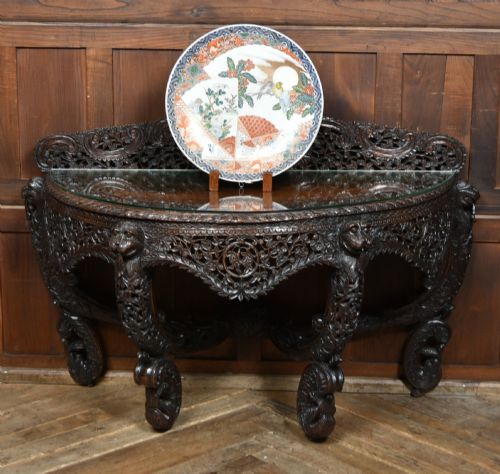
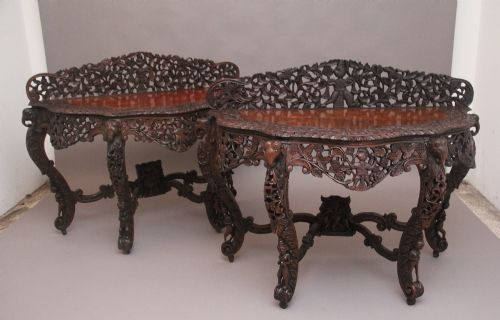
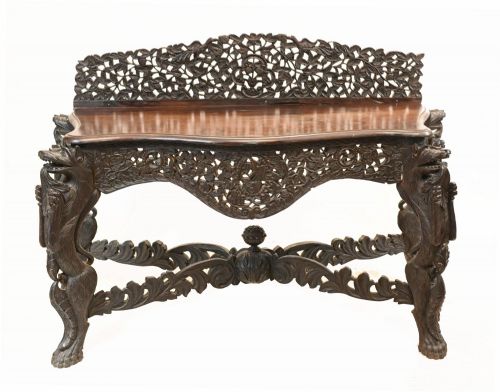
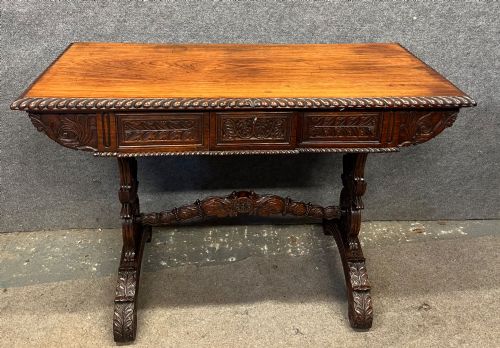
These teak carved console table pieces bring dense colonial craftsmanship and heavy relief work straight into a hallway.
Teak Carved Console Table
A teak carved console table represents nineteenth-century colonial furniture, spanning Anglo-Indian, Anglo-Burmese, and Chinoiserie styles. These side pieces sit against walls in halls and reception rooms, often accompanied by related forms such as centre tables, pier tables, and hall benches.
The pieces appearing on this page date principally from the nineteenth century, including specific dates like 1860, 1880, 1900, and 1920. Alongside standard console formats, variations include occasional tables, window seats, and hall benches featuring figural carving like elephants.
Constructed primarily from teak, rosewood, and general hardwood, these items frequently incorporate secondary materials such as bone inlay, marble, and glass tops. Buyers encounter heavy regional carving traditions that reflect distinct nineteenth-century workshop practices from British colonial territories.
How they were made
Maker workshops utilised dense tropical timbers like teak and rosewood, which accepted deep, undercut chisel work without splitting. Artisans carved complex floral scrolls, foliage, and animal figures directly into the solid hardwood structures.
Construction methods combined traditional joinery with applied decorative elements, occasionally integrating bone inlay panels or supporting glass and marble surfaces. The resulting tables and benches relied on the structural weight of the timber to remain stable against interior walls.
Teak Carved Console Table Retail Price Guide 2026
Typical asking prices for teak carved console table among the pieces listed under this phrase on Sellingantiques today, from the lower quarter to the upper quarter. They describe what is for sale here now, not the wider market.
Listings span the nineteenth and early twentieth centuries, recording periods from 1860 to 1920 alongside materials like bone inlay, marble, and teak.
What varies in quality
Depth and clarity of the chisel work separate standard production from superior pieces, with finer carving showing crisp relief in foliage and animal figures. The intricacy of Anglo-Indian and Burmese motifs dictates the visual weight of the console.
The choice of primary and secondary materials influences the overall character, where solid teak meets contrasting bone inlay or fitted marble and glass tops. Proportion and the integration of figural elements like elephants determine how successfully the form resolves.
The Teak Carved Console Table Glossary
- Anglo-Indian
- Furniture made in India by local artisans for British colonial residents, often blending European furniture forms with traditional Indian carving.
- Console table
- A table designed to stand against a wall, frequently secured to it, used historically in hallways and reception rooms.
- Bone inlay
- A decorative technique where small pieces of bone are set into the surface of hardwoods to create geometric or floral patterns.
- Pier table
- A table designed to stand against the wall between two windows, often paired with a matching mirror above.
- Chinoiserie
- European interpretations of Chinese and East Asian artistic traditions, expressed here through carved furniture forms.
Teak Carved Console Table: Frequently Asked Questions
Where should a console table go?
These tables find a natural home in hallways, entrance passages, and reception rooms where floor space is relatively shallow. Their flat backs suit placement directly against interior walls.
Because many examples feature detailed carving along the front apron and legs, positioning them in open circulation areas allows the relief work to be seen properly.
How do I care for teak furniture?
Solid teak and hardwood require minimal intervention, benefiting chiefly from dusting with a dry cloth to prevent dirt settling in deep carvings. Avoid commercial silicone polishes that build up within the recesses of the relief work.
Maintaining stable room humidity prevents the dense tropical timbers from moving significantly over seasonal changes.
What is the difference between a console and a centre table?
A console table is constructed specifically to stand flat against a wall, often finished with plain or uncarved backs. Centre tables are designed to be viewed from all sides, standing free in the middle of a room.
Both forms appear within nineteenth-century colonial furniture groups but serve distinct spatial functions in an interior.
How are nineteenth century styles identified?
Stylistic attribution relies on characteristic carving motifs, such as the dense foliage of Anglo-Indian pieces or the figural elephant designs of Burmese workshops. The handling of teak and rosewood reflects the period's colonial production methods.
Reference to specific dates like 1860 or 1880 helps anchor individual pieces within the broader nineteenth-century timeline.