
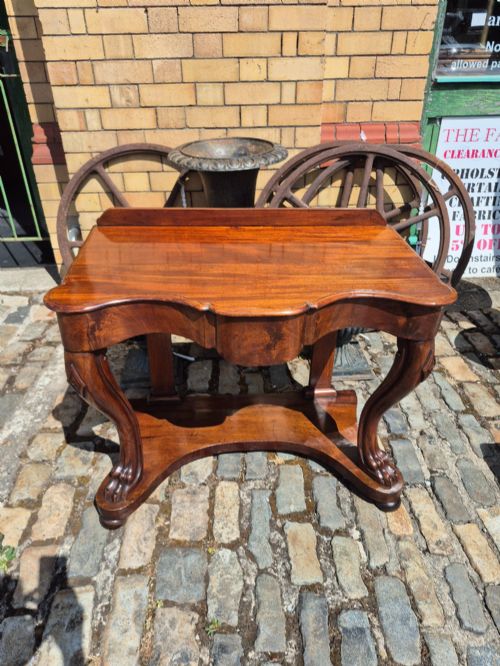
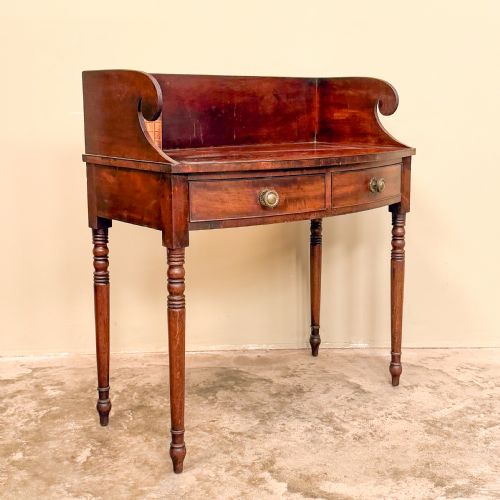
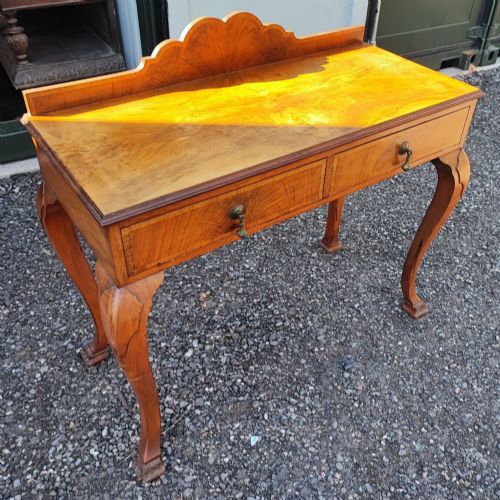
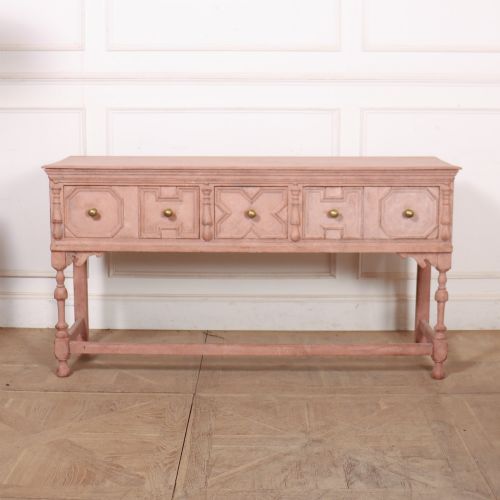
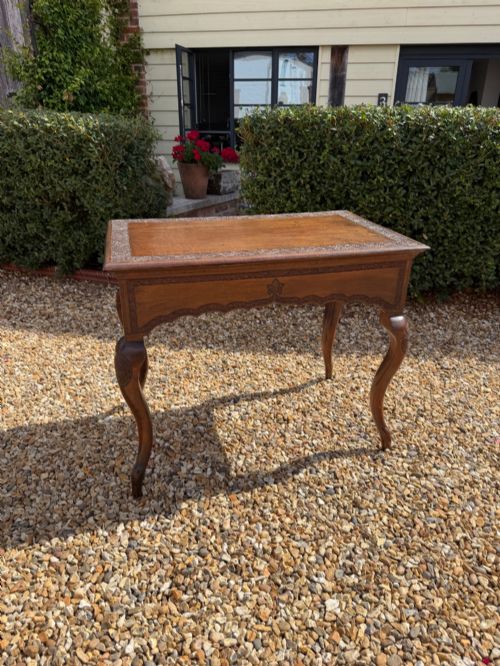
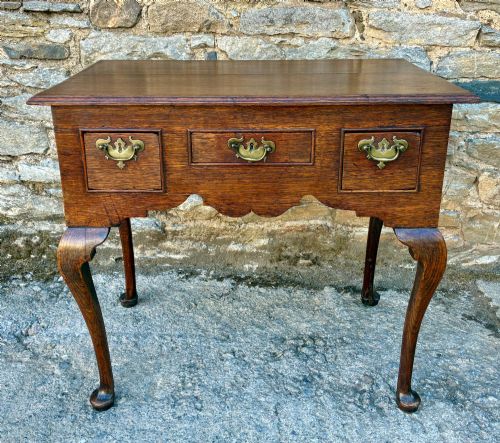
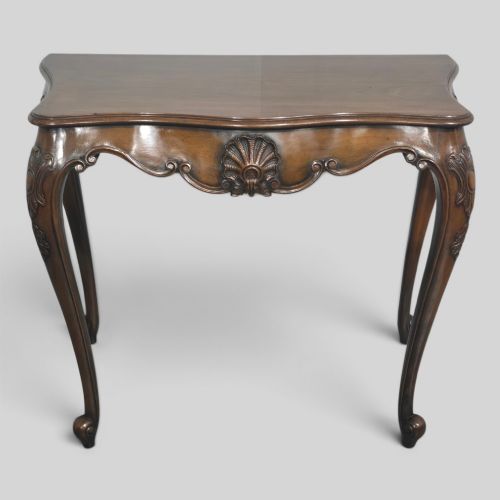
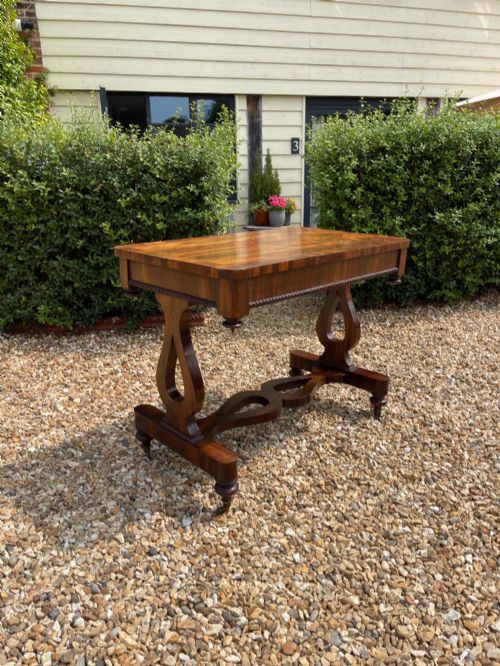
Carved Wooden Hall Console
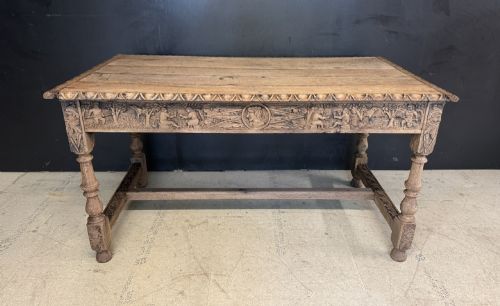
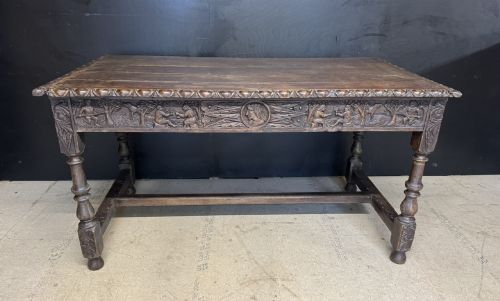
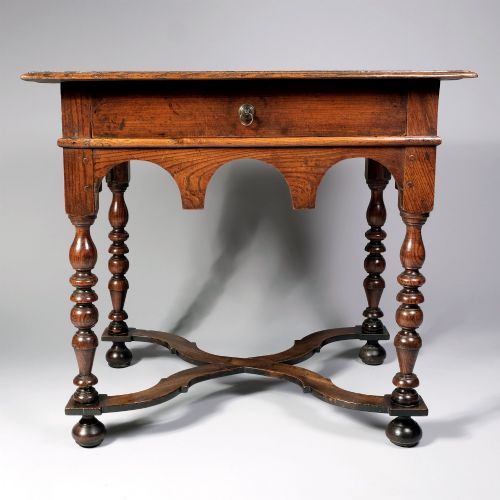
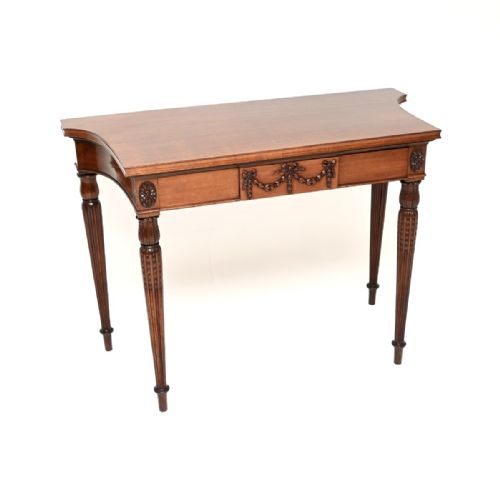
These carved wooden hall console tables are substantial period furniture pieces designed for narrow spaces, offering strong architectural form and practical surface area.
Carved Wooden Hall Console
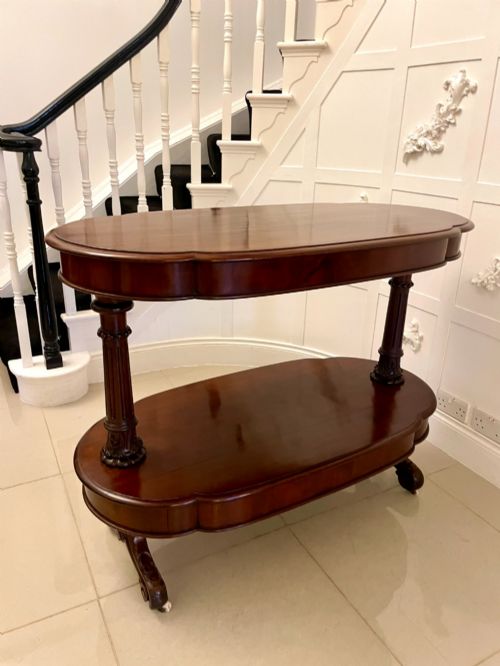
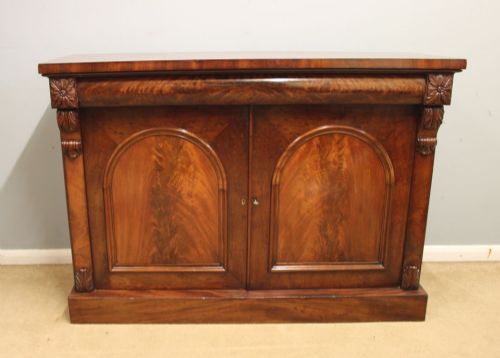
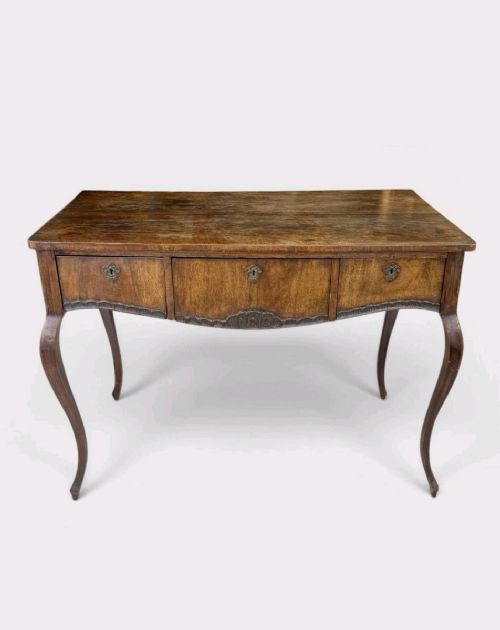
A carved wooden hall console is a functional surface designed to stand against a wall in an entrance or corridor, frequently appearing in forms like console tables, side tables, serving tables, and writing tables.
The pieces listed here span several distinct periods, with Victorian and nineteenth-century examples sitting alongside earlier seventeenth-century oak pieces and later twentieth-century styles.
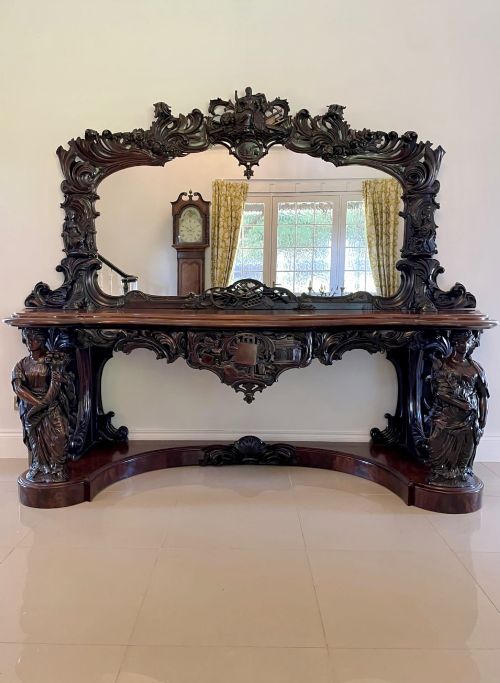
Makers and workshops utilise various formats, including demi-lune shapes, wall-mounted consoles, and large mirror-back designs, providing options for both grand hallways and compact spaces.
How they were made
Cabinetmakers constructed these tables using a range of solid timbers such as mahogany, oak, walnut, elm, and burr oak, often pairing them with marble tops or brass fittings.
Carving serves as the primary decorative technique, applied directly to the wooden frames, whilst some examples feature painted finishes or parcel gilt highlights.
Earlier pieces rely on traditional joinery methods suited to solid oak and walnut, whereas nineteenth-century and later variants incorporate complex mirror backs and detailed surface carving.
Listings span from the seventeenth century through the Victorian era to the nineteen-thirties, using mahogany, oak, walnut, and marble.
What varies in quality
Quality in a carved wooden hall console depends heavily on the depth and crispness of the carving, alongside the selection of timber veneers like burr walnut or figured mahogany.
Exhibition-grade pieces display superior proportion and structural ambition, such as large mirror-backed constructions or intricate Anglo-Indian and French hand-carved details.
The integrity of the original surface, whether polished wood, painted finish, or natural patina, separates standard domestic furniture from exceptional workshop examples.
James Mein of Kelso·Hicks of Dublin
The Carved Wooden Hall Console Glossary
- Console table
- A table designed to be fixed against a wall, often supported by front legs or brackets.
- Demi-lune
- A half-moon shape used for table tops and furniture fronts to fit tightly against flat walls.
- Patina
- The surface sheen and colour developed on wood through age, use, and waxing.
- Lowboy
- A small seventeenth or eighteenth-century table with drawers, typically set on four legs.
- Serpentine
- A furniture front or edge that curves outward at the centre and inward at the sides.
Carved Wooden Hall Console: Frequently Asked Questions
Where should I place a hall console?
These tables suit entrance halls, corridors, and narrow reception rooms where a deep piece of furniture would obstruct movement. Their shallow profiles allow them to sit flat against walls while providing a useful surface.
Positioning a console beneath a mirror or painting creates a balanced focal point as you enter a room, whilst versions with drawers offer storage for keys and small items.
How do I identify a Victorian console?
Victorian examples often feature dense mahogany or oak timbers, heavy carved ornamentation, and occasionally large mirror backs. The proportions tend to be robust and grounded.
Look for nineteenth-century construction traits in the drawer linings and timber framing to confirm the period.
Are seventeenth century tables made of oak?
Seventeenth-century pieces on this page frequently utilise solid oak, elm, or walnut, reflecting the primary hardwoods available to period cabinetmakers. These materials resulted in sturdy, heavy frames.
Over centuries, these timbers develop a deep original patina that distinguishes them from later nineteenth-century revivals.
What is the difference between a console and a side table?
Console tables are specifically designed to stand against a wall, sometimes relying on wall brackets or legs that emphasise the front facade. Side tables are freestanding structures finished on all sides.
In historical listings, the terms frequently overlap depending on whether the piece was intended for serving, writing, or display in a hallway.