


Burmese Carved Side Table
A burmese carved side table brings dense tropical timber and intricate relief carving into a room, offering both practical surface space and distinct historic character.

Burmese Carved Side Table
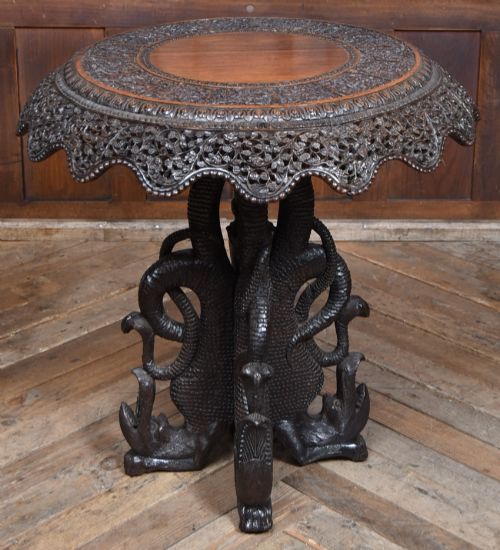
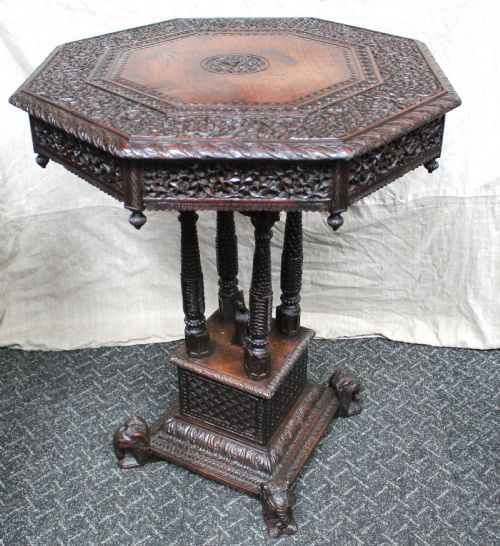
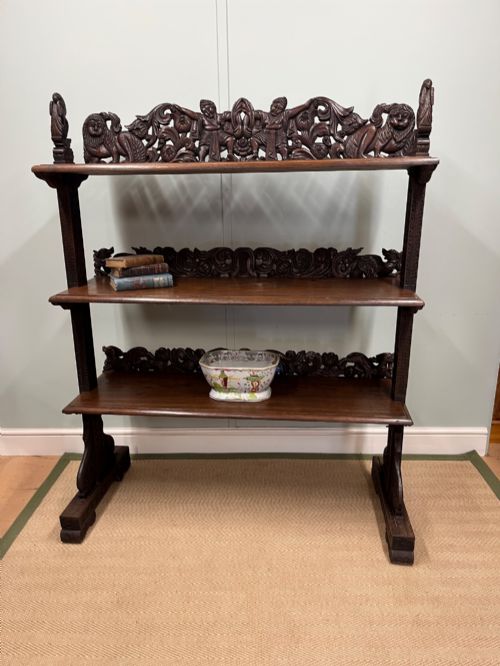
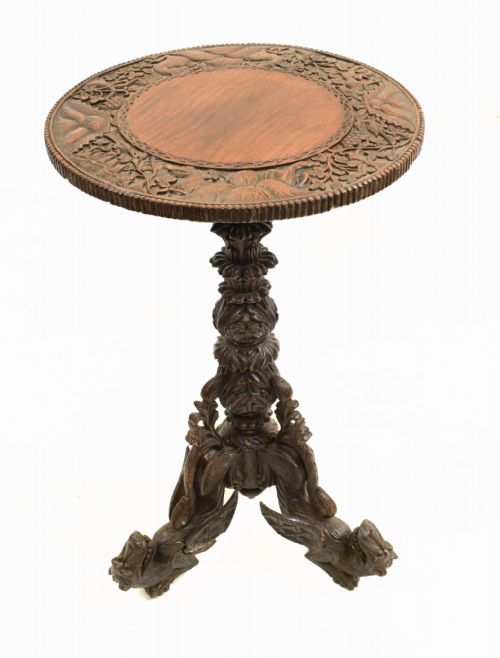
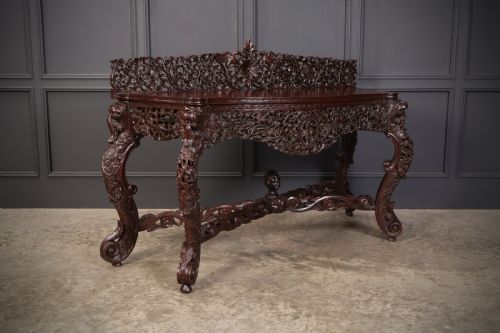
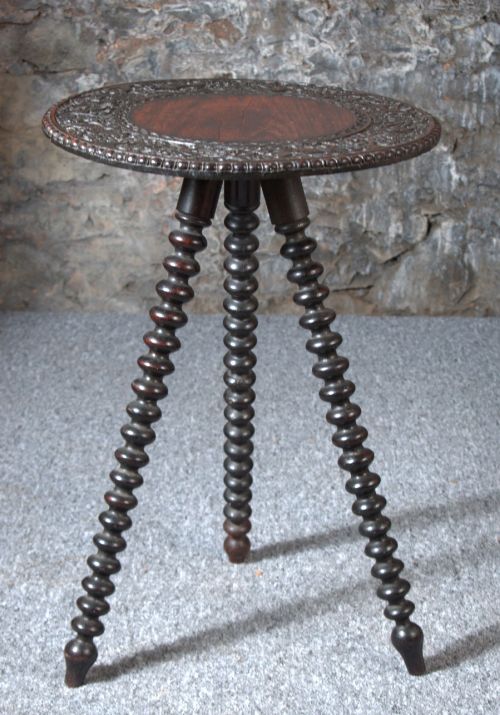
A burmese carved side table encompasses a range of occasional furniture forms including standard side tables, tip-top designs, console tables, and multi-tiered buffets. These pieces primarily date from the nineteenth century, particularly the decades surrounding eighteen-eighty, and emerge from both Burmese and colonial contexts.
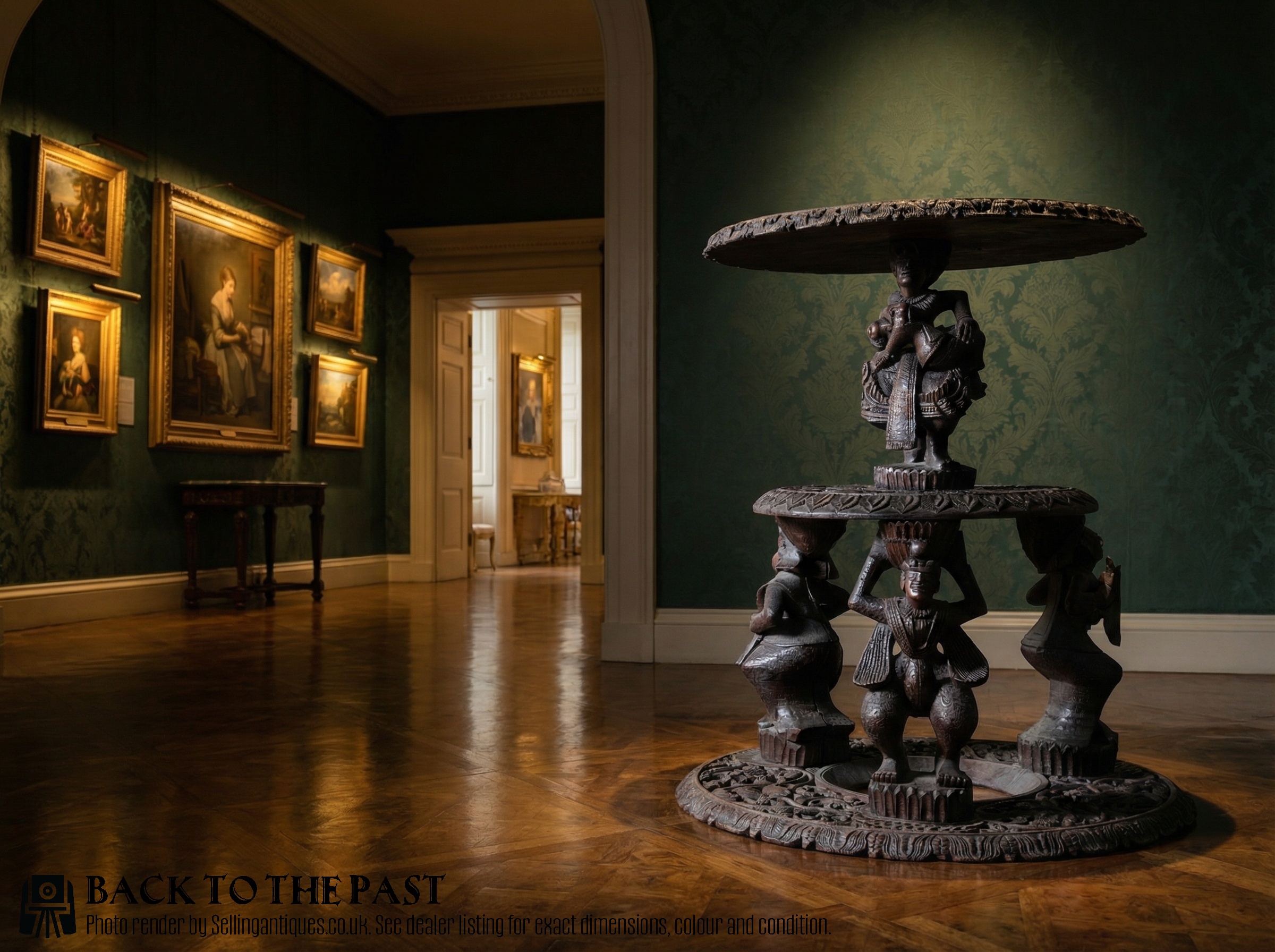
The physical form varies considerably, from compact round tables supported by carved elephant legs to rectangular two-tier and three-tier structures. They function naturally as lamp tables or hall furniture, combining utilitarian surfaces with dense, narrative carving traditions.
How they were made
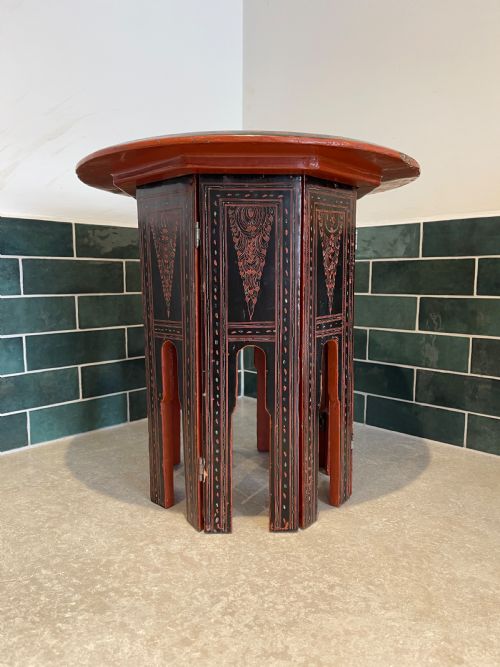
Makers utilised dense tropical timbers such as teak, padauk, and rosewood, which provided a heavy and durable foundation for deep relief work. Some examples also incorporate bone elements or lacquer finishes to create contrasting details against the dark wood.
The decoration relies on extensive hand carving, cutting deeply into the solid timber to produce figures, animals, and foliage in high relief. Joinery and structural framing were built to support the substantial weight of these carved hardwoods.
Several tables feature carved elephant legs, letting miniature pachyderms quietly bear the weight of your evening cup of tea.
What varies in quality
The depth and clarity of the hand carving separate standard pieces from finer examples, where figures and vegetal motifs retain sharp undercut details. The choice of timber also dictates the character of the piece, with richly grained padauk and dense teak offering superior weight and colour.
Structural complexity influences distinction, as multi-tiered buffets and tables featuring figurative supports like elephants require greater joinery skill than simple occasional tables. The handling of proportions and the integration of the carving into the overall silhouette determine the visual balance of the work.
The Burmese Carved Side Table Glossary
- Padauk
- A heavy, durable tropical hardwood with a reddish hue used extensively for carved furniture. It provides a stable base for deep relief work.
- Tip-top
- A table top hinged to a central pillar so it can tilt vertically when not in use. This mechanism appeared on various occasional forms.
- Anglo-Burmese
- A style descriptor for furniture made in Burma during the colonial period, often blending traditional local motifs with British room requirements. These pieces reflect cross-cultural design exchanges of the nineteenth century.
- Tiered buffet
- A multi-level side table or shelving unit designed for display or serving. Examples on record feature two or three distinct stages.
- Relief carving
- A sculptural technique where figures and patterns project from a background plane. In these tables, the carving is often exceptionally deep and intricate.
Burmese Carved Side Table: Frequently Asked Questions
What is a Burmese carved side table?
A Burmese carved side table is a nineteenth-century occasional table made from dense tropical hardwoods like teak or padauk. These pieces are characterised by intricate hand-carved decoration reflecting traditional and colonial styles.
They appear in various forms, including tip-top tables, console tables, and multi-tiered buffets. The designs often incorporate figurative elements such as elephants alongside dense floral and foliate relief work.
How do I date a Burmese carved table?
Dating relies on examining the timber, construction methods, and stylistic indicators recorded across nineteenth-century examples. Many pieces are associated with the decades between eighteen-eighty and nineteen-hundred.
Archival and listed items show production spanning from the mid-nineteenth century into the early twentieth century. Subtle shifts in the complexity of the carving and the form of the legs help place an item within this period.
Where should I place a carved side table?
These tables suit hallways, living rooms, and studies where their decorative surfaces can be appreciated. Their compact footprint makes them practical as lamp tables or occasional display stands.
Because they feature dense woodwork and figurative carvings, they work well alongside both traditional interiors and more eclectic modern room schemes.
What woods were used for these tables?
Makers predominantly used heavy tropical timbers including teak, padauk, and rosewood. These woods provided the structural density required for deep, sustained hand carving.
Some variations also incorporate bone details or lacquer finishes to highlight specific decorative elements across the surface.