


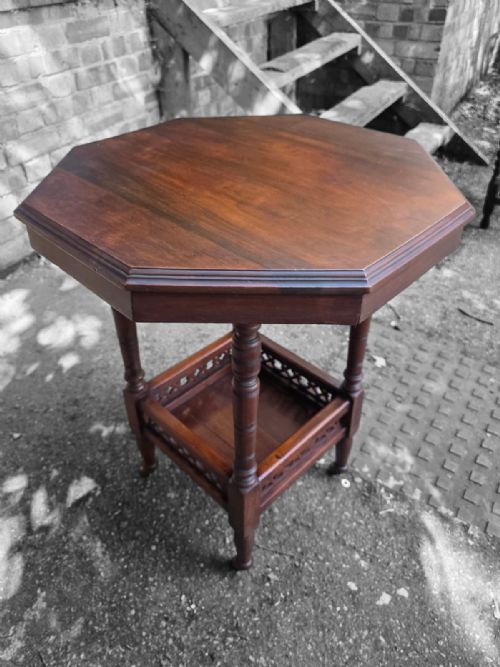
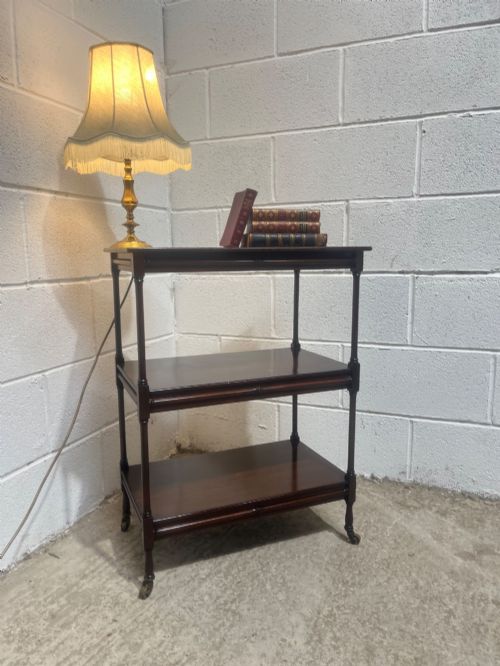
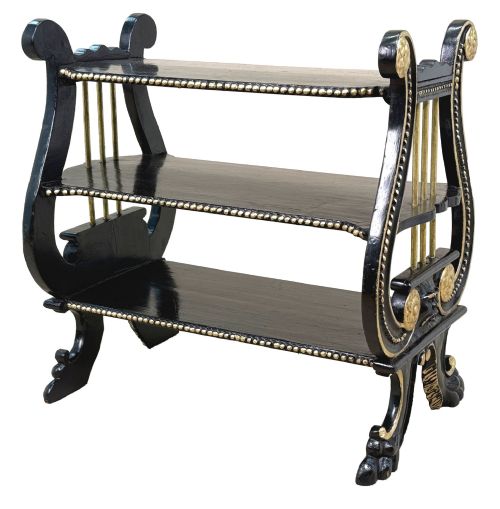
19th Century Tier Table
A 19th century tier table brings stacked surfaces and varied timbers into a room, offering practical display space with distinctive period character.
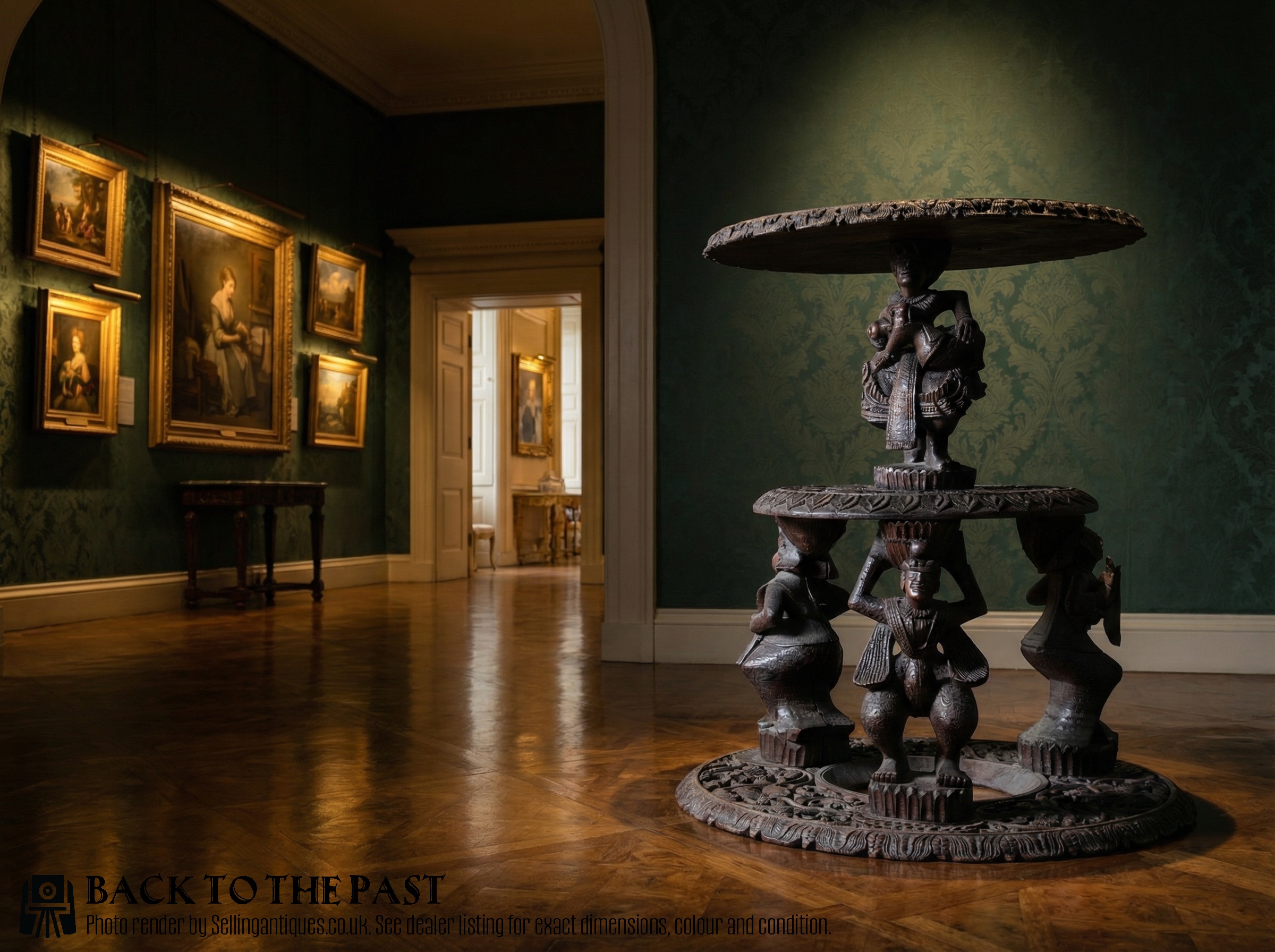
19th Century Tier Table
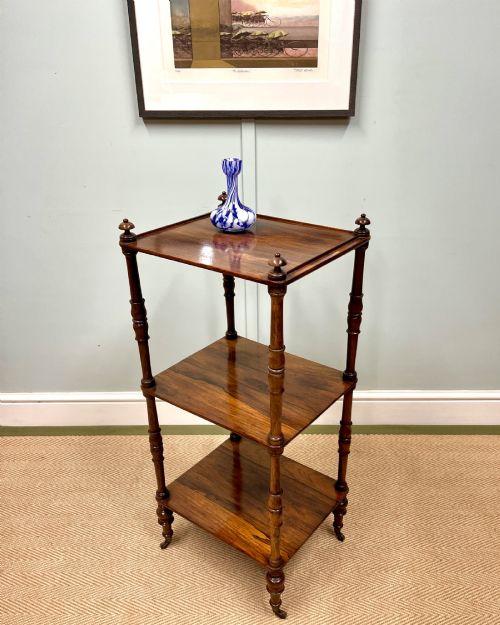
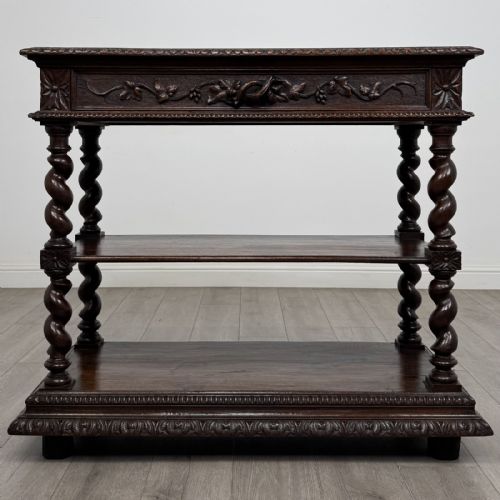
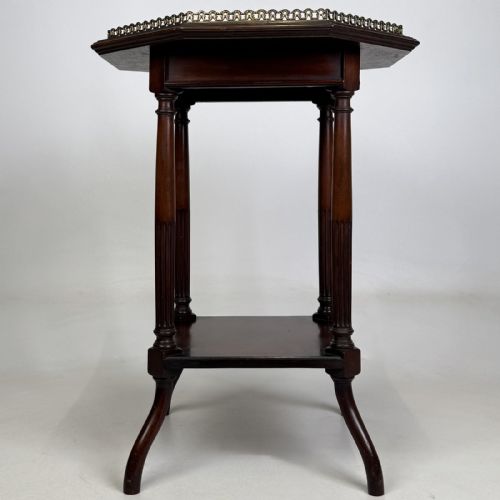
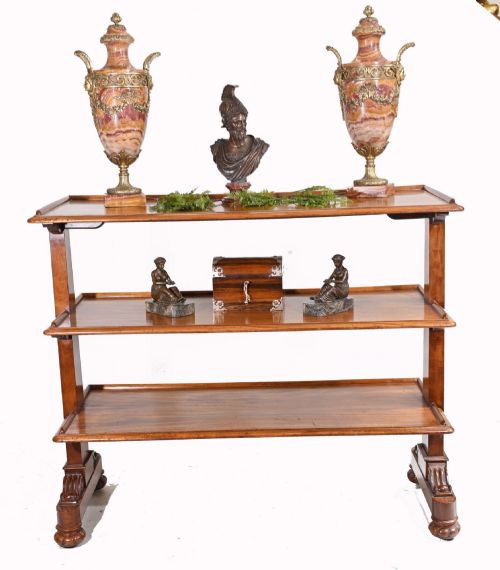
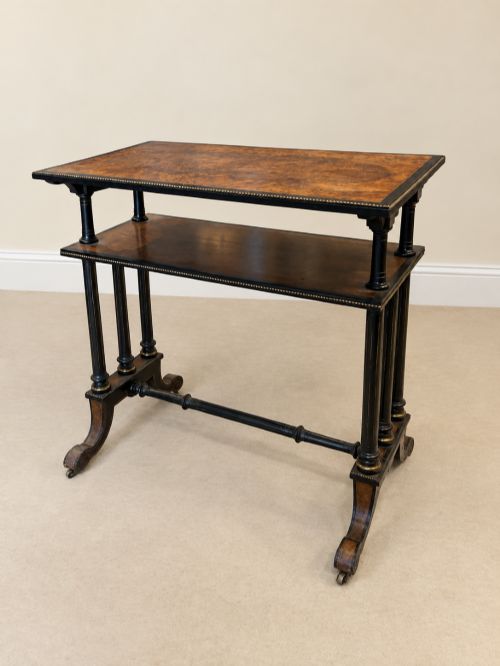
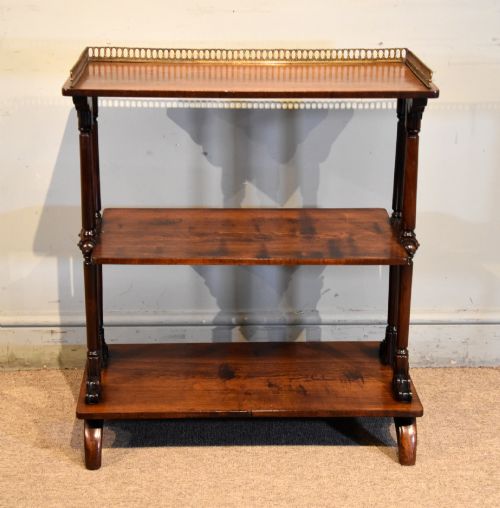
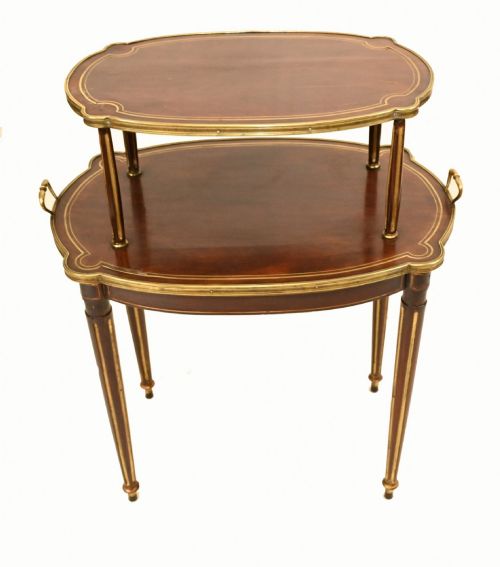
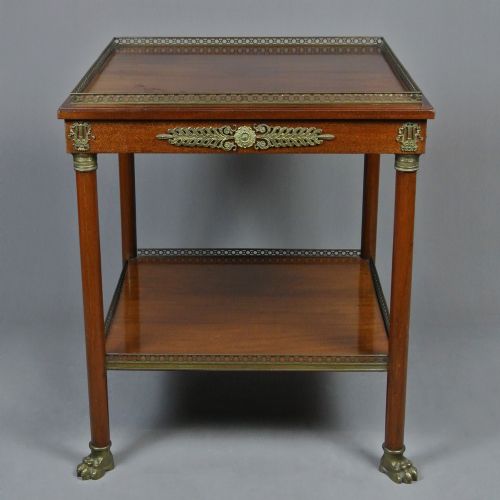
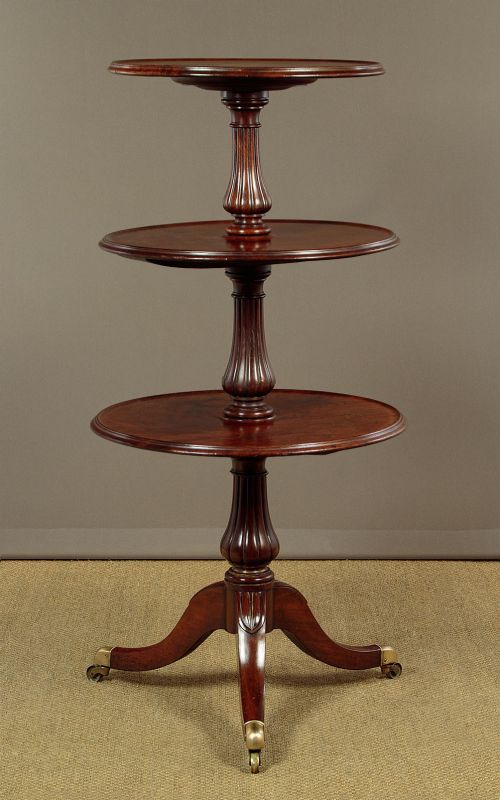
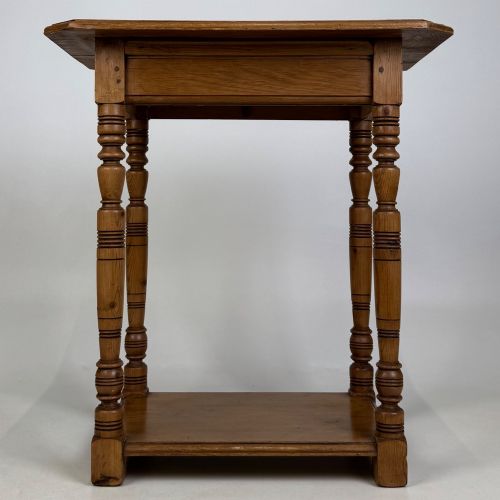
A 19th century tier table comprises multiple stacked horizontal surfaces supported by vertical posts, legs, or turned columns. These pieces appear as occasional tables, étagères, plant stands, and tea trolleys across the century.
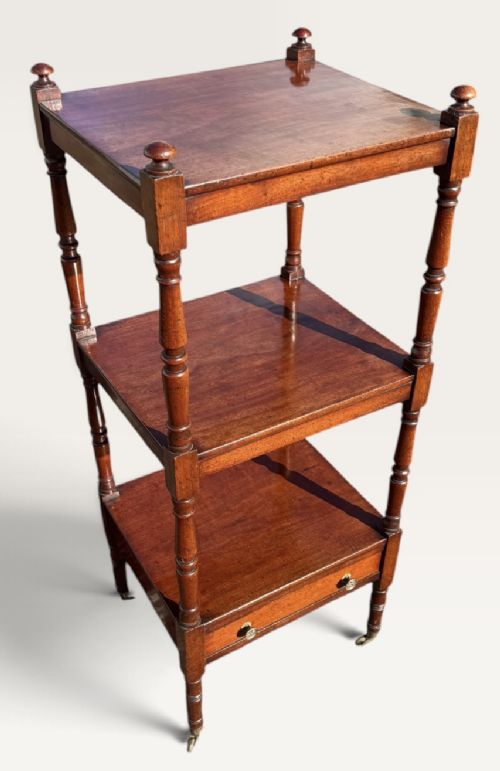
The version most commonly met on this page is the two or three-tier mahogany occasional table dating from the Victorian era. Walnut, rosewood, and ebonised wood also frequently form the primary surfaces.
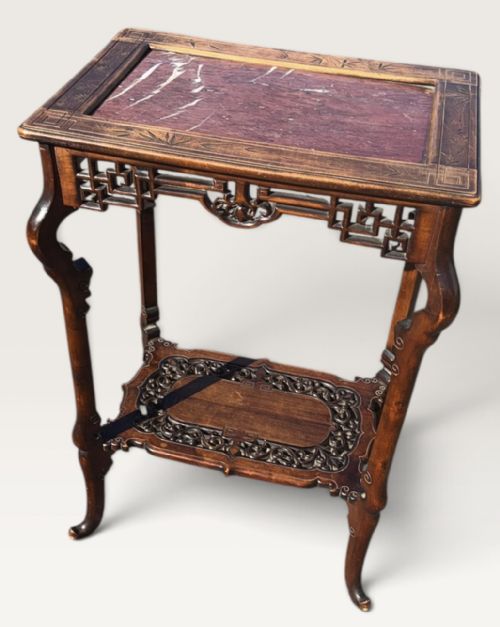
Origins stretch from English workshops to French ateliers and Chinese export studios. Domestic examples sit alongside bamboo creations and Anglo-Japanese designs influenced by aesthetic movement principles.
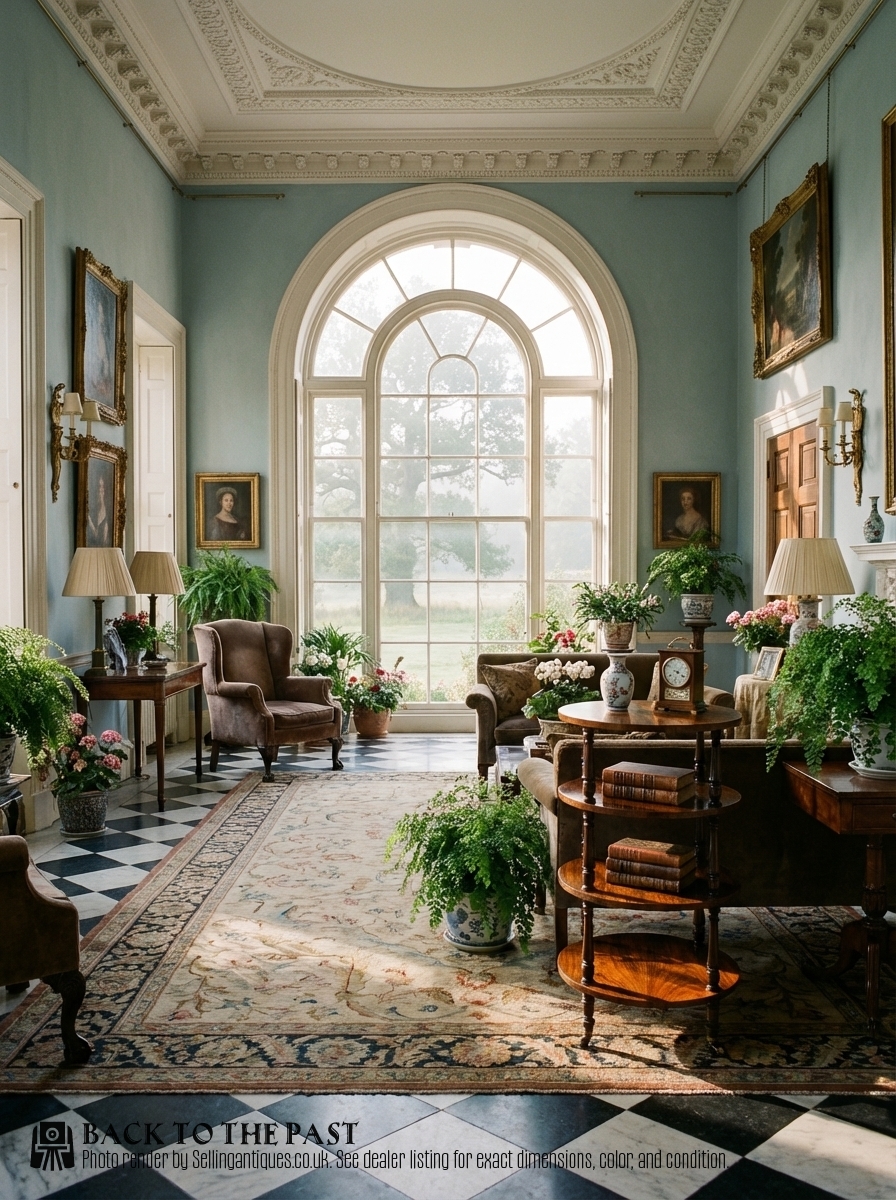
What Varies in Quality
The choice of timber and veneer figures dictates the visual impact of the piece, with dense grain and rich coloration marking superior examples. Figured mahogany and burr walnut demand greater skill in selection and placement.
Refinement in the turning of legs, the crispness of ormolu mounts, and the precision of marquetry inlay separate standard utility items from pieces produced by notable makers and workshops.
19th Century Tier Table Retail Price Guide 2026
Typical asking prices for 19th century tier table among the pieces listed under this phrase on Sellingantiques today, from the lower quarter to the upper quarter. They describe what is for sale here now, not the wider market.
Some Victorian bamboo tables arrived from the Orient with hollow legs that occasionally doubled as hiding spots for clandestine love letters.
Gregory And Co·Maison Giroux·François Linke·Edwards And Roberts·W Turner Lord And Co·Heal And Son·Holland And Sons·Robert Strahan
The 19th Century Tier Table Glossary
- Étagère
- A piece of furniture consisting of a set of open shelves for displaying small objects. These tiered stands gained popularity during the Victorian period.
- Japanning
- A type of European finish that emulates Japanese lacquer work. Craftsmen applied dark varnishes and raised metallic decorations to wooden surfaces.
- Marquetry
- Decorative veneer work formed by fitting together small pieces of wood, shell, or ivory into geometric or pictorial patterns. This technique decorates the tops of many French and English tables.
- Ormolu
- Gilded bronze mounts applied to the edges, legs, and corners of furniture. Found frequently on French and high-status English pieces.
- Dumb waiter
- A freestanding tiered stand used for holding food, tableware, or books without requiring servant attendance. Examples span from revolving designs to fixed shelves.
19th Century Tier Table: Frequently Asked Questions
Where were tier tables used?
Victorian households placed these tables in drawing rooms, parlours, and bedrooms for holding books, lamps, and decorative ornaments. Their movable nature allowed them to sit beside seating or against walls.
Larger versions functioned as dumb waiters or tea trolleys in dining spaces. Smaller étagères displayed collections of porcelain and curiosities.
How do I date a tier table?
Dating relies on timber selection, construction methods, and stylistic indicators. Earlier examples from the Regency period utilise heavy mahogany and restrained brass details.
Late 19th-century pieces often incorporate aesthetic movement influences, bamboo frames, or ebonised finishes. Maker stamps and labels provide definitive dates when present.
How do I care for antique wood?
Keep wooden surfaces away from direct heat sources and strong sunlight to prevent veneer cracking and fading. Regular dusting with a dry cloth maintains the finish.
Apply traditional wax polish sparingly to nourish timber surfaces. Avoid placing damp items directly onto antique wood to protect the polish.