
Colonial Carved Table
A colonial carved table brings dense hardwoods and intricate regional motifs together, offering a functional centrepiece with distinct historical weight.
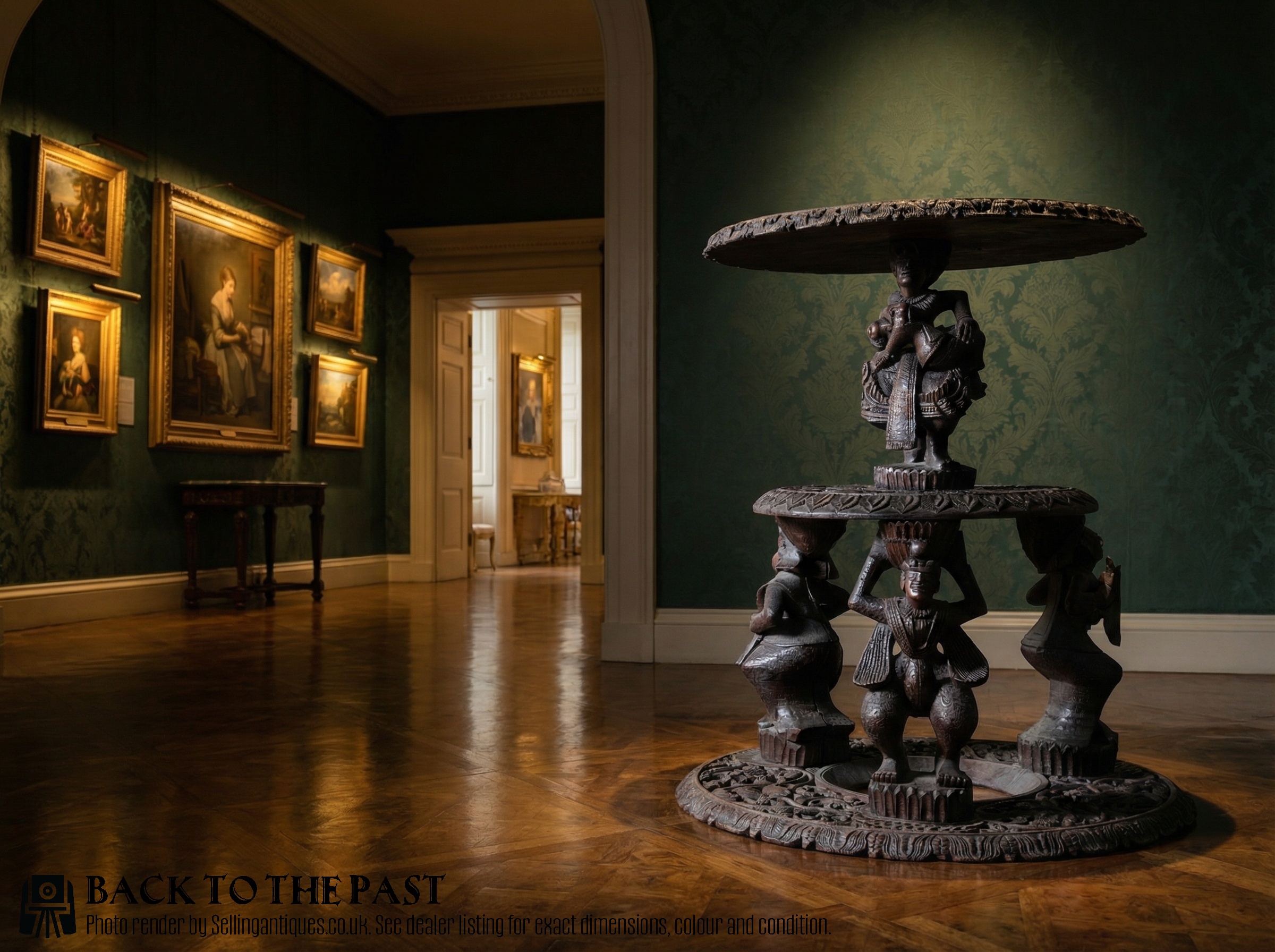
Colonial Carved Table
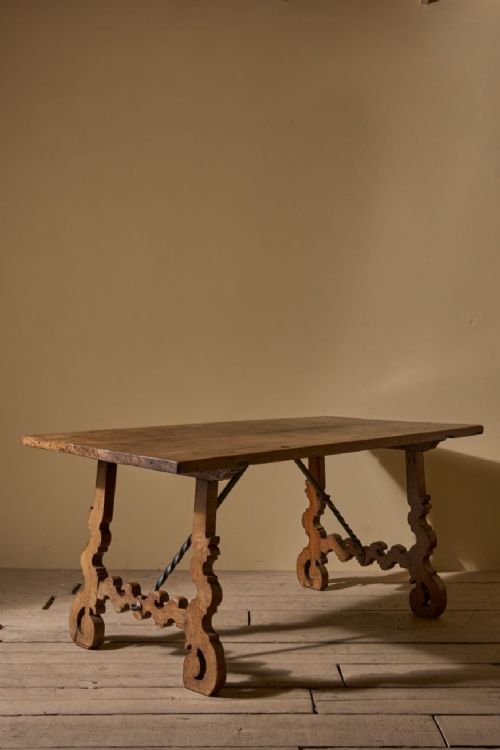
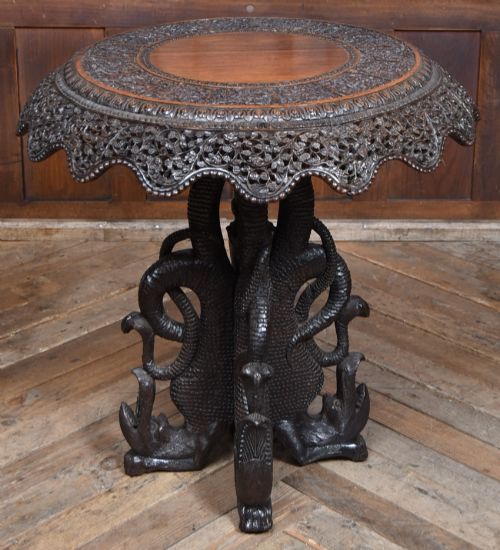
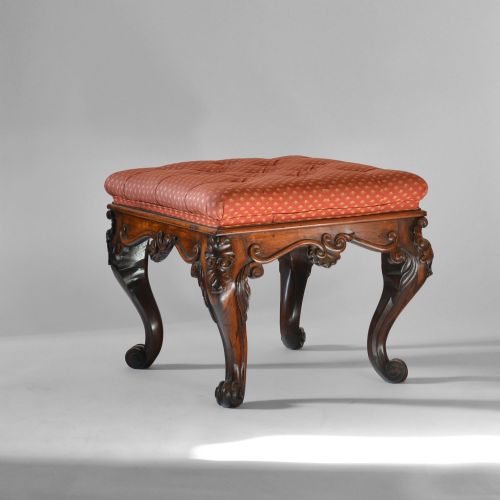
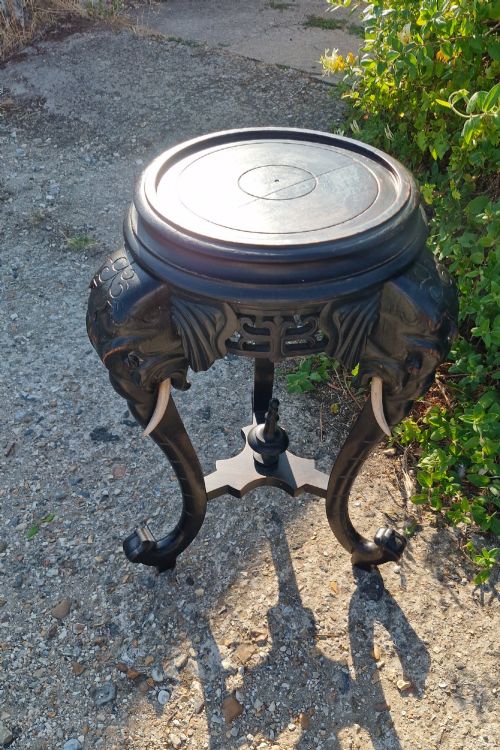
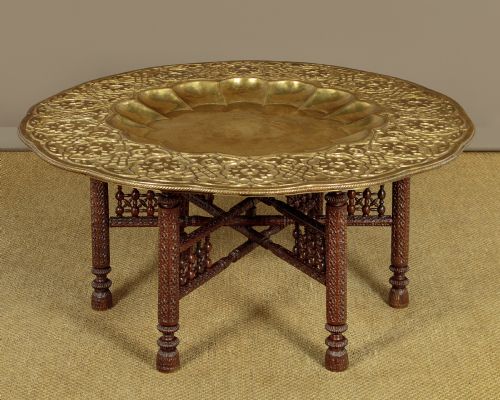
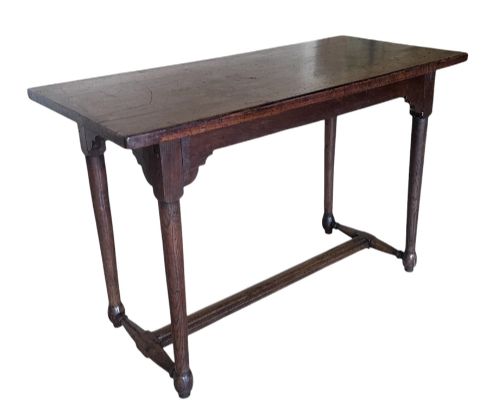
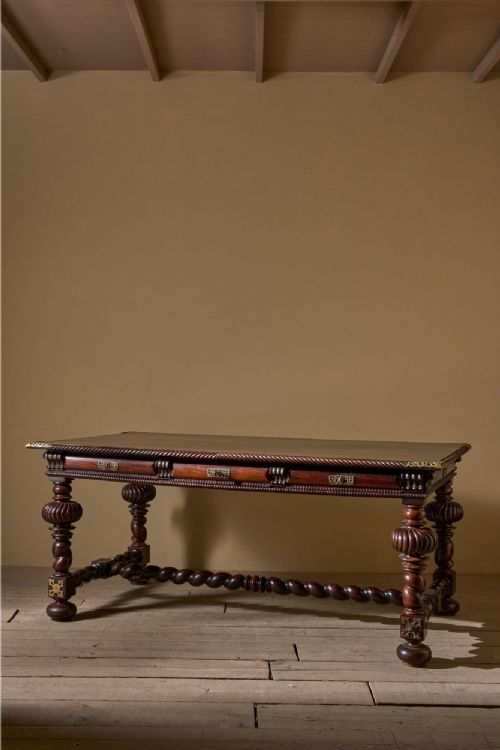
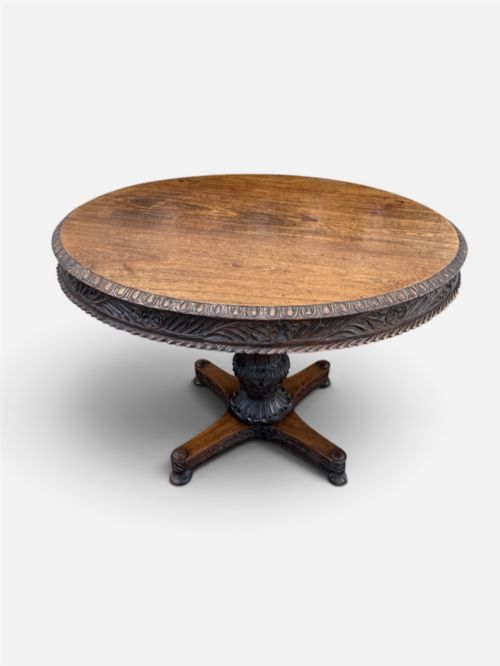
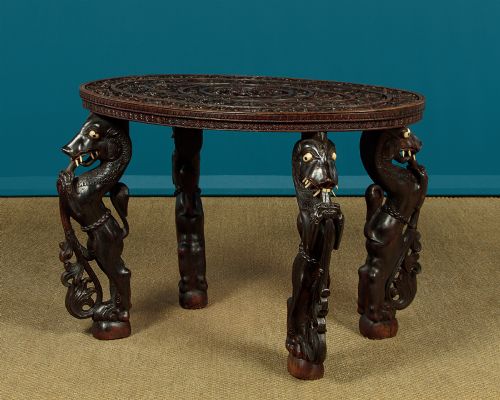
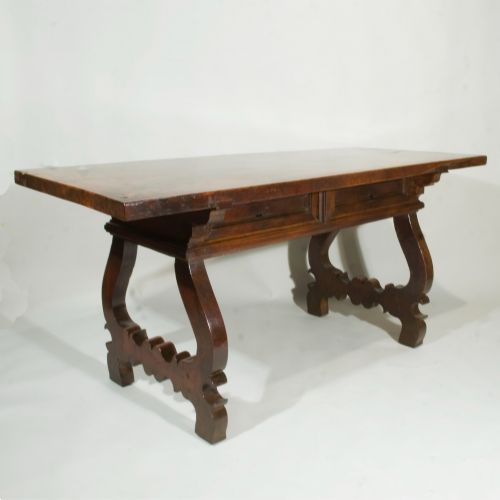
A colonial carved table spans various formats including side tables, occasional tables, coffee tables, and desks originating from diverse global regions under imperial influence. These pieces emerge predominantly from the nineteenth century, featuring styles such as Anglo-Indian, Anglo-Burmese, Portuguese Colonial, and Spanish Colonial.
Geographic attribution shapes the character of these items, linking specific carving traditions to locations like Hoshiarpur, Ceylon, Burma, and broader Indian or Iberian colonial territories. The resulting objects combine European furniture forms with local carving expertise.
How They Were Made
Craftsmen utilised dense tropical hardwoods including teak, rosewood, padauk, ebony, and hardwood alongside European timbers like oak and walnut. These foundational woods supported deep relief carving, pierced fretwork, and structural turning.
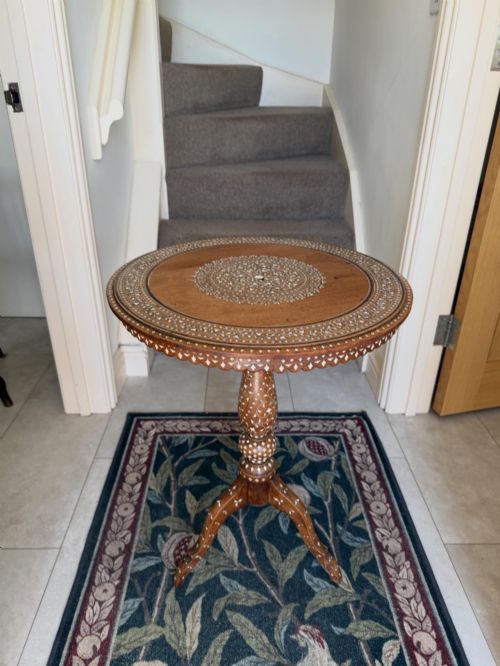
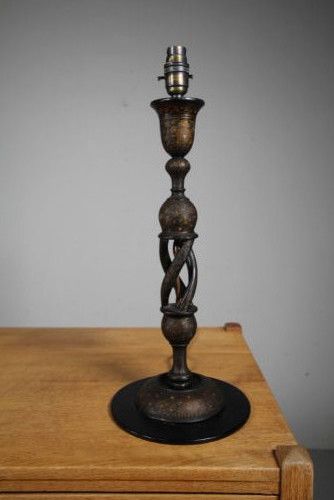
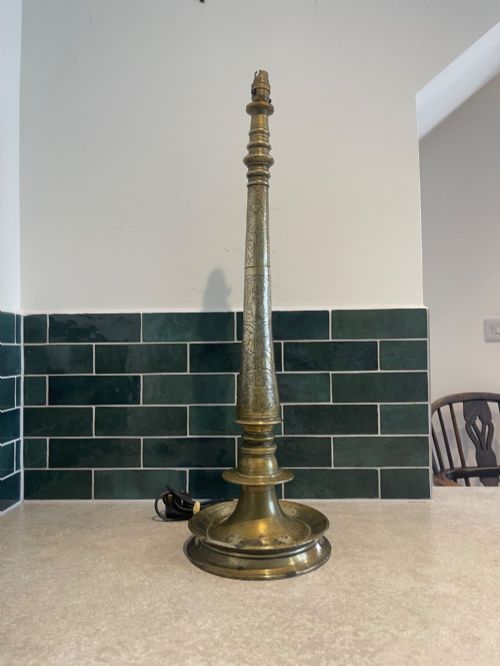
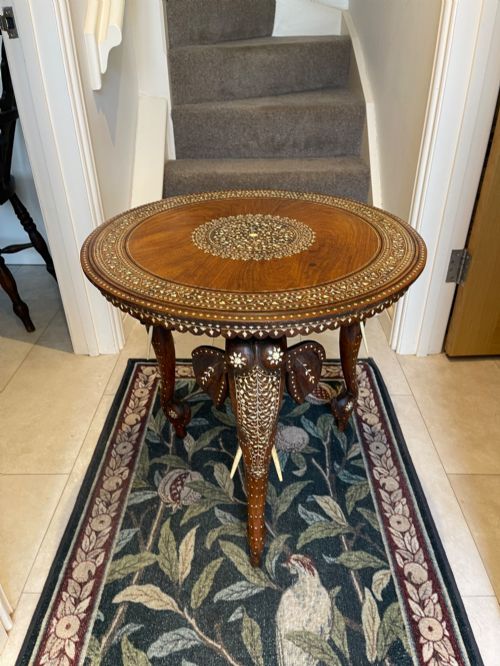
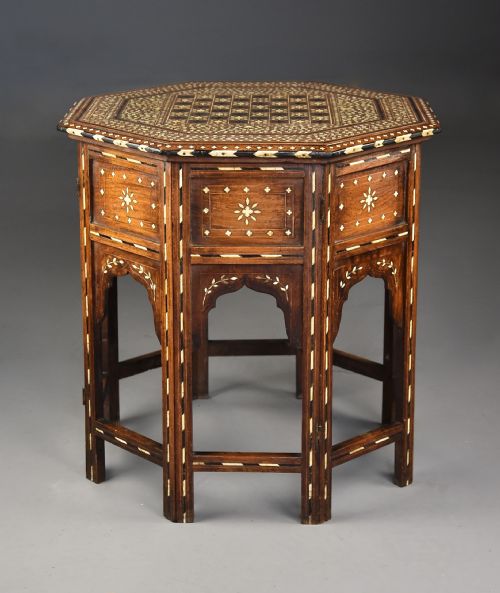
Surface ornamentation often incorporated contrasting materials such as brass inlay, bone, and bone inlay set directly into the wood grain. Specific pieces integrated painted wooden elements or specialised specimen wood assemblies to enhance the visual texture.
Listings feature items spanning the seventeenth through the early twentieth centuries, incorporating Victorian and specific colonial periods.
What Varies in Quality
The crispness and depth of the hand carving separate standard production from superior examples, where intricate foliate, animal, or geometric motifs display distinct three-dimensional layering. Finer items maintain structural integrity despite the natural movement of dense timber over time.
The integration of secondary materials like brass wire inlay and bone components demonstrates the precision of the artisan. Superior pieces exhibit balanced proportions across complex forms such as octagonal folding frames and pedestal bases.
The Colonial Carved Table Glossary
- Anglo-Indian
- Furniture made in India during the British period, combining British furniture forms with local Indian carving techniques and motifs. These pieces often feature dense foliate patterns.
- Padauk
- A heavy tropical hardwood frequently utilised in nineteenth-century colonial furniture production. It possesses a deep reddish-brown tone and accepts intricate relief carving.
- Hoshiarpur
- A town in Punjab renowned for intricate woodwork involving delicate inlay work. Tables from this region typically display dense geometric patterns formed from brass and bone.
- Teapoy
- A small table traditionally used for holding tea equipment or serving beverages. In colonial contexts, these items often feature elaborate carved decoration and compartmented interiors.
- Tripod Table
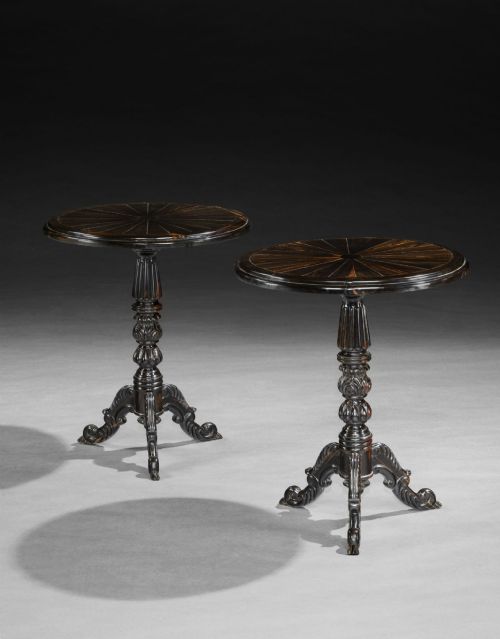
- A small freestanding table supported by a pillar above three legs. This form appeared frequently in nineteenth-century Ceylonese and Indian production.
Colonial Carved Table: Frequently Asked Questions
How do I identify an Anglo-Indian table?
Anglo-Indian tables combine familiar European furniture silhouettes with dense, hand-carved regional motifs executed in tropical hardwoods. Look for deep relief carvings depicting foliage, animals, or geometric patterns characteristic of workshops in regions like Hoshiarpur or Bengal.
Material choices provide further confirmation, as these pieces frequently employ teak, padauk, or rosewood. Many examples also incorporate contrasting brass or bone inlay directly into the wooden surfaces.
Where were these tables used originally?
These tables served formal and domestic functions within colonial households, administrative bungalows, and merchants' residences abroad. Smaller occasional tables and teapoys moved easily for entertaining, while larger partner desks and centre tables anchored main rooms.
Owners utilised console tables and side tables along hallways and reception spaces to display decorative objects or lamps. Their portability also suited the transient lifestyles of officials and traders.
How should I care for a colonial hardwood table?
Maintain stable indoor humidity levels to prevent the dense tropical hardwoods from drying out and splitting over time. Avoid placing the furniture near direct heat sources or in strong sunlight that could fade the timber polish.
Dust the intricate carved recesses regularly using a soft brush rather than a cloth that might snag on delicate pierced work. Apply a light application of appropriate wax polish periodically to nourish the wood surface.
What distinguishes Ceylonese tables from Indian ones?
Ceylonese furniture production frequently makes use of distinctive native timbers such as ebony and varied specimen woods. These tables often emphasise smooth contrasting wood grains alongside carved elements.
Indian production tends to feature more pervasive overall relief carving across the entire surface of the piece. Regional workshops also utilised specific inlay materials like bone and brass wire in particular geometric arrangements.