
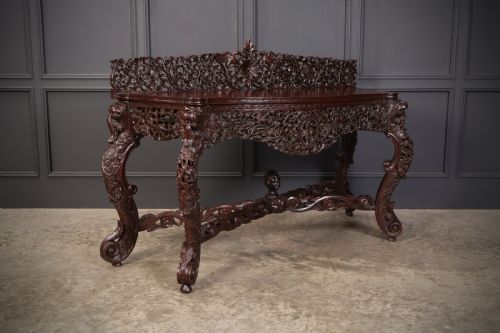


Padauk Side Table
These padauk side table pieces offer deep red timber surfaces shaped across nineteenth-century colonial workshops.
Padauk Side Table
A padauk side table brings together dense tropical hardwood and distinct regional carving traditions spanning the nineteenth century. Buyers seek these forms for their robust structure and rich reddish timber tones that darken naturally over time.
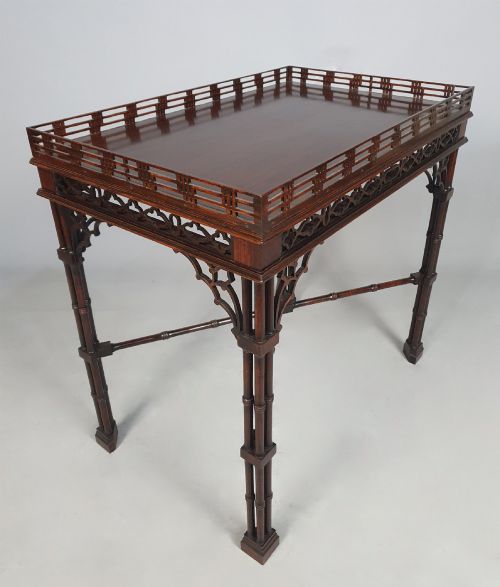
The selections available here lean heavily toward Anglo-Indian and Burmese colonial production, alongside Chinese export and Gothic Revival examples. Common formats include rectangular side tables, folding tables, occasional tables, consoles, and small multi-tiered buffets.
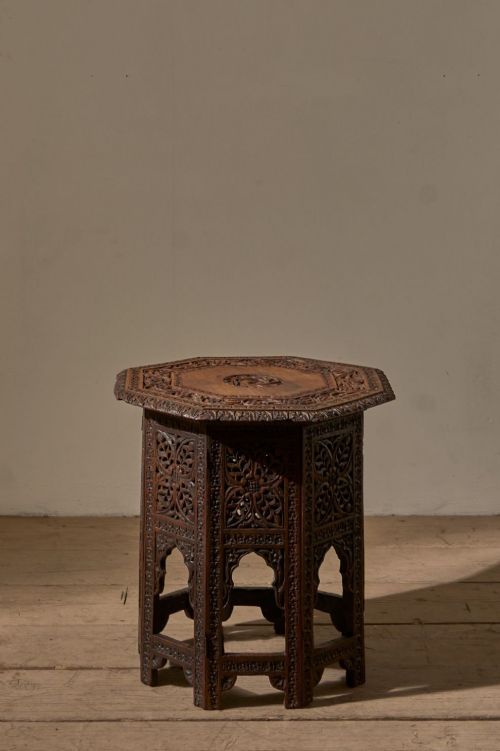
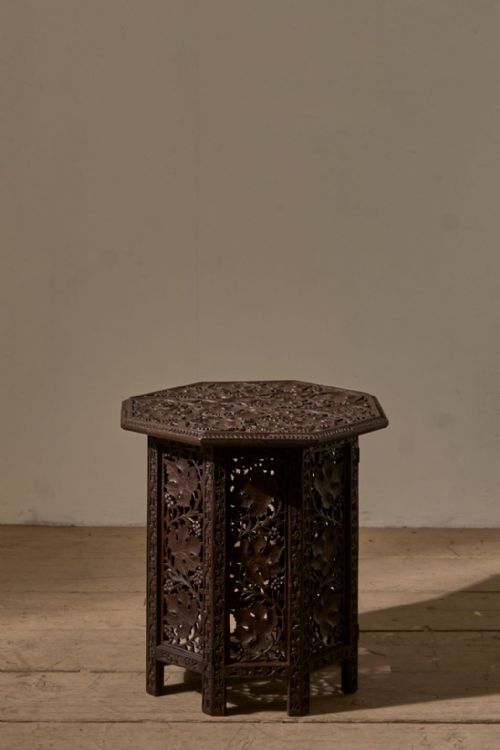
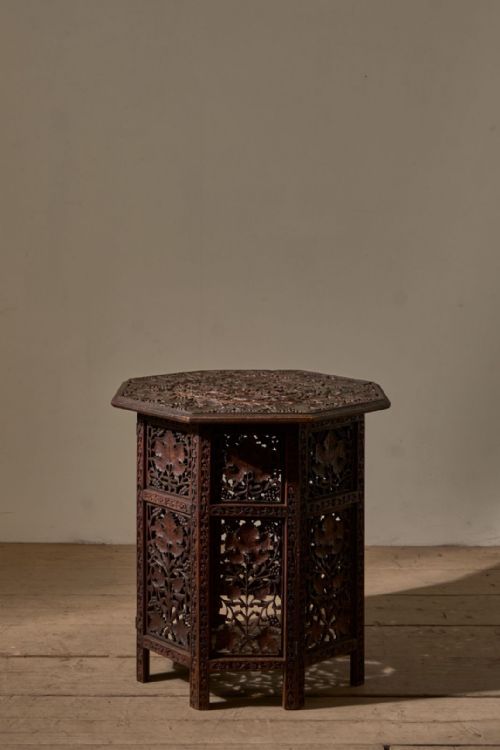
Many specimens feature elaborate leaf or dragon carvings across the aprons and bases, while others rely on cleaner lines with marble inserts or brass fittings. Each piece reflects the global reach of nineteenth-century cabinet-making using durable exotic timbers.
Materials and construction
Makers utilised padauk wood and dense hardwoods known for their resistance to humidity and insect attack. This heavy timber allowed artisans to carve deep, crisp relief patterns without fracturing the structural integrity of the frame.
Construction methods combine traditional British joinery techniques with regional carving labour located in India, Burma, and China. Auxiliary materials appear selectively, including marble table tops, bone inlay details, and brass hardware components.
Padauk Side Table Retail Price Guide 2026
Typical asking prices for padauk side table among the pieces listed under this phrase on Sellingantiques today, from the lower quarter to the upper quarter. They describe what is for sale here now, not the wider market.
Several tables fold away entirely flat, proving that nineteenth-century travellers appreciated flat-pack furniture just as much as modern buyers do.
Assessing quality and execution
Quality rests primarily on the depth and crispness of the hand carving across the timber surface. Superior examples display sharp undercutting and well-proportioned motifs, whereas lesser pieces show shallow, hurried execution with soft edges.
The choice of secondary materials and structural stability also separate tiers of production. Fully integrated folding mechanisms, sound marble tops, and uniform timber grain distinguish the finest workshop output from standard utility items.
The Padauk Side Table Glossary
- Padauk
- A dense tropical hardwood displaying a distinctive reddish-orange hue that oxidises to a deep brown over decades. It forms the primary structural material for these colonial tables.
- Anglo-Indian
- Furniture made in India during the British colonial period, typically combining British furniture forms with local carving styles. These pieces often incorporate rich foliage and animal motifs.
- Gothic Revival
- An architectural and decorative style popular in the nineteenth century, drawing inspiration from medieval forms. Tables in this style incorporate pointed arches, trefoils, and heavy structural mouldings.
- Occasional table
- A small, movable table designed for specific, temporary uses within a room. The listings include collapsible and folding variants suited for flexible interior placement.
Padauk Side Table: Frequently Asked Questions
How do I date a padauk side table?
Dating relies on examining construction marks, timber ageing, and stylistic conventions recorded across nineteenth-century production. Most items trace back to specific decades between eighteen-fifty and eighteen-ninety.
Changes in carving depth and hardware integration help narrow the timeline when combined with known colonial trade patterns and regional workshop habits.
How do I care for padauk wood?
Maintain padauk furniture by keeping it away from direct heat sources and strong sunlight, which can alter the rich reddish timber tone. Dust regularly with a dry cloth.
Avoid heavy liquid polishes or silicone sprays that trap moisture. A light application of natural wax preserves the porous surface without dulling the grain.
Are folding padauk tables sturdy?
Colonial folding and collapsible tables use clever interlocking hinges and pivot mechanisms designed for transport without sacrificing stability. Properly aligned joints lock firmly into position.
Inspect the pivot points and wooden pins for wear to ensure the frame remains secure during everyday use.
What styles are common in these tables?
The dominant aesthetics encompass Anglo-Indian, Burmese, and Chinese export design vocabularies alongside occasional Gothic Revival interpretations. Each style brings specific carving motifs, from dense leaf arrangements to mythological dragons.
Understanding these regional styles clarifies where and how a particular table was constructed during the nineteenth century.