





Chippendale Silver Table
A chippendale silver table brings the refined proportion and carved detail of the eighteenth century directly to your sitting room.
Chippendale Silver Table
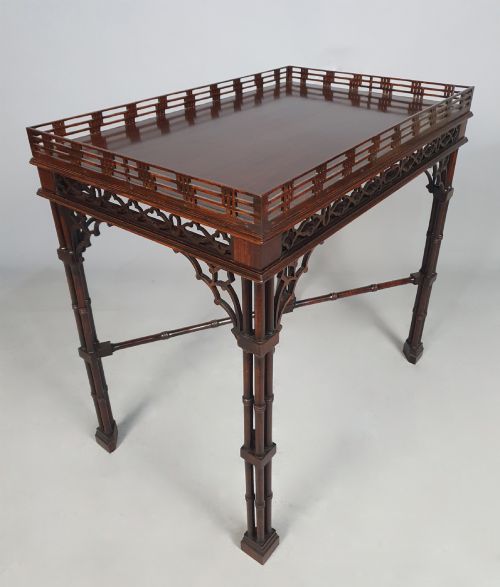
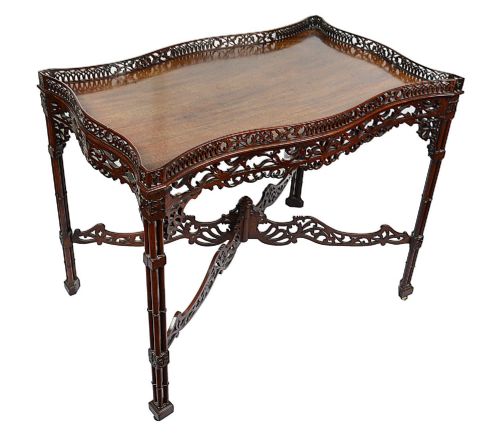
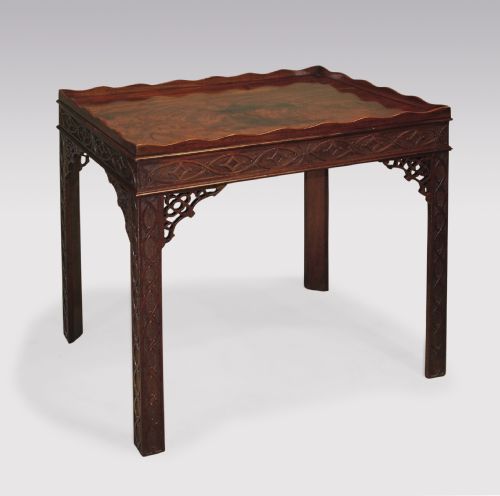
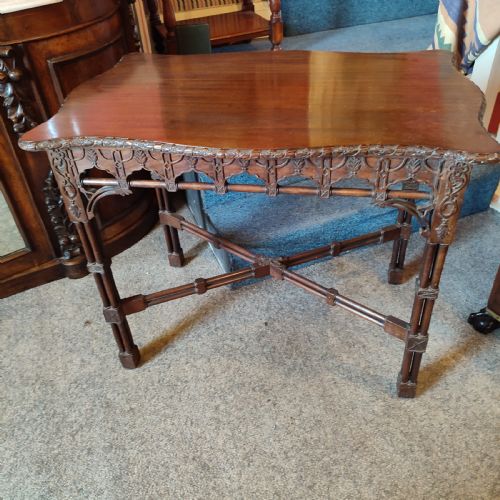
A chippendale silver table is a distinct form of small display or serving furniture, found across periods from the eighteenth century into the twentieth century. These pieces appear as side tables, occasional tables, and centre tables, designed originally for the display or handling of silver and tea wares. You will encounter both authentic Georgian examples and later revival interpretations.
The material palette of these tables relies heavily on rich timbers, with mahogany dominating alongside walnut, padauk, and black lacquer. Makers constructed them to stand centrally in a room or against a wall, frequently utilising tilt-top mechanisms or raised gallery edges to secure items. The forms span straightforward George III designs up to elaborate Chinese Chippendale and Gothic revival reinterpretations.
On this page, the selection ranges from mid-eighteenth century originals to late Victorian and Edwardian revival pieces. You meet side tables and occasional tables built in the classic manner, alongside related forms such as cutlery chests. Each piece demonstrates the enduring influence of Chippendale proportion across consecutive centuries of cabinet making.
Materials and Construction
Cabinet makers relied primarily on solid and veneered mahogany, selected for its grain and structural stability, supplemented by dense padauk and figured walnut. Black lacquer surfaces also appear, offering an alternative finish suited to specific revival tastes. These timbers were shaped into slender legs, galleried tops, and carved friezes.
Joinery techniques define the period, employing traditional mortise and tenon joints to bear the weight of heavy display items. Carving is executed directly into the solid wood of the knees and friezes, displaying motifs such as fretwork and gadrooning. Brass hardware, where present, secures hinges and tilt mechanisms.
Chippendale Silver Table Retail Price Guide 2026
Typical asking prices for chippendale silver table among the pieces listed under this phrase on Sellingantiques today, from the lower quarter to the upper quarter. They describe what is for sale here now, not the wider market.
Revival pieces on the site date primarily from the Victorian and Edwardian eras, mirroring earlier Georgian and Chippendale styles.
Assessing Quality
Quality rests upon the crispness of the timber carving and the fidelity of the proportions. Superior pieces display deep, hand-carved detail in the mahogany rather than shallow or mechanical pressing. The selection of timber grain, particularly in the top surfaces, signals the maker's intent and expenditure on materials.
Structural integrity and originality of components dictate the standing of a piece. Tables retaining their original raised gallery edges, timber surfaces, and internal framing command greater respect among collectors. Later revival pieces vary according to how closely they adhere to the cabinet making standards of the Georgian originals.
Elkington & Co·Walker & Hall
The Chippendale Silver Table Glossary
- Chippendale
- A style of English furniture originating in the mid-eighteenth century, taking inspiration from the designs of Thomas Chippendale. It incorporates Rococo, Gothic, and Chinese motifs.
- Silver table
- A specific table form designed for the display or serving of silver tea services and related wares. These tables typically feature a raised edge or gallery to prevent items from sliding.
- Gallery
- A raised wooden or pierced metal rim surrounding the top of a table. It serves to secure the display objects placed upon the surface.
- Padauk
- A dense, heavy tropical hardwood prized for its reddish-brown colour and durability. Cabinet makers utilised it for high-status furniture.
- Gothic revival
- An architectural and decorative style drawing on medieval forms. In furniture, this manifests in pointed arches, trefoils, and tracery carving.
Chippendale Silver Table: Frequently Asked Questions
What was a silver table used for?
These tables served as surface furniture in wealthy households for holding silver tea services, display items, or presentation pieces. Their raised edges kept valuable wares secure during social gatherings.
Over time, their usage shifted towards general display and occasional use within reception rooms and parlours, adapting to changing domestic habits.
How do I tell an original Georgian piece from a revival?
Original eighteenth-century pieces display the tool marks, timber shrinkage, and structural wear consistent with extended age and hand production. The joinery and secondary woods match the period of manufacture.
Revival pieces from the Victorian and Edwardian eras often show uniform machine processing, different secondary timbers, and styling that interprets rather than replicates eighteenth-century norms.
Where should I place a silver table in my home?
Because many of these tables are finished on all sides for central placement, they sit well as centre tables in a drawing room or study. Alternatively, side table formats fit neatly against walls or beneath windows.
Ensure the piece rests out of direct sunlight to protect antique mahogany, walnut, and lacquer finishes from fading or drying out.
What is Chinese Chippendale style?
This style combines eighteenth-century British furniture forms with Chinese decorative motifs, including intricate fretwork galleries, pagoda-like silhouettes, and square legs.
Cabinet makers utilised these exotic elements to project sophistication and align with contemporary tastes for imported Asian aesthetics.