
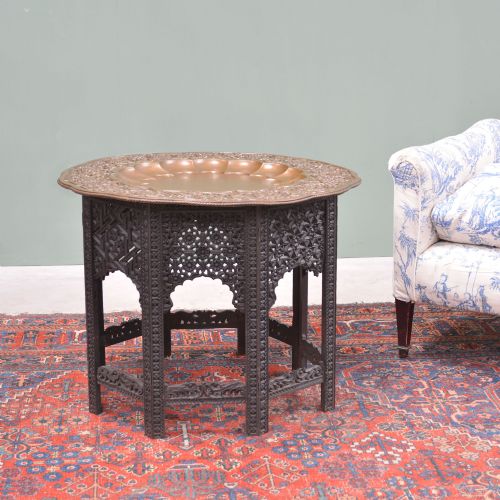
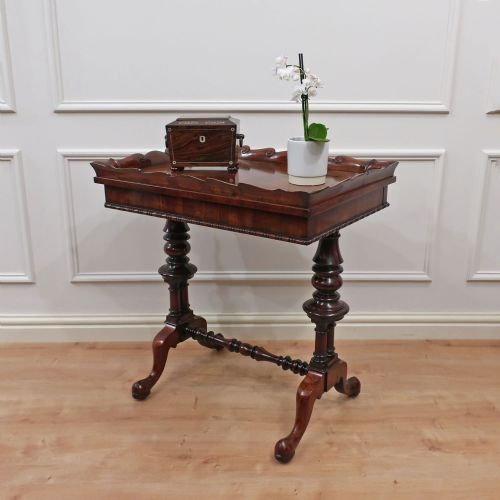
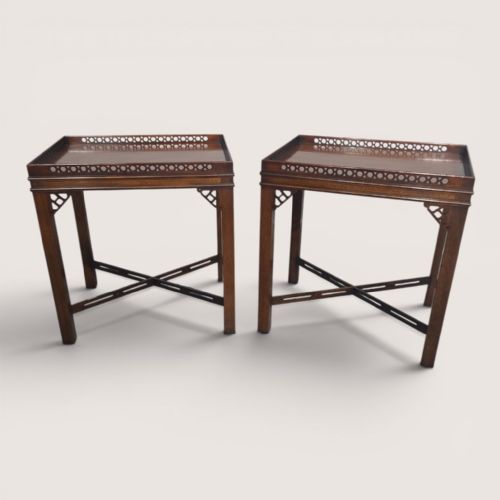
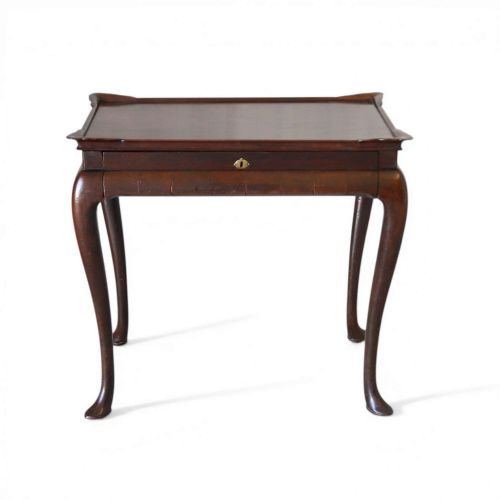

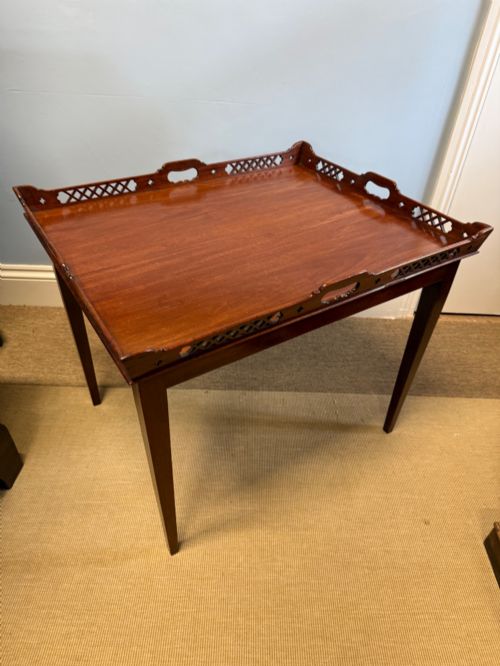


Tray Top Occasional Table
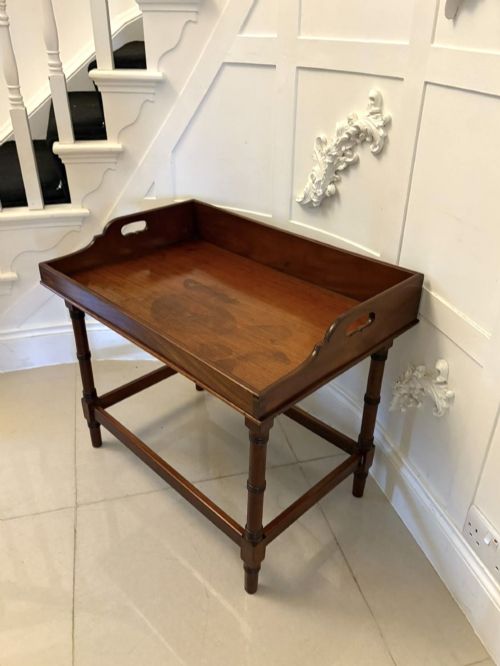
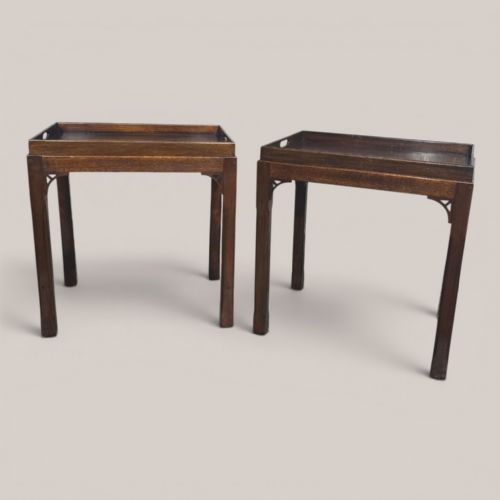
A tray top occasional table brings a raised gallery edge to a portable surface, holding small objects securely while serving tea or displaying silver.
Tray Top Occasional Table
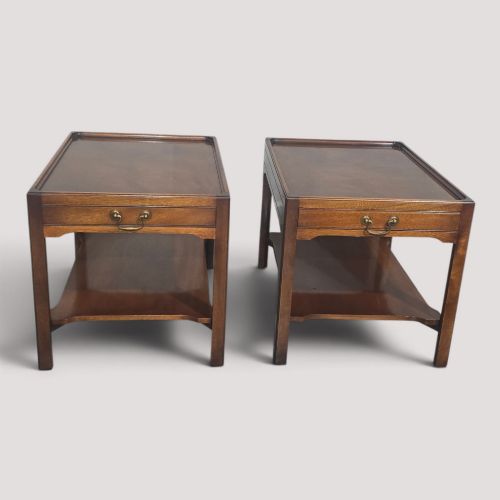
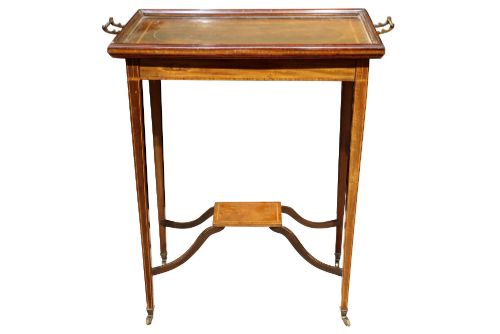
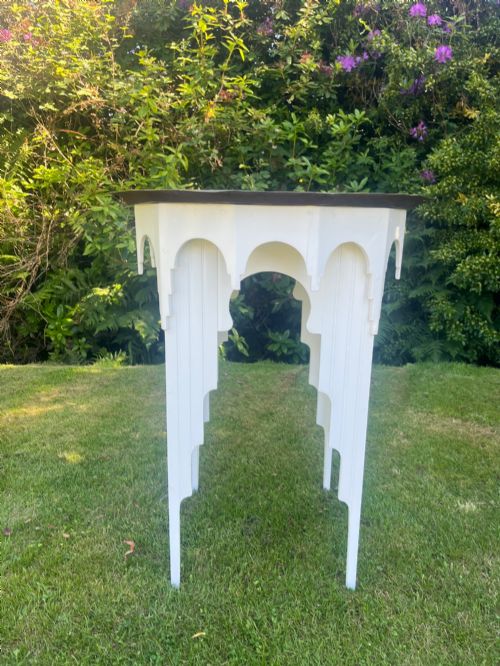
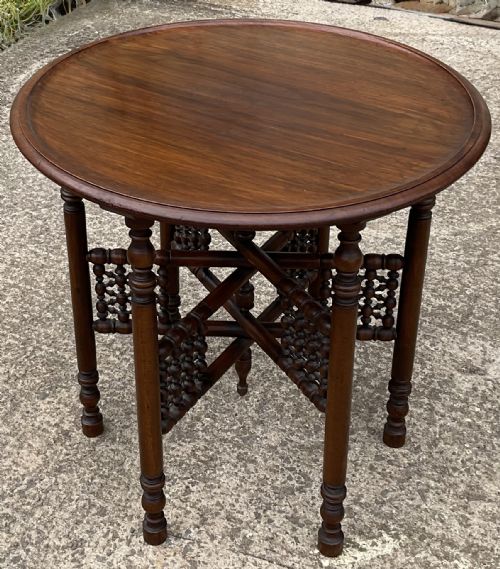
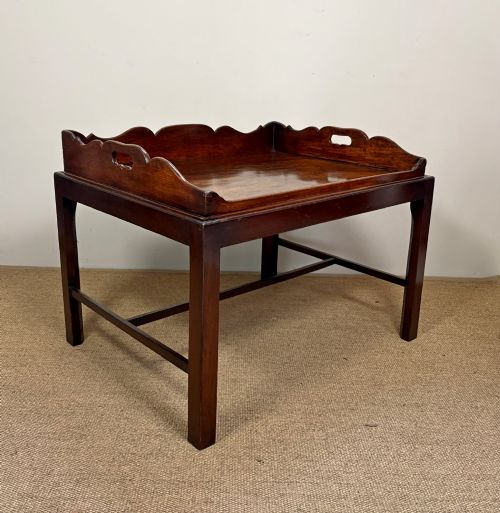
A tray top occasional table combines a raised rim with a portable stand, appearing in forms such as lamp tables, silver tables, and butlers' trays on folding supports. These pieces emerge across the eighteenth, nineteenth, and early twentieth centuries in styles spanning Georgian, Regency, Edwardian, and Anglo-Indian designs.
Mahogany forms the primary timber across the selection, accompanied by walnut, rosewood, teak, and satinwood. Certain examples utilise brass and copper trays mounted on stands, while papier-mâché surfaces appear in Regency productions.
Buyers frequently encounter Edwardian inlaid versions and nineteenth-century mahogany interpretations alongside earlier George III prototypes. These tables function as side furniture, coffee surfaces, and bedside stands within domestic rooms.
Materials and construction
Cabinetmakers utilised solid mahogany, burr walnut, and rosewood, often shaping raised rims directly from solid timber or joining moulded galleries to table tops with dowels and glue. Inlaid Edwardian examples incorporate contrasting satinwood and exotic wood stringing.
Metal versions employ engraved copper and brass trays set onto folding wooden bases or metal frames. Papier-mâché trays utilise layered paper pulp pressed in moulds, finished with lacquer and paint, then mounted on collapsible or fixed stands.
Certain nineteenth-century papier-mâché trays feature inlaid mother-of-pearl that shimmers beneath tea sets, proving Victorians loved theatrical practicality.
Assessing quality and execution
The refinement of the tray rim dictates the grade of the piece, distinguishing cleanly carved mouldings and dovetail joints from simpler applied strips. Superior items display matching timber grain across the tray base and support.
Attribution to documented workshops elevates certain examples, particularly where turned columns, crisp carving, and substantial brass or copper engraving demonstrate skilled craftsmanship.
Gillows·Zwiener
The Tray Top Occasional Table Glossary
- Tray top
- A table top finished with a raised moulded or pierced gallery edge designed to prevent items from sliding off. This feature appears on silver tables and lamp stands.
- Silver table
- A rectangular occasional table with a raised edge, historically utilised for serving tea or displaying silver pieces in reception rooms.
- Butlers tray
- A removable wooden tray with hinged or cutout handles, resting upon a separate folding X-frame stand. These pieces originated for domestic service use.
- Tripod table
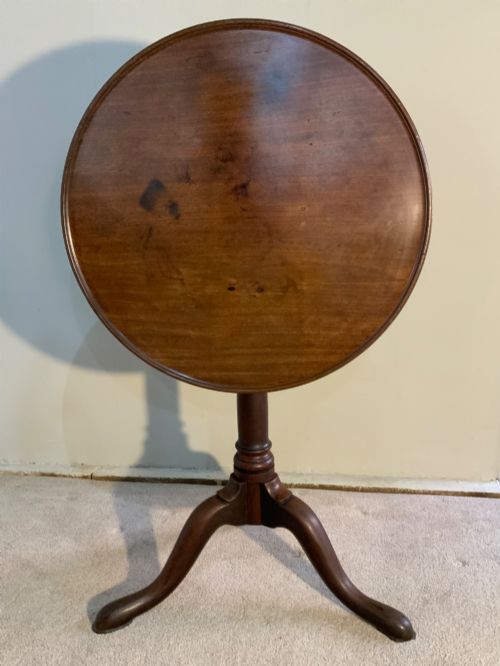
- A small round table supported by a central pillar above three splayed legs. Many examples incorporate a tilt-top mechanism alongside a tray edge.
- Gallery
- A raised ornamental border surrounding the perimeter of a tabletop or tray. Galleries can be pierced from solid wood or constructed from turned spindles.
Tray Top Occasional Table: Frequently Asked Questions
How were tray top occasional tables used?
These pieces functioned primarily for serving afternoon tea, holding writing materials, or displaying silver presentation items in formal rooms. The raised rim ensured cups and vessels remained secure when moved.
Over time, owners repurposed them as bedside stands, lamp tables, and small coffee surfaces within drawing rooms and libraries. Their portable nature allowed servants to carry the tray separately from the folding base.
How do I identify a Georgian tray top table?
Georgian examples typically feature dense Cuban mahogany, hand-cut dovetails, and crisp solid-timber mouldings around the tray edge. Cabriole legs with pad feet or straight legs with bracket corners often mark this period.
Later nineteenth-century and Edwardian revivals frequently incorporate machine-cut veneers, satinwood stringing, or lighter secondary timbers beneath the polished surface.
Are brass and copper tray tables antique?
Late nineteenth and early twentieth-century workshops produced numerous metal tray tables, influenced by Arts and Crafts ideals and Anglo-Indian imports. These feature hand-hammered or engraved copper and brass trays set onto folding wooden stands.
Italian Art Nouveau and Moorish revival pieces from the 1920s also utilise metal trays with intricate geometric or floral engraving mounted on collapsible wooden bases.
Where should I place a tray top table?
These tables suit placement beside sofas and armchairs where the raised rim provides a secure surface for cups, books, and small lamps. Their compact footprints allow them to fit into narrow alcoves and hallways.
Avoid positioning them in direct sunlight or beside active heat sources, as older mahogany and walnut timbers respond to environmental changes by shrinking or splitting.