

Vintage Tray Table
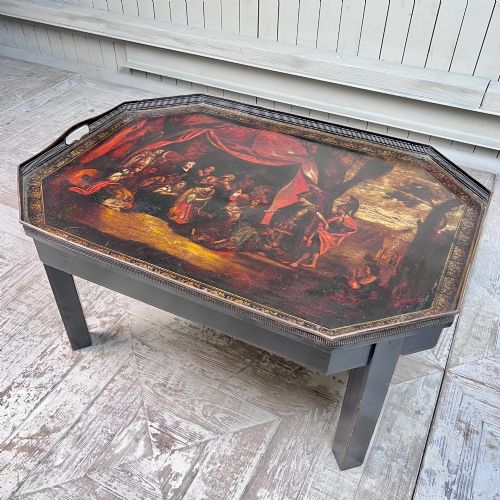
A vintage tray table offers a portable surface rooted in historic utility, combining a removable serving tray with a folding or fixed wooden stand.
Vintage Tray Table
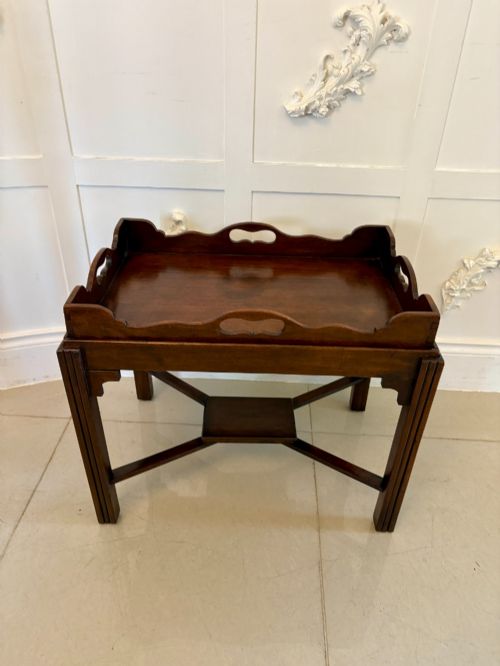
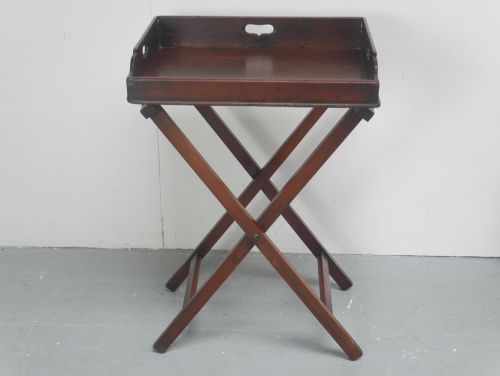
When you search for a vintage tray table, you are looking at practical furniture designed for mobility and service, spanning the Georgian period through the early twentieth century. These pieces typically combine a flat timber tray top, often featuring raised edges or cutout handles, with a supporting stand that may be folding or rigid.
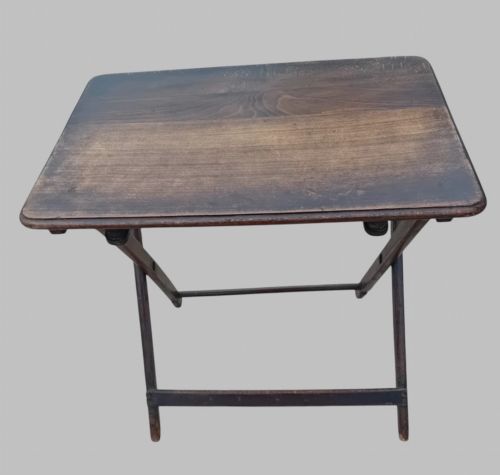
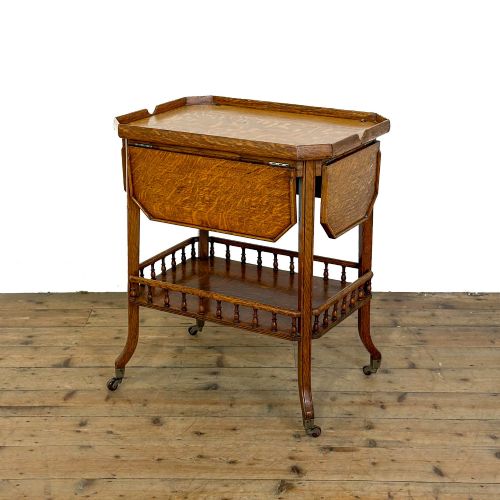
On this page, the versions you are most likely to meet originate from the nineteenth and early twentieth centuries, constructed in oak or mahogany. Many take the form of butler's trays or folding campaign styles, reflecting utilitarian origins repurposed for domestic sitting rooms and bedrooms.
How they were made
Makers utilised solid timbers such as mahogany and oak, frequently employing traditional joinery like dovetailing for tray corners and hinged or X-frame folding mechanisms for the stands. The structural integrity relies on the grain orientation and seasoning of the wood to endure repeated folding and weight.
Surface finishes involved hand-applied French polish, wax, or oil to protect the timber while highlighting natural grain patterns. Metal elements like brass hinges, corner brackets, and carrying handles were integrated using flush screws to maintain a clean profile.
Listings feature woods like mahogany and oak alongside occasional brass hardware and folding stands originating from the Georgian period onward.
What varies in quality
The standard of timber selection and joinery determines the grade of a piece, distinguishing robust workshop construction from simpler utility items. Fine examples exhibit carefully matched wood grains across the tray base and tightly fitted joints on the folding stand.
Originality of hardware and stands separates preserved historic examples from later married pieces or replacements. Subtle details in hand-cut handles, patination, and the crispness of moulded edges indicate skilled cabinet-making.
William Neale·William Hutton & Sons·Mappin & Webb
The Vintage Tray Table Glossary
- Campaign style
- Portable furniture engineered with folding stands and brass hardware for easy transport during military operations or travel. This design prioritises modular practicality.
- Tray top
- A table top finished with a raised rim or gallery to prevent items from sliding off. This feature is common on serving tables and specific occasional tables.
- Trolley
- A tiered serving cart mounted on wheels or castors for moving dishes and beverages between rooms. These usually include multiple shelves or trays.
- Mahogany
- A durable, reddish-brown tropical hardwood favoured by cabinet-makers for its stability and fine grain. It accepts carving and polishing exceptionally well.
- Oak
- A sturdy domestic timber characterised by distinct grain markings and high durability. It forms the basis of many traditional English serving stands and butler's trays.
Vintage Tray Table: Frequently Asked Questions
What is a butler's tray table?
A butler's tray table consists of a removable wooden tray resting upon a separate folding or rigid stand. The tray design incorporates raised edges and side handles for carrying.
Historically utilised by domestic staff for serving meals, these pieces function today as versatile coffee tables or side tables in residential settings.
How do I care for wood surfaces?
Protect antique wood surfaces by applying natural beeswax periodically and avoiding placement near direct heat sources or strong sunlight. Use coasters to prevent moisture marks on the polished timber.
Dust regularly with a soft, dry cloth rather than using silicone-based sprays, which can build up and dull the historic finish over time.
Are the trays detachable?
Most trays on these stands lift off completely, fulfilling their original purpose as portable serving vessels. The supporting X-frame or folding base remains stationary while the tray moves.
Certain variations feature fixed tops or locking mechanisms, so examining the support structure clarifies whether the tray was intended for independent removal.
How do I date a tray table?
Dating relies on observing timber types, construction methods, and hardware styles such as brass hinges or handles. Georgian and Victorian examples display hand-cut joinery and mature patina.
Twentieth-century pieces often utilise machine-sawn components and lighter secondary timbers, reflecting industrial production methods of the Edwardian era and later decades.