
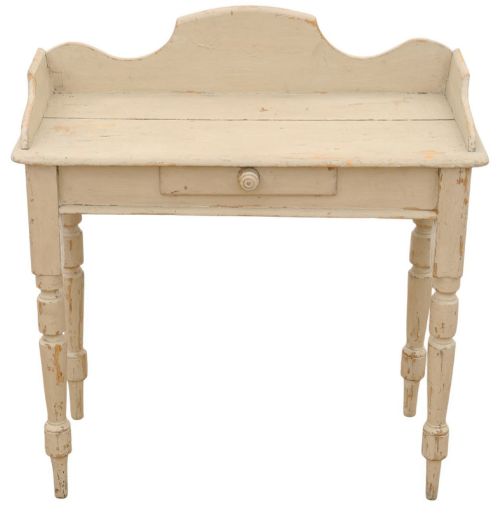
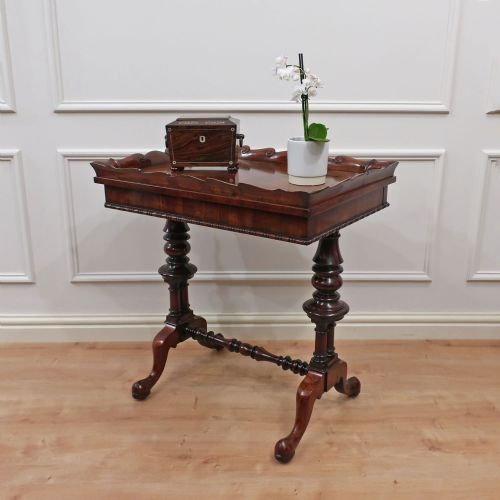

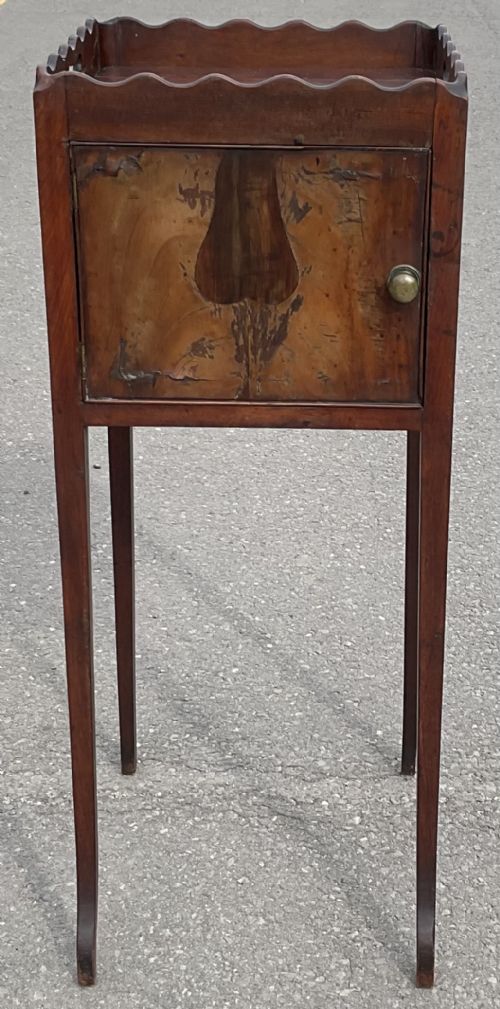


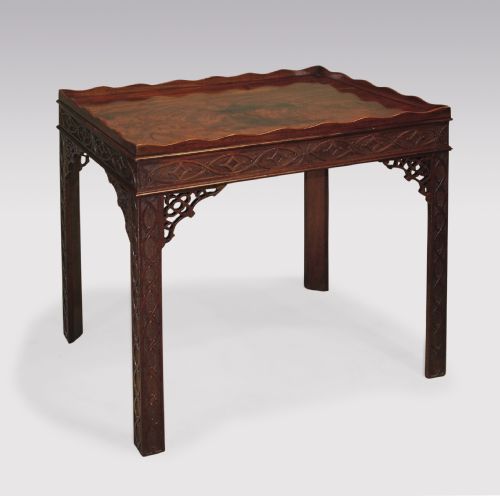

Scalloped Gallery Table
These scalloped gallery table pieces are timber side and occasional items defined by raised edges, offering both functional surface and period character.
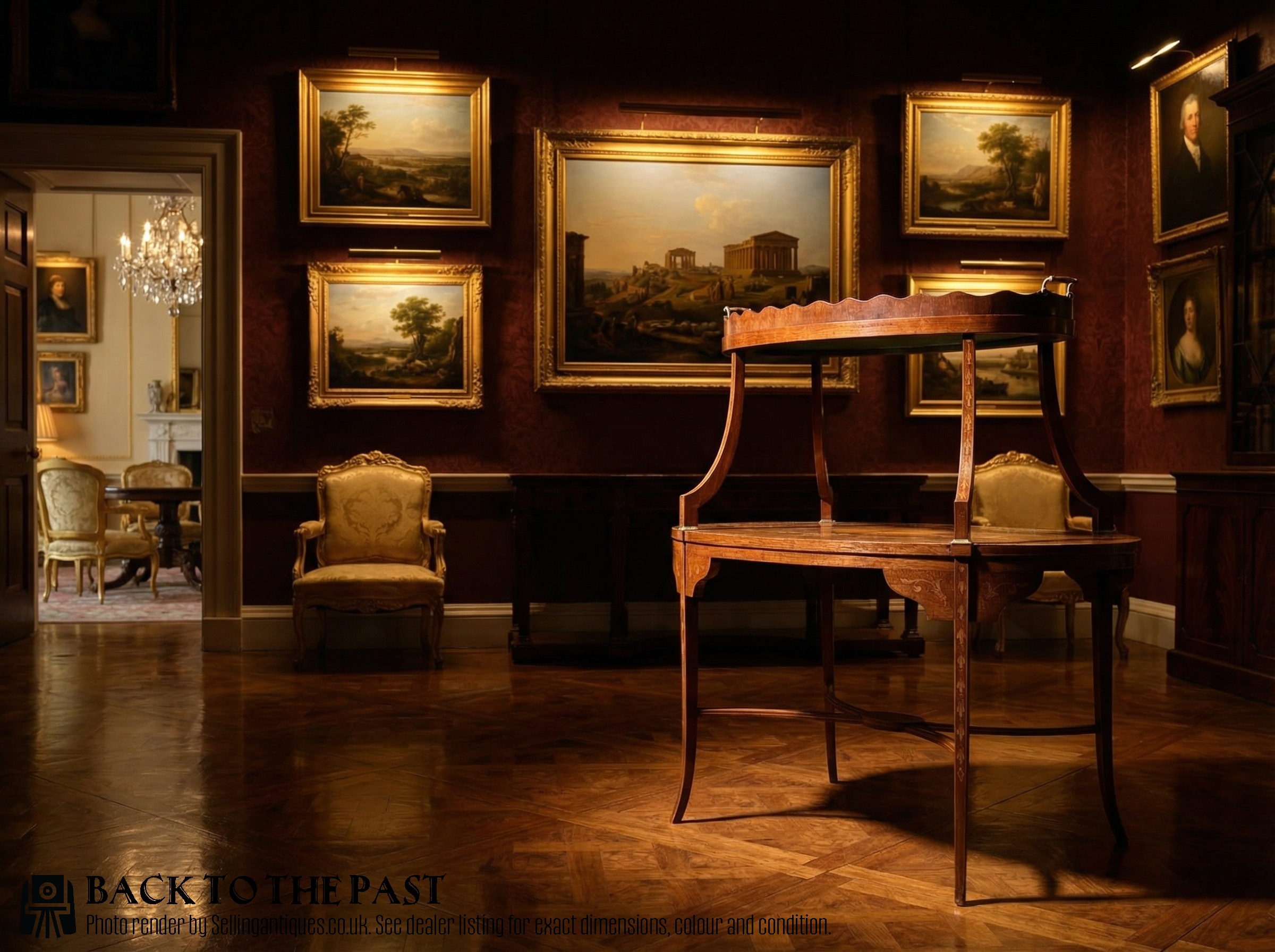
Scalloped Gallery Table
When you search for a scalloped gallery table, you encounter domestic items spanning the Georgian, Regency, Victorian, and Edwardian eras. The selection on this page runs from side tables and occasional pieces to tray tables, commodes, and writing desks.
The defining characteristic across these forms is the raised edge or gallery, often shaped with scalloping to contain objects securely. Examples include folding butler's trays, kettlestands, and wine tables executed in varied woods.

How they were made
Cabinetmakers utilised primary timbers such as mahogany, walnut, burr walnut, and satinwood, frequently pairing them with secondary pine. Wood inlay added decorative contrast to the surfaces of wine tables and occasional pieces.
Brass fittings appear as functional elements on campaign and tray furniture, while painted finishes alter the visual weight of 19th-century writing and dressing tables.
Listings span multiple eras including Georgian, Regency, Victorian, and Edwardian periods.
What varies in quality
Quality rests in the crispness of the timber selection, such as figured mahogany or rich burr walnut, and the precision of any inlay work. The execution of the shaped gallery and the joinery of the frame dictate the overall integrity of the piece.
Attribution to specific workshops like Gillows or adherence to recognised periods such as Chippendale and Sheraton Revival elevates the standing of an item within its category.
Gillows
The Scalloped Gallery Table Glossary
- Gallery
- A raised edge or border surrounding the top of a table, tray, or stand to prevent items from sliding off. It is often pierced, turned, or scalloped for decorative effect.
- Commode
- A low cabinet or chest of drawers, sometimes adapted with a fitted interior for sanitary use or general storage in period bedrooms.
- Kettlestand
- A small occasional table designed specifically to hold a tea kettle and related paraphernalia near the hearth.
- Side Table
- A domestic table placed against a wall, functioning as a surface for lamps, decorative objects, or serving.
Scalloped Gallery Table: Frequently Asked Questions
What is a scalloped gallery table?
It is a piece of antique furniture featuring a raised, shaped rim around the top surface.
These items range from small occasional and wine tables to larger side tables and desks.
How were these tables used originally?
They served multiple domestic purposes, from holding tea kettles and serving drinks to writing and dressing.
The raised edges ensured that items placed upon them remained secure during use.
Which woods are most common?
Mahogany is the predominant timber found across these pieces, alongside walnut, burr walnut, and satinwood.
Some examples also feature painted finishes or decorative wood inlay.
How do I identify the period?
Dating relies on stylistic markers associated with Georgian, Regency, Victorian, and Edwardian design.
Construction methods and timber choice further help distinguish between 18th-century and later 19th-century examples.