
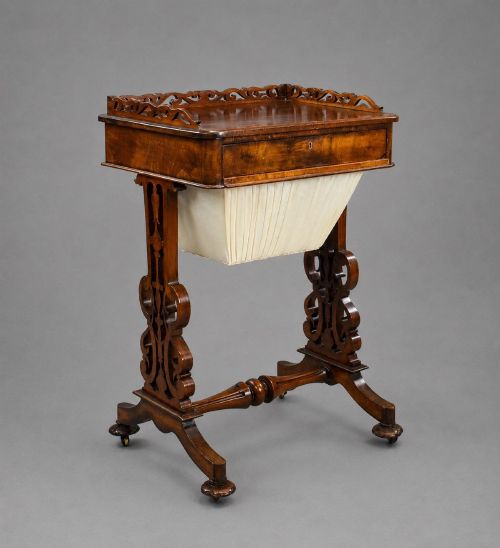
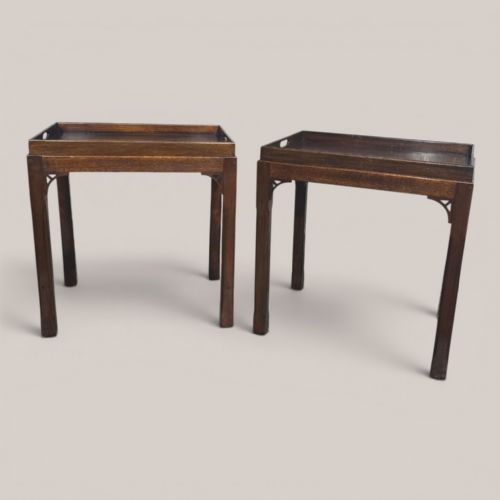
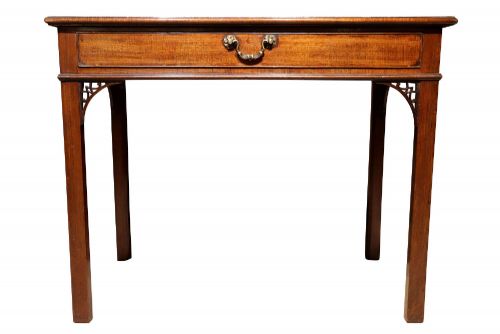
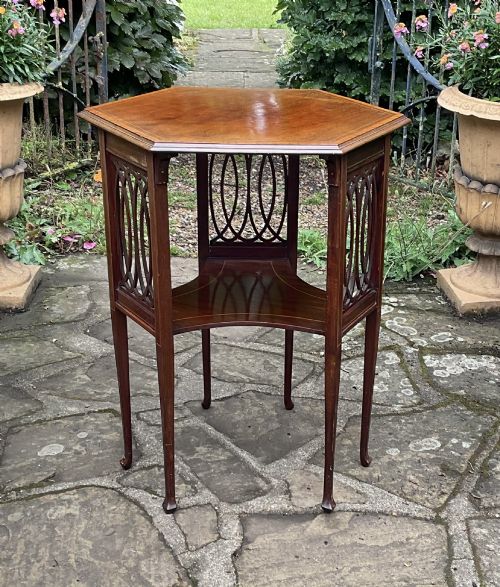
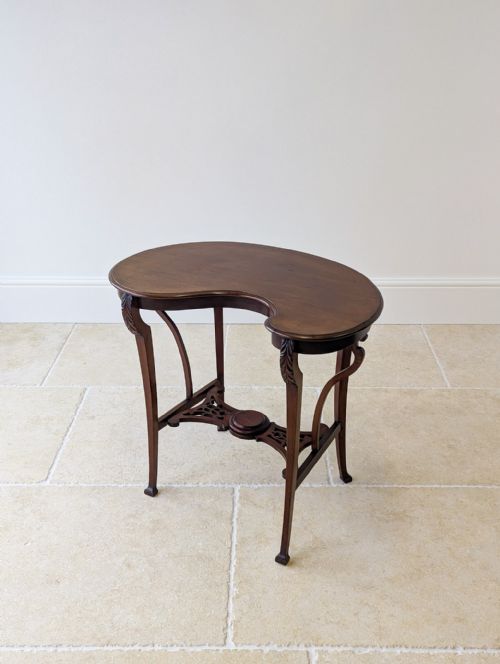
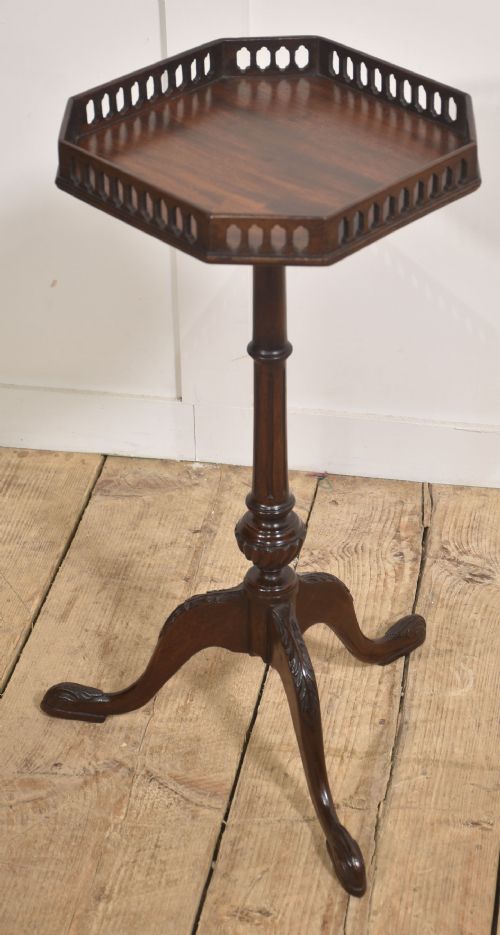
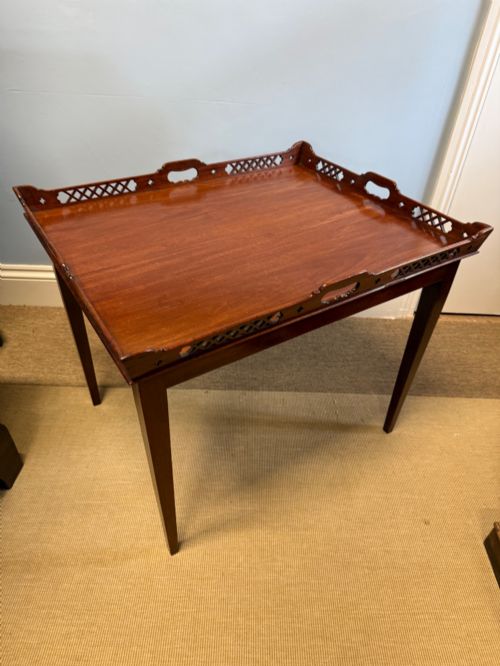

Fretwork Mahogany Table
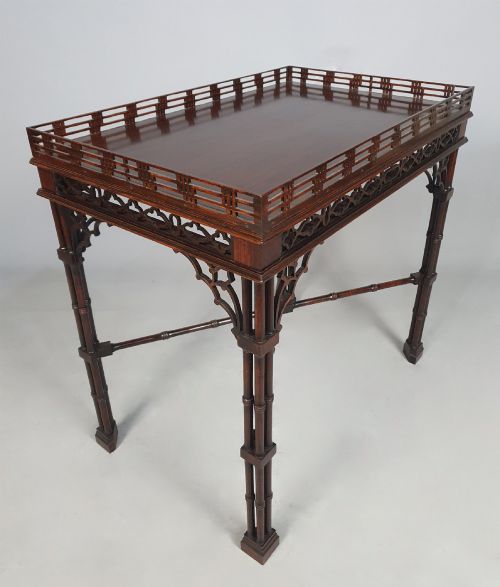
A fretwork mahogany table brings intricate open-carved bracket details and rich timber grain to a room, offering both display space and classical style.
Fretwork Mahogany Table
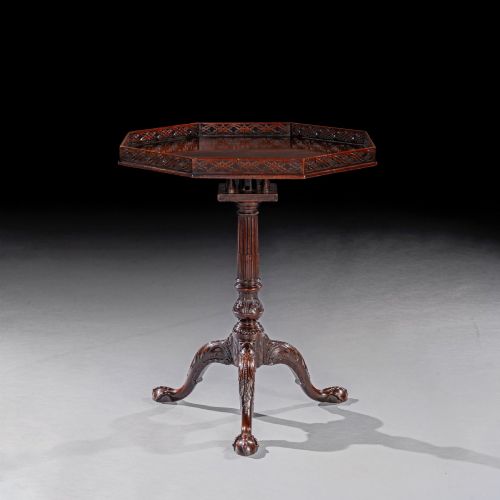
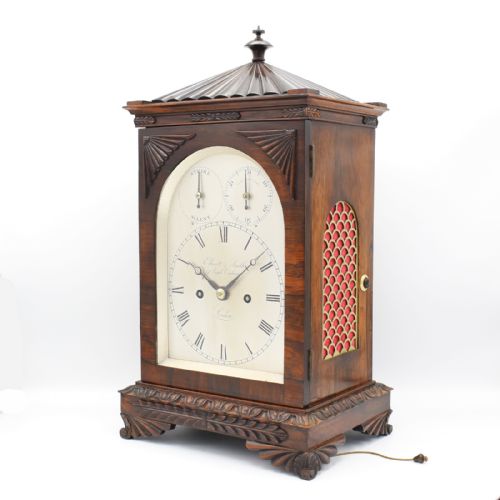
When you search for a fretwork mahogany table, you encounter forms ranging from silver tables and side tables to occasional pieces, card tables, and desks. These tables bridge utilitarian domestic use and ornamental display through pierced woodwork.
The pieces on this page span the eighteenth century through to the early twentieth century, taking in Georgian, Victorian, Edwardian, and revival eras. You will frequently meet Chippendale and Chinese Chippendale styles alongside Arts and Crafts or Gothic interpretations.
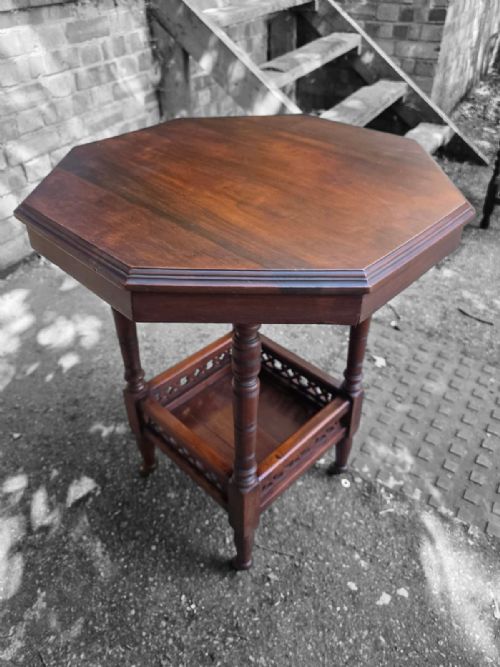
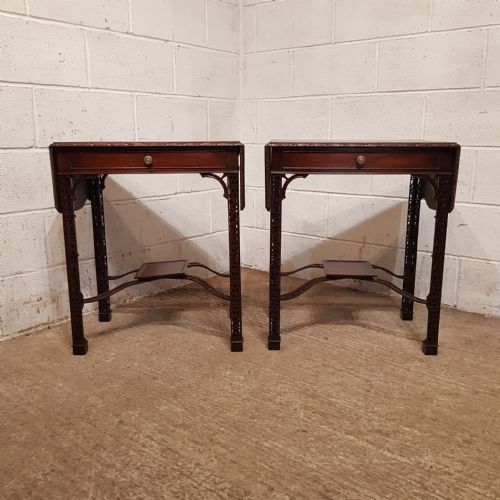
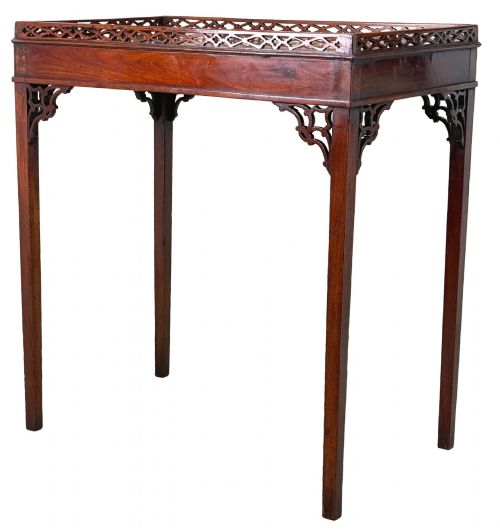
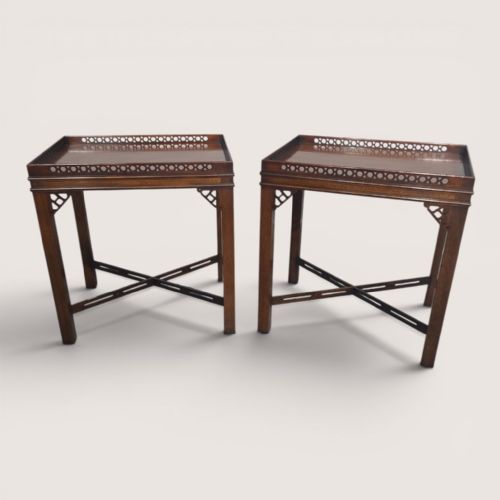
Silver tables and side tables dominate the selections, often featuring pierced brackets beneath the frieze or intricate gallery edges on the top surface. Tripod wine tables and occasional tables also appear regularly across the different periods represented.
Materials and construction
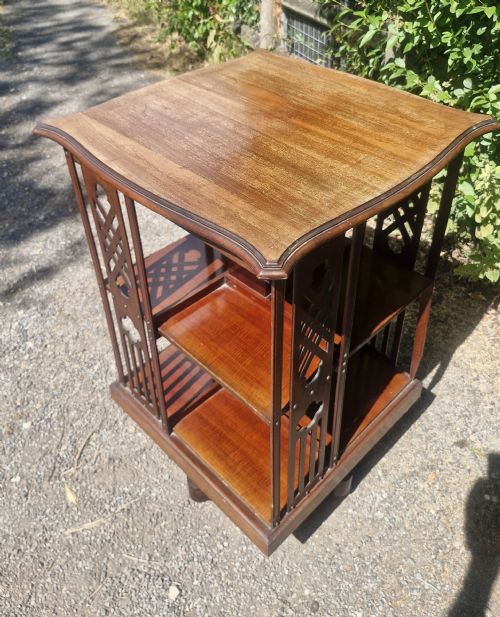
Mahogany serves as the primary timber, occasionally accompanied by padauk, while brass handles, glass tops, leather inserts, and fabric linings provide functional contrast. Joinery relies on traditional methods adapted to support open-work carved decoration without compromising structural integrity.
The defining fretwork is achieved by piercing solid mahogany or assembled panels, either through fretsaw work or delicate carving directly into the timber. This technique creates the characteristic geometric, Gothic, or Chinese-inspired patterns seen along table friezes and brackets.
Listings span from the 18th century through the Victorian and Edwardian eras, incorporating Chippendale, Gothic Revival, and Arts and Crafts styles in mahogany and padauk.
Variations in quality
Quality rests upon the crispness and depth of the pierced carving, distinguishing sharply cut geometric patterns from softer, shallower execution. The choice of timber grain also dictates distinction, with highly figured mahogany elevating an ordinary side table into a more substantial visual object.
Structural harmony separates the finest examples from standard production, particularly where delicate fretwork brackets meet slender legs. Superior pieces maintain rigidity and proportion despite heavy ornamental piercing along the frieze or gallery.
Edwards and Roberts
The Fretwork Mahogany Table Glossary
- Fretwork
- Ornamental perforated carving or pierced woodwork arranged in geometric or interlaced patterns. It is typically applied to table brackets, friezes, and galleries.
- Silver table
- A high-sided display or serving table popular in the eighteenth century and later revived. It is designed with a raised gallery edge to hold porcelain or silver tea services.
- Chippendale revival
- A late nineteenth and early twentieth century design movement replicating or reinterpreting mid eighteenth century forms. These pieces often incorporate elaborate fretwork and carved cabriole legs.
- Padauk
- A dense, heavy tropical hardwood seen in certain nineteenth century items. It possesses a distinct reddish-brown colour that darkens with age.
- Concertina action
- A mechanical frame mechanism used in expandable card tables. It extends symmetrically to support a folding top without sagging.
Fretwork Mahogany Table: Frequently Asked Questions
What is a fretwork mahogany table used for?
These tables function as display surfaces for porcelain, silver, or decorative objects, whilst smaller occasional variants serve beside seating for books or lamps. Card tables and writing desks offer specialised surfaces for leisure and correspondence.
Their decorative pierced frames ensure they act as architectural accents within a room, combining surface utility with intricate woodwork.
How do I date a fretwork mahogany table?
Dating relies on combining the construction methods, timber characteristics, and stylistic markers such as Georgian proportions or Edwardian revival detailing. Secondary woods and joinery marks provide further clues to whether a piece originates from the eighteenth century or later.
Comparing the specific fretwork patterns against documented period designs helps distinguish original Georgian examples from later nineteenth and twentieth century revivals.
Are these tables sturdy enough for daily use?
Most variants are structurally sound for normal placement, though the pierced brackets and delicate fretwork require careful handling during relocation. Occasional tables and side tables handle standard lamps and small objects easily.
Heavier forms like console tables and desks provide robust writing and display surfaces, provided the joints and timber remain stable.
How do I care for mahogany fretwork?
Dusting requires a soft brush or feather duster to reach into the pierced apertures of the fretwork without snagging delicate corners. Regular cleaning preserves the rich patina of the timber.
Avoid excessive moisture and direct sunlight to protect the polished mahogany finish and prevent the dry wood from splitting along the carved sections.