
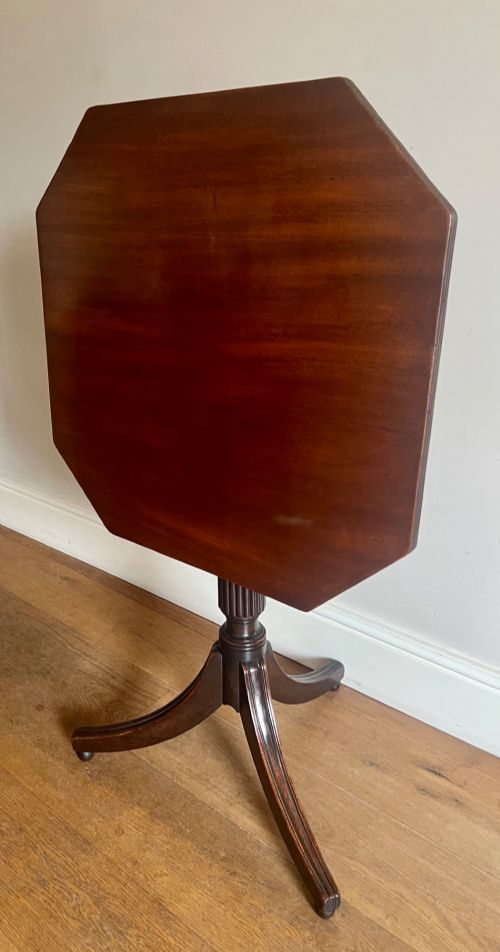
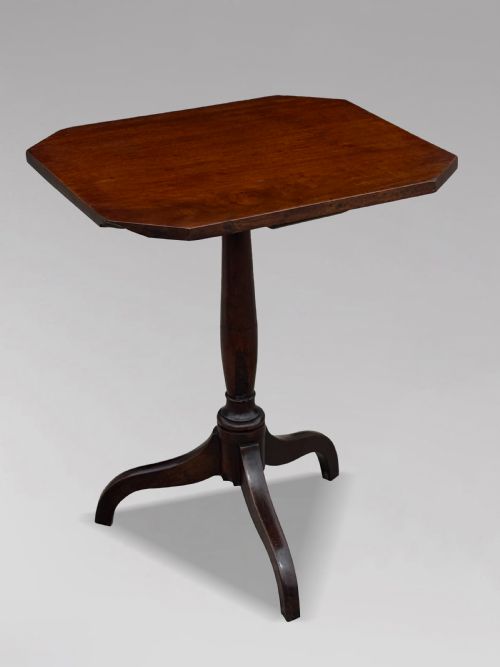
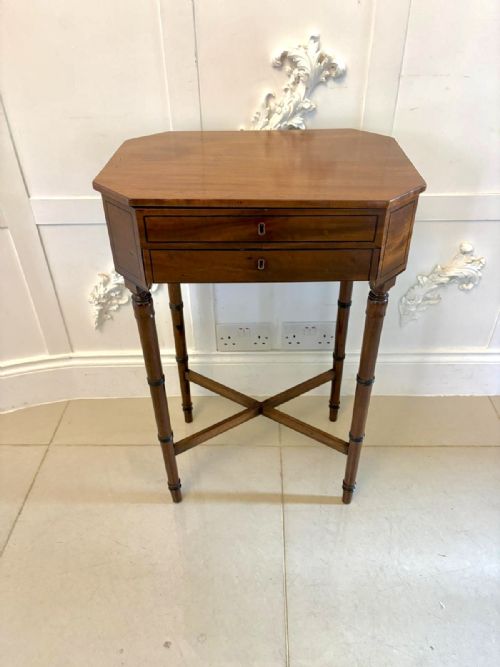


Canted Corner Side Table
These canted corner side table examples span Georgian, Regency, and Edwardian periods in mahogany, walnut, and oak.
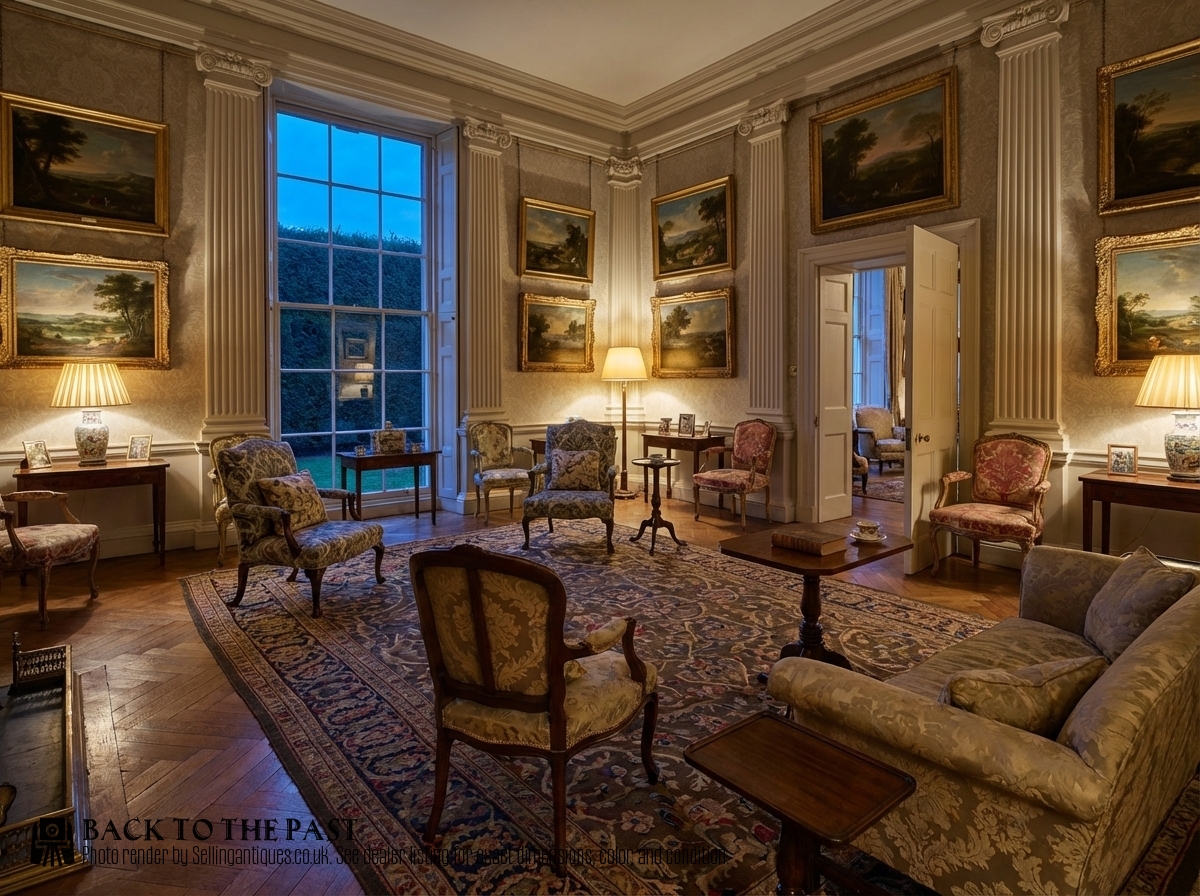
Canted Corner Side Table
A canted corner side table brings functional surface space into a room through angled or bevelled front corners, shaping the profile distinctively. The examples on this page span the Georgian, Regency, Victorian, and Edwardian periods, appearing alongside later Art Deco iterations in oak and walnut.
Most pieces seen here belong to the Georgian and Edwardian eras, executed primarily in mahogany with occasional satinwood crossbanding or birch inlay. Forms vary from simple tripod and snap-top tables to work tables fitted with sewing baskets, tea tables, and two-tier occasional tables.
Origins stretch from the late eighteenth century into the twentieth century, recording functional shifts from tea and supper tables to general lamp and occasional tables. Buyers encounter straightforward rectangular tops with bevelled corners as well as drop-leaf Sutherland formats.
How they were made
Makers utilised solid timbers like mahogany, oak, and walnut, often applying veneers and contrasting stringing lines in satinwood or boxwood to accentuate the geometric form. Turned spindle bases, pedestal tripod supports, and lyre-form frames provide the structural foundation for these tables.
Inlaid stringing and crossbanding require precise cabinetmaking skill to follow the oblique angles of a canted corner without lifting over time. Brass hardware, such as hinges and castors, appears on mobile work tables and tea tables from the Georgian and Regency periods.
Canted Corner Side Table Retail Price Guide 2026
Typical asking prices for canted corner side table among the pieces listed under this phrase on Sellingantiques today, from the lower quarter to the upper quarter. They describe what is for sale here now, not the wider market.
Some work tables contain hidden compartments for pins and threads, waiting quietly behind nineteenth-century veneer.
What varies in quality
The standard of timber selection defines the upper tier of these pieces, where figured mahogany or rich walnut grain runs uninterrupted across the top. Crispness in the execution of inlaid crossbanding and the sharpness of the bevelled corner angles separate finer cabinet work from simpler production.
Structural integrity in moving parts, such as snap-top mechanisms, drop-leaf actions, and fitted sewing compartments, marks the difference between basic utility items and superior examples. Retaining original brass fittings and stable tripod pillar joints adds substantial merit to older specimens.
The Canted Corner Side Table Glossary
- Canted corner
- A corner that has been bevelled or angled off at forty-five degrees rather than left square. This shaping softens the silhouette of a table.
- Crossbanding
- A strip of veneer applied to the border of a table top with the grain running perpendicular to the centre panel. It creates a contrasting frame.
- Snap top
- A table top hinged to a tilt-top mechanism that secures in a horizontal position with a catch. It allows the table to be stored flat against a wall.
- Tripod table
- A small freestanding table supported by a central pillar resting on three legs. These appeared frequently during the Georgian period.
- Sutherland table
- A narrow drop-leaf table with hinged flaps supported by pivoting legs. The design allows the leaves to fold almost vertically.
Canted Corner Side Table: Frequently Asked Questions
What is a canted corner?
A canted corner is an angled or bevelled edge where a sharp ninety-degree corner is cut across at an angle. This detail lightens the visual weight of case pieces and tables.
Cabinetmakers used this treatment extensively across Georgian and Edwardian designs to create a more refined geometric profile.
How do I date a side table?
Dating relies on observing timber choices, construction methods, and stylistic cues present in the legs and top. Georgian examples often feature mahogany with tripod bases, while Edwardian pieces frequently display inlaid satinwood crossbanding.
Secondary woods and fixing methods inside drawers or beneath tops also help narrow down the period of manufacture.
Where were these tables used?
These tables served multiple domestic purposes in reception rooms, parlours, and bedrooms as surfaces for tea, lamps, or needlework. Drop-leaf Sutherland versions were easily moved around living spaces as needed.
Work tables included internal compartments specifically designed for sewing materials and textiles.
Are these tables sturdy?
Solid timber construction gives these tables considerable durability, provided the joints and pillar bases remain secure. Tripod bases require careful handling to avoid strain on the central block.
Normal domestic use suits these pieces well, though heavy loads should be avoided on tilt-top mechanisms.