
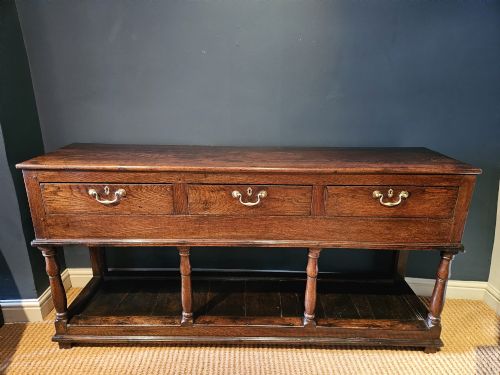
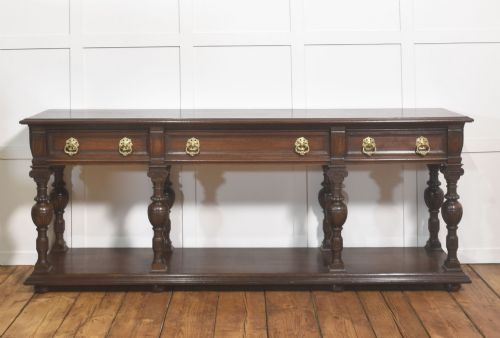


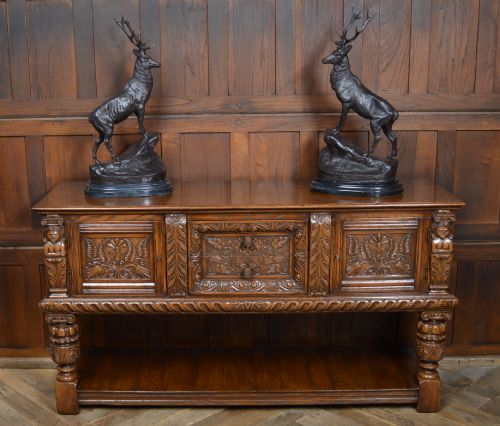

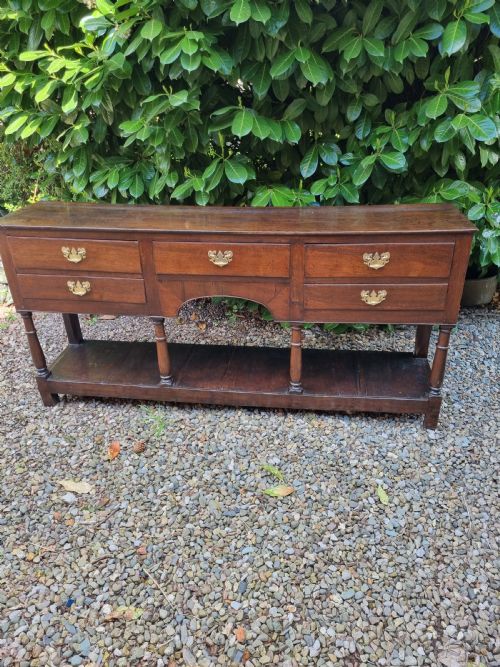
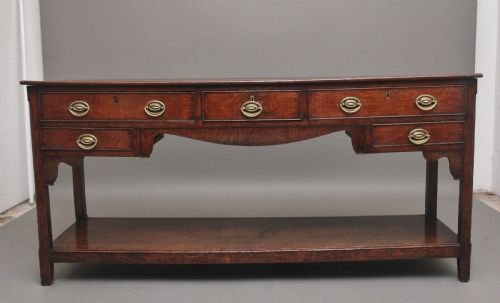


Oak Pot Board Table
These oak pot board table examples combine sturdy timber construction with a low open shelf, offering both a solid work surface and practical storage for everyday use.
Oak Pot Board Table
An oak pot board table provides a sturdy surface paired with a low slatted lower shelf, known as a pot board, designed for heavy domestic utility. You will most frequently encounter Georgian and eighteenth-century Welsh vernacular examples alongside later revival pieces from the Edwardian era and the nineteen-twenties.
The form spans dresser bases, sideboards, and hall tables, reflecting centuries of practical household furniture evolution. These pieces bridge the gap between working kitchen furniture and formal dining room storage.
How They Were Made
Makers built these pieces primarily from solid oak, utilising iron and brass fittings where hinges, handles, or structural reinforcements were required. Timber selection focused on durability, with boards chosen to withstand daily kitchen and pantry use.
Joinery methods rely on traditional framing techniques to support the heavy top boards and the lower pot shelves. Surfaces often display the marks of hand-planing and simple edge moulding rather than elaborate mechanical finishing.
Early pot boards kept heavy pots off cold flagstone floors, accidentally inventing the ultimate bottom shelf for kitchen clutter.
What Varies in Quality
Quality rests in the proportion of the timber, the integrity of the board construction, and the handling of the joints. Better examples maintain balanced proportions between the upper surface and the lower pot board without heavy-handed later alterations.
The character of the timber grain and the depth of the surface finish distinguish finer vernacular pieces from simpler production. Original boards and uncompromised structural frames carry greater integrity than heavily reworked surfaces.
The Oak Pot Board Table Glossary
- Pot board
- The low open shelf fitted near the floor beneath a dresser base or table. It was traditionally used for storing pots, pans, and heavy tableware.
- Dresser base
- A low cabinet or sideboard featuring drawers and sometimes cupboards beneath a main work surface. This form provides the structural foundation for many pot board examples.
- Vernacular
- Furniture made by local craftsmen following regional traditions rather than metropolitan pattern books. These pieces reflect the specific domestic needs of areas like mid Wales.
- Jacobean Revival
- A style popular in the late nineteenth and early twentieth centuries that copies seventeenth-century ornamentation such as geometric moulding and carved strapwork.
- Linenfold
- A style of wood carving that imitates folded fabric, frequently seen on panels of cupboards and cabinet doors.
Oak Pot Board Table: Frequently Asked Questions
What is an oak pot board table used for?
These pieces serve as sideboards, serving tables, or general work surfaces in kitchens, dining rooms, and hallways.
The lower pot board provides open display or storage space for baskets, ceramics, and large household items.
How do I identify an 18th-century pot board table?
Eighteenth-century examples typically display hand-worked timber surfaces, pegged mortise and tenon joinery, and natural patination acquired through generations of use.
Construction details such as board thickness and drawer linings help distinguish early regional pieces from later revival items.
What timber are these tables made from?
The primary material across these listings is solid oak, selected for its strength and resistance to heavy wear.
Metal elements like brass and iron appear selectively in handles, hinges, and occasional structural braces.
Are there different regional styles?
Regional variations appear strongly in Welsh vernacular pieces, which often feature distinctive drawer arrangements and local timber characteristics.
Revival pieces from the twentieth century frequently incorporate Jacobean-style carving and darker finishes inspired by earlier centuries.
How do I care for an antique oak surface?
Protect the timber by avoiding excessive moisture and direct heat sources that can cause the wood to warp or split.
Regular dusting and occasional application of traditional wax help preserve the natural finish and patination of the oak.