
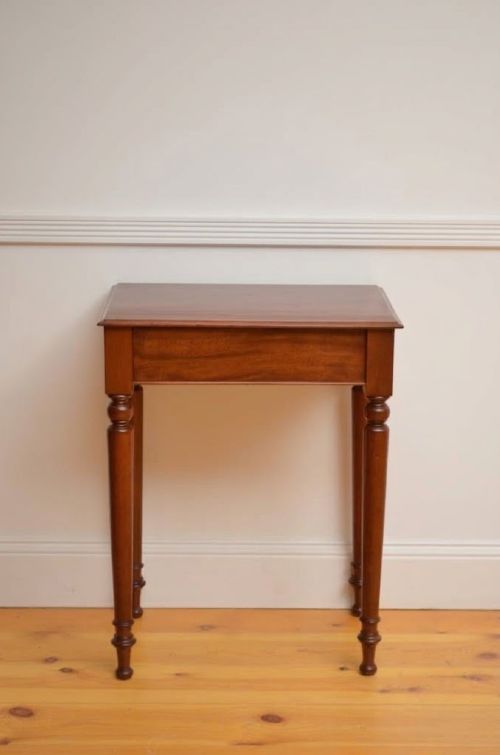
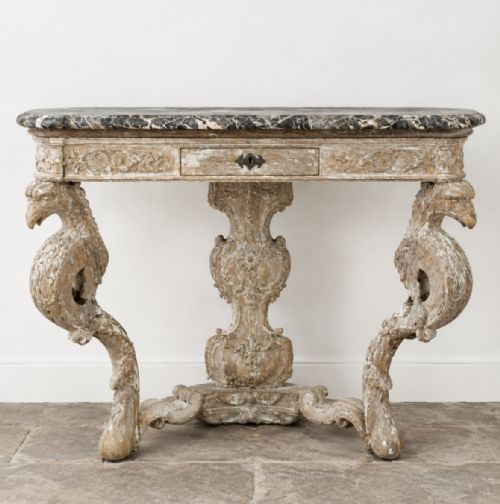
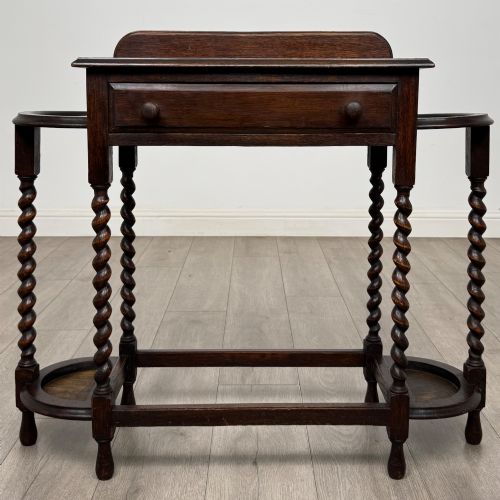
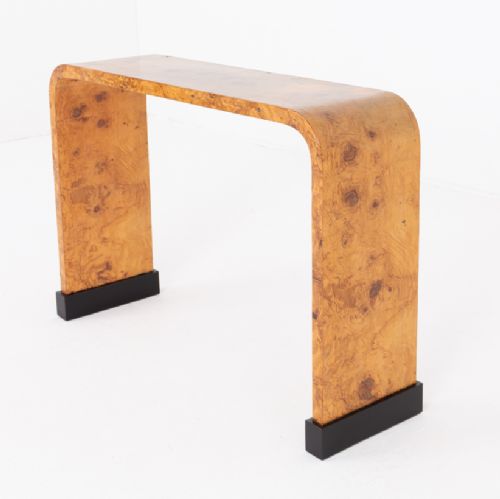




Hallway Entryway Table
A hallway entryway table sets the tone the moment a door opens, offering a practical surface for post and keys alongside a definite statement of period taste.
Hallway Entryway Table
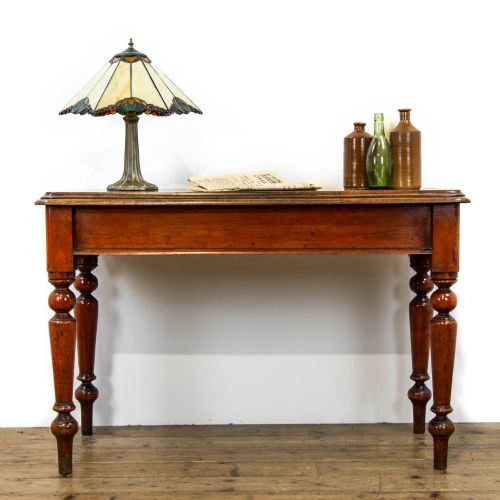
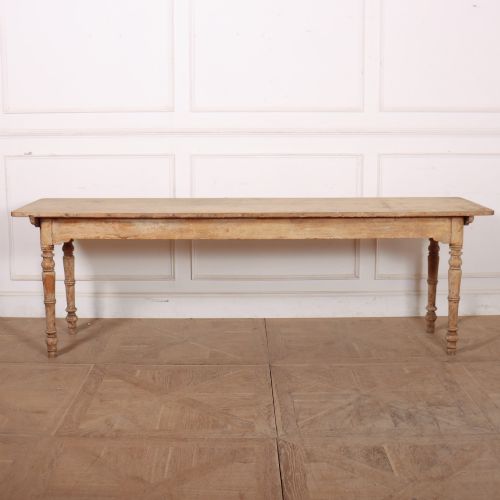
A hallway entryway table encompasses console tables, hall tables, hall stands, and side tables designed to occupy narrow transitional spaces within a home. These forms serve functional purposes while anchoring an entrance hall, ranging from simple timber surfaces to elaborate architectural consoles.
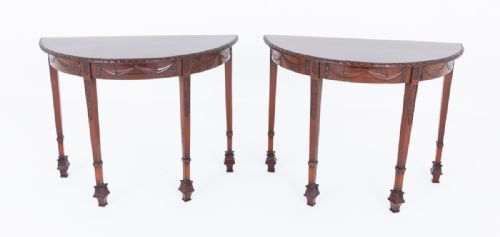
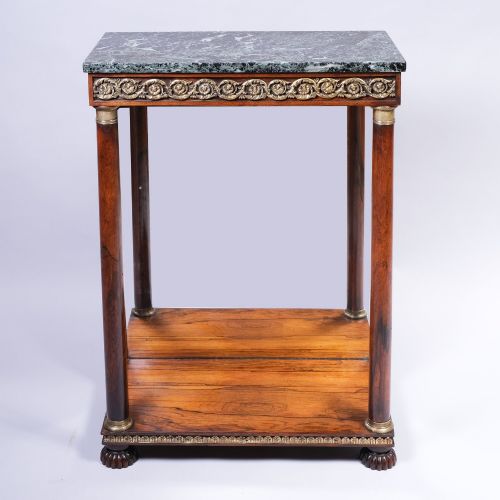
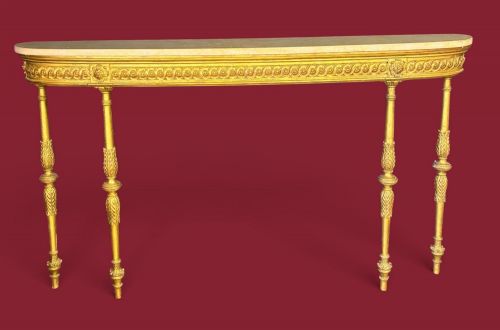
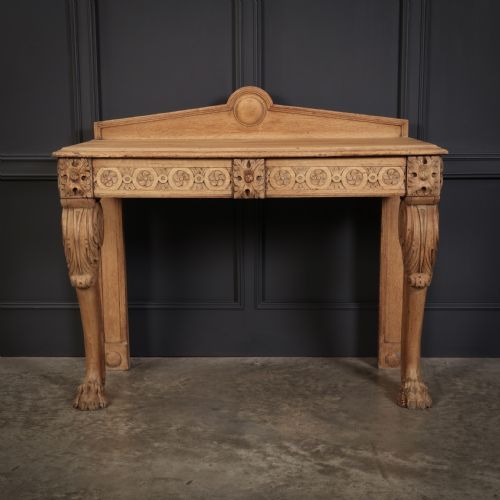
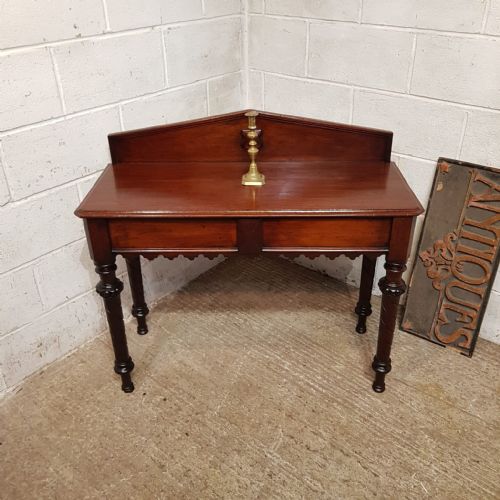
The pieces appearing on this page span several centuries and stylistic traditions, drawing heavily on Georgian, Victorian, Regency, and Edwardian eras. Buyers encounter formats such as demi-lune tables, wall-mounted or supported consoles, and combination pieces incorporating mirrors or umbrella stands.
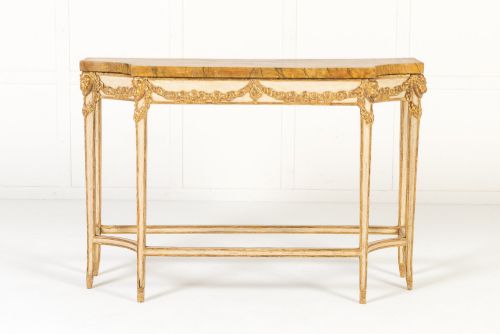
Materials reflect the prevailing tastes of their respective periods, moving from heavy mahogany and walnut to lighter oak, painted wood, and gleaming giltwood. Continental and English workshops alike produced these works, employing marble inserts or timber tops tailored to formal reception rooms and modest hallways alike.
Materials and construction methods
Makers relied on durable timbers such as mahogany, oak, walnut, and rosewood, often selecting figured veneers like burr birch or maserbirch for visual depth on prominent surfaces. Solid woods formed the structural frames, legs, and aprons, while secondary softwoods frequently appeared in concealed areas like drawer linings and back panels.
Decorative surfaces incorporated hand-applied paint schemes, parcel gilding, and carved giltwood details executed in neoclassical or empire styles. Heavy marble slabs, fitted precisely into the timber frames of console tables, provided cool, durable surfaces for entrance areas.
Listings feature pieces spanning the eighteenth, nineteenth, and twentieth centuries, incorporating mahogany, marble, oak, brass, and giltwood.
Distinguishing quality across examples
The caliber of a hallway entryway table is evident in the sharpness of its carved details, the crispness of its mouldings, and the selection of timber veneers. Superior pieces display harmonious proportions and seamless joinery, whereas lesser examples show heavy-handed restorations or coarse timber selections.
Hardware, original marble tops, and gilding integrity further separate standard production from exceptional works. Fine integration of brass mounts, original mirror plates, and untouched surface patination indicate a higher tier of craftsmanship.
The Hallway Entryway Table Glossary
- Console table
- A table designed to be fixed against a wall, often supported by two front legs or brackets because the rear rests against the vertical surface.
- Demi-lune
- A half-moon shape characteristic of tables designed to sit flush against a hallway wall while occupying minimal floor space.
- Giltwood
- Timber that has been coated with gold leaf or gold paint to simulate solid gold, commonly found on decorative frames and neoclassical consoles.
- Marble top
- A polished stone slab fitted to the surface of a table, prized for durability and coolness in formal entrance settings.
- Serpentine outline
- A table edge or front that curves outward in the centre and inward at the sides in a gentle 'S' wave.
Hallway Entryway Table: Frequently Asked Questions
What is a hallway entryway table used for?
These tables provide a compact surface in entrance areas for dropping keys, post, and daily items while establishing the decorative character of a home.
Many variations include drawers, matching mirrors, or integrated umbrella stands to handle the practical demands of coming and going.
How do I choose the right size?
Measure the available wall space and walkway clearance carefully, keeping in mind that shallow demi-lune or console formats work best in narrow passages.
Ensure the table height allows for comfortable access and does not block doorways or wall mouldings.
How do I tell an 18th-century table apart from a 19th-century revival?
Examination of construction marks, timber shrinkage, and secondary woods usually reveals the true age of a piece beneath its stylistic surface.
Revival pieces often display heavier machine-cut elements and standardised joinery compared to the hand-shaped components of earlier centuries.
Are marble tops original to these tables?
Many console tables from the neoclassical, Empire, and Victorian periods were specifically designed to carry heavy marble slabs.
Checking the fit against the timber rebate and looking for period-appropriate edge polishing helps confirm whether the stone belongs to the piece.