
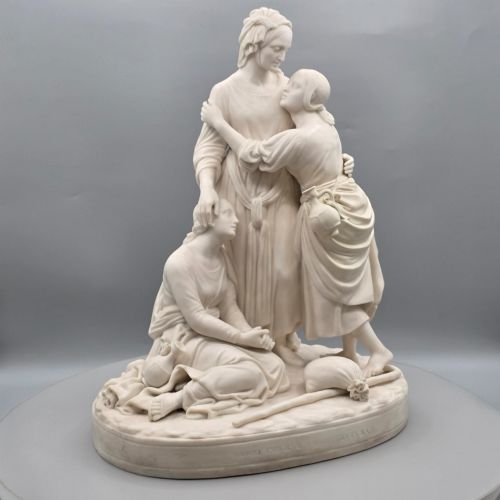
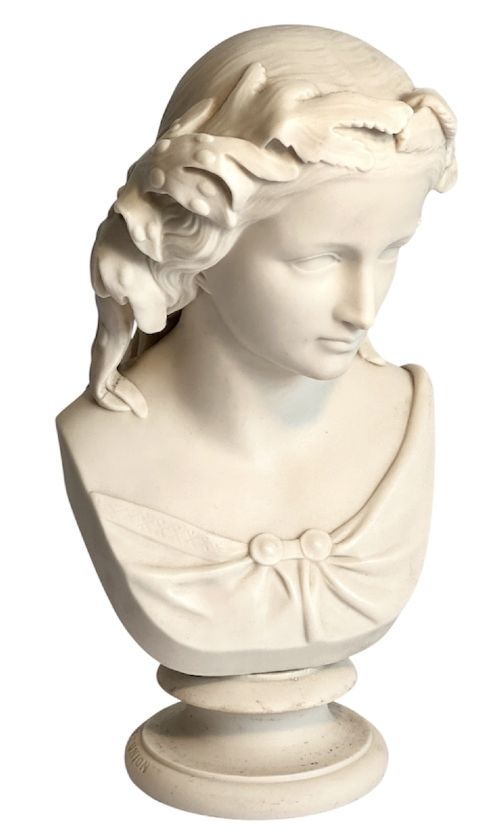
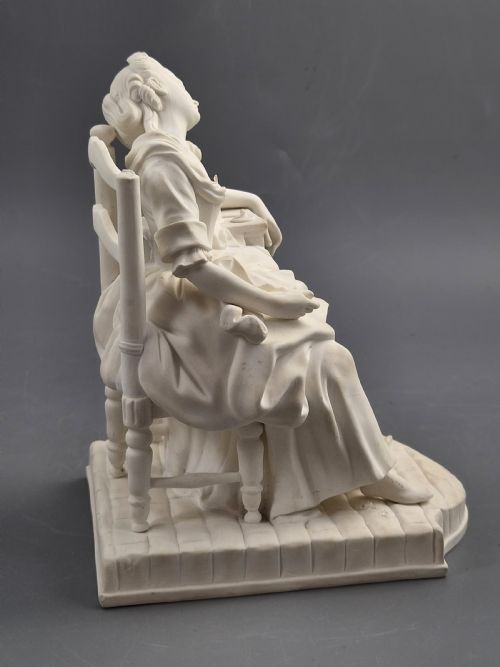


Parian Marble Porcelain
Parian marble porcelain figures and busts bring the smooth, matte finish of classical sculpture into nineteenth-century interiors.
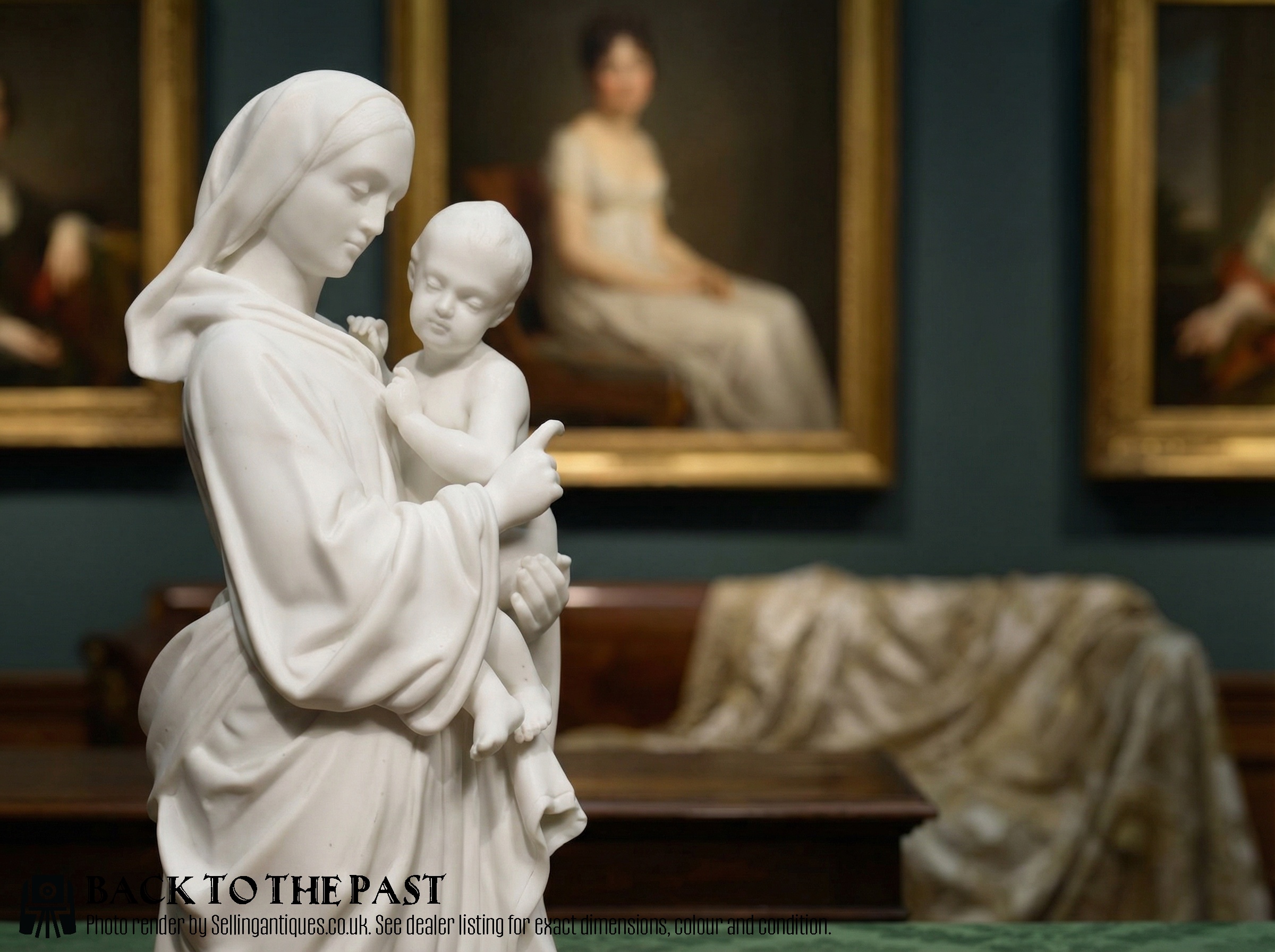
Parian Marble Porcelain
When you search for parian marble porcelain, you encounter nineteenth-century British and European figures, groups, and busts produced during the Victorian era. These sculptural pieces often reproduce classical subjects, literary characters, and political figures in a bright white ceramic body that mimics carved marble.
The objects listed on this page span the Victorian period, including specific dates across the mid and late nineteenth century alongside general nineteenth-century examples. Common forms include single statuary figures, literary groupings, historical busts, and figural menu holders.
English factories dominate the available selection, though continental pieces such as Old Paris figures also appear. Subjects range from allegorical figures and literary heroines like Miranda and Clorinda to statesman portraits.
How they were made
These pieces are cast using parian porcelain, also known as biscuit porcelain, parian ware, or bisque porcelain. This unglazed ceramic material contains a high proportion of feldspar, which melts during firing to create a dense, opaque body with a characteristic matte texture.
The liquid porcelain slip is poured into multi-part plaster moulds, allowing manufacturers to capture fine details in drapery, hair, and facial expressions without the need for subsequent glazing. After firing, pieces often required careful hand-finishing and cleaning of mould seams by skilled studio workers.
Victorian dining tables once featured parian menu holders shaped like porcelain men to keep track of the courses.
What varies in quality
Quality in parian marble porcelain rests on the crispness of the moulding and the sensitivity of the subsequent hand-finishing. Superior examples retain sharp details in hair, fingers, and fabric folds, whereas inferior castings appear soft or blurred.
The reputation of the producing works also defines the tier of the piece, with named manufacturers employing prominent sculptors to model their figures achieving greater refinement than anonymous factory output.
Minton·Copeland·Worcester
The Parian Marble Porcelain Glossary
- Parian porcelain
- A fine, unglazed ceramic material developed in the nineteenth century to imitate carved marble. It fires to a smooth, matte white finish.
- Biscuit porcelain
- Ceramic ware fired once without glaze, leaving a porous, matte surface texture. It is synonymous with bisque and parian in many nineteenth-century contexts.
- Statuary figure
- A sculptural representation of a human or allegorical subject intended for display. These objects are cast in porcelain rather than carved from stone.
- Neoclassical
- An artistic style drawing inspiration from the classical art and culture of ancient Greece and Rome. It influences many Victorian figural subjects and compositions.
Parian Marble Porcelain: Frequently Asked Questions
What is parian porcelain?
Parian porcelain is an unglazed ceramic material developed in the nineteenth century specifically to imitate the appearance of carved marble. It combines fine clay and feldspar, firing at a high temperature to produce a dense, matte white body that captures intricate sculptural detail.
Unlike traditional porcelain, parian receives no glossy glaze. This lack of glaze preserves the soft, stone-like texture prized by Victorian collectors of classical and literary figures.
How do I clean parian figures?
Because parian porcelain has an unglazed, porous surface, it readily absorbs dirt and oils from handling. Cleaning requires gentle brushing with a soft dry brush to remove dust, or a mild soap solution applied sparingly with a soft sponge if marks persist.
Harsh chemical cleaners or abrasive scouring pads must be avoided entirely, as they can permanently scar the matte surface and alter the uniform white colour of the ceramic body.
Are these pieces glazed?
These pieces are strictly unglazed, retaining the raw biscuit finish characteristic of parian ware. The lack of a glossy coating is essential to their aesthetic, allowing light to diffuse slightly into the surface in the manner of actual marble.
This porous nature means nineteenth-century figures often show areas of discolouration where they have been picked up repeatedly over generations.
Who sculpted these figures?
Major nineteenth-century manufacturers commissioned prominent contemporary sculptors to model their parian figures. Artists such as John Durham provided original works that factories then scaled down and cast in porcelain for the domestic market.
Many pieces also reproduce famous earlier sculptures or depict literary heroines, historical statesmen, and allegorical subjects popular during the Victorian period.