

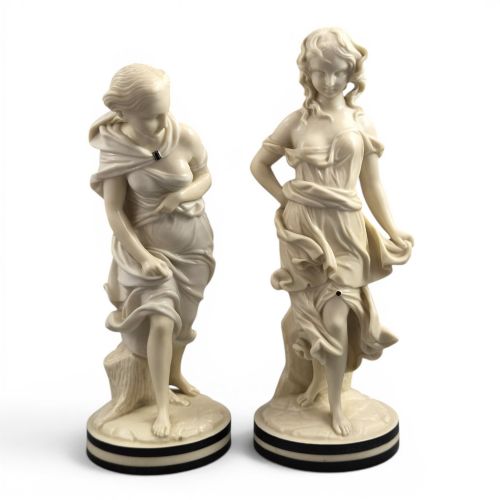


White Parian Figure
White parian figure pieces offer crisp neoclassical modelling in porcelain, capturing the tactile charm of carved marble for the Victorian interior.
What white parian figure pieces are
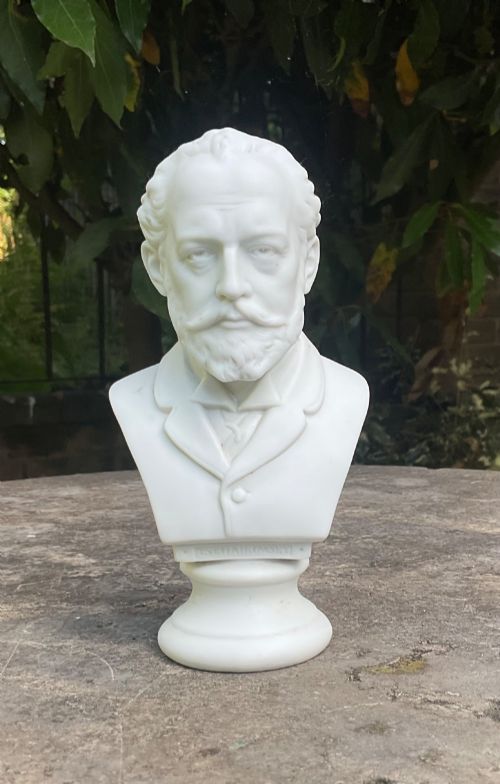
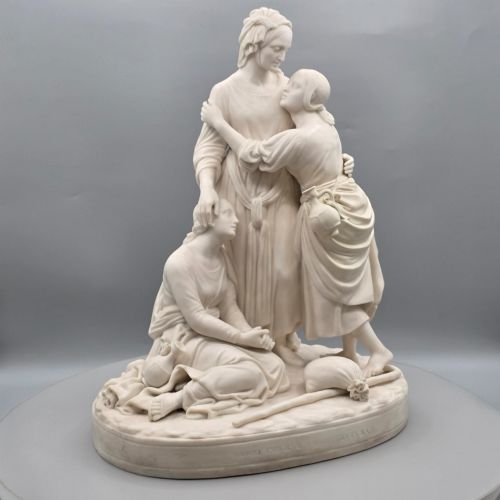
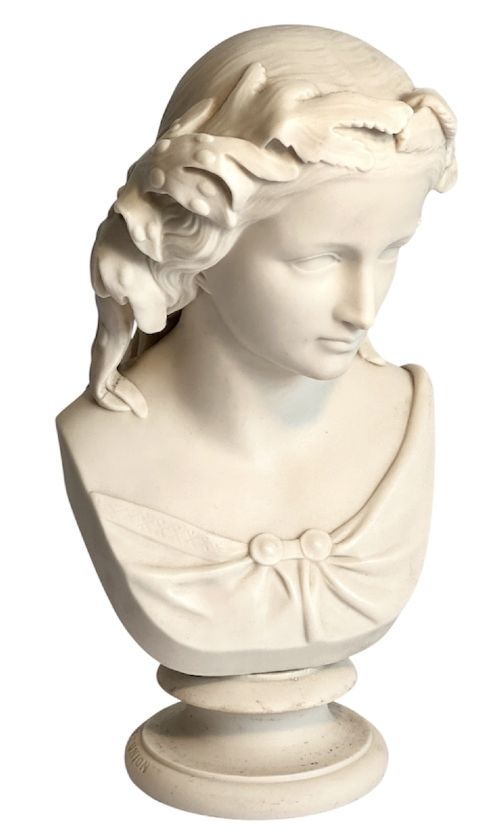
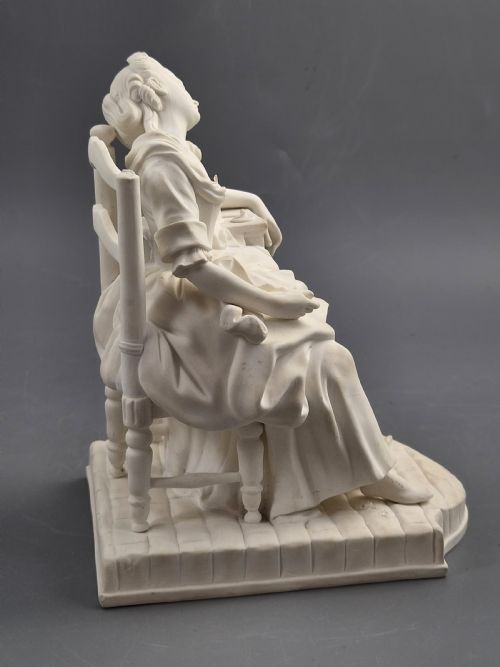
A white parian figure presents porcelain modelled as classical or romantic sculpture, designed for display in nineteenth century interiors. The examples available on this page belong to the Victorian parian ware tradition, specifically interpreting earlier sculptural works.
Makers adapted classical subjects and French models for domestic settings during the nineteenth century. These porcelain figurines bring sculptural presence to the home without the weight or cost of carved marble.
How they were made
Potters constructed these figures using biscuit porcelain and parian porcelain, a specialised ceramic body that imitates carved marble. Slurry was poured into multi-piece mould systems to capture fine details from original sculptures.
Early ceramicists named parian porcelain after the famous white marble of Paros, hoping to trick wealthy visitors into seeing solid stone.
What varies in quality
The refinement of the modelling distinguishes superior examples from simpler production pieces. Sharpness in the rendering of hair, fingers, and fabric folds indicates the condition of the original moulds.
Quality also rests in the purity of the parian body and the absence of firing blemishes across large smooth surfaces. Superior pieces preserve the subtle translucency and matte texture characteristic of fine nineteenth century biscuit porcelain.
Michel Victor Acier
The White Parian Figure Glossary
- Parian porcelain
- A fine ceramic body developed in the nineteenth century to imitate carved marble. It fires to a matte, unglazed finish with a slight grain.
- Biscuit porcelain
- Unglazed ceramic fired once to vitrify the body while retaining a porous, matte texture. It forms the foundation of parian ware figures.
- Victorian parian ware
- Decorative ceramic figures and vessels produced during the reign of Queen Victoria. These pieces celebrate classical subjects and literary characters.
- Model
- The original sculptural prototype from which ceramic mould makers cast production pieces. Fine figures often credit renowned sculptors or earlier factories.
Frequently Asked Questions
How should I clean my figure?
Clean unglazed parian porcelain gently with a soft, dry brush to remove dust from crevices. Avoid water and liquid cleaners, as the matte surface absorbs moisture and stains easily.
Harsh detergents and scrubbing can damage the delicate unglazed ceramic body. Professional restoration is recommended for ingrained dirt.
Are these figures glazed?
Parian porcelain pieces are typically left unglazed to achieve a dry, matte surface that mimics marble. This porous finish distinguishes parian ware from standard glazed table ceramics.
The absence of glaze allows light to interact directly with the ceramic body, highlighting the fine details of the modelling.
When were these figures made?
The pieces recorded here originate from the nineteenth century, reflecting the Victorian enthusiasm for classical sculpture and parian ware. Factories across Europe produced these ornamental figures for a growing middle-class market.
Stylistic cues and manufacturing techniques help place these porcelain figurines within the Victorian period. They represent a significant technical achievement in nineteenth century ceramic history.