


French Biscuit Figurine
A french biscuit figurine brings the matte, unglazed finish of nineteenth-century French porcelain figures directly into your interior.
French Biscuit Figurine
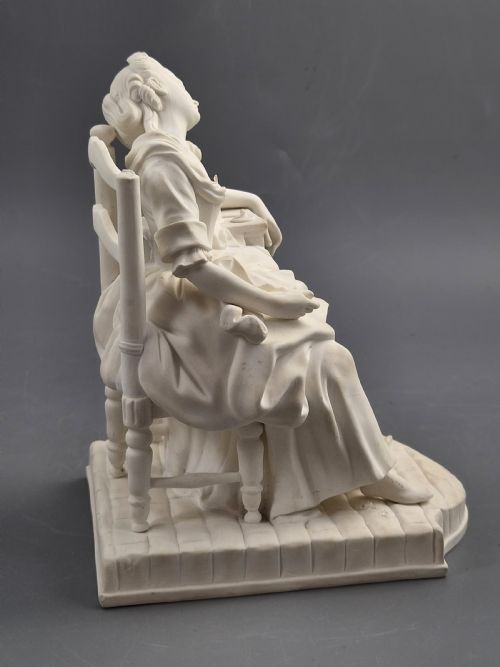
A french biscuit figurine takes the form of nineteenth-century sculptural groups, busts, and statues modelled in unglazed porcelain. These pieces originate from French workshops and factories during the Victorian period, including old Paris establishments and Sevres.
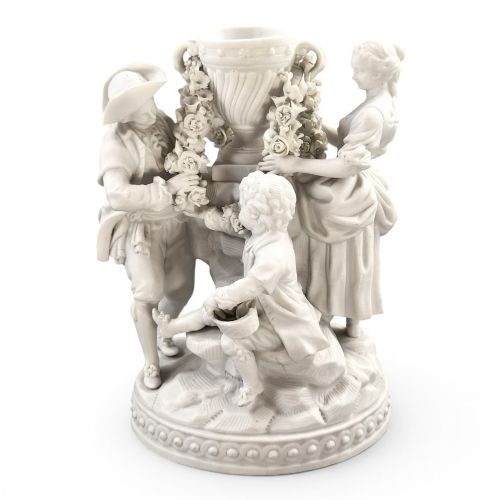
You will most frequently meet nineteenth-century figures depicting classical subjects, romantic pairs, and historical figures like Marie Antoinette. The forms range from cabinet-sized statues to large sculptural groups decorated with floral garlands.
The aesthetic relies entirely on the smooth, marble-like surface of biscuit porcelain rather than traditional glossy glazes. Makers often combined this matte finish with touches of enamel, paint, or gilt to highlight specific details of costume and hair.
Materials and construction
Makers produced these pieces using finely ground ceramic paste fired without a glossy glaze, resulting in the characteristic matte surface known as biscuit or bisque porcelain. Certain workshops also utilised parian porcelain to achieve a similar unglazed, marble-like texture.
Detailed modeling defined the production process, often relying on after-models of famous sculptors like Michel Victor Acier. Artisans frequently added hand-painted enamel, gilt, and gold leaf accents to portions of the unglazed figures after the initial firing.
Several figures portray sleeping ladies safely tucked into porcelain armchairs, enduring the nineteenth century in perpetual repose.
Assessing quality
The presence of clear factory marks, such as those from Chantilly or Vion et Baury, often distinguishes standard production from more notable works. Additionally, the subtlety of applied gilt and enamel work separates finer display pieces from simpler decorative figures.
Letu & Mauger Paris·Vion & Baury·Chantilly·Sevres
The French Biscuit Figurine Glossary
- Biscuit porcelain
- Unglazed ceramic ware fired to a matte finish that resembles marble. It is also frequently referred to as bisque porcelain.
- Gilt
- A thin layer of gold applied to portions of a ceramic figure. Artisans used it to accent garments, hair, and bases.
- Vieux Paris
- A collective term for porcelain produced by numerous independent workshops in Paris during the nineteenth century. These makers created diverse sculptural and decorative objects.
French Biscuit Figurine: Frequently Asked Questions
How were these figures cleaned?
Cleaning unglazed biscuit porcelain requires care because the porous matte surface absorbs dirt easily. Owners generally use a soft, dry brush to remove dust from intricate details like floral garlands.
Moisture and harsh cleaning agents should be avoided to prevent staining the unglazed ceramic body.
Are these pieces marked?
Many nineteenth-century pieces carry factory stamps, incised signatures, or model numbers on the base. Marks from makers such as Vion and Baury or Chantilly help identify the origin.
Unmarked pieces remain common, as numerous smaller Paris workshops produced similar figures without signing their output.
Where were they displayed?
In nineteenth-century interiors, these porcelain sculptures sat prominently on mantelpieces, side tables, and cabinet tops. Their marble-like appearance suited formal drawing rooms and parlours.
Collectors today continue to place them on tabletops and shelves where adequate lighting highlights their modeled details.