

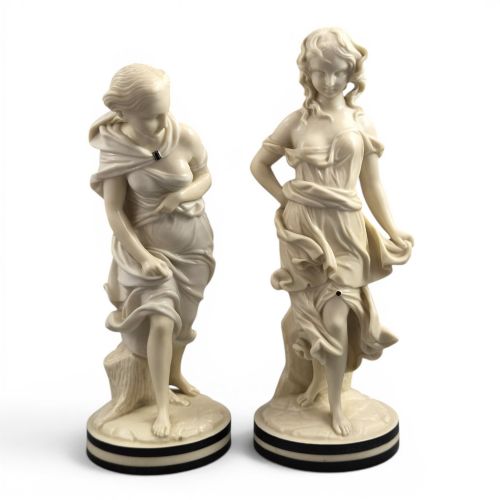


19th Century Porcelain Statue
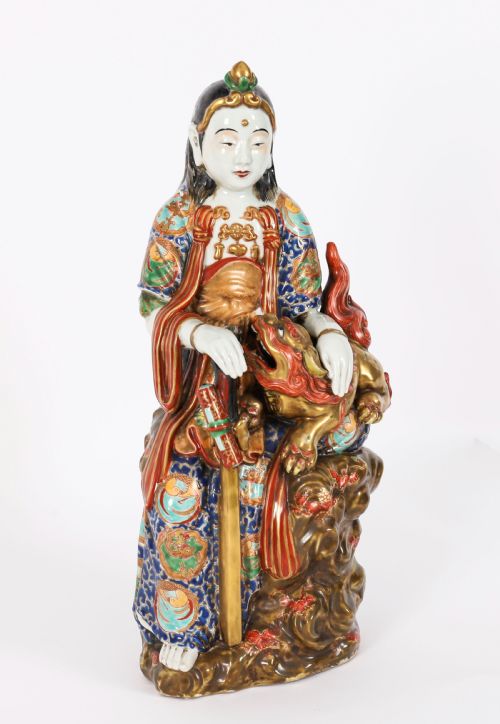
A 19th century porcelain statue brings expressive human, animal and mythological forms into the interior through skilled European and Japanese modelling.
19th Century Porcelain Statue
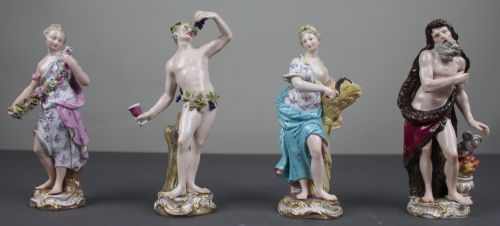
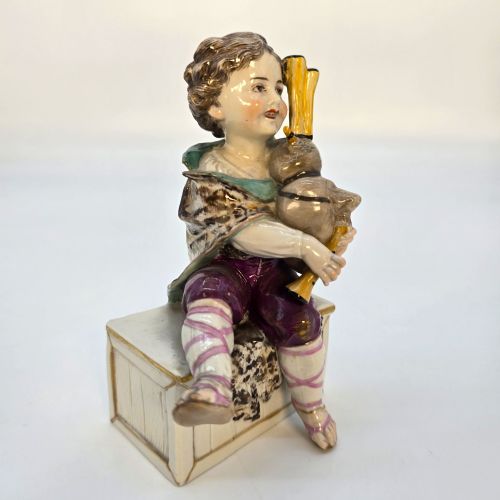
A 19th century porcelain statue encompasses figures, groups and busts produced across European and Japanese kilns during the Victorian, Regency and Meiji eras. Buyers searching this phrase encounter subjects ranging from classical mythological studies and allegorical series to naturalistic animal models and everyday genre figures.
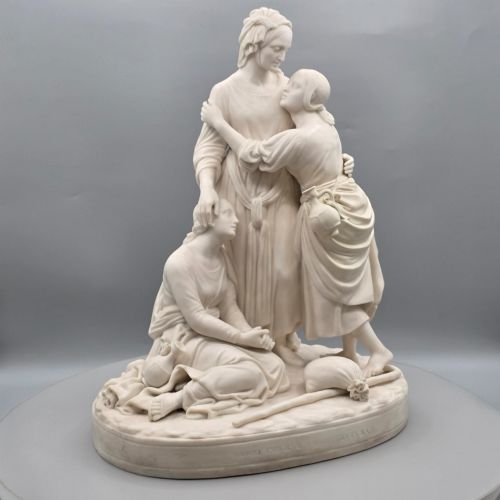
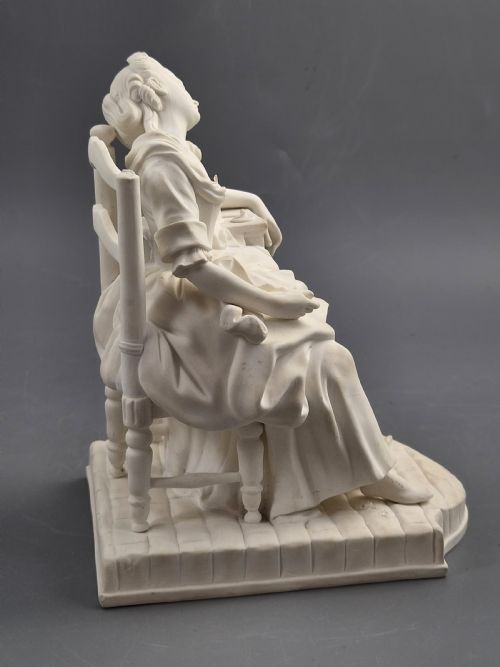
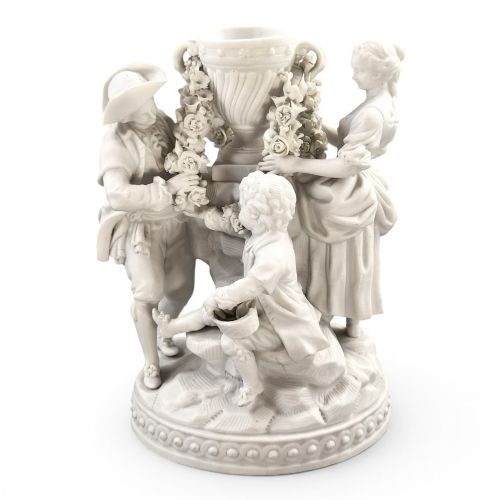
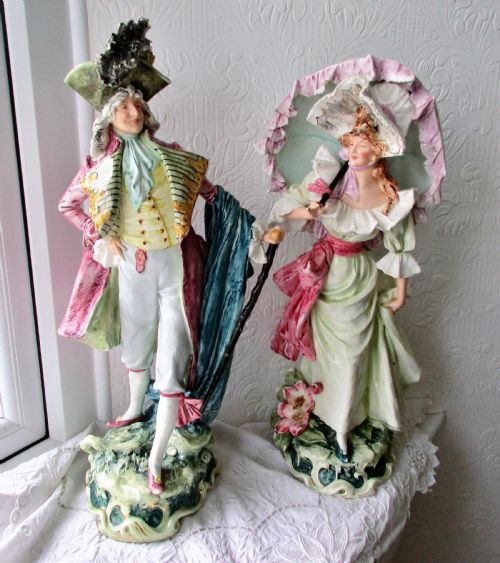
The selections available lean heavily toward Victorian production, with notable examples of French biscuit porcelain, English parian ware and German hard-paste figures. Formats vary from small cabinet pieces to large sculptural pairs standing up to significant heights.
How they were made
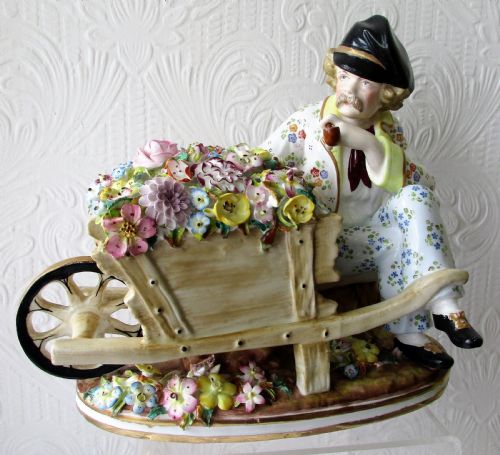
Makers utilised standard porcelain, biscuit porcelain, parian and bisque bodies, often leaving surfaces unglazed to emulate carved marble or finishing them with detailed enamel paintwork and gold leaf gilding. Delicate lace elements and applied floral garlands required meticulous hand-assembly before firing.
Many works were cast from moulds derived from original models by celebrated sculptors, then hand-finished with fine incision work and painted details prior to high-temperature kiln firing.
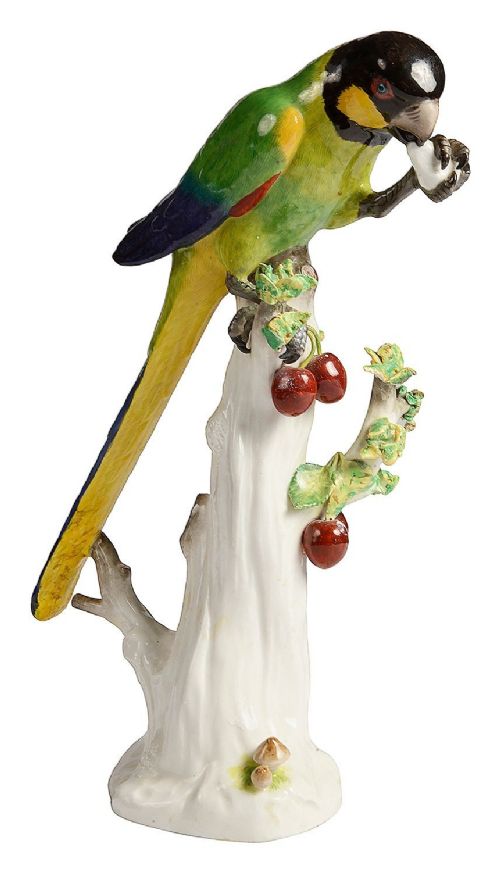
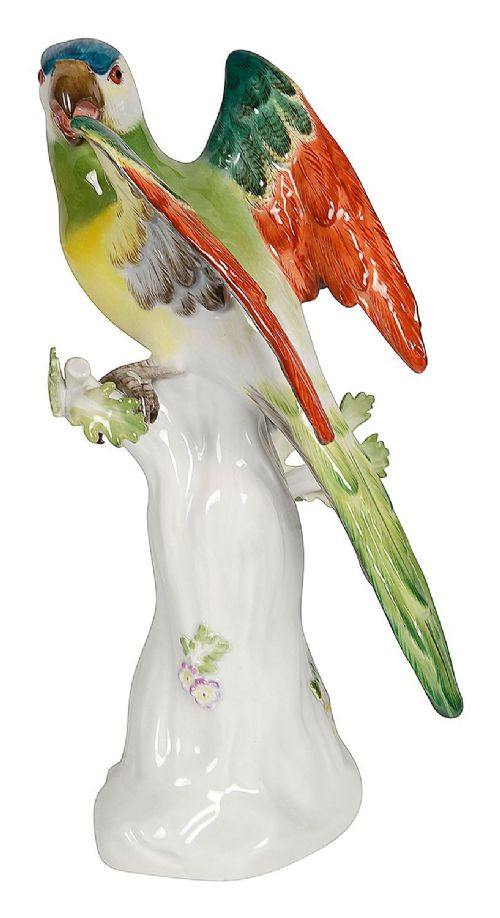
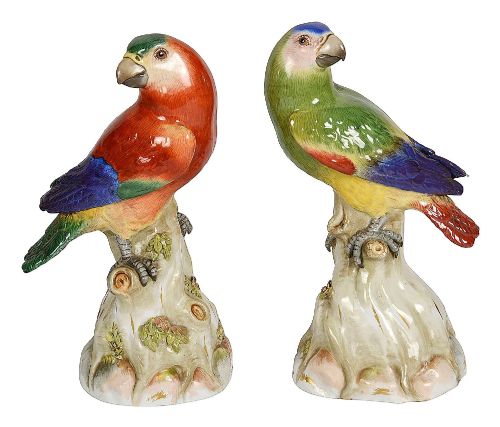
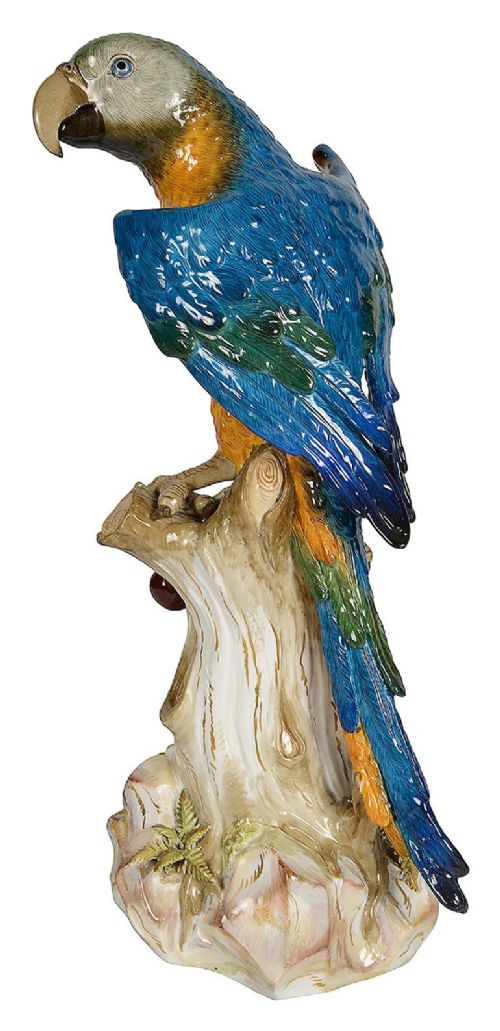
Several makers produced cheerful pairs of porcelain dwarves and playful parrots perched on tree trunks to amuse Victorian drawing-room visitors.
What varies in quality
The standard of modelling separates ordinary production from superior works, with finer pieces exhibiting crisp facial expressions, anatomically convincing limbs and sharply defined drapery folds. The precision of hand-painting, the subtlety of enamel blending and the careful application of gilding also determine the grade of a piece.
The crispness of unglazed parian and bisque surfaces reveals the original quality of the mould and the diligence of the finisher in removing seam lines without softening fine details.
Meissen·Minton·Volkstedt Rudolstadt Factory·Royal Worcester·Samson of Paris·C. G. Schierholz
The 19th Century Porcelain Statue Glossary
- Parian porcelain
- A fine-grained, unglazed porcelain developed in the 19th century to imitate carved marble. It is particularly associated with Victorian sculptural groups and portrait busts.
- Biscuit porcelain
- Unglazed fired porcelain that has a matte, porous surface resembling marble. It was widely utilised by French and German factories for classical and allegorical figures.
- Hard-paste porcelain
- A durable ceramic composition fired at high temperatures using kaolin and petuntse. It provides a dense, vitreous base for rich enamel colours and gilding.
- Enamel
- Vitreous colour applied to the fired porcelain surface and fixed in a second, lower-temperature kiln firing. It provides the vibrant hues seen on garments and decorative accessories.
- Gilding
- The application of gold leaf or powdered gold to highlights, borders and bases. It accentuates architectural details and decorative elements on Victorian and continental figures.
19th Century Porcelain Statue: Frequently Asked Questions
Where were most nineteenth century porcelain statues made?
European factories dominated production, with prominent centres in Germany, France and England. Major kilns operated in Meissen, Paris, Staffordshire and Worcester.
Imported Japanese wares also appeared through international trade during the later decades of the period.
What is the difference between bisque and parian?
Bisque refers generally to any unglazed fired porcelain body, frequently used for French and continental portrait busts and decorative groups. Parian is a specific dense formulation developed to closely mimic white marble.
Parian porcelain has a slightly heavier weight and a smoother, warmer sheen than standard bisque.
How are periods identified on porcelain figures?
Factories stamped, painted or impressed specific factory marks, monograms and numbers onto the unglazed undersides. Stylistic clues such as Victorian neoclassical drapery or Rococo Revival curves also help date the work.
Comparing modelling techniques and glaze styles against documented factory output confirms the era of manufacture.