


Unglazed Porcelain Sculpture
Unglazed porcelain sculpture offers a matte, chalky finish that highlights every subtle contour of the modeller's hand without the distraction of a glossy glaze.
Understanding unglazed porcelain sculpture
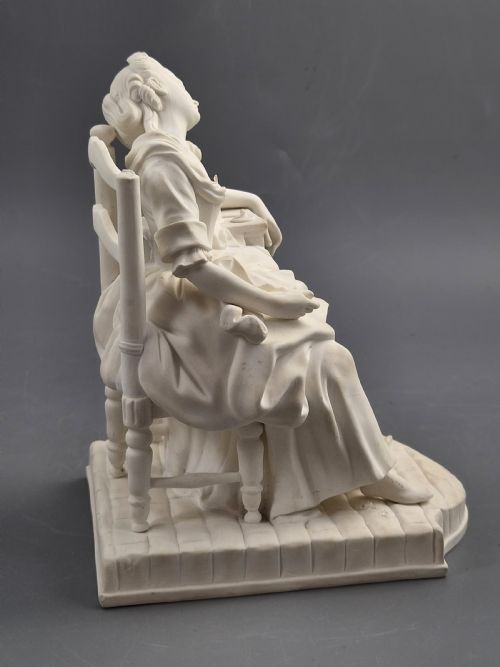
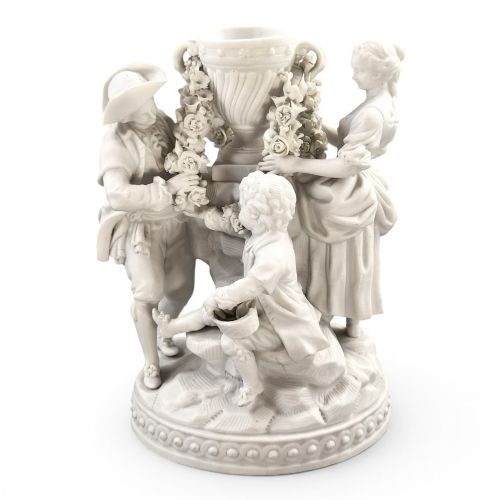
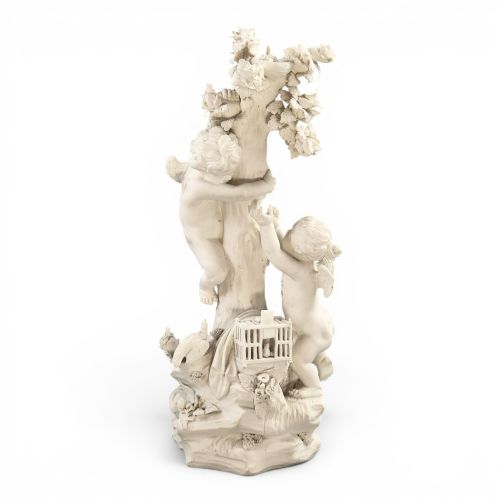
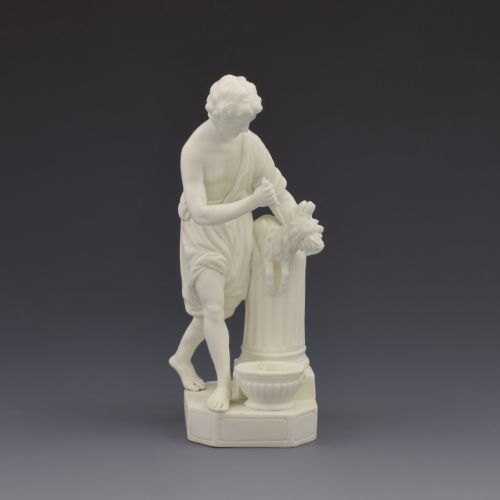
When you search for unglazed porcelain sculpture, you are looking at figures, busts, and groups modelled in biscuit ceramic, bisque porcelain, and Parian ware. These pieces range from Georgian figure groups to Victorian neoclassical statues and 19th-century French works.
The most common examples you will meet on this page are 19th-century works, including Parian porcelain figurines and French bisque sculptures. They depict mythological subjects, historical figures, and allegorical scenes with a characteristic stark, marble-like surface.
Makers represented in these listings include the early Derby factory, Copeland, and Triebner Ens & Co of Volkstedt, alongside named artists such as Luca Madrassi. Their creations demonstrate the wide geographical spread and stylistic variety of unglazed ceramic art.
Materials and manufacture
These sculptures are formed from specialised ceramic bodies fired without a vitreous glaze, leaving the surface porous and matte. Biscuit porcelain and bisque refer to unglazed china fired once or twice to achieve a durable, bone-like texture.
Parian ware, developed in the 19th century, uses a specific feldspathic porcelain composition that vitrifies at a lower temperature to closely imitate carved white marble. Makers cast or hand-press these materials into complex mould systems to capture intricate details like drapery and hair.
Retail Price Guide 2026
Typical UK retail prices for unglazed porcelain sculpture, calculated from the Sellingantiques database of over a million retail prices indexed since 2003. This retail price guide relies exclusively on Sellingantiques data; no external sources or auction records are used, so the figures do not describe the wider market.
Even three graces need a rest from distressing Cupid when the Victorian kiln cools down.
Assessing quality and execution
The choice of ceramic body also dictates the aesthetic success of the piece, with high-grade Parian ware achieving a translucent, marble-like depth superior to flat, chalky biscuit porcelain.
Luca Madrassi·Copeland·Triebner Ens And Co
The Unglazed Porcelain Sculpture Glossary
- Bisque porcelain
- Unglazed ceramic fired to a hard, matte state. It absorbs no glaze, offering a dry finish resembling marble.
- Parian ware
- A self-glazing white porcelain developed in Victorian Britain. It was specifically formulated to mimic carved statuary marble.
- Biscuit ceramic
- An alternative term for unglazed pottery after its initial firing. It provides a porous and receptive surface for fine detail.
- Neoclassical
- A revival style drawing inspiration from classical antiquity. It emphasises restrained proportions, heroic themes, and classical drapery.
- Neo-Rococo
- A decorative style favouring asymmetry, swirling curves, and ornate natural motifs. It emerged strongly during the 19th century.
Frequently Asked Questions
What is unglazed porcelain?
Unglazed porcelain is ceramic material that has been fired in a kiln without the application of a glass-like coating. This leaves the surface completely matte and porous.
Such bodies include bisque, biscuit, and Parian ware, each designed to showcase sculpted form through shadow and texture rather than glossy reflection.
How do I clean unglazed porcelain?
Cleaning requires dry methods like a soft brush or a dry microfibre cloth to lift dust from the porous surface. Avoid water or liquid cleaners.
Because the material is unglazed, moisture can sink into the ceramic body and draw trapped dirt deeper into the microscopic pores.
How do I date a biscuit sculpture?
Dating relies on stylistic clues, factory marks pressed into the base, and the specific composition of the ceramic body itself. Georgian pieces often display different modelling styles compared to later Victorian works.
Comparing the crispness of the casting and the nature of any underglaze stamps helps narrow down the period of production.
What is Parian porcelain?
Parian porcelain is a dense, fine-grained ceramic introduced in the 19th century to imitate carved white marble. It contains a high proportion of feldspar which melts during firing.
This composition gives the finished sculpture a subtle translucency and a smooth, stone-like texture distinct from standard porcelain.