



White Parian Figurine
A white parian figurine brings nineteenth-century neoclassical sculpture into a room through matte biscuit porcelain.
White Parian Figurine
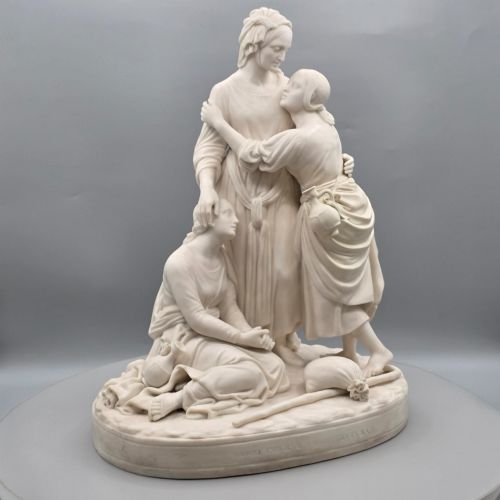
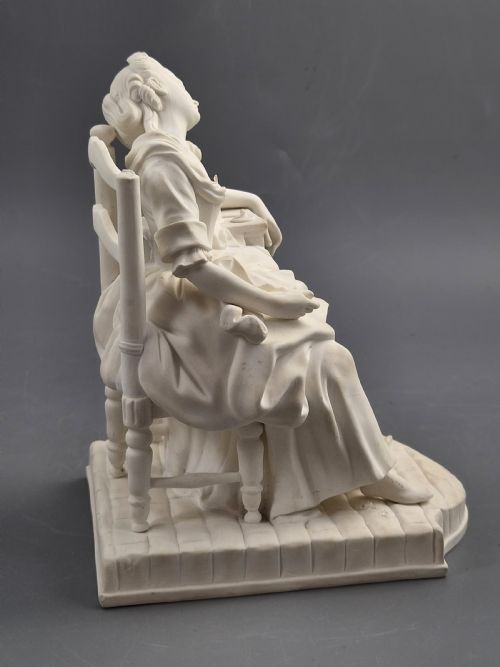
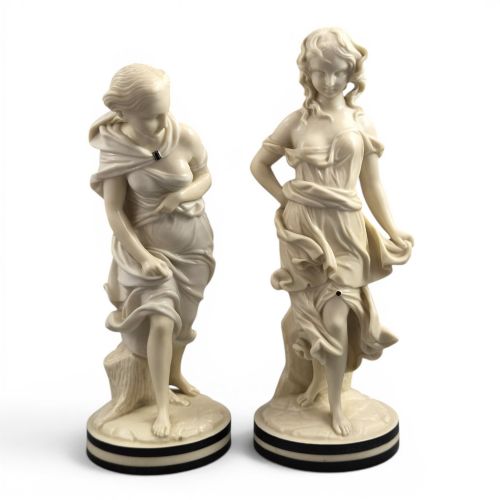
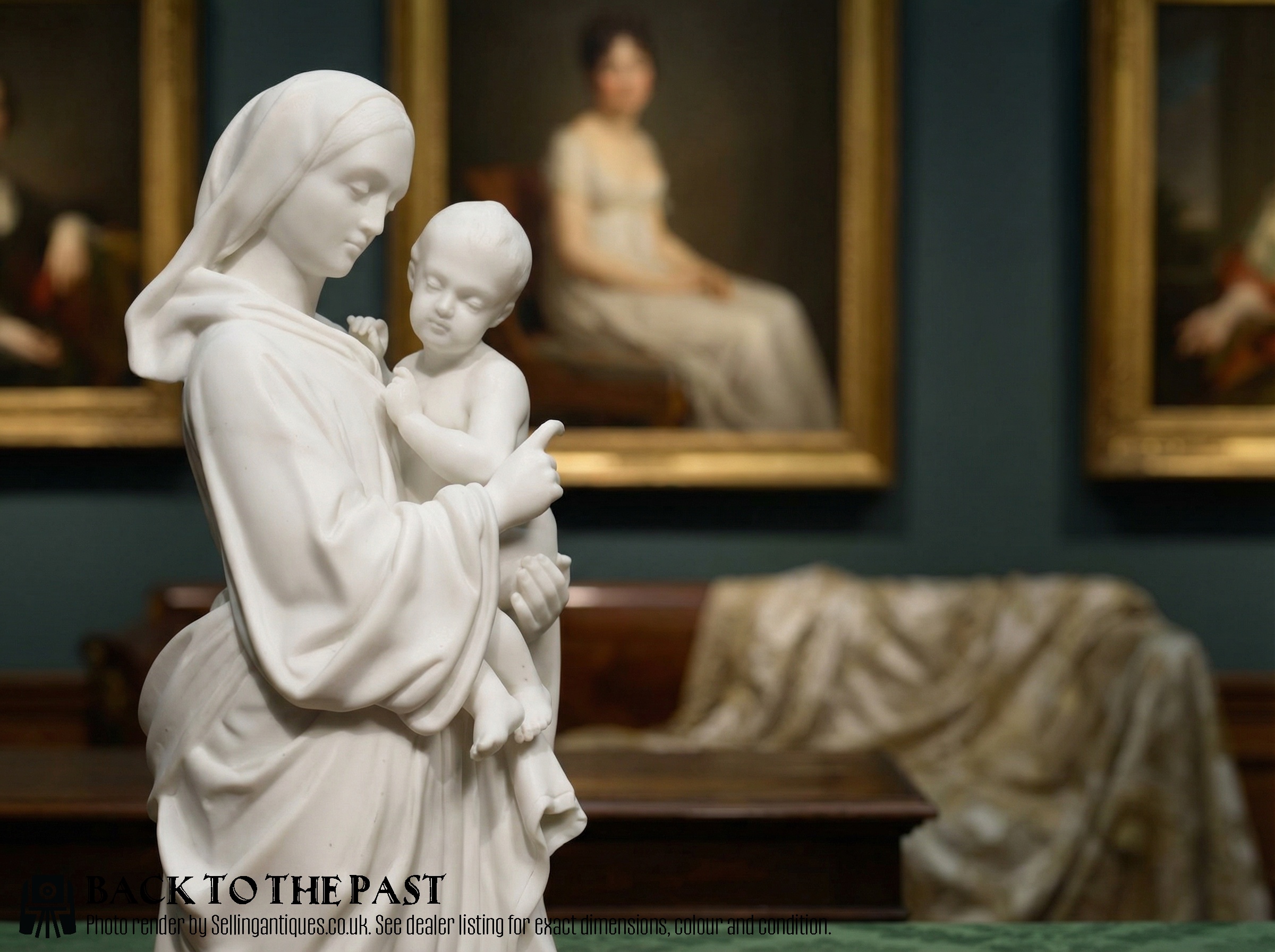
A white parian figurine presents nineteenth-century sculptural subjects in unglazed porcelain, taking the form of classical maidens, literary figures, hunting dogs, and children. These pieces replicate marble statuary for domestic interiors, offering the texture of carved stone through ceramic slip casting.
The pieces on this page span the Victorian era, particularly the mid-to-late nineteenth century around eighteen seventy. Makers reproduced famous gallery sculptures after artists like Dannecker and Acier, alongside original domestic studies.
Buyers encounter single figures, pairs such as Fast Sleep Wide Awake, and complex groups depicting scenes like Rebekah at the well or Naomi and her daughters-in-law. Classical antiquity and Victorian sentimentality dominate the visual vocabulary.
Materials and production
Makers utilised parian porcelain, also recorded as parian ware or bisque porcelain, which contains a high proportion of feldspar that vitrifies during low-temperature firing. This composition produces a dense, fine-grained body with a matte surface resembling marble rather than glossy pottery.
Firms cast these sculptures in multiple plaster moulds before assembling the parts by hand and firing the clay without glaze. Artisans then chased the surface detail manually, sharpening drapery folds and hair before a final hardening kiln run.
White Parian Figurine Retail Price Guide 2026
Typical asking prices for white parian figurine among the pieces listed under this phrase on Sellingantiques today, from the lower quarter to the upper quarter. They describe what is for sale here now, not the wider market.
Nineteenth-century makers occasionally translated fierce hunting dogs and sleepy toddlers into identical matte white porcelain, treating both with equal neoclassical dignity.
Markers of quality
Scale and complexity also define the better pieces, moving from simple single figures to large multi-figure groups with intricate anatomical detail and botanical accessories.
Minton·Old Paris·Royal Worcester·Copeland·Triebner Ens And Co·Sevres
The White Parian Figurine Glossary
- Parian ware
- A type of unglazed porcelain developed in Britain to imitate marble. It derives its name from Parian marble found on the Greek island of Paros.
- Bisque porcelain
- Unglazed ceramic fired once to create a porous, matte surface. It is often used interchangeably with biscuit porcelain in nineteenth-century cataloguing.
- Neo-roccoco
- A nineteenth-century revival style marked by asymmetrical scrolls and ornate botanical framing. It appears alongside neoclassical subjects in figurine bases.
- Slip casting
- A manufacturing technique where liquid clay is poured into plaster moulds to capture intricate sculptural detail. This method allowed factories to produce complex figures efficiently.
White Parian Figurine: Frequently Asked Questions
What is parian ware?
Parian ware is a type of unglazed porcelain developed during the nineteenth century to imitate carved marble. It uses a high feldspar content to achieve a matte finish when fired.
Potteries utilised this material specifically for portrait busts and classical figurines intended for Victorian drawing rooms.
How do I clean parian porcelain?
The unglazed matte surface absorbs dirt easily due to its porous nature. Gentle dry brushing with a soft artists' brush removes dust from crevices.
Avoid using water or chemical cleaners, as moisture penetrates the unglazed body and leaves permanent stains.
Are these figures marked?
Many nineteenth-century pieces carry impressed factory ciphers, registry diamond marks, or maker names on the underside or base edge. Unmarked examples rely on stylistic attribution and paste quality.
Registration marks provide precise decades of production under British patent law.
Where were these figures displayed?
Victorian households placed these sculptures on mantelpieces, credenzas, and centretables as symbols of cultural literacy. They brought classical antiquity and high art into middle-class domestic spaces.
Pairs often flanked clock sets or decorative garnitures on drawing room hearths.