



19th Century Parian
These 19th century parian pieces offer the classic biscuit finish of Victorian neoclassical sculpture, prized by collectors for their crisp detail.
What 19th century parian pieces are
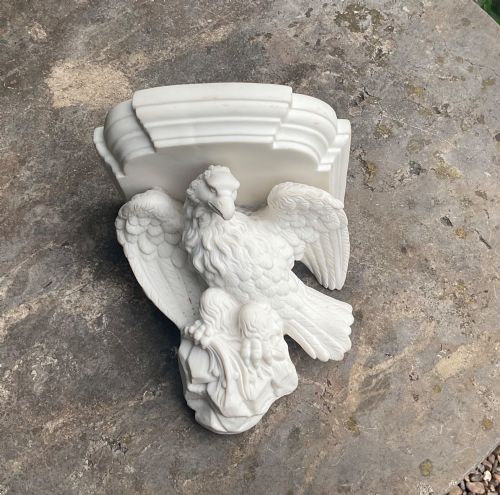
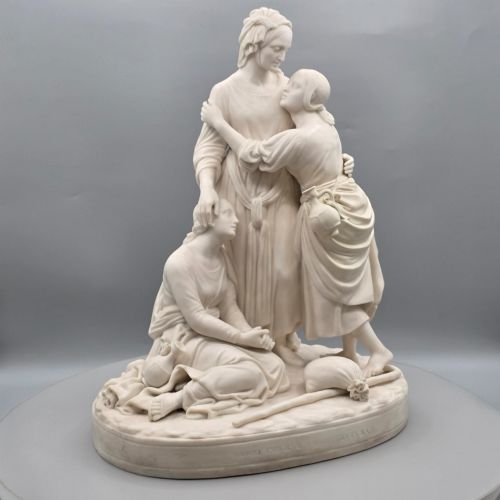
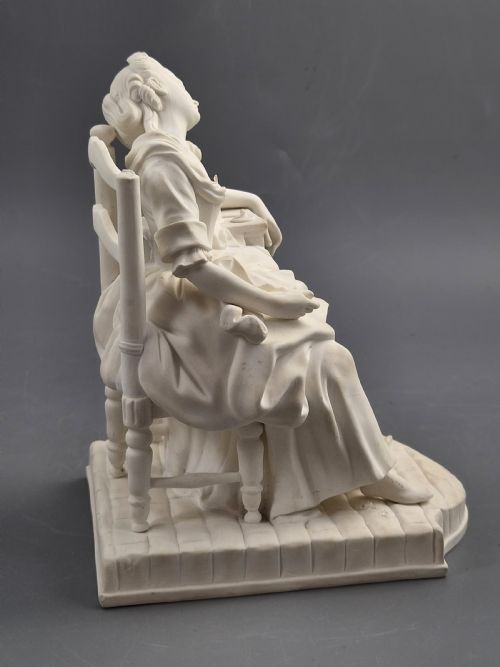
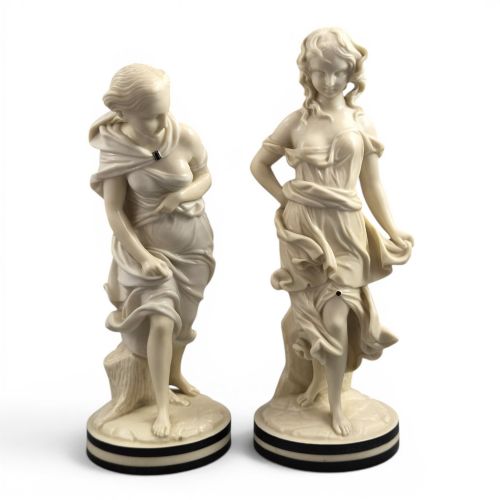
When searching for 19th century parian, a buyer encounters a range of unglazed porcelain objects that mimic white marble. The forms on this page include portrait busts of literary and political figures, figural groups, and single figures of classical or allegorical subjects.
Most pieces date across the Victorian period, including works from 1870. You will commonly find figures depicting historical characters, literary subjects, and mythological deities.
Many items relate directly to contemporary tastes for high art in the home, often produced via subscriptions or through factory editions. These sculptures served as domestic ornaments for the Victorian parlour, bringing classical sculpture into the private interior.
How they were made
These items are formed from parian porcelain, a special type of bisque porcelain developed in Britain to imitate carved marble. The ceramic body contains a high proportion of feldspar, which melts during firing to give the material its characteristic dense and slightly translucent quality.
Listings for 19th century parian feature both individual portrait busts and multi-figure groups executed entirely in unglazed parian porcelain.
What varies in quality
Quality in these porcelain sculptures rests on the crispness of the modelling and the depth of the relief work. Finer examples retain sharp facial expressions and clean separation in complex drapery, whereas lesser pieces can appear soft and blurred where the mould has worn.
The presence of factory stamps, artist signatures, or publisher marks elevates the standing of a piece. Larger sculptural groups and detailed portrait busts generally demonstrate a higher ambition in design than smaller, generic figures.
Copeland·Worcester·Minton·Art Union Of London
The 19th Century Parian Glossary
- Parian
- A type of unglazed white porcelain developed in the nineteenth century to imitate carved marble. It takes its name from Parian marble found on the Greek island of Paros.
- Bisque
- Porcelain that has been fired once without a glaze, resulting in a matte, porous surface resembling marble. This finish is essential for parian ware.
- Neoclassical
- An artistic style drawing inspiration from the classical art and culture of ancient Greece and Rome. It heavily influences the subject matter of Victorian parian figures.
- Figural group
- A sculpture composed of multiple human or allegorical figures interacting within a single scene. These groups often depict literary or biblical narratives.
Frequently Asked Questions
What is 19th century parian ware?
Parian ware is a type of unglazed white porcelain designed to look like carved marble. British potteries developed the material in the mid-nineteenth century for portrait busts and classical figures.
The ceramic body contains high levels of feldspar, which vitrifies during the high-temperature firing. This creates a durable material with a smooth, matte finish that captures fine detail.
How do I clean parian porcelain?
Because the surface is unglazed and porous, parian porcelain absorbs dirt and oils easily. Cleaning requires gentle brushing with a soft, dry tool to remove dust.
For stubborn marks, warm water with a mild detergent and a soft brush can be used very carefully. Avoid harsh chemical cleaners or soaking the piece, as moisture can become trapped.
Who made these ceramic sculptures?
Major British factories such as Copeland, Minton, and Worcester produced these figures during the Victorian era. Art unions also commissioned works from notable sculptors for distribution to members.
Many pieces bear factory stamps, registration marks, or artist signatures impressed into the clay. These marks help identify the manufacturer and sometimes the specific date of production.
How were parian figures displayed?
Victorian homes displayed these white porcelain sculptures on mantelpieces, sideboards, and dedicated pedestals. Their marble-like appearance brought an air of classical culture into the domestic parlour.
Collectors often paired portrait busts of statesmen or poets with allegorical figures. Wall domes and brackets were also utilised to showcase smaller plaques and portrait heads.