



19th Century Parian Figure
These 19th century parian figure examples bring neoclassical white statuary into domestic parlours.
What a 19th century parian figure is
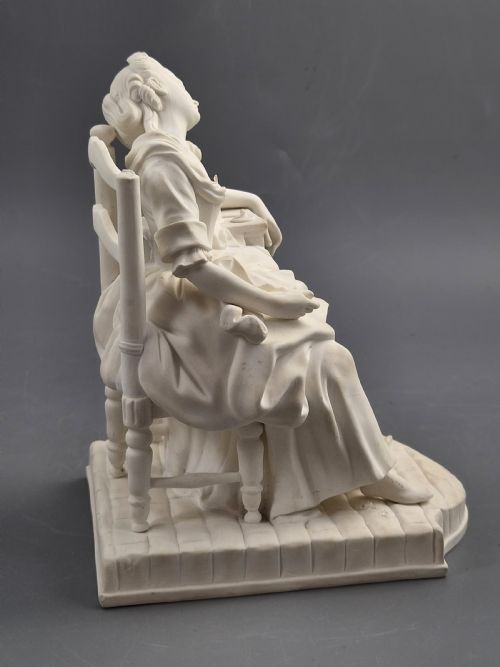
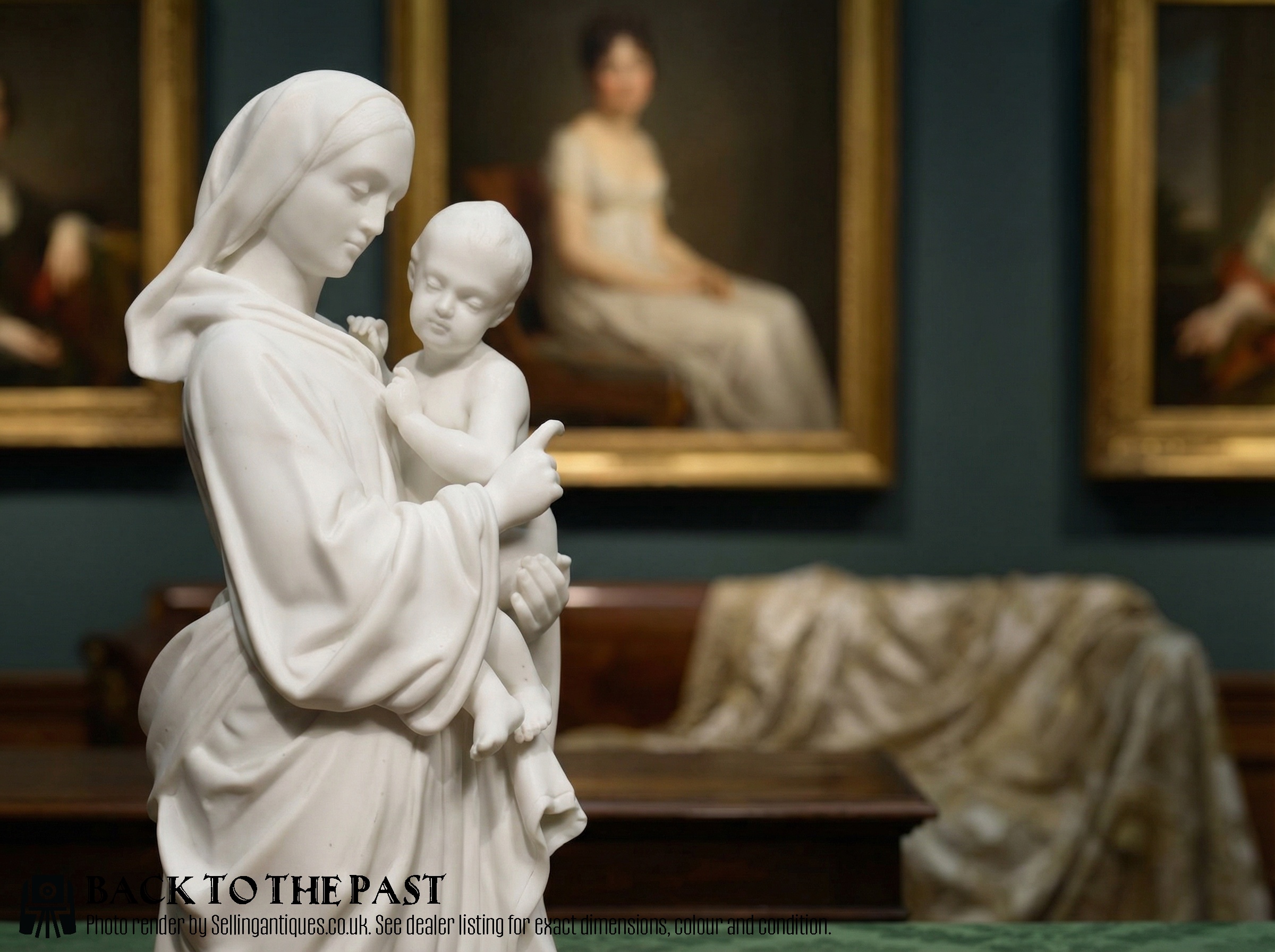
A 19th century parian figure represents the Victorian taste for classical sculpture rendered in unglazed biscuit porcelain. Collectors search for these pieces to acquire miniature monuments depicting literary characters, classical heroines, and allegorical subjects such as Solitude or Il Penseroso.
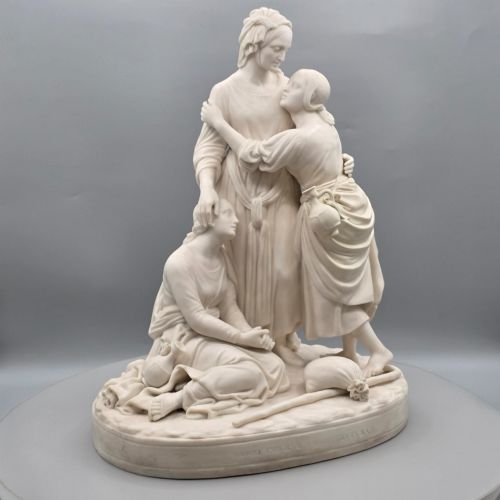
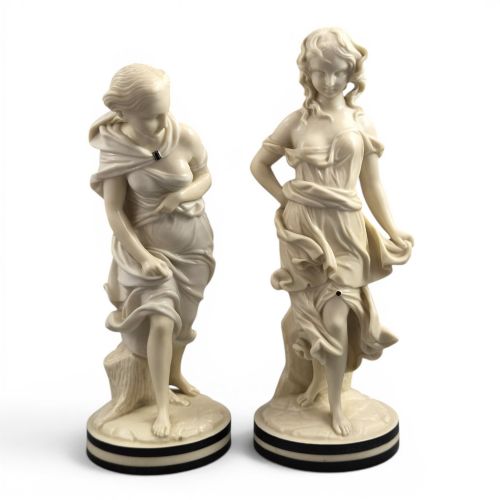
The pieces appearing on this page span the Victorian era, including specific dates around eighteen sixty and eighteen seventy alongside broader mid-nineteenth century examples. Forms range from single figures of ladies leaning on columns to complex sculptural groups like Naomi and her daughters-in-law.
Most entries are straightforward sculptures and statuettes, though pairs and signed works also populate the selection. Their matte white surface mimics carved marble without the prohibitive cost.
How they were made
Certain details on a 19th century parian figure received hand-finishing after removal from the mould, smoothing out seams and sharpening the contours of hair, baskets of grapes, or lamps. While the body remained unglazed, occasional highlights of paint appear on specific elements.
Retail Price Guide 2026
Typical UK retail prices for 19th century parian figure, calculated from the Sellingantiques database of over a million retail prices indexed since 2003. This retail price guide relies exclusively on Sellingantiques data; no external sources or auction records are used, so the figures do not describe the wider market.
What varies in quality
The refinement of the modelling distinguishes an ordinary 19th century parian figure from a superior one. Superior examples exhibit crisp detail in fingers, drapery folds, and facial expressions, whereas lesser pieces suffer from softened contours due to worn moulds.
The complexity of the composition also drives distinction, moving from simple single figures to multi-figure groups like Isaac and Rebekah or narrative subjects involving animals such as Ariadne and the panther.
Minton·H. Bourne
The 19th Century Parian Figure Glossary
- Parian ware
- A type of bisquit porcelain developed in the nineteenth century to imitate carved marble. It fires to a smooth, matte finish that resembles the stone quarried on the Greek island of Paros.
- Porcelain
- A ceramic material made by heating raw ingredients, including clay in the form of kaolin, to high temperatures. It forms the dense base of these white sculptures.
- Figurine
- A small statuette representing a human or animal figure. These pieces populate Victorian drawing rooms and cabinets.
- Victorian
- The period spanning the reign of Queen Victoria, during which these decorative sculptures were widely produced. It encompasses the specific dates and mid-century spans found in these listings.
Frequently Asked Questions
What is a 19th century parian figure made from?
These pieces consist of parian ware, which is a specialised porcelain body formulated with high feldspar content. This composition fires into an unglazed, matte surface that resembles carved marble.
Potters poured the liquid slip into moulds to capture intricate details like flowing drapery and facial expressions. The resulting material lacks the glossy shine of traditional tableware.
How were these figures displayed?
Victorian households placed these sculptures on mantelpieces, side tables, and within glass-fronted cabinets. Their bright white finish stood out against dark wooden furniture and patterned wallpapers.
Collectors often arranged them in pairs or matched groups to balance decorative displays in drawing rooms.
What subjects do these sculptures depict?
The designs draw heavily from classical mythology, literature, and biblical narratives. Common subjects include heroines like Ariadne, allegorical figures such as Solitude, and literary characters like Il Penseroso.
Maker catalogues also featured domestic scenes and figures with symbolic accessories, including baskets of grapes or lamps.
How do you date a parian figure?
Dating relies on recorded manufacturer marks, registration diamonds, and stylistic clues from the Victorian period. Pieces from the eighteen sixties and seventies often display crisper moulding than later mass-produced iterations.
Archival records and signatures from modellers or potteries help narrow down the production window.