
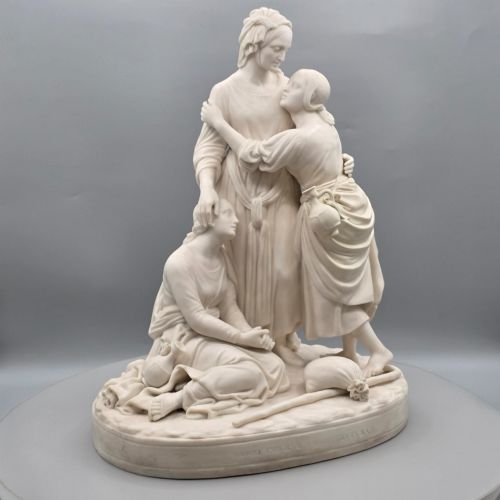
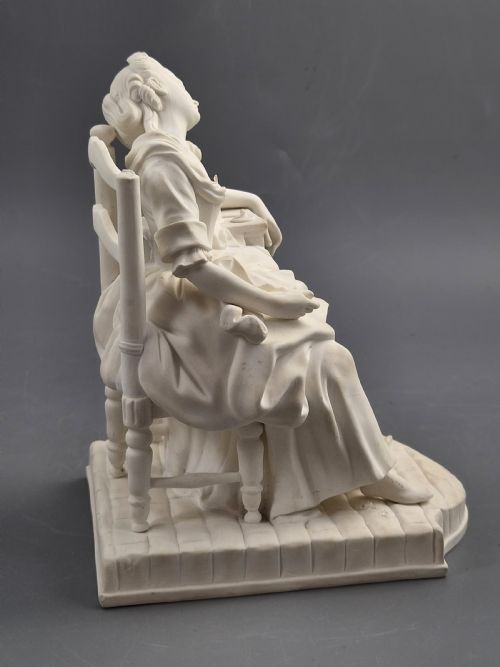

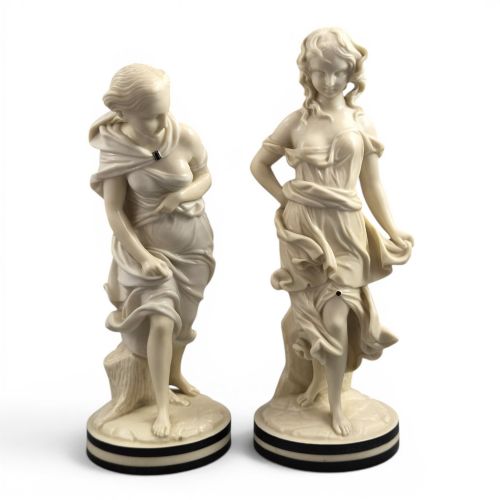


Victorian Parian Figurine
A victorian parian figurine brings tactile neoclassical sculpture into domestic rooms through unglazed porcelain modelled on marble.
Victorian Parian Figurine
When you search for a victorian parian figurine, you find unglazed ceramic sculptures produced across the nineteenth century, most often taking the form of classical maidens, literary subjects, and animals.
The examples on this page span from the mid-Victorian decades to the turn of the twentieth century, originating from English potteries and European makers working in neoclassical and neo-rococo styles.
You will encounter single figures, pairs, and sculptural groups depicting literary heroines, historical figures, and allegorical subjects modelled with smooth matte surfaces.
Materials and technique
These pieces are cast from liquid porcelain slip into intricate mould assemblies, then fired without glaze to produce a matte surface resembling carved marble.
Manufacturers such as Minton, Copeland, and Royal Worcester utilised specially formulated parian bodies containing high feldspar content, which matured at lower temperatures to achieve fine detail.
Select examples incorporate supplementary decoration including gilding, enamel, and pale coloured glazes to highlight garments or botanical elements.
Listings feature parian porcelain produced by English and European factories across the nineteenth century, spanning neoclassical figures and animal studies.
What determines quality
Quality rests primarily on the crispness of the modelling and the precision of the casting, which separates works derived from master sculptors from standard factory output.
Finer pieces retain sharp facial expressions, articulated drapery folds, and clean finishing that disguises mould lines without obscuring delicate surface textures.
Scale and ambition also define the range, distinguishing simple single-figure studies from large multi-figure sculptural groups.
Minton·Royal Worcester·Copeland·Triebner Ens And Co·James Hadley·Owen Hale
The Victorian Parian Figurine Glossary
- Parian ware
- A fine unglazed white porcelain developed in the mid-nineteenth century to imitate marble for sculptural figures and decorative objects.
- Biscuit porcelain
- Unglazed ceramic fired once before decoration, yielding a matte finish identical in texture to parian bodies.
- Neoclassical
- A revival style drawing inspiration from classical antiquity, featuring draped figures, mythological subjects, and formal symmetry.
- Slip
- A liquid suspension of clay and water poured into moulds to form hollow ceramic objects with intricate surface detail.
- Biscuit figure
- A sculptural ceramic piece left unglazed after firing, prioritising surface texture over glossy vitreous coatings.
Victorian Parian Figurine: Frequently Asked Questions
What is a parian figurine?
A parian figurine is an unglazed porcelain sculpture created to imitate carved marble during the nineteenth century. These pieces reproduce classical statues and contemporary sculptural works for domestic display.
They capture fine details through slip casting and low-temperature firing, producing a matte finish that highlights the sculptor's modelling.
How do I clean parian ware?
Parian ware requires gentle dusting with a soft brush because its unglazed matte surface readily absorbs oils and dirt. Avoid harsh chemical cleaners and excessive water.
For stubborn marks, use a soft sponge with mild soapy water, rinsing carefully and allowing the piece to dry naturally away from direct heat.
Are all parian figures white?
Most parian figures present a uniform white or off-white marble-like appearance. However, makers occasionally produced coloured parian or added enamel and gilding to specific details.
Certain pieces incorporate celadon glaze or contrasting tinted clay bodies to emphasise garments or natural settings.
Who made these figures?
Major British potteries such as Minton, Copeland, and Royal Worcester produced the majority of these sculptural works. European factories also contributed distinct figures and groups.
Renowned sculptors and modellers often provided the original designs from which these commercial porcelain editions were cast.