
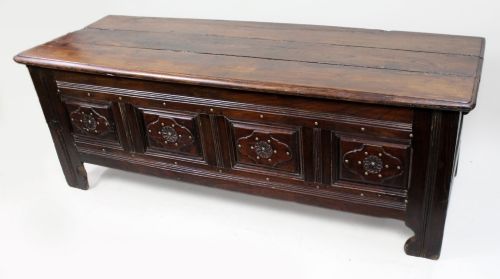
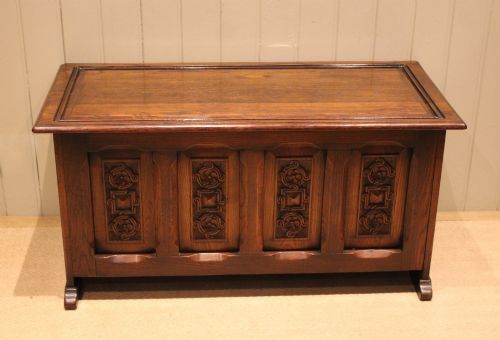
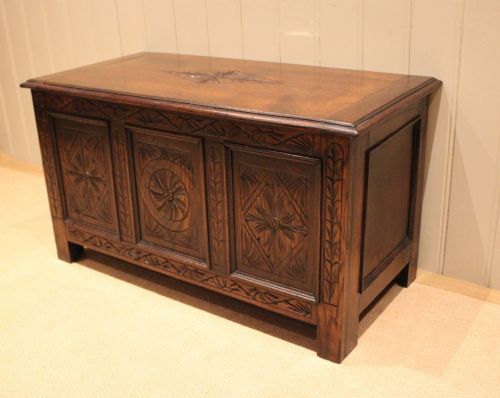
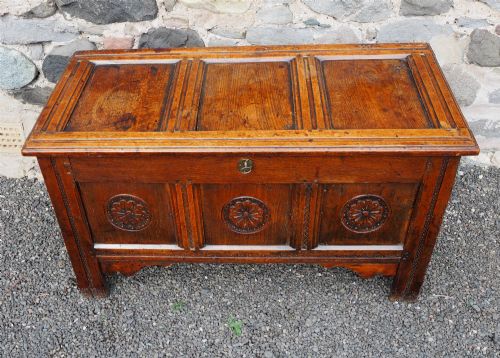
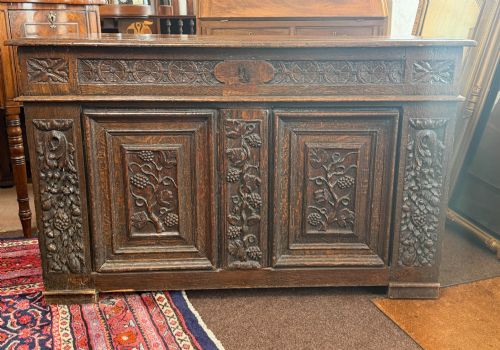
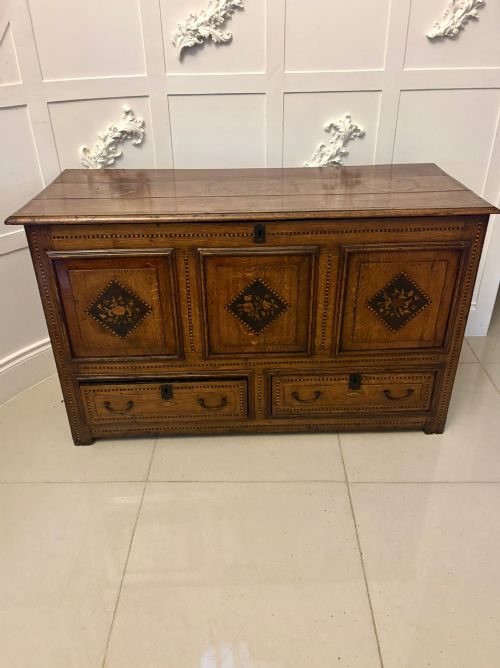
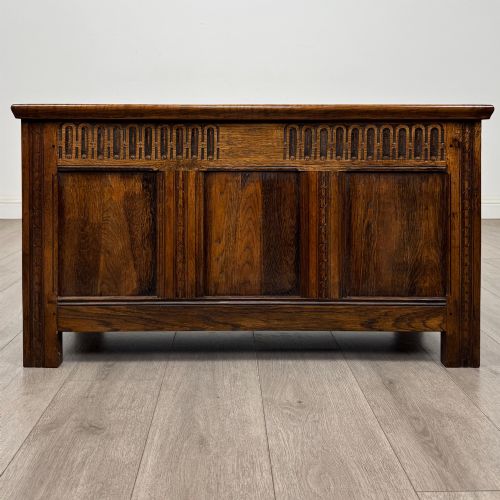


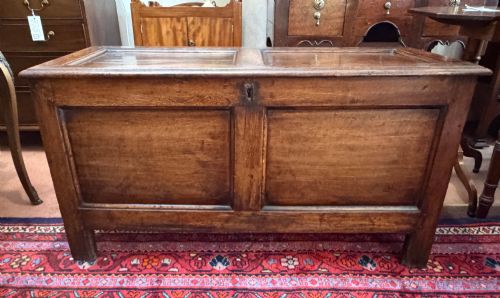
Paneled Oak Blanket Chest
A paneled oak blanket chest is a sturdy timber storage box built to hold household linens, apparel and valuables through the centuries.
Paneled Oak Blanket Chest
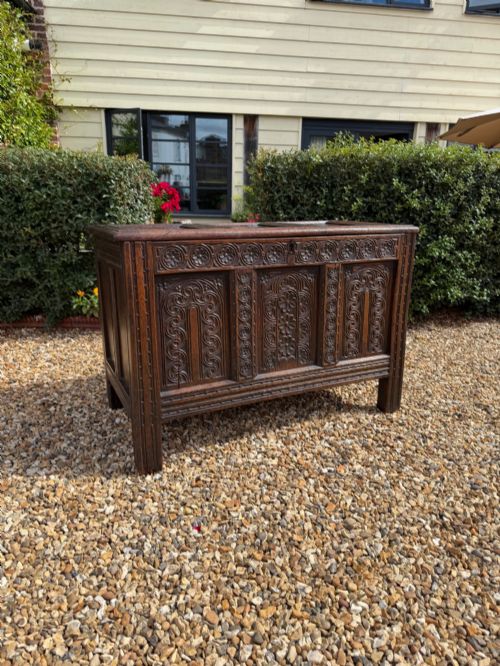
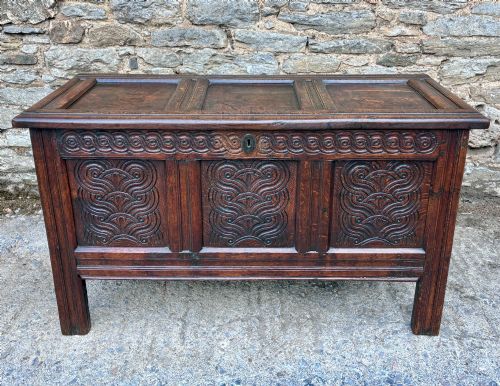
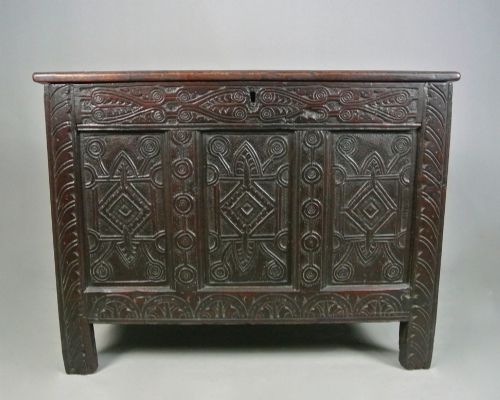
When you search for a paneled oak blanket chest, you encounter robust storage furniture constructed primarily from native British and European hardwoods. The selections span from sixteenth-century Elizabethan origins through the seventeenth and eighteenth centuries, alongside later revival pieces.
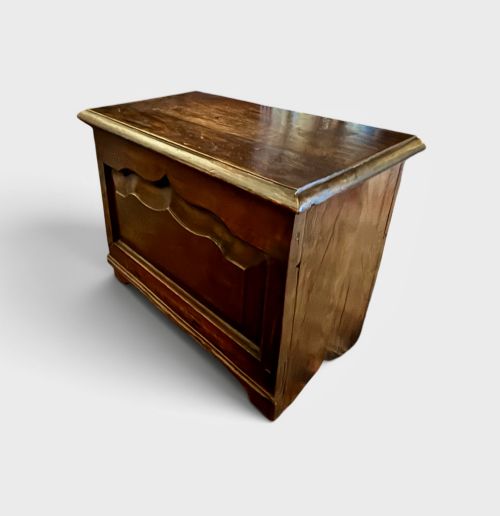
The most common formats on this page are traditional coffers, mule chests fitted with lower drawers, and smaller coffer bach designs originating from Wales. These pieces served practical domestic storage functions before fitted wardrobes became standard in bedrooms.
Examples range from restrained provincial French and Welsh workshops to intricately carved James I period items. Construction relies on pegged frame-and-panel assemblies designed to accommodate seasonal timber movement.
Materials and construction methods
Makers built these chests using solid oak timbers, often quarter-sawn to reveal rich medullary rays in the grain. Structural rigidity came from mortise and tenon joints secured with wooden dowels rather than metal nails.
Decoration on finer examples includes geometric marquetry inlay, contrasting wood inlays, and ebonised wood details. Iron and brass hinges, locks and escutcheons provided functional security for the contents inside.
The inventory spans the sixteenth century through the Edwardian era, with strong representation from the seventeenth and eighteenth centuries.
Assessing quality and authenticity
Quality in a paneled oak blanket chest rests on the integrity of the original timber and the crispness of any hand carving. Untouched surfaces displaying deep historic patina command higher regard than stripped or heavily restored boards.
Structural completeness also dictates value, particularly the survival of original floor boards, lid boards, and wrought iron hardware. Pieces retaining regional characteristics, such as specific Welsh or French provincial traits, show distinct craftsmanship.
The Paneled Oak Blanket Chest Glossary
- Coffer
- A large wooden box used for storing valuables, textiles, or documents. These form the primary ancestor of the modern chest of drawers.
- Mule chest
- A storage chest fitted with one or more drawers beneath the main compartment. This form emerged as makers sought easier access to garments without opening the top lid.
- Marquetry inlay
- Decorative patterns formed by fitting contrasting veneers into prepared recesses in the timber surface. This technique adds pictorial or geometric elaboration to the panels.
- Frame and panel
- A method of construction where a central floating panel sits within a grooved outer frame. This allows the wood to expand and contract safely with humidity changes.
Paneled Oak Blanket Chest: Frequently Asked Questions
How were paneled oak blanket chests used historically?
These chests served as primary storage furniture in domestic interiors for holding heavy woolen blankets, household linens, and valuable personal belongings. Their flat lids also allowed them to function as tables or benches in the main rooms of a home.
In wealthier households, they secured silver and documents, while modest rural homes relied on them for general wardrobe storage before fitted closets existed.
What is the difference between a coffer and a mule chest?
A standard coffer is a deep box accessed solely by lifting the hinged lid from the top. This means items at the bottom require removing everything stacked above them.
A mule chest integrates one or more sliding drawers beneath the main compartment. This hybrid design allows everyday items to be stored accessibly in the drawers while bulky blankets remain in the upper chest.
How do I care for antique oak furniture?
Protect antique oak by placing pieces away from direct heat sources, radiators, and strong sunlight which can dry out the timber and cause splitting. Maintain a stable indoor humidity level to prevent the wood from moving excessively.
Apply microcrystalline wax occasionally to nourish the surface and preserve the historic patina. Avoid silicone-based sprays or modern polishes that can damage old finishes.
How can I tell an early chest from a later revival piece?
Early pieces display hand-tooled joinery marks, irregular adze marks on internal boards, and hand-forged iron hardware secured with traditional fixings. The timber shows natural oxidation and wear patterns consistent centuries of use.
Revival pieces from the nineteenth and twentieth centuries often exhibit uniform machine sawing, standardised screws, and cleaner internal surfaces lacking historic wear.