
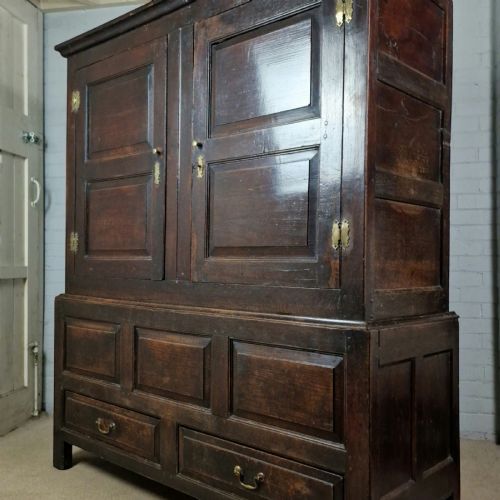
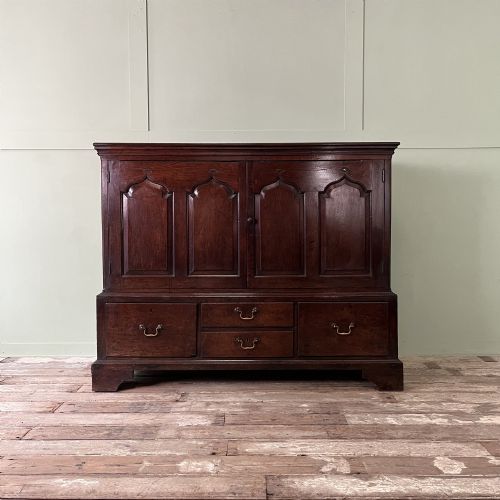
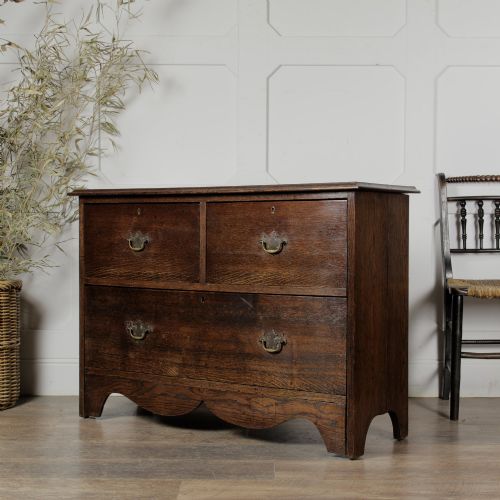
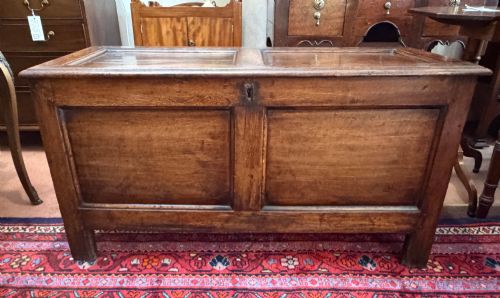
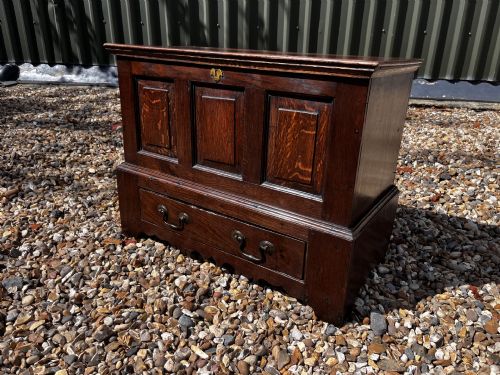
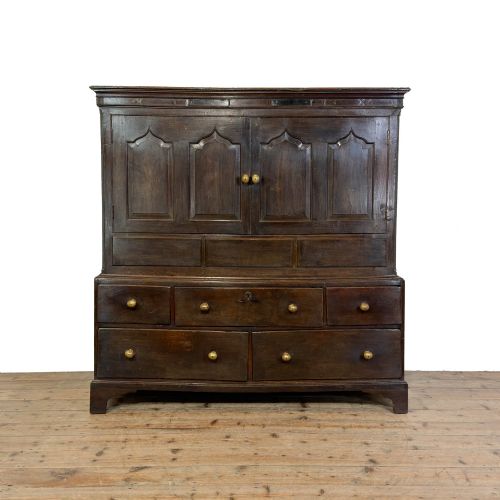
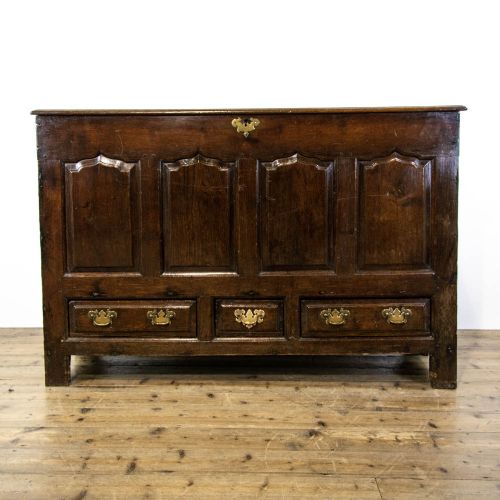
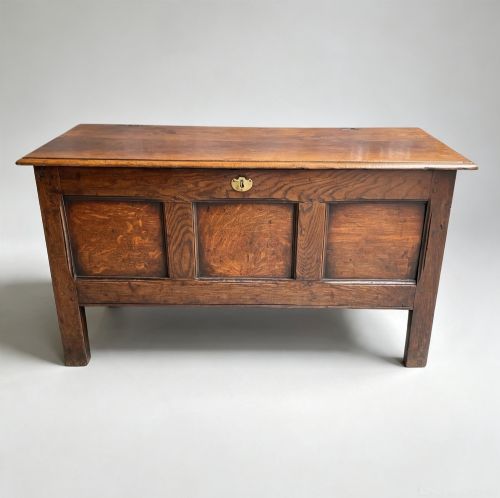


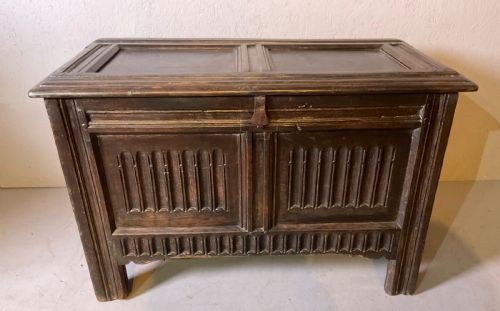

Country Oak Mule Chest
A country oak mule chest brings centuries of practical English domestic storage into a room with solid timber and honest drawer space beneath the lid.
Country Oak Mule Chest
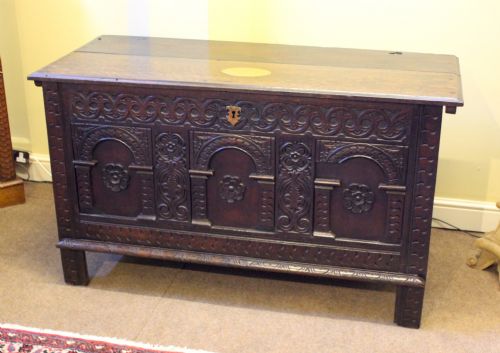
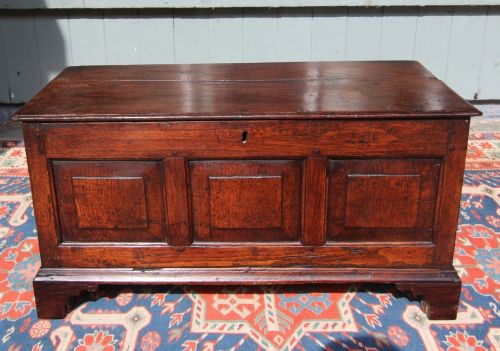
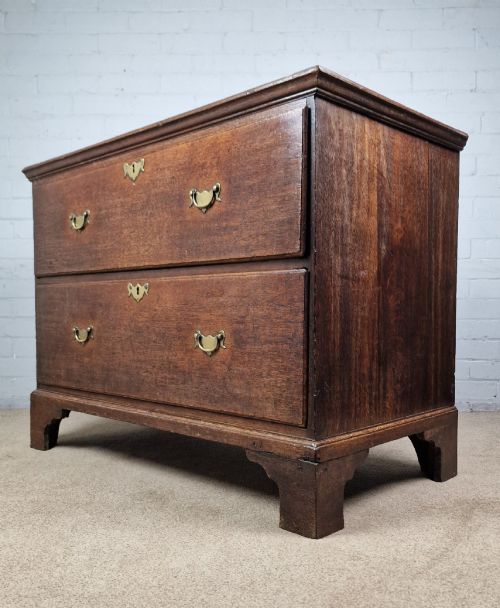
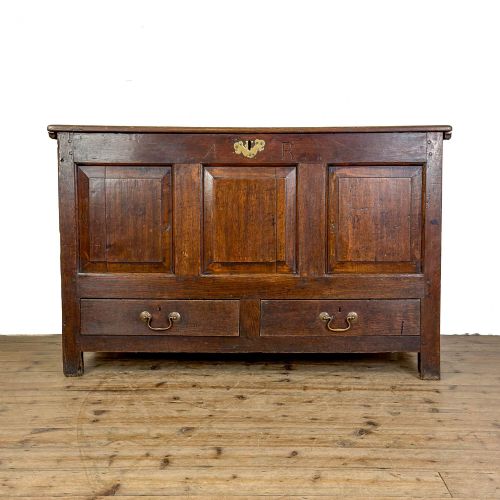
A country oak mule chest is a storage box fitted with one or more drawers at the base, combining the traditional lift-top coffer with the accessibility of chest storage. The pieces meeting this search phrase range from seventeenth-century joined examples to later Georgian and nineteenth-century vernacular interpretations made in regional workshops.
Most entries belong to the eighteenth century or the Georgian period, displaying the regional traditions of English and Welsh country makers. Alongside standard mule chests, the record includes related vernacular forms such as panelled coffers, blanket chests, and low linen press cupboards.
Buyers encounter items built for daily utility in farmhouses and country houses, often featuring internal compartments like candle boxes. The construction relies heavily on native timber, showing regional variations in carving, panel assembly, and proportion.
What varies in quality
Quality rests in the integrity of the timber, the crispness of the original joinery, and the retention of honest surface patination accumulated through generations of use. Pieces that retain their original brass hardware, unreplaced feet, and sound structural framing command greater respect from collectors.
Proportion and regional character also dictate distinction, separating standard utility pieces from more ambitious vernacular commissions with carved panels or marquetry inlay. The balance between the upper chest cavity and the lower drawer configuration defines the visual success of the form.
Country Oak Mule Chest Retail Price Guide 2026
Typical asking prices for country oak mule chest among the pieces listed under this phrase on Sellingantiques today, from the lower quarter to the upper quarter. They describe what is for sale here now, not the wider market.
Many surviving mule chests still harbour generations of accumulated dust in their secret candle boxes, untouched since the Georgian era.
The Country Oak Mule Chest Glossary
- Mule chest
- A storage chest featuring one or more drawers built beneath the main lift-top compartment. This form bridged the transition between the traditional coffer and the modern chest of drawers.
- Coffer
- A heavy wooden chest with a hinged lid, traditionally used for storing valuables, textiles, or documents. Early examples rely on six-board or joined frame-and-panel construction.
- Candle box
- A small internal compartment fixed inside a chest or coffer near the top edge. It protected domestic candles from dust and damage.
- Linen fold
- A carved panel motif popular in early woodwork that imitates folded linen cloth. It appears frequently on seventeenth-century panels.
- Vernacular
- Objects built by regional craftsmen following local traditions rather than metropolitan court styles. These pieces prioritise practical function and available local materials.
Country Oak Mule Chest: Frequently Asked Questions
What is a country oak mule chest used for?
These chests provide deep interior storage beneath a hinged lid alongside lower drawer space for smaller items. Historically used for blankets and household textiles, they function well in modern interiors for linens or general storage.
The combination of a top well and base drawers allows owners to separate bulky items from everyday articles. Their sturdy timber tops also serve as display surfaces in hallways or living spaces.
How do I date an 18th century oak chest?
Dating relies on observing construction methods, handle types, and panel styles. Seventeenth and early eighteenth-century pieces often use hand-riven oak with pegged frame-and-panel assembly, while later Georgian examples introduce refined mouldings and fitted brasses.
Secondary woods, nail types, and the degree of hand-tool marking help narrow the period of manufacture. Regional variations in Welsh and English country workshops also provide clues to the decade of origin.
What is the difference between a coffer and a mule chest?
A standard coffer consists solely of a chest cavity with a lid opening from the top. A mule chest adds one or more functional drawers beneath that main compartment.
This addition of base drawers marks an evolutionary step in domestic furniture design. It allowed users to access stored items without having to lift objects off the top of the chest.
Where were mule chests made?
Mule chests were produced across England and Wales by local carpenters and joiners working in rural workshops. Regional characteristics often link specific decorative carving or timber choices to areas like Snowdonia or Carmarthenshire.
Makers utilised locally felled native oak rather than imported foreign timber. This reliance on regional materials gives each piece its distinct local character.