


Oak Blanket Box Chest
When shopping for an oak blanket box chest, buyers secure a practical storage piece rooted in centuries of domestic history.
Oak Blanket Box Chest
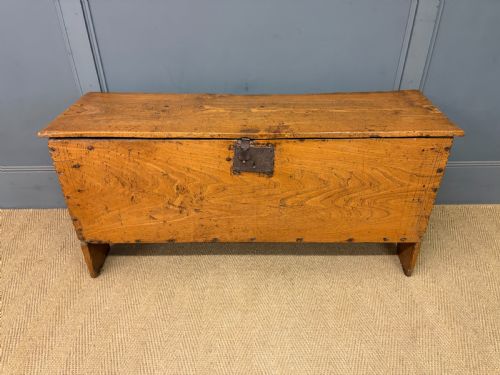
An oak blanket box chest represents a utilitarian storage vessel designed to hold textiles, valuables, and domestic goods. These sturdy containers appear across domestic settings from the sixteenth century through the Georgian era and into later revival periods.
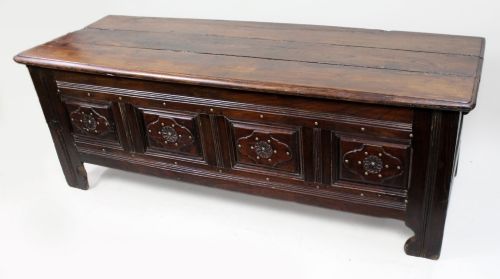
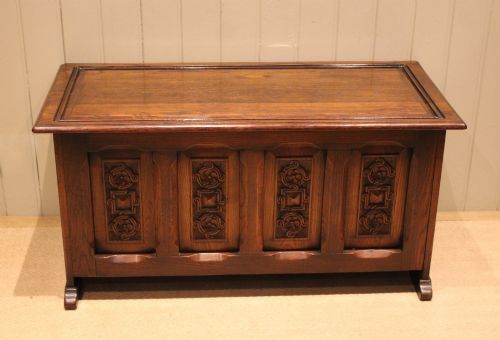
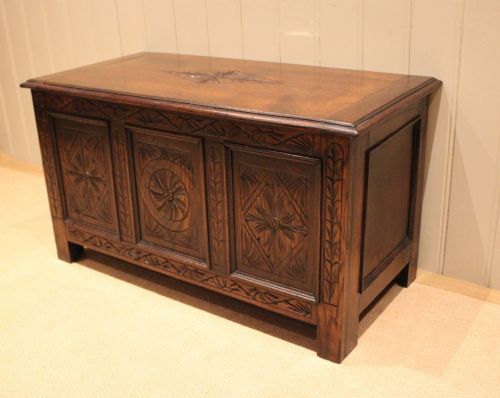
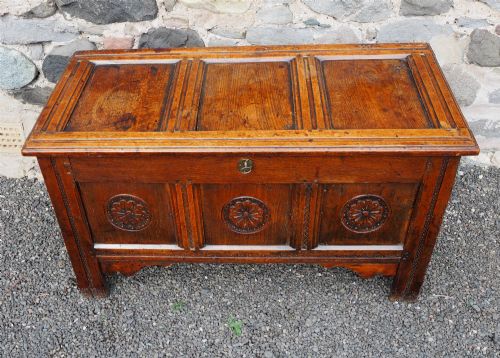
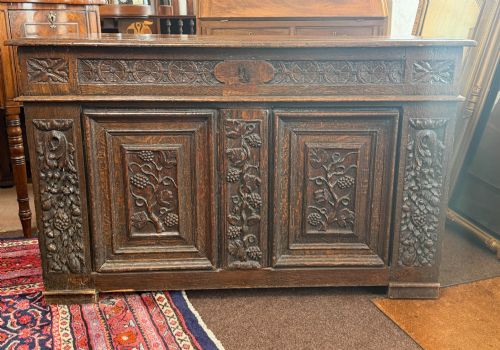
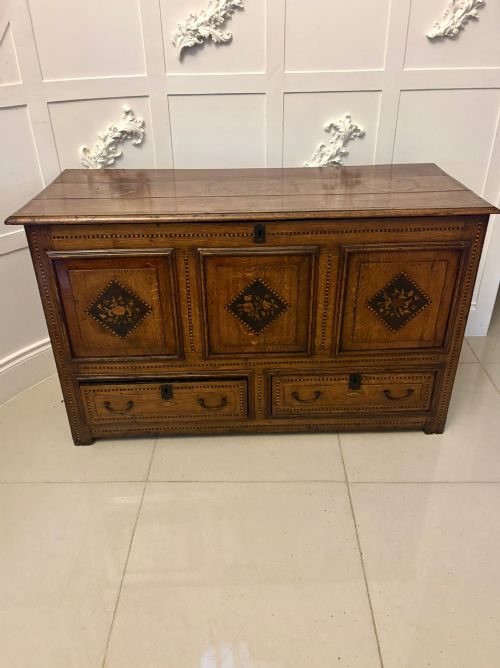
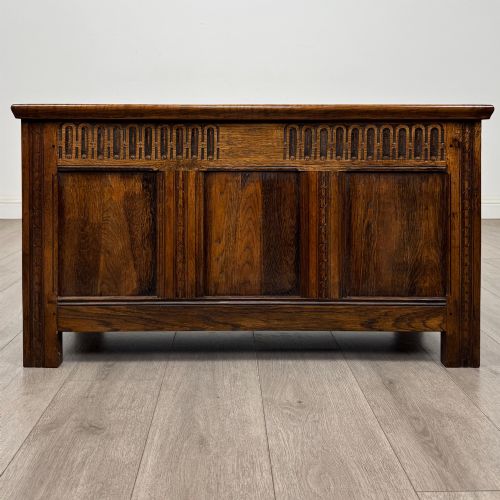
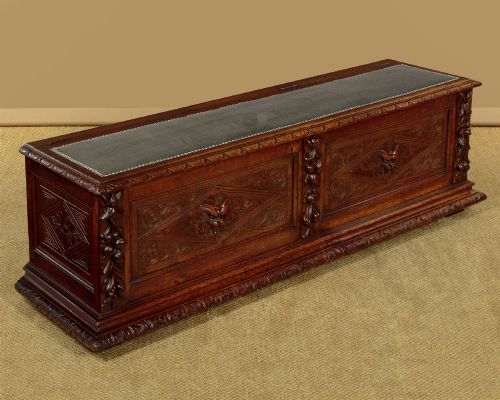
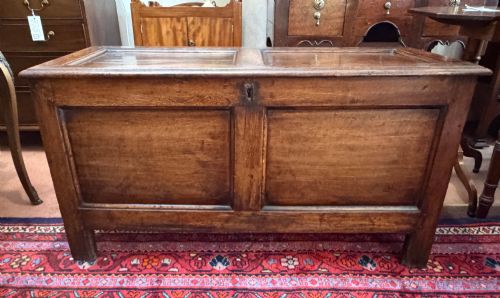
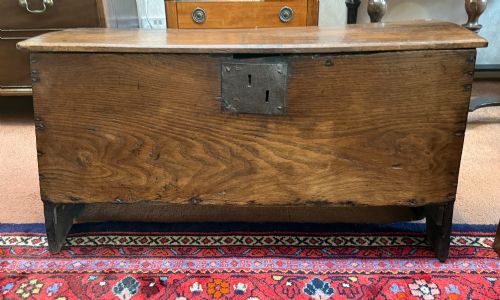
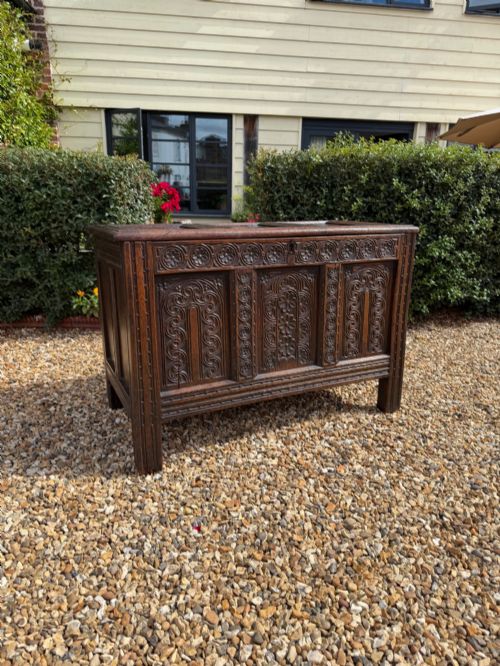
The selections on this page span simple boarded construction to elaborate panelled coffers and mule chests equipped with lower drawers. Buyers encounter regional variants such as Welsh coffer bach and geometric panelled trunks alongside carved seventeenth-century examples.
How They Were Made
Joinery defines these pieces, utilising framed panels held together with pegged tenons rather than simple nailed boards. Artisans relied primarily on solid oak, occasionally incorporating secondary timbers like elm alongside iron and brass hardware.
Surface ornamentation involved hand carving, geometric moulding, and occasional marquetry inlay to embellish the structural framework. Over centuries, natural ageing developed deep patinas across the exposed grain.
What Varies in Quality
Construction integrity separates standard utility boxes from superior examples, particularly the survival of original lids, floorboards, and hinges. Master carpentry shows in tight joints and well-proportioned panels that withstand centuries of use.
Depth of carving and sophistication of inlay distinguish individual pieces. Rich surface patination and documented regional origins add significant character to surviving examples.
The Oak Blanket Box Chest Glossary
- Mule chest
- A storage chest featuring one or more drawers beneath the main internal compartment. This form bridges the traditional coffer and the modern chest of drawers.
- Coffer
- A heavy wooden box with a hinged lid used for safe storage of valuables and linens. Early versions often utilised simple boarded construction before frame and panel methods took precedence.
- Marquetry inlay
- Decorative patterns formed by fitting contrasting pieces of wood veneer into prepared recesses. This technique creates geometric or floral motifs across the surface.
- Coffer bach
- A small Welsh oak coffer traditionally given as a wedding gift or dowry chest. These miniature storage pieces display distinct regional vernacular carpentry.
- Panelling
- A method of construction where vertical stiles and horizontal rails enclose a floating central board. This technique allows wood to expand and contract safely with humidity changes.
Oak Blanket Box Chest: Frequently Asked Questions
What is a mule chest?
A mule chest combines a traditional lidded storage box with one or more lower drawers. This hybrid form emerged as households sought easier access to garments without disturbing items stored on top.
Carpenters built these pieces using joined oak framing, mounting the drawers below the primary internal well.
How do I date an oak chest?
Dating relies on observing construction methods, hinge types, and decorative styles. Sixteenth and seventeenth-century examples often display boarded six-plank construction or heavy geometric mouldings.
Later Georgian pieces frequently incorporate framed panels and integrated base drawers. Tool marks and fastener types provide further clues to age.
Where were these chests made?
Surviving examples originate from English workshops as well as regional centres in Wales and continental Europe. Distinct local styles emerge in Welsh coffer bach and Flemish or French provincial coffers.
Local timber availability dictated the primary use of oak alongside secondary woods like elm.
How can I use an antique chest today?
These sturdy boxes serve as functional coffee tables, hallway seating, and blanket storage units. Their flat lids and robust construction accommodate everyday domestic items.
Placing them in living spaces preserves their original purpose while displaying historical joinery.