




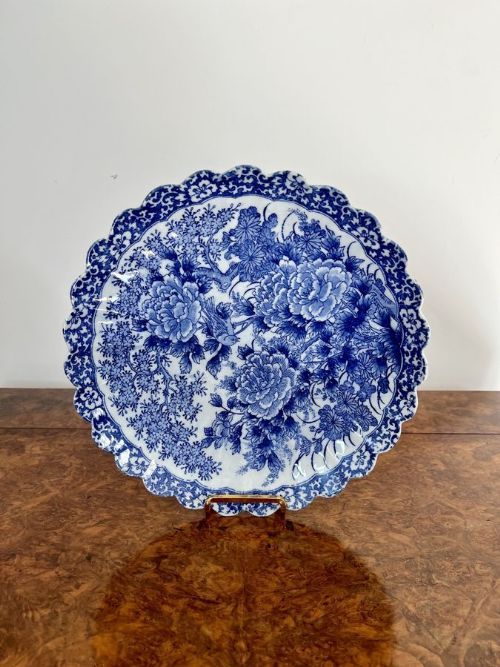


Oriental Wall Platter
Oriental wall platters bring bold hand-painted porcelain and intricate cloisonne enamel into a room, offering centuries of Asian artistry for display.

Oriental Wall Platter
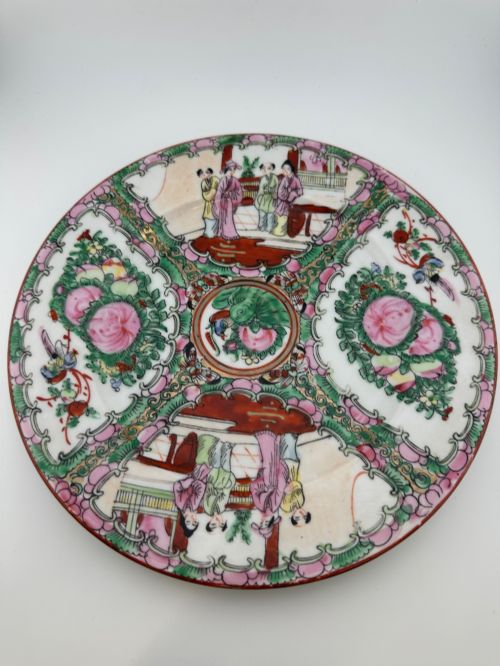
An oriental wall platter brings substantial scale and decorative impact to an interior, functioning primarily as a display piece rather than tableware. Buyers searching this phrase encounter large decorative chargers, shallow dishes, and wall plates spanning the late nineteenth century and the Meiji period.
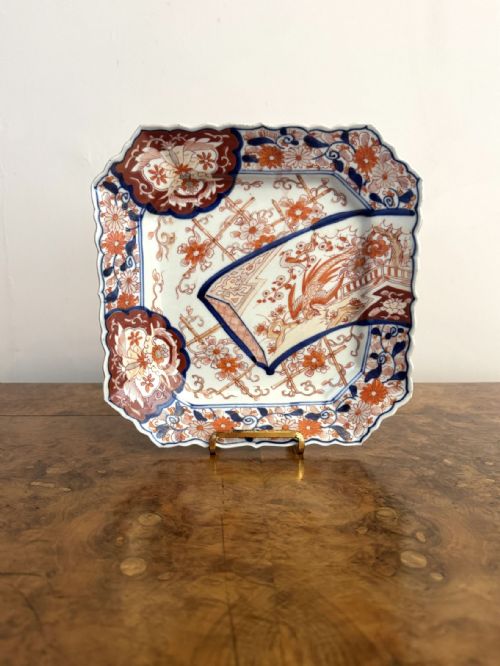
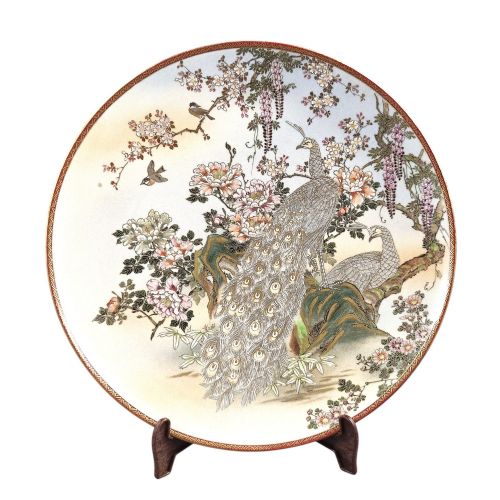
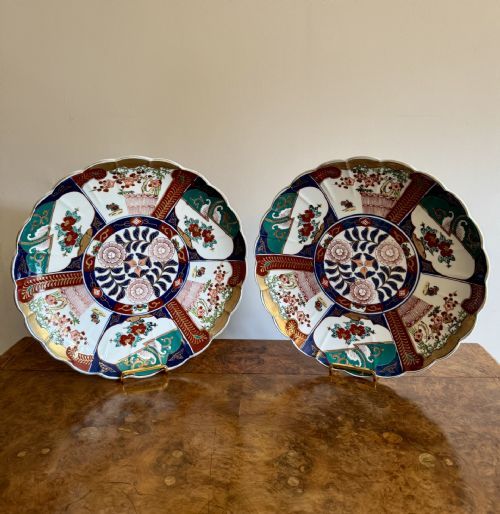
The selection leans heavily toward Japanese ceramics and metalwork, particularly Imari porcelain, Kutani wares, Satsuma earthenware, and wired cloisonne enamel. Pieces originating from Chinese kilns also appear, representing Qing Dynasty traditions and earlier styles.
Forms vary from traditional circular chargers to square shapes, fan-shaped plates, and oval dishes designed to be hung or mounted. These items draw the eye through complex pictorial scenes, floral motifs, and symbolic ornamentation executed in rich palettes.
Materials and Techniques
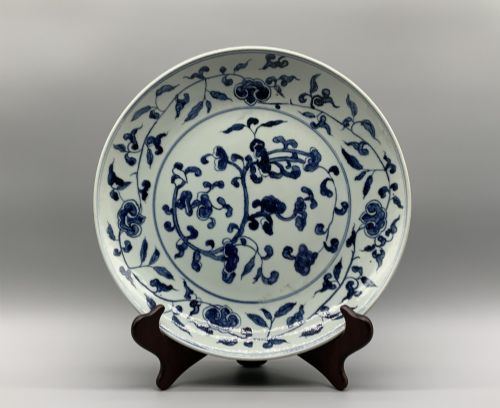
Ceramic platters utilise high-fired porcelain or earthenware bodies finished with cobalt blue underglazes, polychrome enamel pigments, and occasional gilt detailing. Potters shaped these wide vessels by hand or on the wheel before applying meticulous hand-painted designs of landscapes, deities, and fauna.
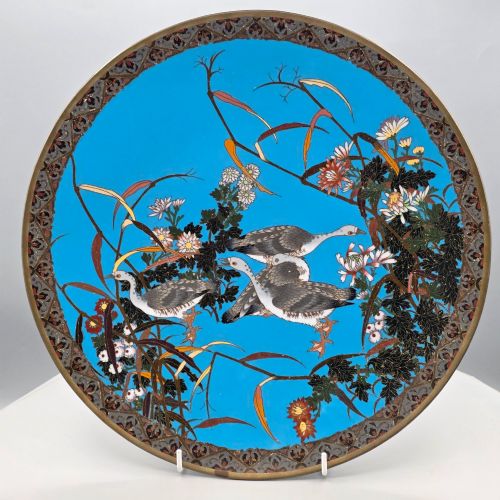
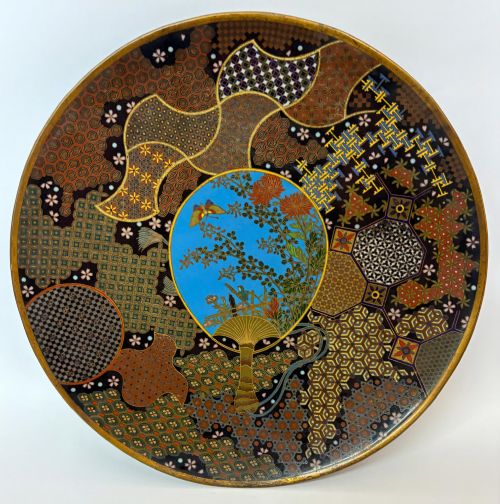
Cloisonne enamel pieces rely on fine brass or copper bases mapped with delicate metal wires to form intricate cells. These compartments are packed with coloured enamel pastes and fired multiple times before grinding and polishing to a smooth finish.
Select examples incorporate moriage raised slip decoration, lacquer work, or copper framing to add texture and depth to the surface design. The interaction of metallic elements with vitreous glazes defines the tactile quality of the medium.
The selection includes Japanese Imari, Kutani, and Satsuma forms alongside detailed cloisonne enamel chargers.
Assessing Quality and Execution
The density and precision of the hand-painted brushwork separate ordinary production from superior examples. Masterpieces display exact linework in complex figural scenes involving samurai, deities, or detailed bird and floral compositions.
In cloisonne enamelling, the fineness of the wirework and the absence of pitting or distortion across large surfaces indicate higher skill. Superior metal plates maintain absolute control during high-temperature firings, yielding crisp divisions between enamel colours.
The depth of the glaze palette and the successful integration of gold leaf or moriage embellishments contribute to a stronger visual presence. Scale also plays a role, with exceptionally large chargers requiring advanced technical proficiency to prevent warping during the kiln process.
The Oriental Wall Platter Glossary
- Imari
- A style of Japanese porcelain featuring a distinct palette of underglaze blue, iron red, and gold, named after the port of export. These wares gained immense popularity across Europe during the Edo and Meiji periods.
- Cloisonne
- A metalworking technique where thin flat wires are soldered to a copper or brass body to create compartments for enamel pastes. The piece is fired and polished to produce a smooth, patterned surface.
- Kutani
- Japanese coloured porcelain known for bold pictorial designs, often dominated by rich greens, blues, yellows, and purples. Production centred on the Ishikawa prefecture during the nineteenth century.
- Satsuma
- Japanese earthenware characterised by a fine ivory crackle-glaze finished with delicate polychrome enamels and raised gold accents. These decorative pieces frequently depict court figures, landscapes, and floral motifs.
- Charger
- A large ornamental plate or platter designed specifically for display on a sideboard, table stand, or wall mounting rather than for serving food.
Oriental Wall Platter: Frequently Asked Questions
How do I hang an oriental wall platter safely?
Heavy ceramic and cloisonne chargers require robust, adjustable spring-loaded brass hangers designed to distribute weight evenly around the rim. Ensure the wall fixing is secured into a stud or uses an appropriate wall anchor rated for the weight of the piece.
Position the platter away from direct sunlight and high-moisture areas to protect fragile enamel surfaces and gold leaf details over time.
What is the difference between Imari and Kutani wares?
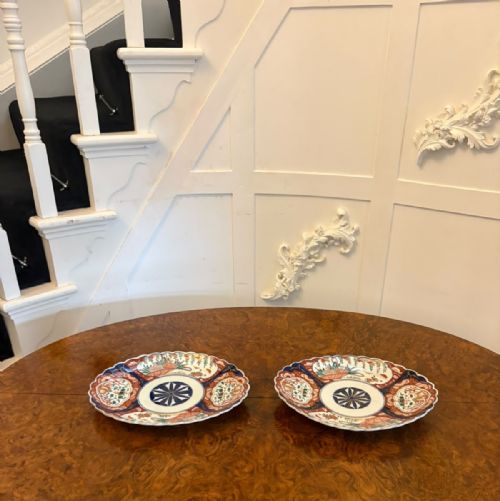
Imari porcelain relies primarily on a rigid colour scheme of cobalt blue and iron red, frequently heightened with gold on a white ceramic body. The patterns often incorporate geometric borders surrounding floral or landscape panels.
Kutani wares utilise a broader, heavier palette dominated by deep greens and earthy tones, focusing on dense figurative scenes and intricate pictorial storytelling.
How do I clean antique cloisonne and porcelain platters?
Dust enamel and ceramic surfaces gently with a soft, dry microfibre cloth or a clean ostrich feather duster. Avoid liquid cleaners, chemical solvents, or water immersion, which can damage aged glazes or corrode exposed metal wires.
Professional conservation advice should be sought if deeper cleaning is required to remove stubborn accumulated residue.
How can I tell the Meiji period from other eras?
The Meiji period spans from eighteen sixty-eight to nineteen twelve, a time when Japanese craftsmanship expanded rapidly for export markets. Pieces from this era often display exceptional technical refinement in cloisonne wirework and highly detailed polychrome enamel painting.
Markings on the reverse, stylistic markers, and the evolution of export regulations help narrow down the production decade.