
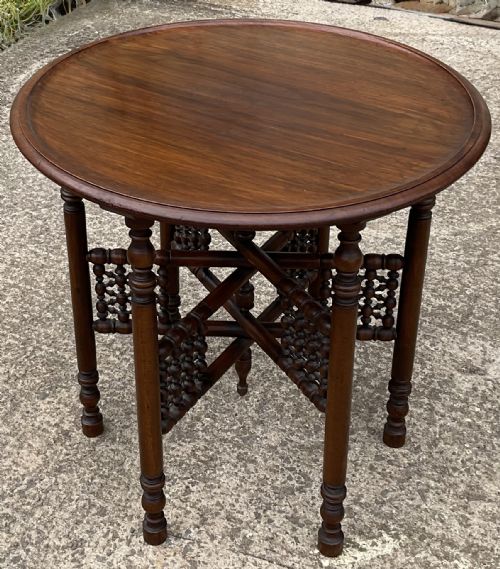
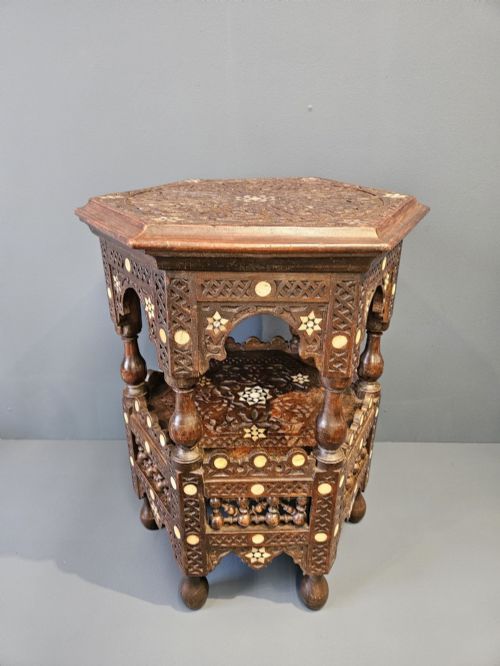

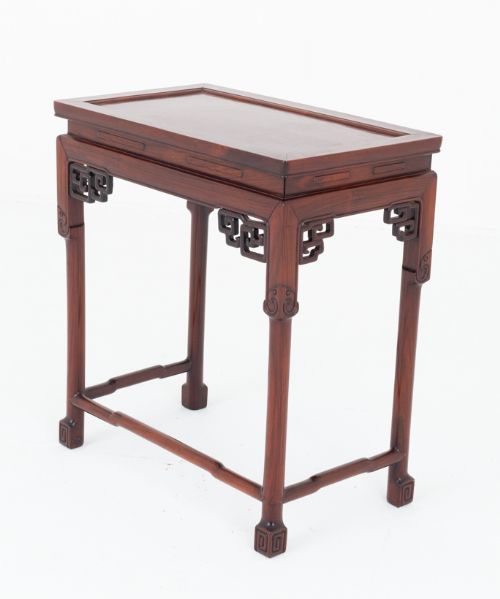
Oriental Carved Tea Table
An oriental carved tea table brings deep relief, rich timber and intricate handwork to a room that needs a focal point.
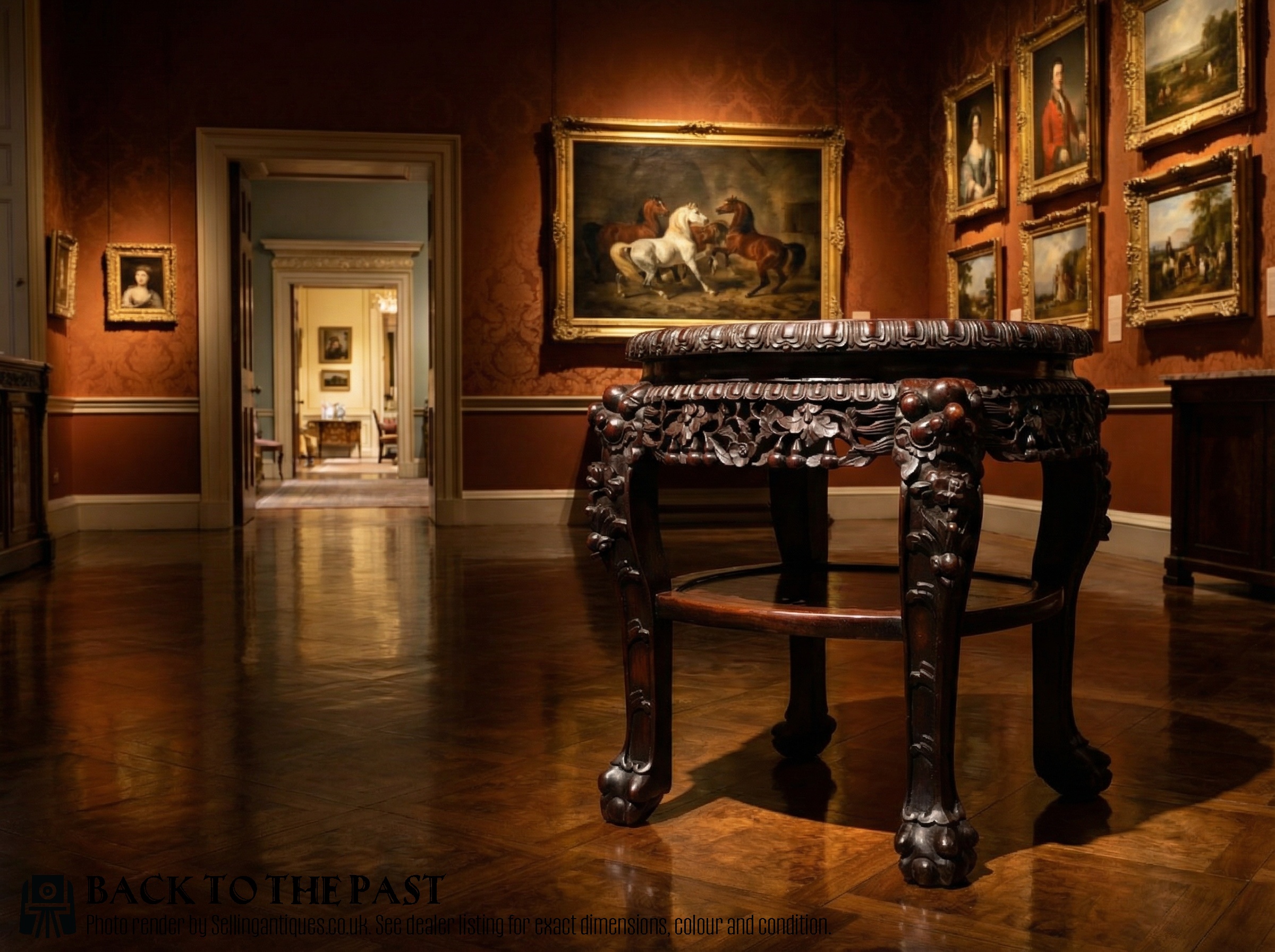
Oriental Carved Tea Table
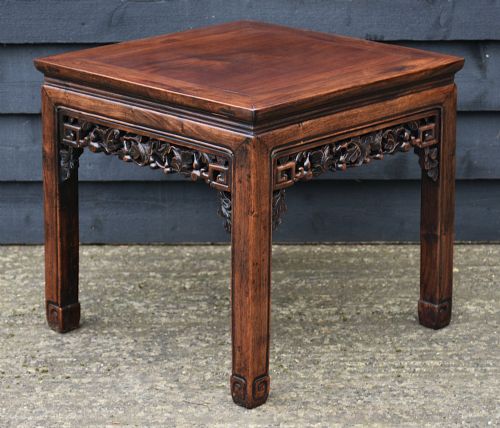
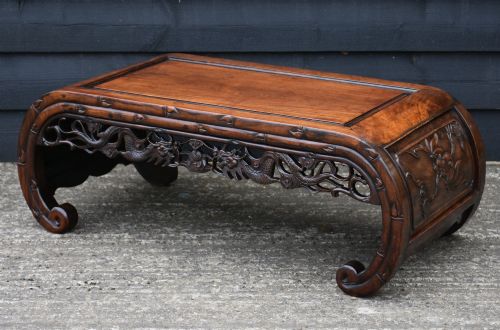
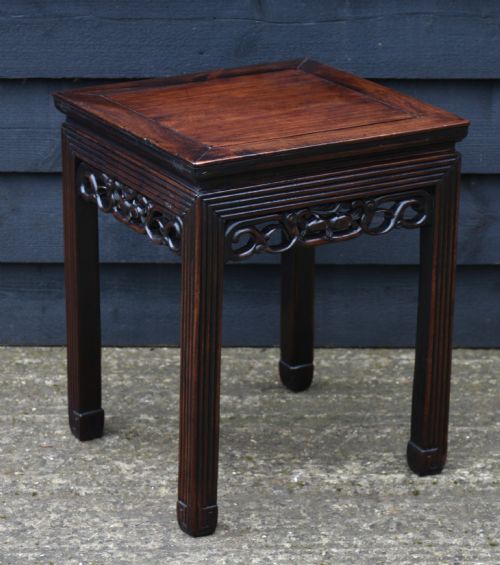
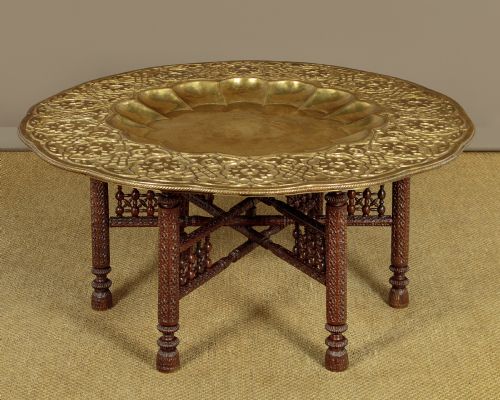
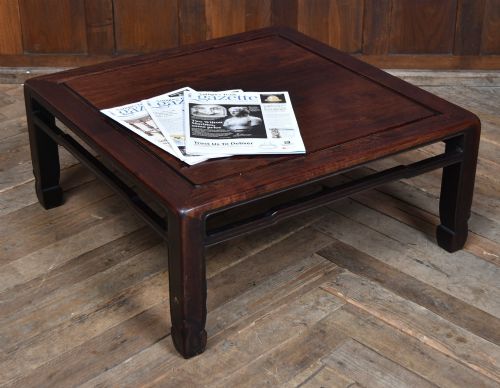
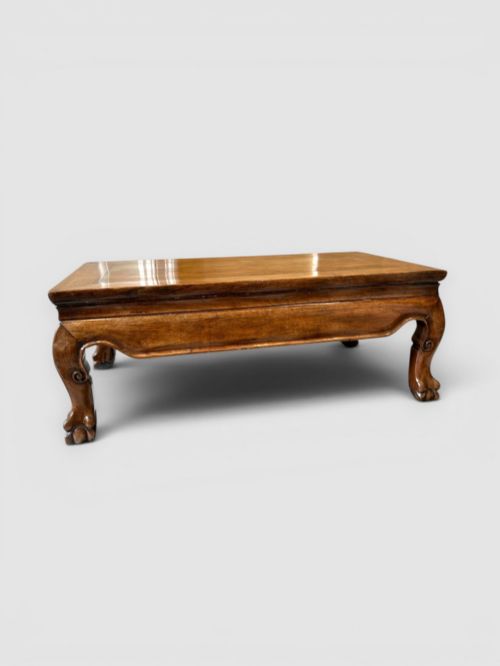
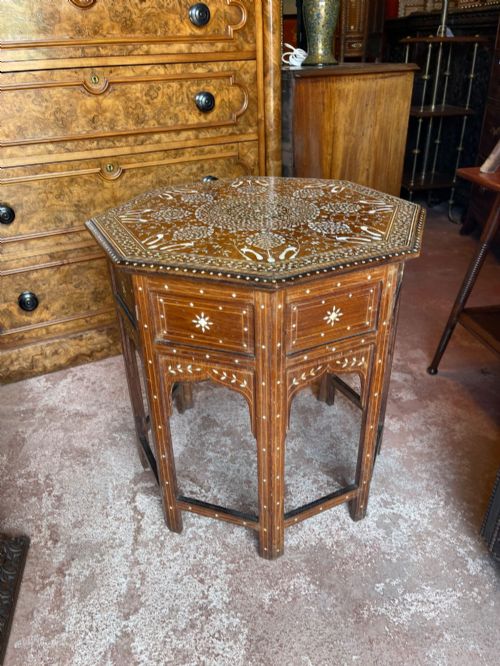
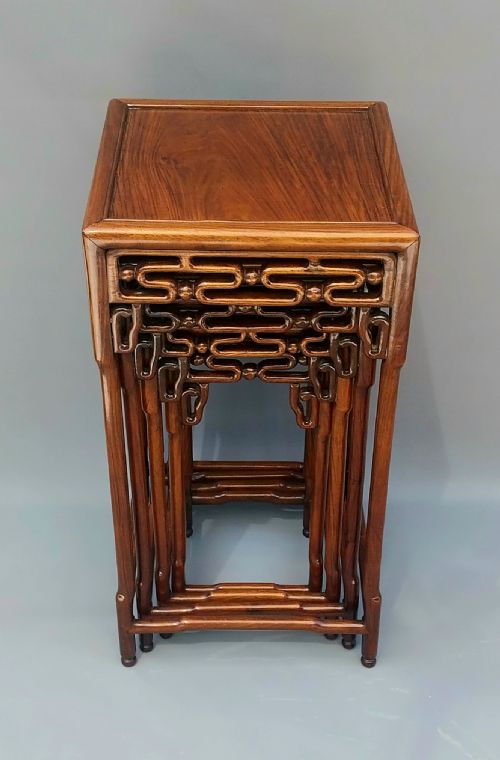
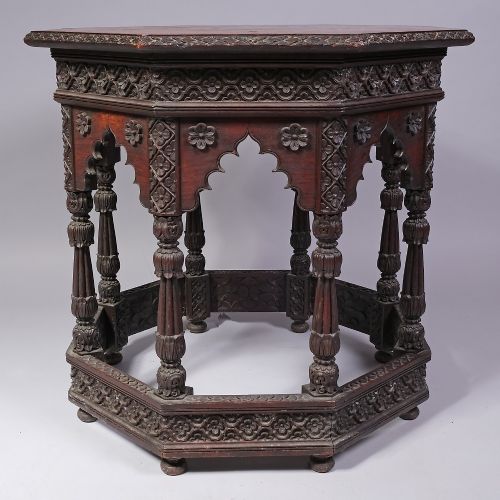
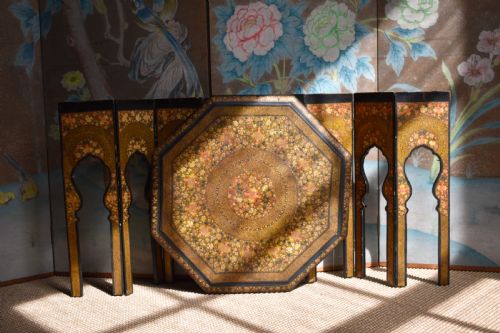
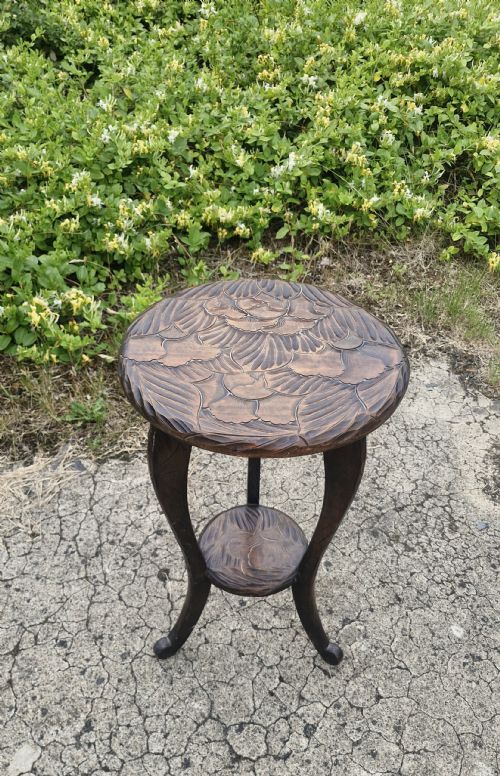
When you search for an oriental carved tea table, you encounter low opium tables, nests of four tables, octagonal occasional tables, and coffee tables originating from Chinese, Anglo-Indian, and Moorish traditions.
The version you are most likely to meet on this page is a low hardwood or rosewood table from the nineteenth century or the early decades of the twentieth century, often featuring detailed carvings of dragons, foliage, or geometric patterns.
These pieces cross several styles, including Chinese Export, Qing Dynasty, and Anglo-Indian Colonial, functioning historically as low seating surfaces, tea ceremony stands, or display pieces.
Materials and construction
Carpenters utilised dense regional timbers such as rosewood, teak, padouk, and general hardwood, alongside softer elements like elm, allowing deep relief carving without splitting.
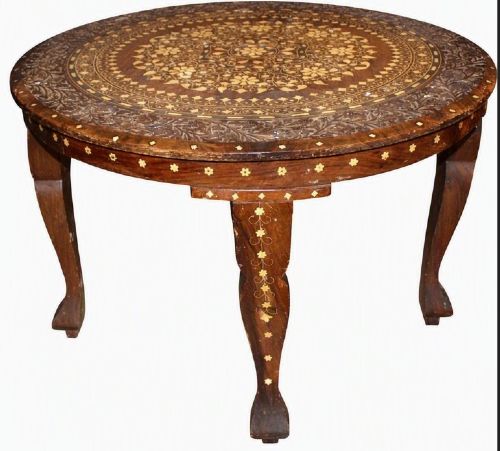
Many examples incorporate contrasting inlay work, utilising bone, brass, or copper set flush into the timber surface to form intricate geometric or floral motifs.
Certain regional workshops applied layers of black or red lacquer, while others left the natural hardwood finished with wax to highlight the grain.
Listings span the nineteenth century through the 1930s, featuring rosewood, teak, brass, and bone inlay across Chinese and Anglo-Indian forms.
Assessing craftsmanship
Quality rests in the crispness and depth of the hand-carved detail, where superior examples exhibit sharp undercutting and lively depictions of dragons, birds, or foliage rather than shallow, mechanical scoring.
The integrity of the joinery determines longevity, distinguishing solid hardwood frames assembled with traditional housing joints from looser constructions that wobble under weight.
The precision of inlaid bone, brass, or copper separates fine work from crude execution, with top-tier pieces showing seamless integration between metal and timber.
Liberty & Co
The Oriental Carved Tea Table Glossary
- Opium table
- A low-profile surface traditionally used in China for resting tea sets or smoking implements, characterised by short legs and recessed panel tops.
- Hongmu
- A dense, heavy Chinese hardwood prized for its deep reddish-brown colour and durability, frequently utilised for high-status nest tables and low tables.
- Hoshiarpur
- A North Indian style of furniture originating from Punjab, heavily defined by intricate wooden carving and dense bone or brass inlay.
- Padouk
- A vibrant tropical hardwood with reddish tones, selected by makers for its strength and stability when subjected to elaborate carving.
- Nest of tables
- A set of graduated tables designed to slide neatly beneath one another, popular in Chinese Qing Dynasty and Edwardian production.
Oriental Carved Tea Table: Frequently Asked Questions
What is an oriental carved tea table used for?
These pieces function primarily as low coffee tables, lamp stands, or decorative occasional surfaces in modern interiors. Their compact proportions and detailed carvings suit placement beside low seating.
Historically, low variations served during tea ceremonies or social gatherings where guests sat close to the floor. Today, they bring texture and cultural history into living spaces.
How do I date a carved wooden table?
Dating relies on examining timber shrinkage, tool marks, and the specific style of carving relative to known periods like the Qing Dynasty or Victorian era. Nineteenth-century examples often display hand-cut joinery and aged patina.
Later pieces from the early twentieth century may show slightly more standardised construction methods while retaining traditional regional motifs.
Are these tables solid wood?
The majority of pieces encountered are constructed from solid regional timbers such as rosewood, teak, padouk, or general Asian hardwoods. This density was necessary to support deep hand-carving without warping.
Inlay work using brass, copper, or bone is embedded directly into the solid timber substrate rather than applied as a thin veneer.
How do I clean and care for a rosewood table?
Maintenance requires dusting with a soft, dry cloth and avoiding modern silicone polishes that can degrade the historic finish. An occasional application of pure beeswax preserves the moisture of the timber.
Keep the table away from direct heat sources and strong sunlight to prevent the hardwood from splitting or the inlaid bone and brass from lifting.