


Multicolour Caucasian Rug
These multicolour caucasian rug pieces are woven tribal and nomadic textiles from the Caucasus, offering rich geometric designs and vibrant natural dyes that anchor any room.
Multicolour Caucasian Rug
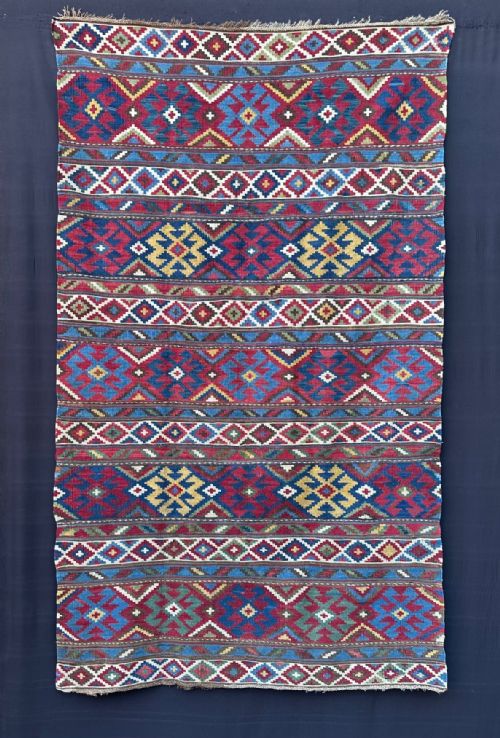
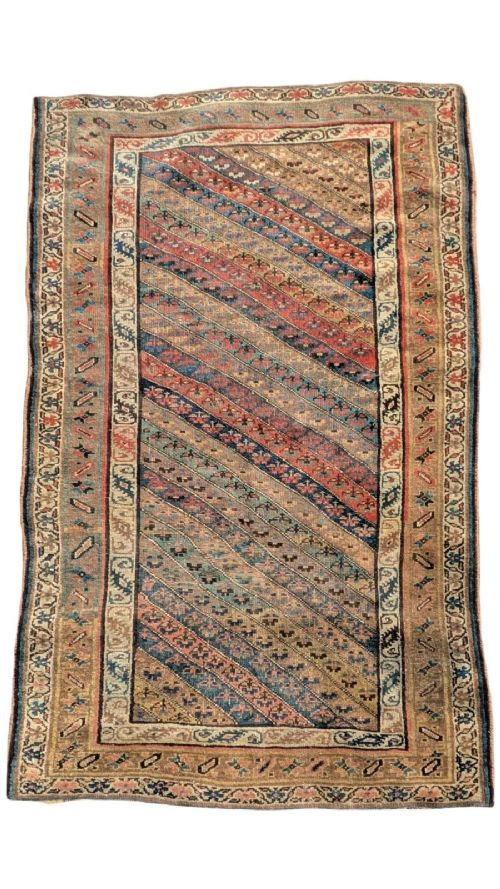
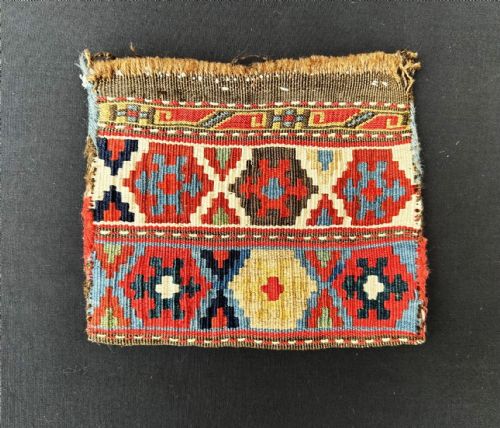
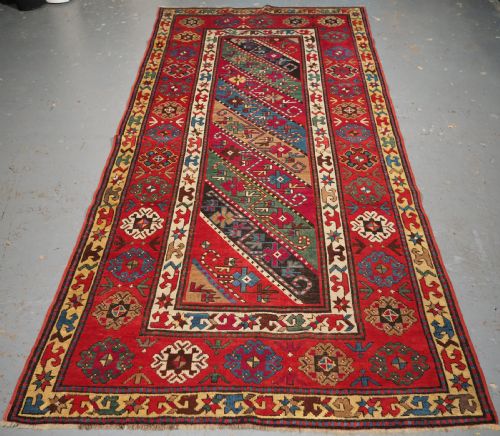
A multicolour caucasian rug brings together various woven forms from the Caucasus, including long runner rugs, village carpets, kilims, and small saddlebag faces. These tribal and nomadic textiles encompass specific regional expressions such as Shirvan, Seychour, Karabagh, Gendje, and Talish.
The pieces appearing on this page span the nineteenth and early twentieth centuries, dating from eighteen fifty up to nineteen ten. Buyers will encounter both flatwoven kilims and pile carpets featuring repeat medallions, diagonal stripes, and shrub motifs.
Nomadic groups like the Shahsevan and Kurdish tribes produced distinct utilitarian items such as vanity bags and Jajim textiles alongside floor coverings. Each piece reflects the specific weaving traditions of its Eastern Caucasus origin.
Materials and construction methods
Weavers utilised wool, hand-spun wool, and occasionally silk, mounting certain textiles or constructing flatweaves and pile rugs by hand. Natural dyes provided the lasting polychrome palettes seen across Shirvan and Karabagh workshops and nomadic camps.
Structural techniques range from slit-weave kilim construction to dense knotting for runners and long rugs. Wood finds use only as mounting material for displayed fragments rather than part of the textile structure.
Some nineteenth-century nomads packed their belongings into small woven vanity bags, carrying portable artistry across the mountains of Azerbaijan.
Assessing quality in regional weaves
Quality rests on the fineness of the weave, the clarity of the geometric or pictorial design, and the integrity of the natural dyes. Tighter knotting and precise latch hook or medallion execution elevate a runner or rug.
Condition plays a role, distinguishing complete pairs of kilim bags or intact long rugs from mounted fragments or heavily restored examples. The vibrancy and stability of the wool and dye materials further separate standard pieces from exceptional ones.
The Multicolour Caucasian Rug Glossary
- Kilim
- A flatwoven textile produced without a pile, commonly associated with nomadic and village production in the Caucasus. These pieces rely on tightly packed horizontal weft threads concealing the vertical warps.
- Medallion
- A central decorative motif placed within the field of a rug or carpet, often repeated down the length of a runner. In Caucasian weaving, these take geometric, latch hook, or stylized floral forms.
- Boteh
- A Paisley-like almond or pine-cone motif originating in Persia and adopted across Caucasian and Kurdish weaving. It appears arranged in stripes or all-over repeat patterns.
- Jajim
- A flatwoven banded textile traditionally used as a cover or bedding wrap, sometimes mounted for display. They feature distinct striped patterns created through supplementary warp techniques.
- Runner
- A long, narrow carpet format designed for hallways or corridors, frequently produced in Caucasian workshops with repeating diagonal stripes or medallions.
Multicolour Caucasian Rug: Frequently Asked Questions
How do I clean an antique rug?
Antique wool textiles require specialist care rather than domestic cleaning methods. Professional textile conservators should handle washing to protect natural dyes and fragile hand-spun wool.
Vacuuming should be done gently without a beater bar, running parallel to the direction of the pile or weave. Regular rotation prevents uneven wear in high-traffic areas.
Can I place a runner in a hallway?
Runners and long rugs suit narrow spaces such as hallways, corridors, and stair landings. Placing a quality underlay beneath the textile prevents slipping and reduces friction against the floor.
Heavy foot traffic can accelerate wear on older wool pile, so monitoring placement helps preserve the structure. Rotating the runner periodically ensures even exposure to light and use.
What does natural dye mean?
Natural dyes derive from plant, insect, and mineral sources rather than synthetic chemical compounds. Dyers in the Caucasus utilised madder, indigo, and other local flora to achieve enduring, complex colours.
Over time, natural dyes develop a characteristic patina that chemically synthesized colours do not replicate. This variation in tone adds depth to the multicolour patterns.