
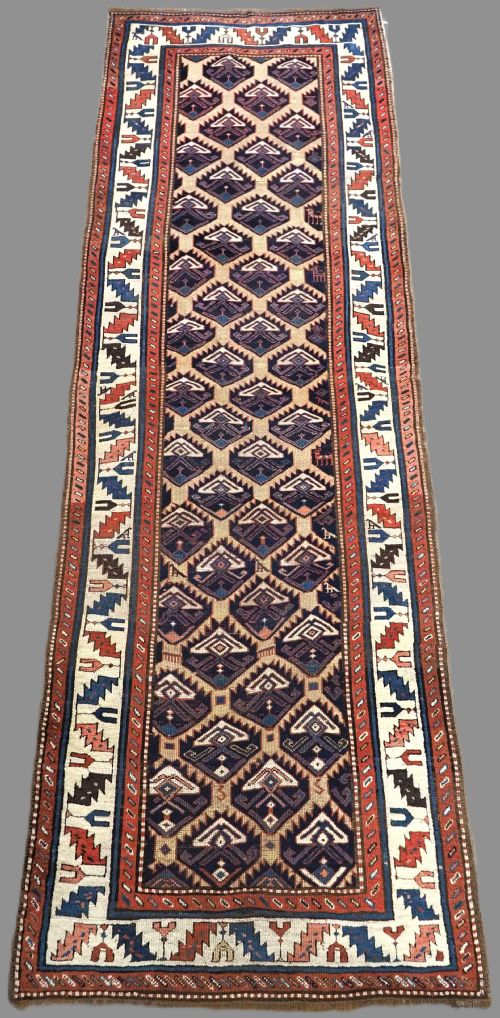


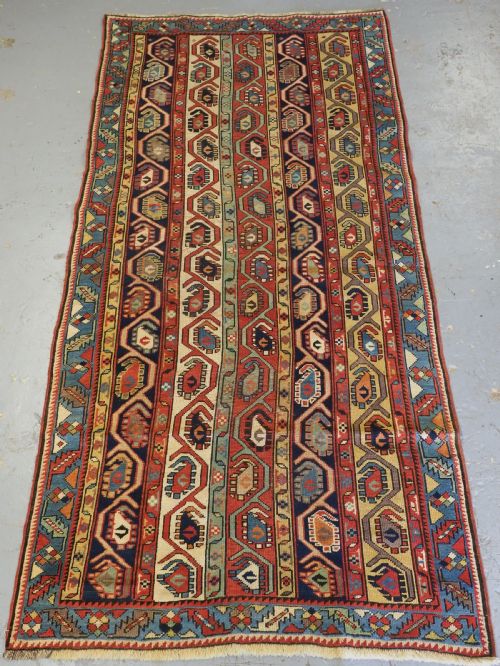
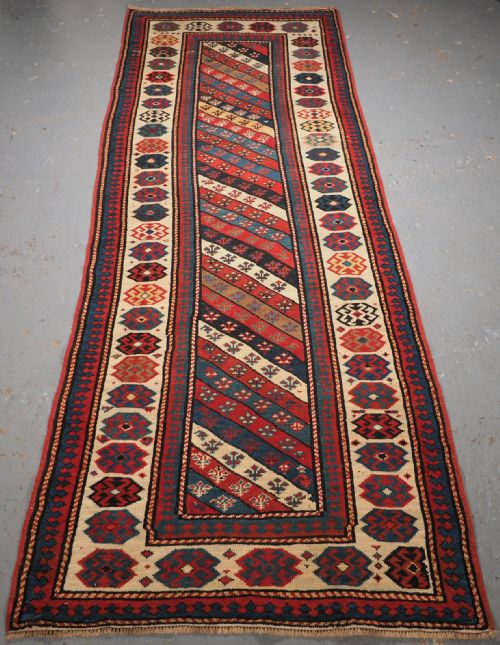
Antique Gendje Carpet
An antique gendje carpet brings vibrant Caucasian tribal colour and geometric design into a room through hand-spun wool woven in the eastern Caucasus.
Antique Gendje Carpet
When you search for an antique gendje carpet, you are looking at resilient tribal weaving originating from the Caucasus region during the late nineteenth and early twentieth centuries. These pieces encompass various formats, including square prayer rugs, long hallway runners, and small area carpets. Most examples display distinct regional characteristics associated with Caucasian weaving traditions.
The version you are most likely to meet on this page is a runner or prayer rug bearing traditional motifs. These include floral lattices, diagonal stripes, and colourful boteh patterns, sometimes featuring figurative folk art elements like horses and people. Their formats range from compact prayer sizes to long narrow runners suited for hallways.
How they were made
Weavers constructed these rugs using wool and hand-spun wool, providing a sturdy foundation and pile suited for everyday use. Natural dyes supplied the characteristic colour palette found across these eastern Caucasian textiles, yielding rich tones that age gracefully over time.
The technical execution relies on traditional tribal knotting methods practised across the region. Artisans utilised local materials to create durable floor coverings featuring geometric lattices, diagonal stripes, and detailed pictorial motifs.
Look closely for folk art rugs that casually sneak horses and people into the geometric rows.
What varies in quality
The visual strength of the design distinguishes superior examples from simpler ones. Pieces featuring scarce colour grounds, such as blue, or intricate pictorial folk art elements like horses and people, stand apart from standard geometric repeats.
Execution and material handling also dictate distinction. Finely prepared hand-spun wool combined with well-preserved natural dyes creates greater depth of colour and structural integrity across the rug.
The Antique Gendje Carpet Glossary
- Boteh
- A traditional almond-shaped or paisley motif representing a seed or floral sprout. It appears frequently in rows or scattered arrangements across Caucasian tribal carpets.
- Prayer rug
- A small format rug featuring a mihrab or arch design indicating the direction of prayer. These pieces served both devotional and domestic functions in the Caucasus.
- Runner
- A long, narrow carpet format designed for hallways and corridors. They often display repeating diagonal stripes or continuous lattice patterns.
- Natural dyes
- Colourants derived from plants, insects, and minerals rather than synthetic compounds. They produce rich, variable tones that mellow harmoniously with age.
Antique Gendje Carpet: Frequently Asked Questions
What is an antique gendje carpet?
An antique gendje carpet is a tribal wool floor covering woven in the Caucasus region around the late nineteenth or early twentieth century. These textiles are known for their geometric patterns, diagonal stripes, and natural dye colours.
They reflect the traditional weaving practises of eastern Caucasian communities. Collectors value them for their authentic folk art character and durable construction.
How do I identify a prayer rug?
A prayer rug is distinguished by a distinct architectural arch or mihrab shape woven into one end of the field. This design element defines the compact format typically used for devotional purposes.
In this regional group, prayer rugs often incorporate floral lattices alongside the central niche. Their smaller dimensions set them apart from longer hallway runners.
Where were these carpets made?
These carpets were produced in the Caucasus region, specifically associated with the Gendje area and neighbouring tribal workshops. The local weavers utilised wool and natural colourants sourced directly from their surroundings.
Such geographic origins impart specific design traits, including distinct boteh motifs and diagonal stripe layouts. The regional aesthetic remains distinct from other Persian or Anatolian traditions.
How should I live with a tribal runner?
A tribal runner works effectively in hallways, corridors, or narrow living spaces where its elongated format can be fully appreciated. Regular rotation helps distribute foot traffic evenly across the wool pile.
Using an appropriate underlay protects the foundation fibres from sliding or excessive wear. Gentle vacuuming without a rotating brush maintains the cleanliness of hand-spun wool.