


Late Nineteenth Century Vase
A late nineteenth century vase brings diverse global craftsmanship into a room, from Japanese satsuma earthenware to French bronze urns.
Late Nineteenth Century Vase
A late nineteenth century vase encompasses a wide variety of decorative vessels originating from European, Asian, and Anglo-Indian workshops during the Victorian and Meiji eras. Buyers searching for a late nineteenth century vase encounter forms ranging from large floor vases and brush pots to campana urns, beaker-form vessels, and mantle clock garnitures.
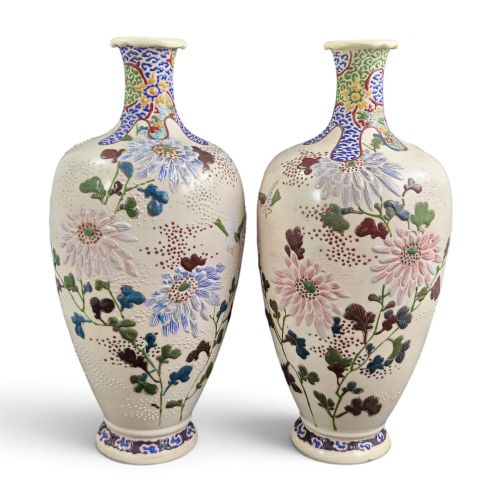
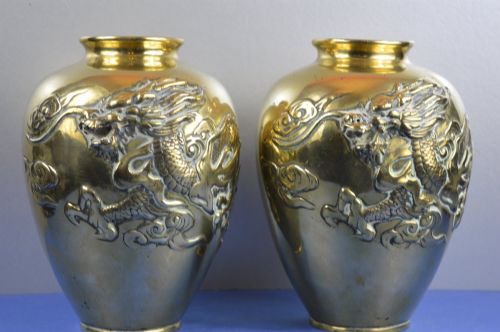
Asian examples dominate the selection, particularly Chinese porcelain and bronze dragon vases alongside Japanese cloisonné lamps and satsuma earthenware decorated with moriage figures. European pieces are well represented by French spelter and gilt bronze urns, English porcelain from Doulton Burslem and Royal Worcester, and glass by Richardson.
How they were made
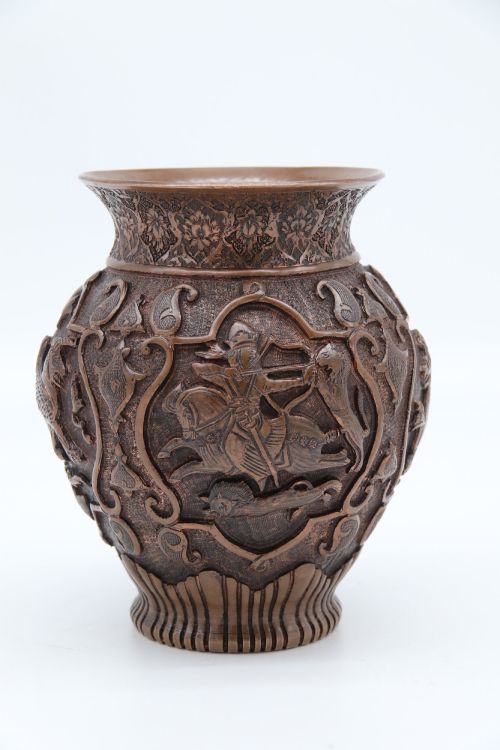
Maker's workshops utilised traditional casting, hand-carving, and glazing techniques across materials such as porcelain, earthenware, crystal, and copper. Metal pieces frequently combined bronze, brass, spelter, and ormolu, often enhanced with enamel, gold leaf, and repoussé detailing.
Japanese items deployed intricate cloisonné enamel and cobalt grounds with raised moriage decoration, while Chinese examples utilised hand-carved bamboo, heavy cast bronze with dragon motifs, and blue and white porcelain with lacquer panels.
Materials span porcelain, enamel, gilt bronze, bronze, gold leaf, brass, earthenware, and ormolu.
What varies in quality
The standard of a late nineteenth century vase depends heavily on the crispness of the casting in metalwork and the precision of hand-painted enamels or moriage work on ceramic pieces. Finer items exhibit superior weight, complex multi-part construction, and distinct workshop signatures such as the Nanzan mark.
Decorative ambition also separates standard production from exceptional pieces, evident in monumental heights, paired sets, and sophisticated stylistic revivals like French Rococo or Renaissance styles after Clodion.
Tunnicliffe·Nanzan·Shiwan·Doulton Burslem·Kinrin Workshop·Clodion·Sevres·Royal Worcester·Richardson
The Late Nineteenth Century Vase Glossary
- Moriage
- A Japanese pottery technique using clay slipped through a piping bag to create raised decorative patterns, frequently seen on Satsuma wares. This method adds distinct texture to the surface of the piece.
- Cloisonné
- An ancient metalworking technique employing thin metal wires soldered to a metal body to create compartments filled with enamel paste. These are then fired and polished to a smooth finish.
- Spelter
- A zinc alloy commonly utilised in European manufacturing as a cheaper, more malleable alternative to bronze. It was frequently painted or electroplated to imitate bronze finishes.
- Garniture
- A set of matching decorative vases or urns designed to sit together on a mantelpiece or sideboard. They typically comprise a central taller vessel flanked by two smaller matching pieces.
- Campana urn
- A classical bell-shaped vessel with a flared rim, a deep bowl, and a stepped plinth base. French makers frequently produced these in bronze and spelter during the period.
Late Nineteenth Century Vase: Frequently Asked Questions
What is a clock garniture set?
A clock garniture set is a matched ensemble consisting of a mantel clock accompanied by flanking decorative pieces such as vases or urns. These sets were designed to sit symmetrically on a fireplace mantel or sideboard.
Materials for these sets from the late nineteenth century often include porcelain, gilt bronze, and crystal. They served as both timepieces and grand decorative centrepieces in Victorian interiors.
How should I care for antique bronze and brass?
Antique bronze and brass require gentle dusting with a soft, dry cloth to prevent the accumulation of abrasive particles. Avoid commercial metal cleaners or polishes that strip historical patination and damage delicate surfaces.
Maintain stable indoor humidity levels to protect any underlying metal or applied gilding from environmental corrosion. For pieces with applied lacquer panels or enamel, keep them away from direct sunlight.
What distinguishes Cloisonne from painted enamel?
Cloisonné involves soldering fine metal wires onto a metal base to form raised cells that are subsequently filled with enamel paste. After firing, the surface is ground down and polished so the metal network remains visible between the coloured areas.
Painted enamel relies on pigments applied directly to a flat metal or porcelain surface without wire partitions. Cloisonné creates a distinct tactile grid pattern that you can feel across the decoration.