


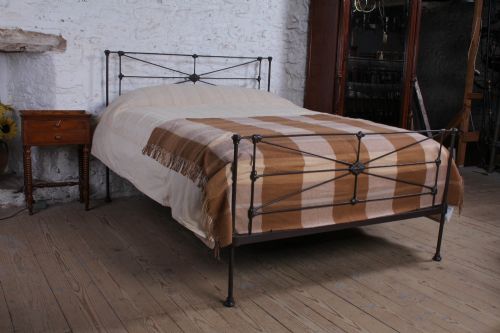


King Size Iron Bedstead
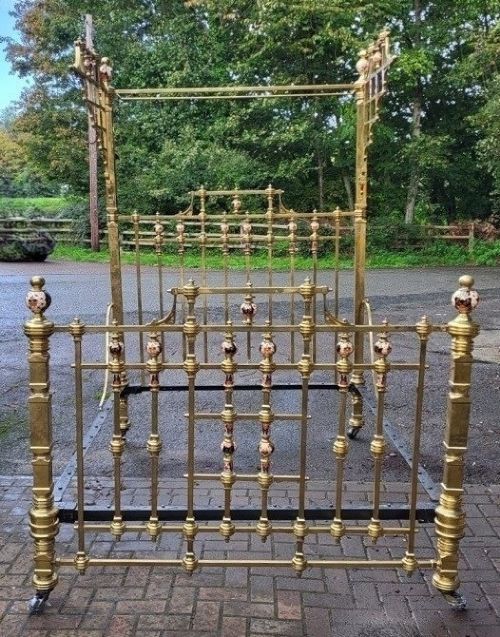
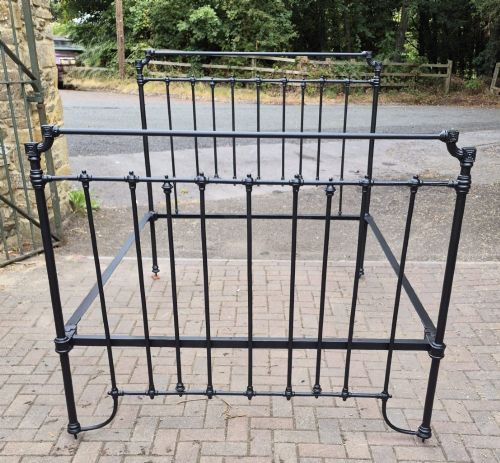
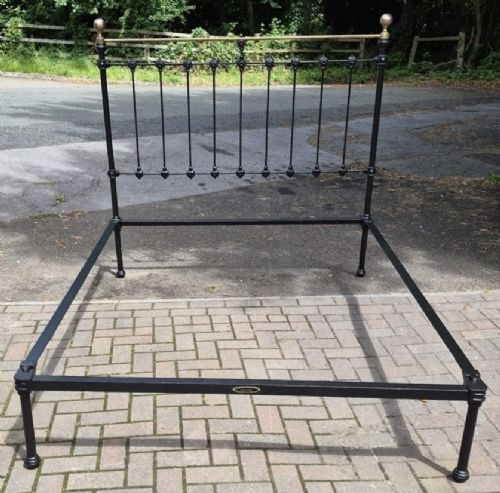
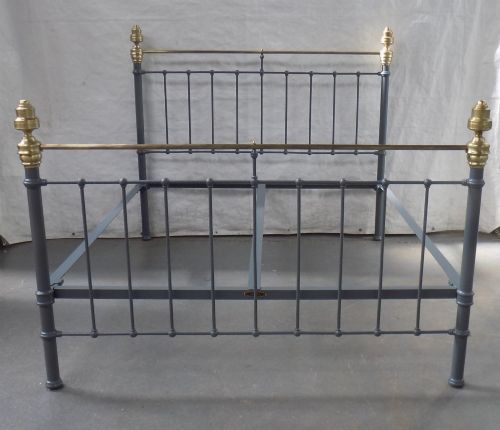
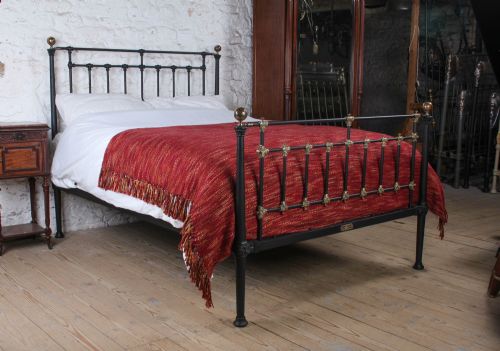
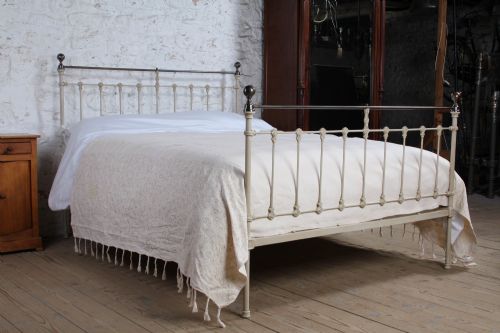
A king size iron bedstead offers robust proportions and period character, anchoring a bedroom with substantial metalwork and decorative brass details.
King size iron bedstead forms and periods
A king size iron bedstead provides a large sleeping platform constructed primarily from metal, appearing in Victorian, Edwardian, and turn-of-the-century designs. The pieces recorded here span from the early Victorian era through to nineteen hundred, encompassing regional variations from Ireland, Portugal, France, and Italy alongside British examples.
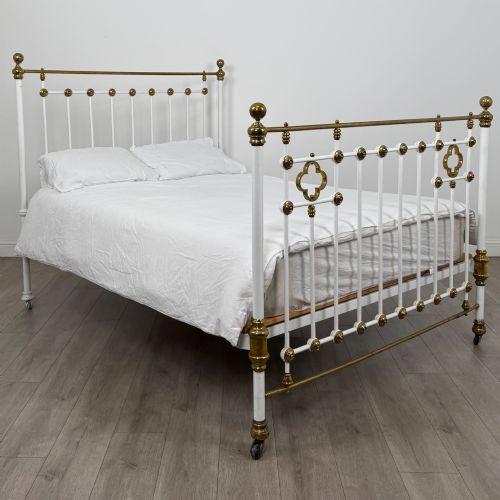
Buyers most frequently encounter combinations of black or painted iron frames paired with polished or aged brass accents, including knobs, caps, and spindles. Simpler formats include all-iron frames with no footboard or low-profile ends, whilst more ornate versions feature intricate castings and mother of pearl detail.
Materials and construction
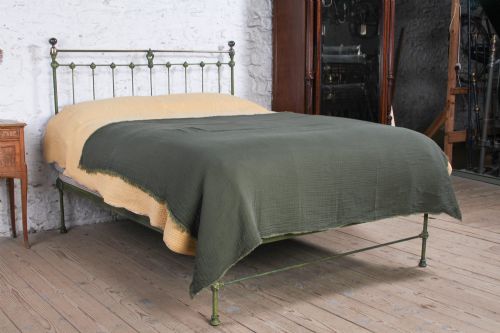
Construction relies on a combination of cast iron, wrought iron, and forged iron elements joined to brass components and structural metal rails. Many examples display original or historic painted finishes, including verdigris, ivory, soft grey, neutral tones, and aged white with gold highlights.
Makers utilised molten iron poured into moulds for decorative castings, alongside hand-forged iron bars shaped to form the structural framework and headboards. Brass details such as knobs, rails, and decorative caps were then fitted to the iron body to complete the piece.
Retail Price Guide 2026
Typical UK retail prices for king size iron bedstead, calculated from the Sellingantiques database of over a million retail prices indexed since 2003. This retail price guide relies exclusively on Sellingantiques data; no external sources or auction records are used, so the figures do not describe the wider market.
Listings feature Victorian, Edwardian, and nineteen hundred periods, utilising cast iron, forged iron, brass, and painted metal.
Distinctions in quality
Quality in a king size iron bedstead rests upon the crispness of the iron castings and the substantial weight of the forged metal framework. Finer examples display meticulous detailing in the brass mounts and smooth integration of decorative spindles or panel work.
The sophistication of the painted finish and the originality of the brass components further differentiate standard production from superior pieces. Regional variations, such as specific Portuguese or Irish forms, introduce distinct aesthetic choices that influence the character of the object.
The King Size Iron Bedstead Glossary
- Bedstead
- A framework of a bed supporting the mattress and springs, distinct from modern freestanding mattress sets. These metal frameworks rely on side rails and bolted joints for stability.
- Cast Iron
- Iron shaped by pouring molten metal into a mould, allowing for ornate decorative patterns and detailed headboard castings. This material provides the heavy structural mass typical of Victorian beds.
- Forged Iron
- Metal shaped through heating and hammering by hand, creating strong structural components and slender decorative scrolls. It defines the more artisanal frames found in the archive.
- Brass and Iron
- A dual-material construction method pairing dark iron frames with bright brass rails, knobs, and finials. This contrast became a defining aesthetic of the nineteenth century.
- Verdigris
- A green patina formed naturally on copper, brass, or bronze surfaces through oxidation, sometimes replicated as a decorative painted finish. It gives antique metalwork an aged, weathered appearance.
Frequently Asked Questions
How do I fit a modern mattress?
Most antique metal bedframes require modern wooden slats or a low-profile base placed inside the side rails to support contemporary mattresses properly.
Checking the internal width and length dimensions ensures a standard modern mattress sits securely within the original iron framework.
Are these beds easy to assemble?
These bedsteads typically dismantle into four primary sections consisting of the headboard, footboard, and two side rails. The components lock together using original wedge joints or bolts without requiring complex tools.
Having two people assemble the frame makes aligning the heavy iron and brass sections much simpler.
How do I care for painted iron?
Cleaning painted metal surfaces requires only a soft, dry cloth to remove dust without damaging historic finishes. Avoid abrasive cleaning agents that might strip aged paint or verdigris.
Brass components can be polished gently if a bright finish is preferred, or left unpolished to maintain an aged patina.
How do I identify a Victorian bed?
Victorian examples often feature heavy cast iron frames, characteristic brass knobs, and robust construction methods typical of nineteenth-century manufacturing. Stylistic markers include Art Nouveau curves, decorative spindles, and specific joint designs.
Examining the casting marks and the type of metal used helps confirm the period of manufacture.