


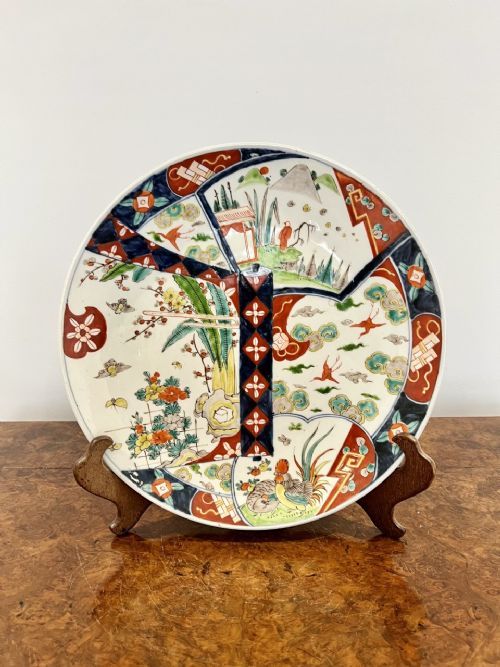














Japanese Imari Display Plates
Japanese imari display plates combine rich cobalt blue and iron red porcelain with gold leaf, bringing vibrant Meiji period craftsmanship to any wall or cabinet.
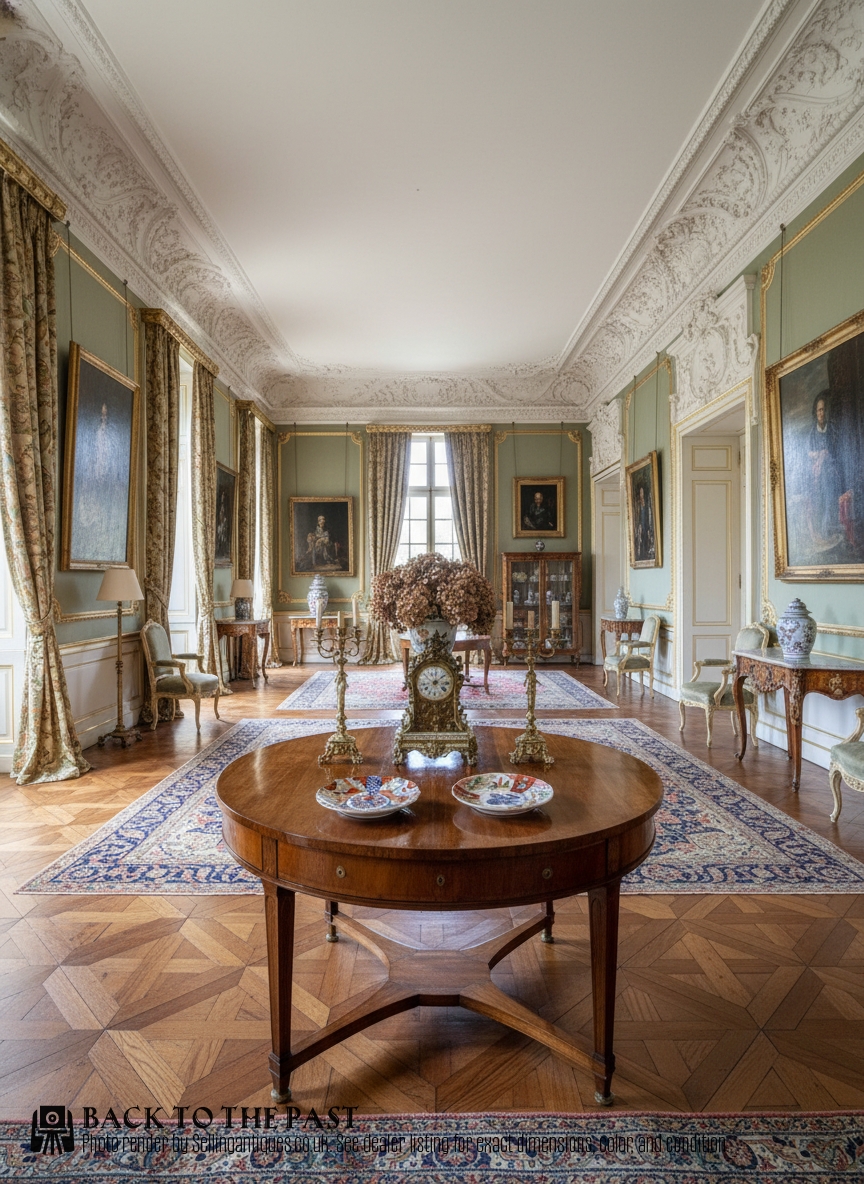
Japanese Imari Display Plates
Japanese imari display plates are ornamental ceramics created for visual impact, often taking the form of large chargers or smaller square, hexagonal, and scalloped dishes. When looking for japanese imari display plates, a buyer encounters predominantly late nineteenth century and Meiji period examples alongside occasional early nineteenth century Staffordshire pieces employing the same distinctive palette.
These items span various formats, including pairs, sets of three or six, and grand individual chargers measuring twelve inches or more in diameter. The decorative motifs frequently incorporate hand painted floral arrangements, exotic birds, and depictions of the Seven Lucky Gods across porcelain surfaces.
How they were made
The production relies on high-fired porcelain shaped into round, square, or scalloped forms, sometimes associated with Arita kilns. Artisans then apply underglaze blue and overglaze enamel colours, often integrating gold leaf, gilt, or gilding to accentuate intricate patterns.
Hand painting forms the core of the technique, combining dense blue and red pigments with detailed brushwork for floral and figurative subjects. Clear glaze seals the ceramic body, providing a glossy finish that protects the delicate pigments underneath.
Japanese Imari Display Plates Retail Price Guide 2026
Typical asking prices for japanese imari display plates among the pieces listed under this phrase on Sellingantiques today, from the lower quarter to the upper quarter. They describe what is for sale here now, not the wider market.
Listings in this category span the nineteenth and early twentieth centuries, encompassing Victorian, Meiji, and Edo periods alongside European Staffordshire interpretations.
What varies in quality
The distinction between standard and exceptional pieces rests upon the precision of the hand painting and the complexity of the design layout. Finer examples display meticulous brushwork in depicting exotic birds, figures, or botanical scenes without crowding the composition.
Subtle variations in the application of gold leaf and enamel pigments also determine the overall visual depth. Pieces featuring unusual geometric formats like square or hexagonal shapes often command greater attention due to the technical difficulty of forming them.
The Japanese Imari Display Plates Glossary
- Charger
- A large decorative plate intended for display on a wall or sideboard rather than for dining use. These items often measure twelve inches or more across.
- Imari palette
- A specific colour scheme dominated by underglaze cobalt blue, iron red, and supplementary gilding. This style originated in Japan and was later adopted by European potteries.
- Meiji period
- The era in Japanese history spanning from 1868 to 1912, associated with many of the porcelain dishes found in this category. Pieces from this time often exhibit elaborate hand painted botanical and figurative designs.
- Scalloped edge
- A decorative rim shaped into a series of continuous curves resembling a scallop shell. This treatment appears frequently on circular plates and bowls.
- Arita
- A Japanese town and production centre renowned for its porcelain manufacturing traditions. Kilns in this region produced many of the blue and white chargers seen today.
Japanese Imari Display Plates: Frequently Asked Questions
How do I hang a heavy charger?
Displaying large ceramic plates securely requires a specialist spring-loaded wall hanger designed to distribute weight evenly across the rim.
Ensure the wall fixing engages directly with solid brickwork or a stud rather than relying solely on plasterboard.
Can I use these plates for food?
Most antique display plates feature delicate overglaze enamels and gold leaf that can wear away or contain metallic compounds unsuited for consumption.
These ceramic items serve best as decorative wall pieces or cabinet displays rather than functional tableware.
What defines the imari colour palette?
The traditional palette combines deep underglaze cobalt blue with vibrant iron red overglaze enamels.
Gold leaf or gilding is frequently added to provide contrast and highlight the intricate hand painted motifs.
How do I date a Meiji period plate?
Dating relies on stylistic markers, historical periods such as the Meiji era, and typical potting characteristics associated with late nineteenth century production.
Makers and decorators rarely signed these export pieces, making visual comparison with dated examples the primary method of attribution.