




Pair of Imari Plates
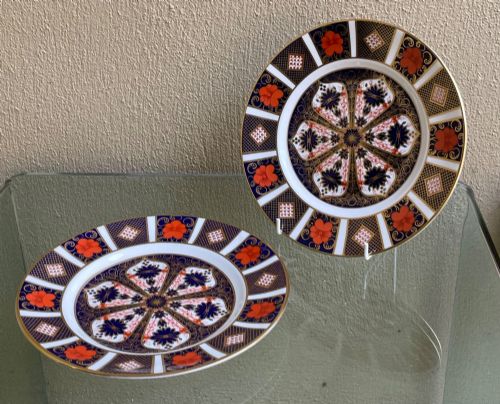
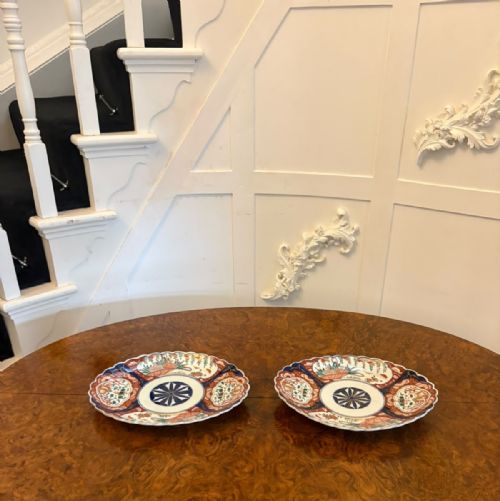
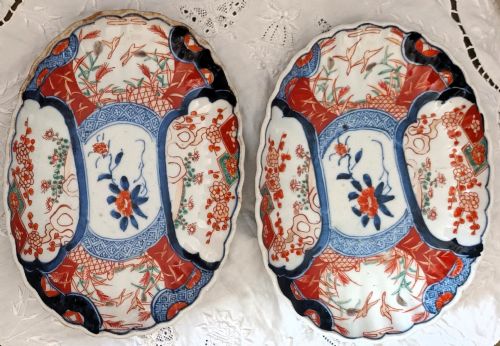
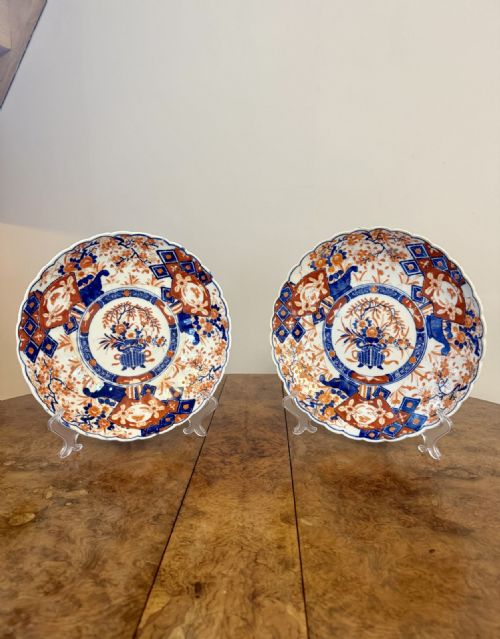
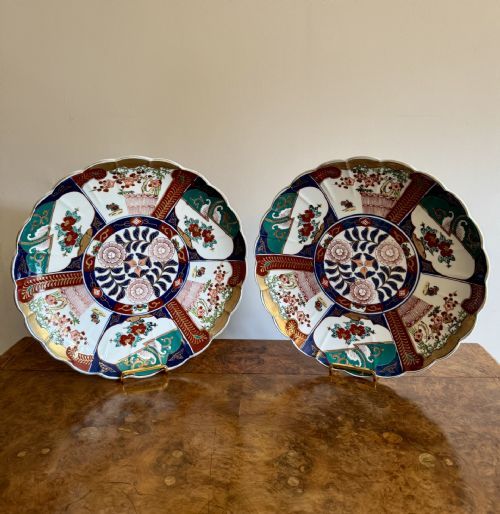
When you search for a pair of imari plates, you look for matched items combining cobalt blue and rich iron-red enamel over porcelain.
Pair of Imari Plates
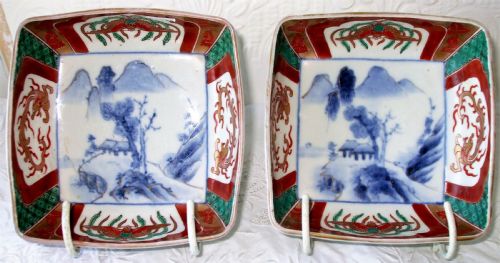
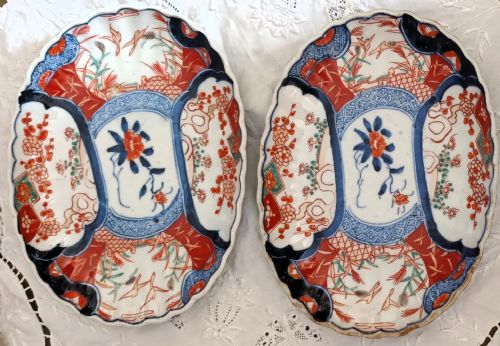
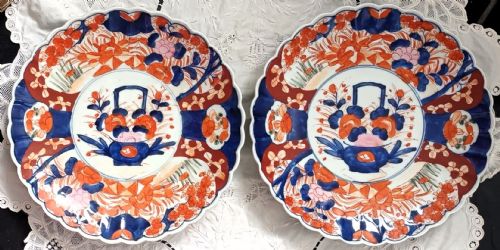
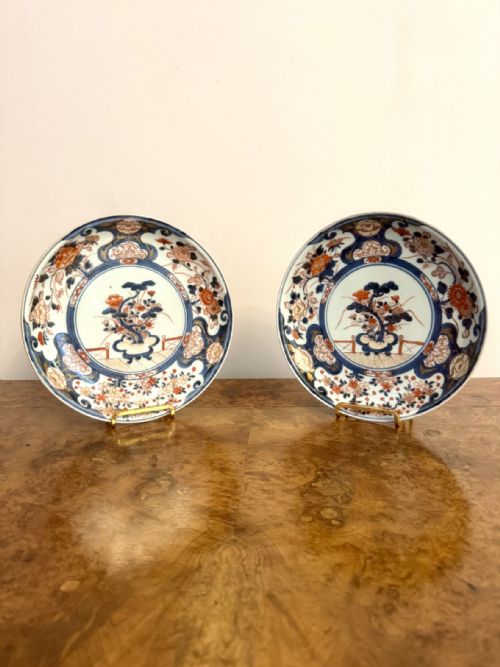
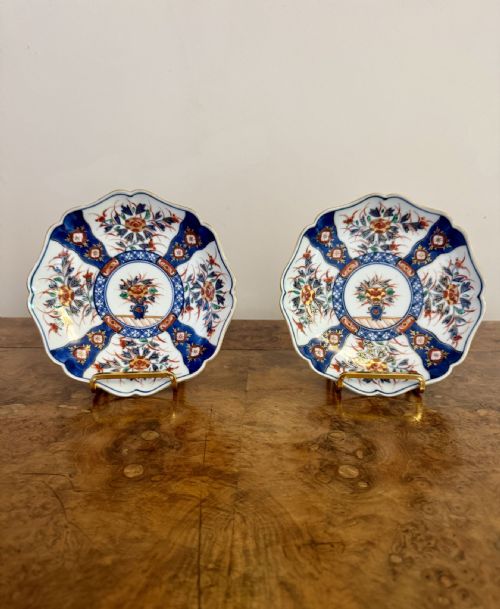
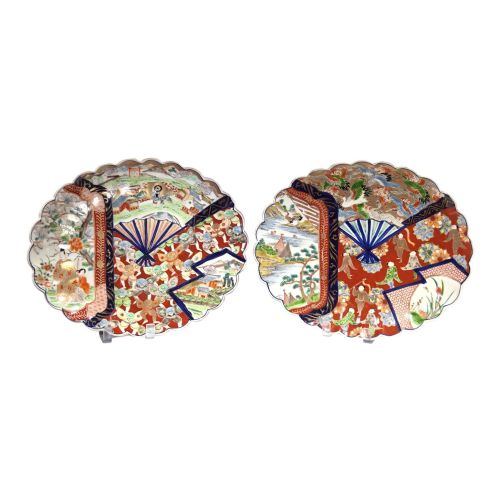
A pair of imari plates brings together traditional ceramic forms made for display and dining, originating primarily from Japanese workshops during the Meiji period and the nineteenth century alongside Chinese export examples. Buyers most frequently encounter nineteenth-century Japanese porcelain pieces featuring distinct cobalt blue and iron-red designs, often accented with gold leaf.
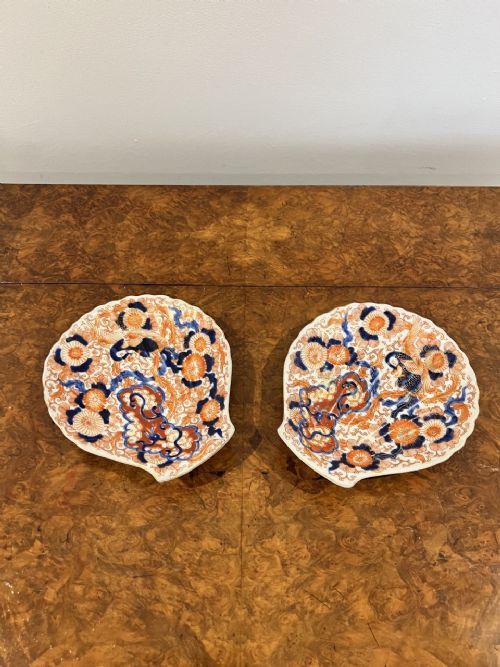
The selection spans standard round dinnerware alongside chargers, shell shapes, hexagonal formats, and scalloped edges. Pieces range from modest domestic dishes to large decorative chargers depicting figures such as the Seven Lucky Gods and exotic birds.
European potteries also adopted the palette, yielding nineteenth-century English porcelain and ironstone interpretations that emulate the historic East Asian aesthetic.
How they were made
Potters shaped high-fired porcelain and ironstone bodies before applying underglaze cobalt blue pigment, followed by overglaze enamel colours in iron-red, green, and aubergine. Artisans then added gilt highlights using gold leaf to enrich the painted surface before a final kiln firing.
Moulding and hand-throwing techniques created diverse vessel shapes, including petal edges, fan contours, and circular chargers designed to hold their painted motifs securely under clear glaze.
Listings feature porcelain, ironstone, enamel, and gold leaf across eighteenth-century, nineteenth-century, Victorian, and mid-twentieth-century eras.
What varies in quality
Quality rests on the crispness of the hand-painted brushwork, the precision of the cobalt underglaze transfer, and the vibrancy of the overglaze enamels. Superior examples show careful alignment of motifs and generous application of gold leaf.
The weight and refinement of the porcelain body also distinguish standard domestic wares from large, finely potted chargers made for display.
Royal Crown Derby·Mintons
The Pair of Imari Plates Glossary
- Imari
- A style of ceramic decoration defined by a palette of cobalt blue, iron-red, and gold over a white porcelain body. The designation originates from the port of shipment in Japan.
- Charger
- A large decorative plate intended for display on a sideboard or wall rather than for serving food at the table.
- Meiji Period
- The era in Japanese history spanning from 1868 to 1912, associated with extensive export of decorative arts to Western markets.
- Overglaze Enamel
- Coloured glass decoration applied over a previously fired and glazed ceramic surface, requiring a lower-temperature secondary kiln firing to fix the pigments.
- Scalloped Edge
- A decorative rim shaped into a series of continuous curves resembling a scallop shell.
Pair of Imari Plates: Frequently Asked Questions
How were imari plates used historically?
These pieces served both functional dining roles and purely decorative display purposes within domestic interiors. Large chargers were frequently set upright on sideboards or mounted on walls to showcase their intricate patterns.
Smaller plates functioned as part of larger dinner services or tea sets used during formal meals and gatherings.
How do you clean antique imari plates?
Careful maintenance involves washing porcelain by hand using lukewarm water and mild soap. Harsh chemical cleaners and abrasive scouring pads must be avoided to protect the delicate overglaze enamels and gold leaf.
Items should be dried immediately with a soft cloth to prevent water spots from forming on the glazed surface.
How do I distinguish Japanese from Chinese imari?
Japanese porcelain pieces from the Meiji period often display denser compositions, distinct iron-red tones, and specific motifs like exotic birds or local figures. Chinese export examples from the eighteenth century typically feature finer, thinner porcelain bodies with slightly different cobalt shades.
Examining the foot ring and glaze characteristics helps identify the regional origin of the clay body.
Are these plates safe for daily dining?
Historic decorative ceramics are generally recommended for display rather than everyday use. Overglaze enamels and gold leaf can wear down with frequent washing and cutlery contact over time.
Preserving the integrity of the antique surface ensures the hand-painted details remain bright for future appreciation.