

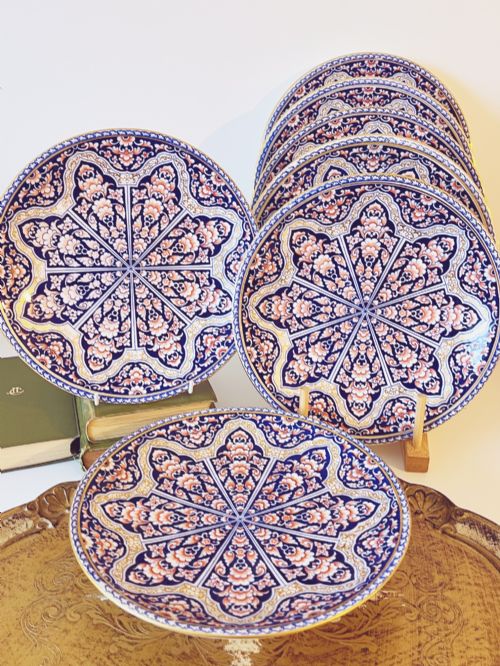

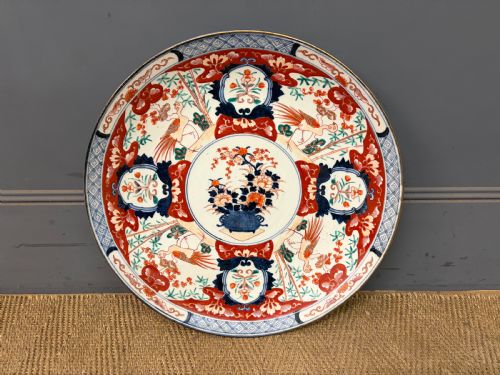
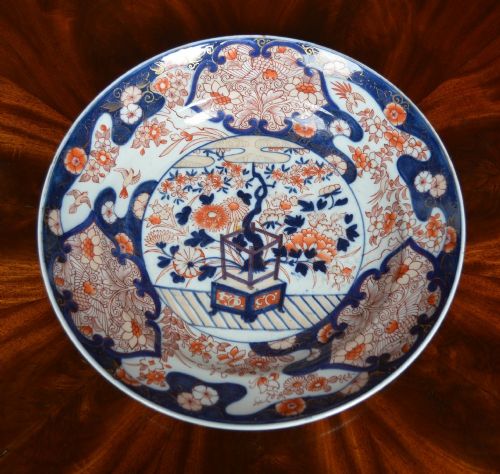
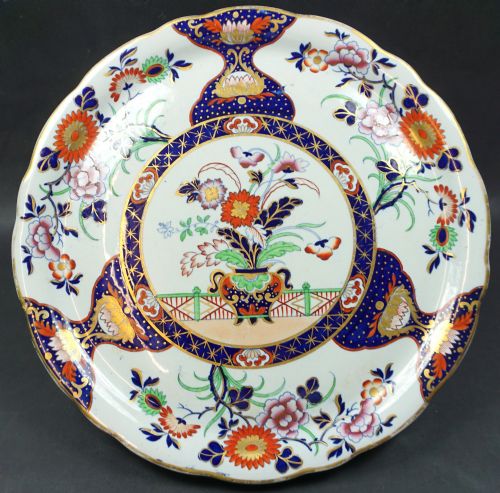


19th Century Imari Plates
These 19th century imari plates bring rich palettes of cobalt blue and iron red to the table, offering lasting decorative impact for the home.
19th Century Imari Plates
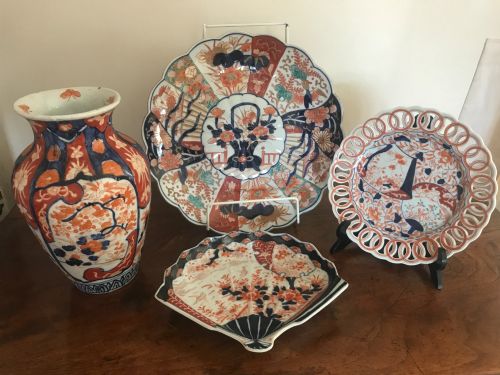
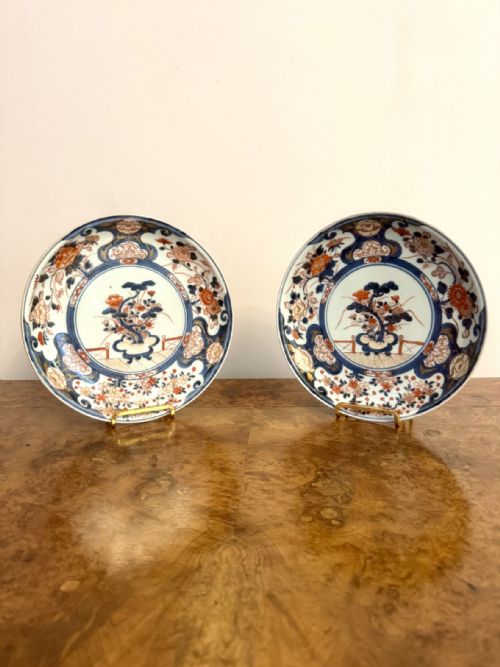
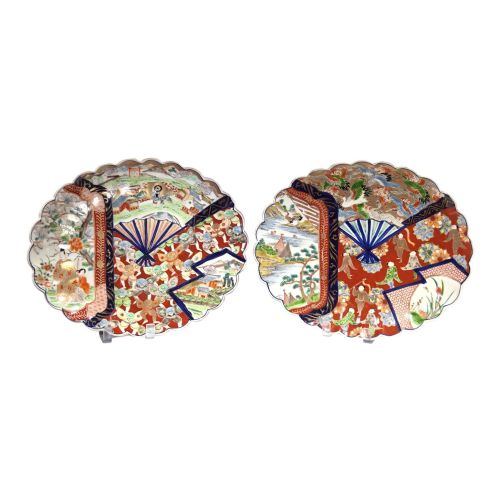
When you search for 19th century imari plates, you encounter an array of chargers, dessert services and decorative plates produced across both English potteries and Japanese kilns. The British examples often adapt the traditional Japanese palette using ironstone or bone china, while the imported Japanese pieces display characteristic Meiji period motifs.
You are most likely to meet standard dinner plates, scalloped chargers and dessert services bearing the distinctive red, blue and gold colour scheme. These items range from large display chargers measuring over twenty inches across down to smaller table plates formed in sets.
The objects span the Georgian, Victorian and Meiji eras, uniting Eastern decorative traditions with Western ceramic bodies. Whether porcelain, ironstone or stoneware, each piece reflects the global trade and taste for Japanese export designs during the nineteenth century.
How They Were Made
Potters shaped these wares using porcelain, ironstone, bone china and ceramic bodies, applying underglaze blue painting followed by iron red enamel and gold leaf highlights. The pieces were then fired to fix the complex patterns of dragons, florals and compartmentalised designs.
English factories such as Masons, Royal Crown Derby and Worcester utilised durable ironstone and porcelain to sustain heavy enamelling and gilding. Japanese makers relied on traditional porcelain techniques, producing crisp white grounds that supported dense, hand-coloured cobalt and iron red decorations.
19th Century Imari Plates Retail Price Guide 2026
Typical asking prices for 19th century imari plates among the pieces listed under this phrase on Sellingantiques today, from the lower quarter to the upper quarter. They describe what is for sale here now, not the wider market.
Listings feature both Japanese Meiji period porcelain and English ironstone plates sharing the Imari palette.
What Varies in Quality
The standard of painting determines the tier of the piece, separating loosely applied motifs from finely delineated brushwork on the cobalt and enamel. Precision in the gilding and the crispness of the porcelain or ironstone body dictate the overall finish.
Completeness within sets and services alters desirability, as matched dessert services or groups of plates command greater interest than isolated items. The scale of the charger or plate also influences the piece, with particularly large chargers demonstrating greater ambition in design and manufacture.
Royal Crown Derby·Hicks And Meigh·Flight Barr And Barr·John Ridgway·Chamberlain Worcester·Minton·Coalport·Mason
The 19th Century Imari Plates Glossary
- Imari
- A style of Japanese porcelain decorated in underglaze blue, iron red and gold, widely imitated by European potteries. The name derives from the port from which these ceramics were shipped.
- Charger
- A large decorative plate intended for display on a wall or sideboard rather than for dining use. These pieces often measure over twelve inches in diameter.
- Ironstone
- A heavy, durable ceramic patented in the nineteenth century to imitate Chinese porcelain. It forms the robust body of many English plates and services.
- Comport
- A raised dish or bowl used for serving fruit or dessert as part of a formal service. They often accompany matching sets of plates.
- Kakiemon
- An asymmetric Japanese ceramic style featuring delicate enamel painting of birds and flowers. It heavily influenced early English porcelain decorators.
19th Century Imari Plates: Frequently Asked Questions
How were 19th century imari plates used?
These pieces served practical dining functions or functioned purely as decorative wall chargers and display items in period homes. Dessert services held fruit and sweetmeats during formal nineteenth century meals.
Larger chargers were hung on walls or stood on sideboards to showcase the vibrant blue and red palettes to visiting guests. Everyday dining plates saw regular use on tables before transitioning into decorative cabinet pieces today.
How do I care for antique imari plates?
Wash these ceramics gently by hand in warm water using a mild detergent, avoiding modern dishwashers entirely. Harsh machine cycles can strip the delicate gold leaf and enamel decorations.
Store plates securely in plate racks or use padded dividers if stacking them to protect the glazed surfaces. Keep them away from direct sunlight to preserve the richness of the iron red enamels.
Were imari plates made in England or Japan?
Nineteenth century imari plates originated from both Japanese kilns and prominent English potteries. English factories created their own interpretations of the aesthetic using local ironstone and bone china bodies.
Japanese pieces arrived through international trade, particularly during the Meiji period, featuring native porcelain techniques. Both traditions embraced the distinctive cobalt blue and iron red colour schemes.
How do I distinguish English imari from Japanese imari?
Examine the ceramic body underneath the glaze, as English pieces frequently utilise heavy ironstone or bone china. Japanese items typically display a finer, true porcelain composition with different foot ring characteristics.
Look for maker marks or pattern names stamped on the reverse of English plates from factories like Mason or Worcester. Japanese chargers often rely on pictorial motifs and border styles characteristic of the Meiji period.