
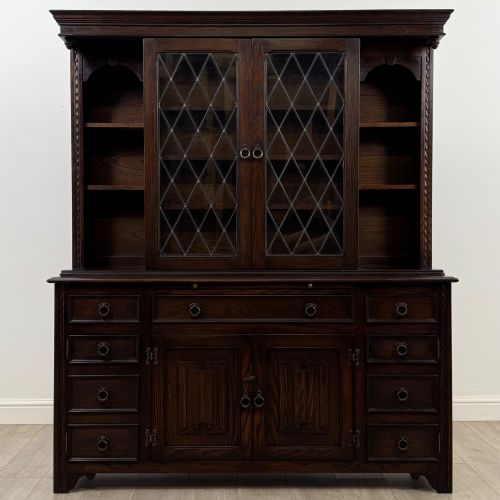
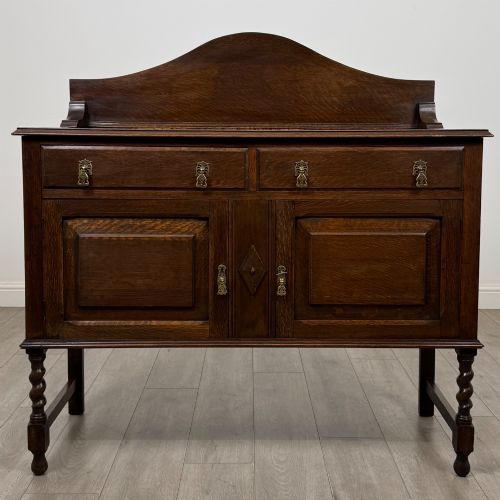
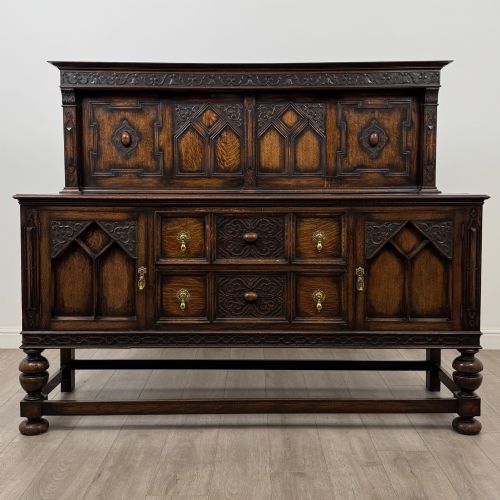
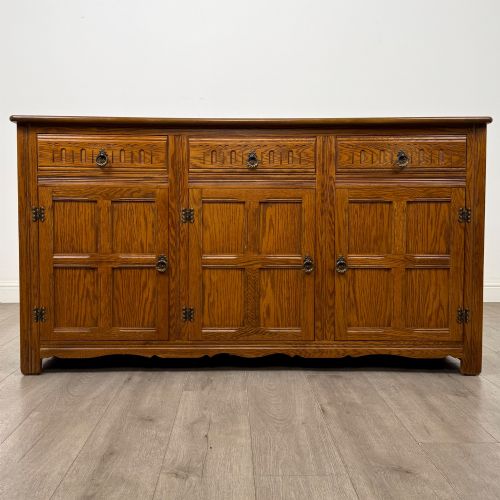
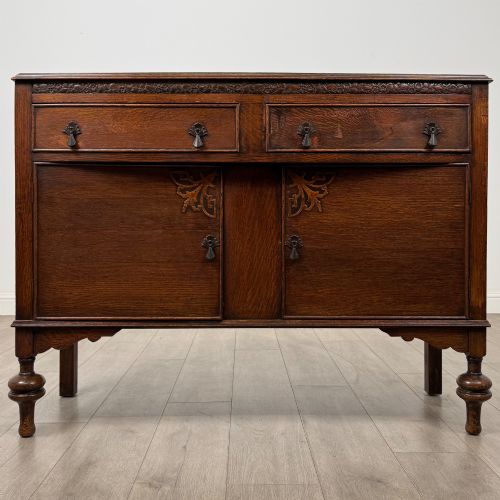
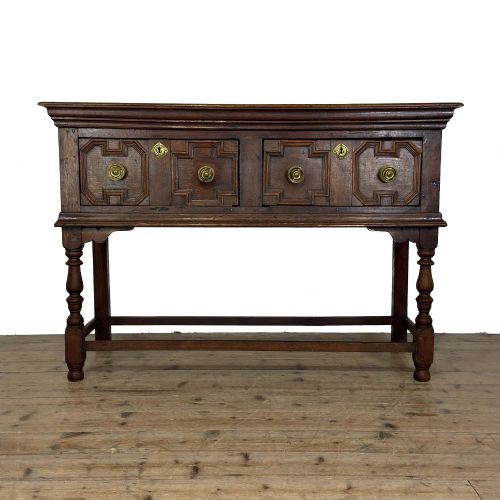
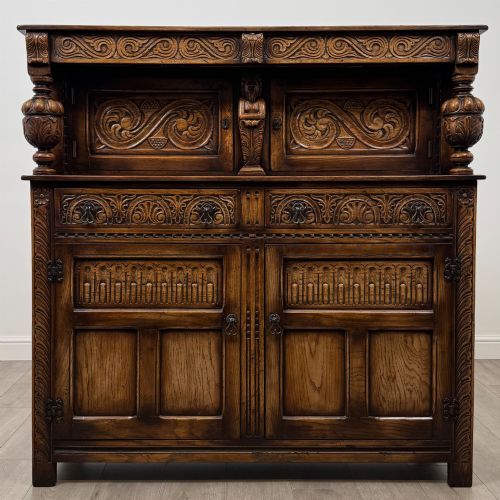
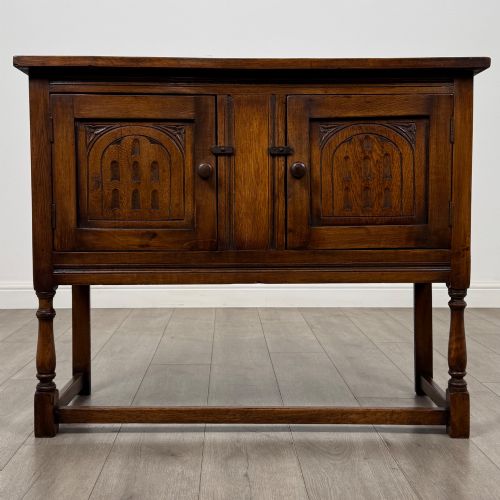
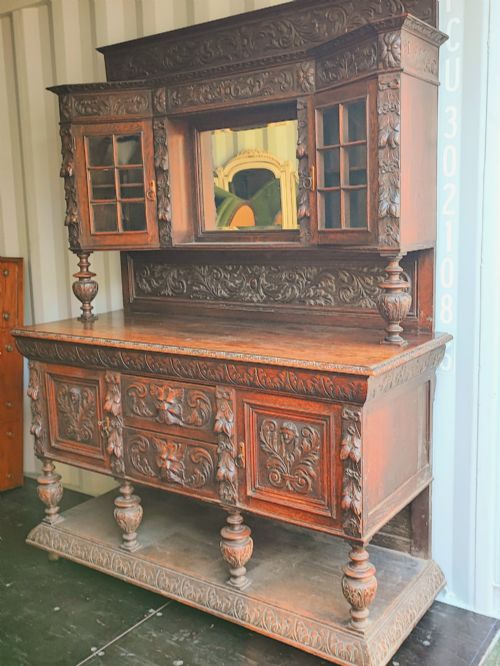
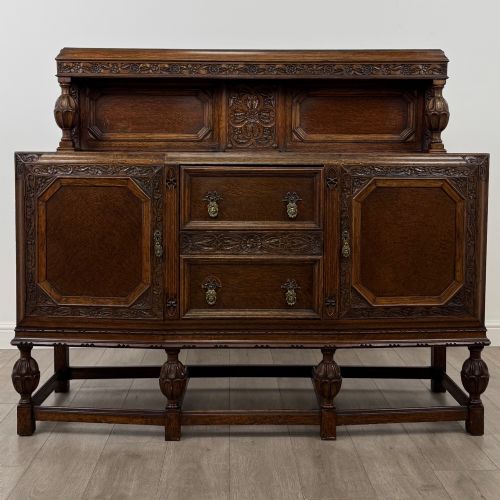
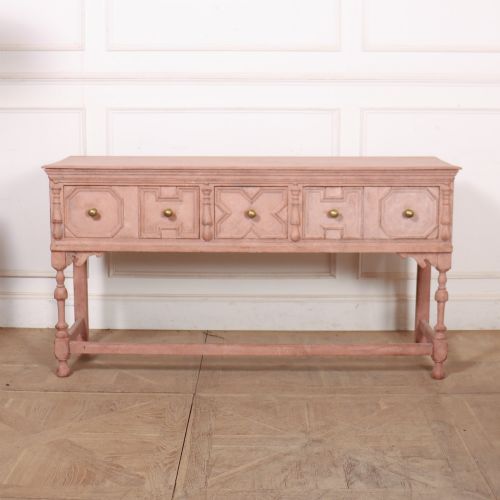
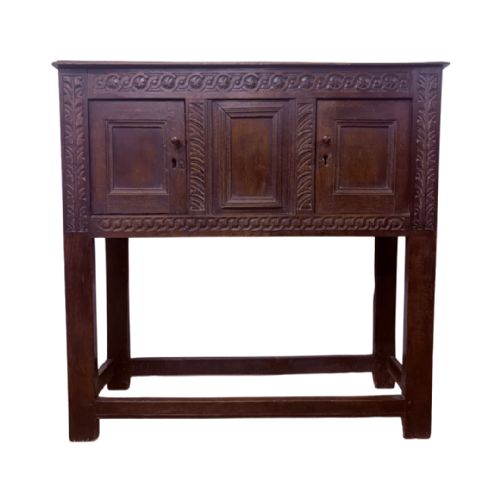
Jacobean Carved Oak Sideboard
These heavy oak pieces bring robust storage and deep carving to a room, rooted in centuries of vernacular tradition.
Jacobean Carved Oak Sideboard
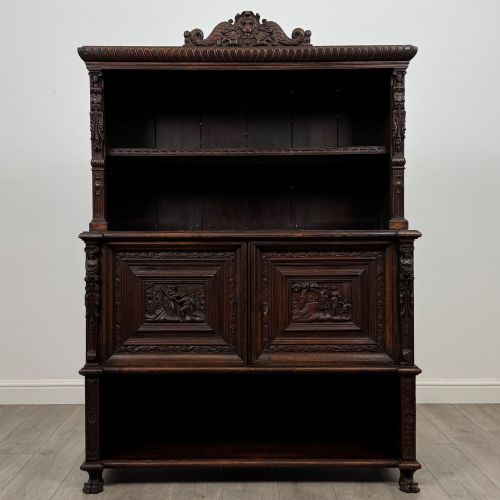
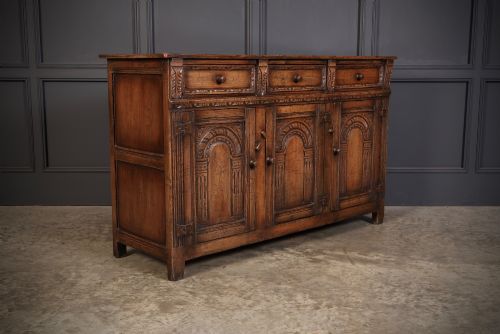
A jacobean carved oak sideboard encompasses court cupboards, dresser bases, and side cabinets originating from the seventeenth century onward, with many later revivals appearing from the Victorian and Edwardian eras. You will encounter genuine seventeenth-century joined cupboards alongside robust early twentieth-century interpretations influenced by Jacobean and Carolean styles.
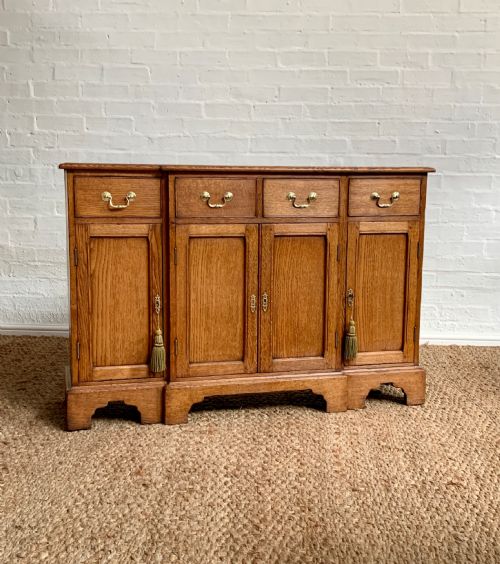
The primary forms on this page include low dresser bases, tall court cupboards, and compact sideboards designed for dining rooms and halls. These items served historically to display plate and store provisions, resulting in sturdy proportions and deep surfaces.
Distinctions in grade
Quality rests upon the crispness of the hand-carved detail and the integrity of the original timber construction rather than mere age. Pieces with untouched surface patination and period-correct joined framing stand apart from later interpretations with applied machine mouldings.
The architectural balance of the piece dictates its standing, where proportioned paneling, substantial cornice work, and well-executed turning elevate the form. Lesser examples show simpler construction methods or heavy restoration that masks the original character of the wood.
The Jacobean Carved Oak Sideboard Glossary
- Court cupboard
- A heavy enclosed storage piece, typically featuring a recessed upper tier supported by carved columns above a lower cabinet.
- Dresser base
- A low utilitarian table fitted with drawers or cupboards beneath the top surface, historically used for food preparation and serving.
- Barley-twist
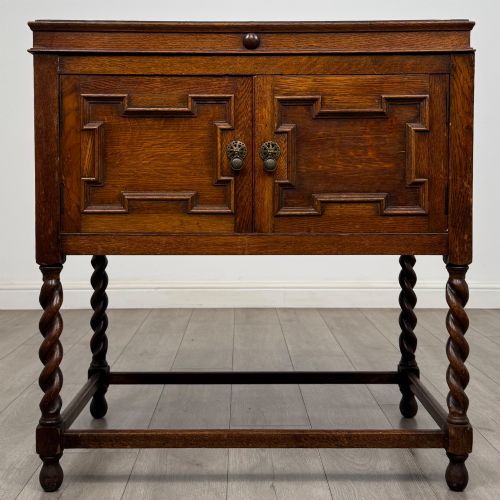
- A type of column or support turned on a lathe to resemble a spiralling rope, popular in seventeenth-century furniture and later revivals.
- Linenfold
- A style of carved wooden paneling designed to imitate vertical folds of fabric, frequently seen on Tudor and Jacobean cabinet doors.
- Patina
- The surface sheen and colour developed on wood over decades of handling, light exposure, and polishing.
Jacobean Carved Oak Sideboard: Frequently Asked Questions
What is a jacobean carved oak sideboard?
It is a sturdy storage furniture item built from solid timber, drawing upon seventeenth-century English design principles.
Such pieces range from authentic seventeenth-century cupboards to later revival interpretations made during the Victorian and Edwardian periods.
How do I date a carved oak sideboard?
Dating relies on examining the construction methods, tool marks, and joinery used inside the frame and drawers.
Earlier seventeenth-century examples utilise joined frame construction, whereas twentieth-century revival pieces often reveal modern machining and standard fixings.
Where should I place a heavy oak sideboard?
These large pieces suit dining rooms, grand hallways, or living spaces where they can anchor the surrounding interior.
Ensure adequate wall space and clearance, as their deep proportions and heavy timber construction command a significant footprint.
How do I care for antique oak furniture?
Maintain the wood by applying traditional beeswax sparingly and buffing gently with a soft cloth to preserve the surface.
Keep the item away from direct heat sources and strong sunlight to prevent the solid timber from drying out and splitting.