

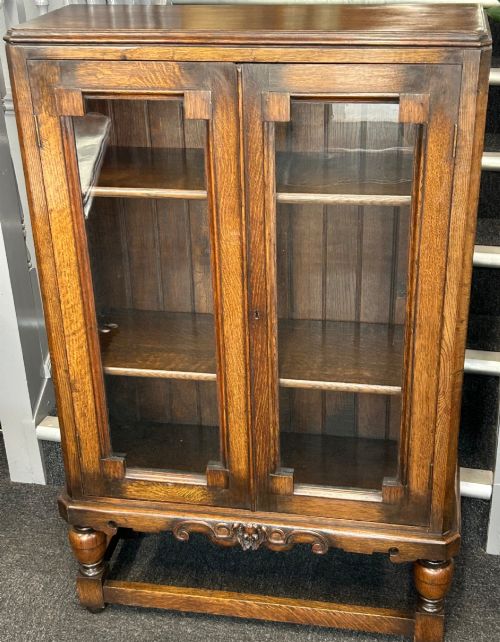
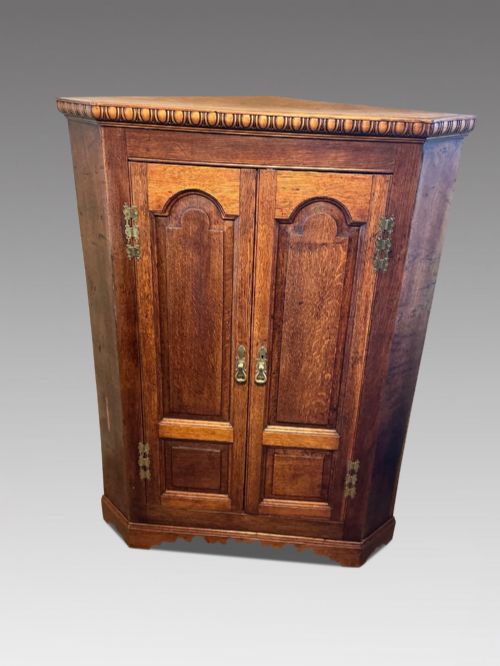
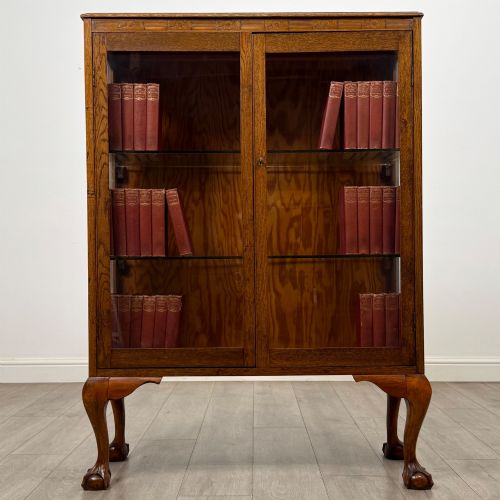
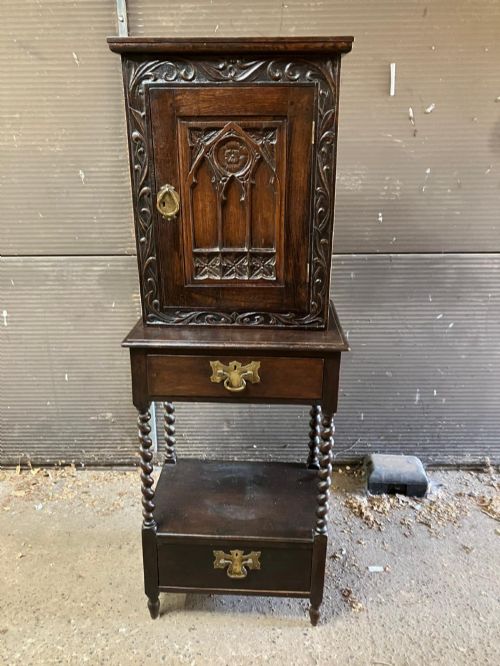
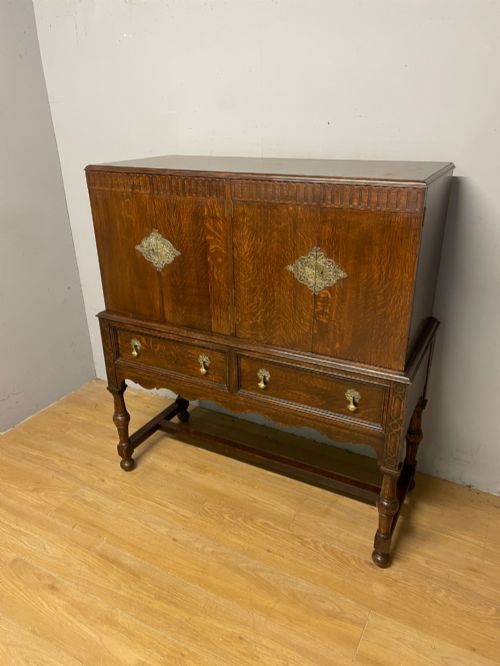

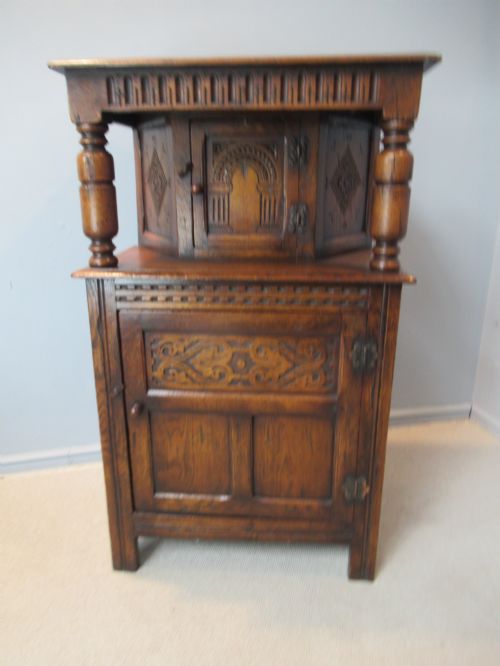
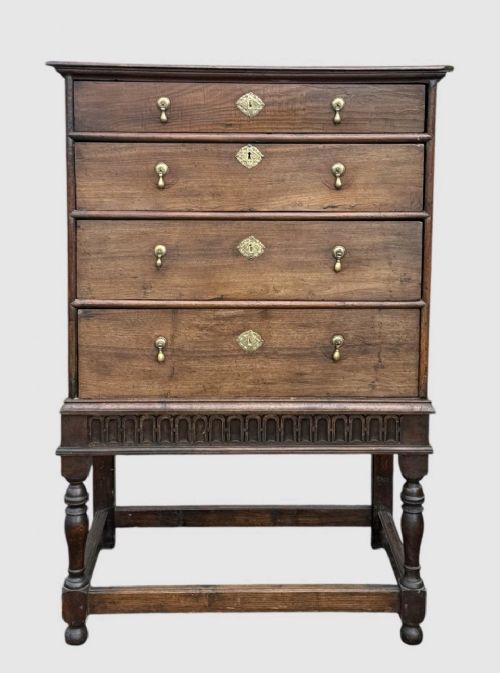


Carved Oak Standing Cupboard
These carved oak standing cupboard examples offer substantial timber architecture and timeless storage for any serious interior.
Identifying carved oak standing cupboard forms
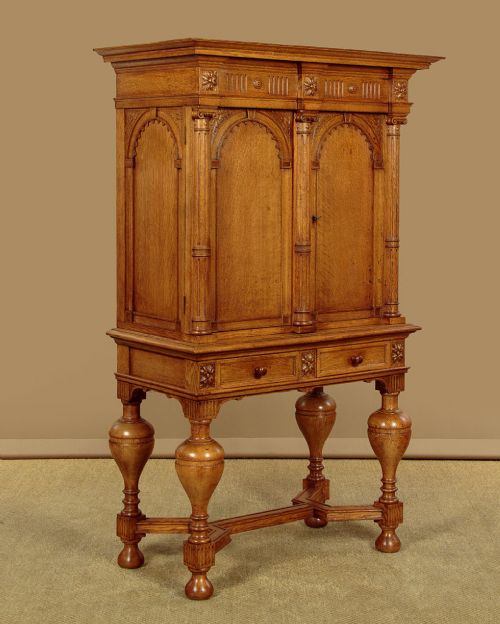
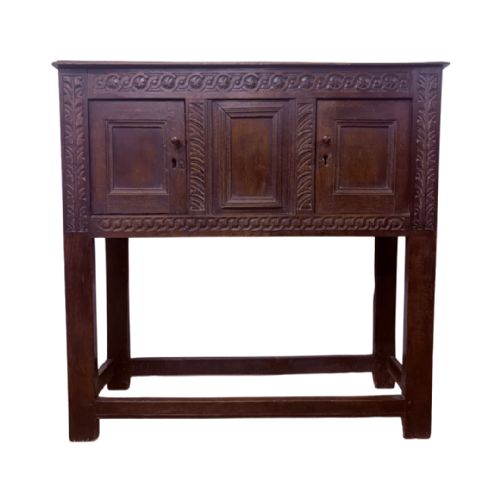
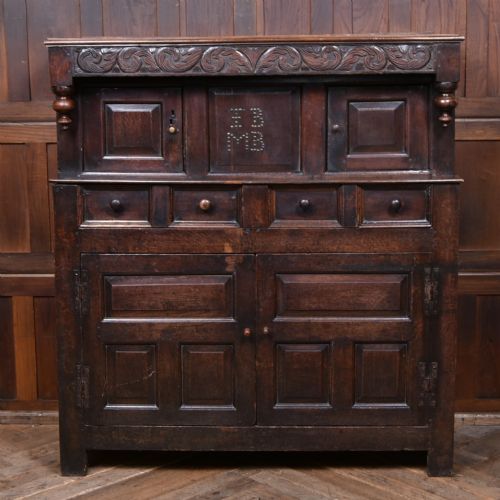
A carved oak standing cupboard represents heavy timber construction designed for grand and modest homes alike, appearing primarily as court cupboards or standing corner cupboards. The seventeenth century yields examples such as the court cupboard and cottage livery cupboard, while later nineteenth century pieces reflect Victorian Gothic Revival and side cabinet forms.
The layout typically combines enclosed upper or lower sections with deep relief carving, spanning formats from standard flat fronts to bowfront and corner configurations. Surviving items demonstrate both authentic seventeenth-century origins and Victorian reinterpretations utilising older motifs.
Construction and materials
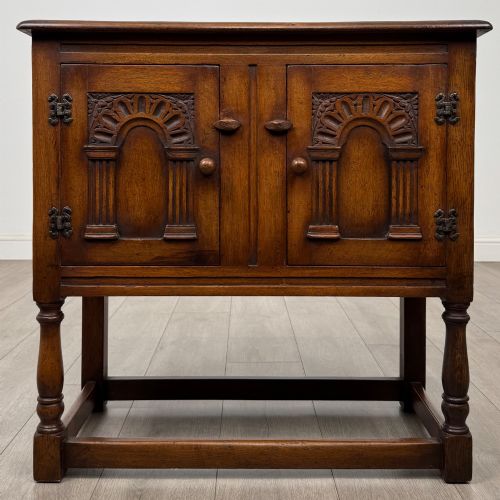
Makers utilised solid oak throughout these cabinets, often supplemented by iron and brass hardware for hinges and handles, alongside glass mirrors in select Victorian adaptations. Timber preparation relied on traditional joinery methods suited to heavy wood.
Surface embellishment depends on deep hand carving, shaping the oak panels with geometric patterns, foliage, or architectural reliefs characteristic of Jacobean and Gothic styles.
Retail Price Guide 2026
Typical UK retail prices for carved oak standing cupboard, calculated from the Sellingantiques database of over a million retail prices indexed since 2003. This retail price guide relies exclusively on Sellingantiques data; no external sources or auction records are used, so the figures do not describe the wider market.
The inventory spans the seventeenth century and the year eighteen sixty, utilising oak, brass, iron, and mirror.
Judging the range
The distinction between ordinary and exceptional pieces lies in the crispness of the hand carving and the architectural proportion of the timber. Early seventeenth-century work displays distinct tool marks and structural honesty that later revival pieces interpret with varying degrees of success.
Original timber surfaces and untouched patination elevate a piece far above items that have undergone heavy structural alterations or excessive modern refinishing.
The Carved Oak Standing Cupboard Glossary
- Court cupboard
- A traditional English open or enclosed sideboard used for displaying plate and storing provisions. These pieces date predominantly from the seventeenth century.
- Jacobean
- The style of English art and architecture prevalent during the early seventeenth century, characterised by robust proportions and strapwork carving. It appears frequently on early oak furniture.
- Livery cupboard
- A small storage cabinet traditionally used for keeping food and candles fresh. They often feature pierced or turned spindles for ventilation.
- Bowfront
- A convex curved cabinet front that projects outward. This form softens the rigidity of heavy timber furniture.
- Gothic Revival
- An architectural and decorative movement from the nineteenth century that revived medieval forms. Victorian cabinet makers utilised these pointed arches and heavy mouldings on oak furniture.
Frequently Asked Questions
What is a court cupboard?
A court cupboard is a traditional seventeenth-century storage piece featuring enclosed lower compartments and upper display tiers. They served as prominent furniture in wealthy homes.
In modern interiors, they function as substantial sideboards or display cabinets.
How old are these cupboards?
The pieces span from the seventeenth century through to Victorian Gothic Revival examples made around eighteen sixty. Some items combine authentic early timber with later adaptations.
Checking the construction methods and joinery helps determine the precise period of manufacture.
Where should I place a standing cupboard?
These tall oak pieces require substantial wall space and benefit from placement in dining rooms, hallways, or spacious living areas. Their dark timber tones anchor a room visually.
Keep them away from direct heat sources to protect the solid oak panels from splitting.
How do I maintain carved oak?
Maintain the timber by applying natural beeswax periodically to nourish the dry oak surface. Avoid synthetic polishes that build up a sticky residue over the intricate hand carvings.
Dust the deep relief panels regularly with a soft, dry brush.