
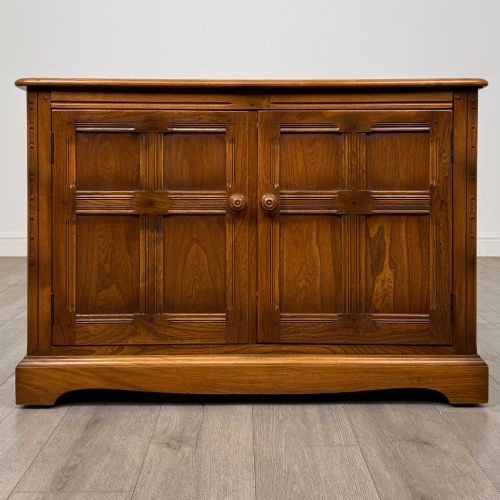
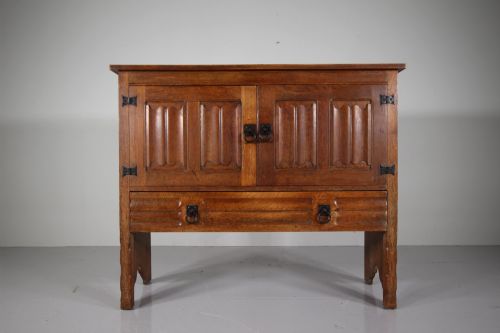

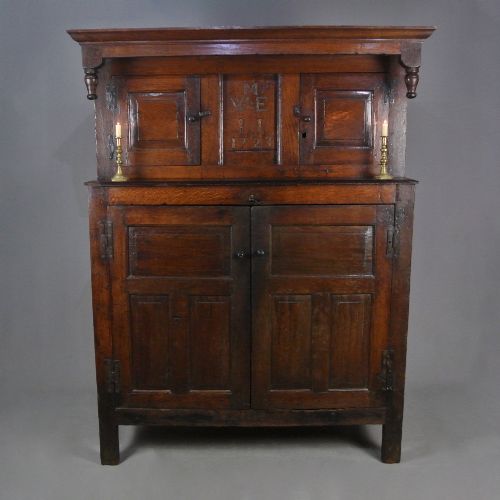
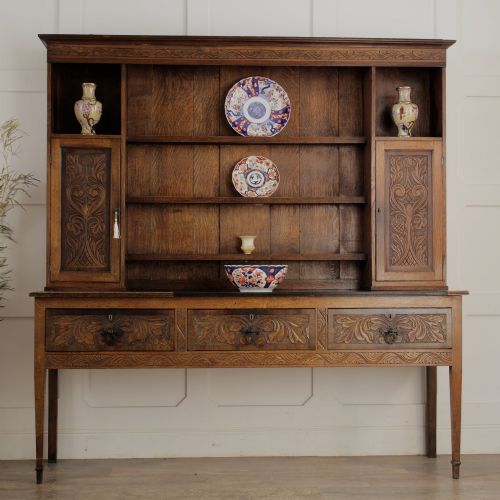
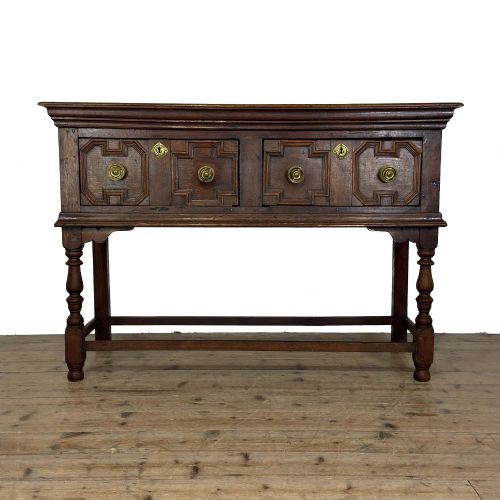

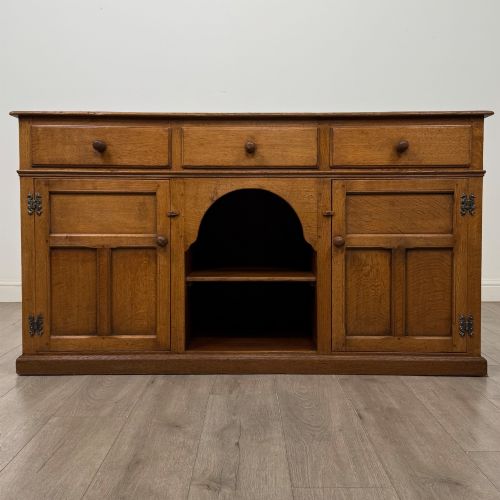
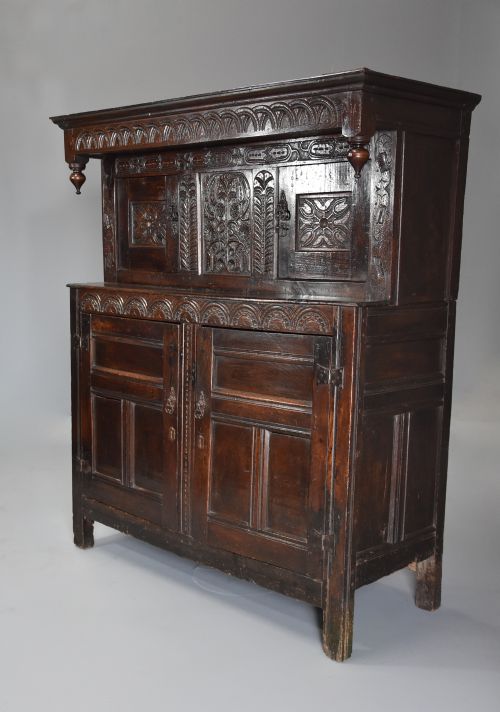
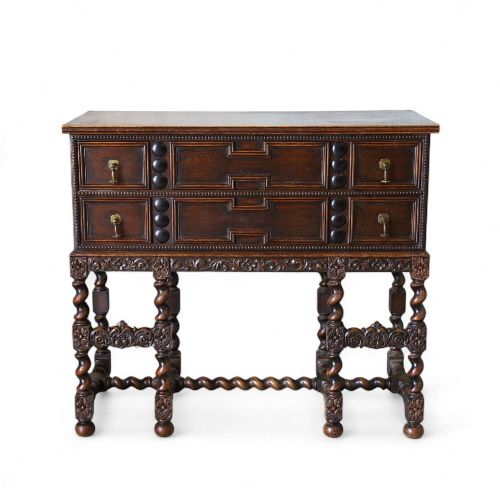
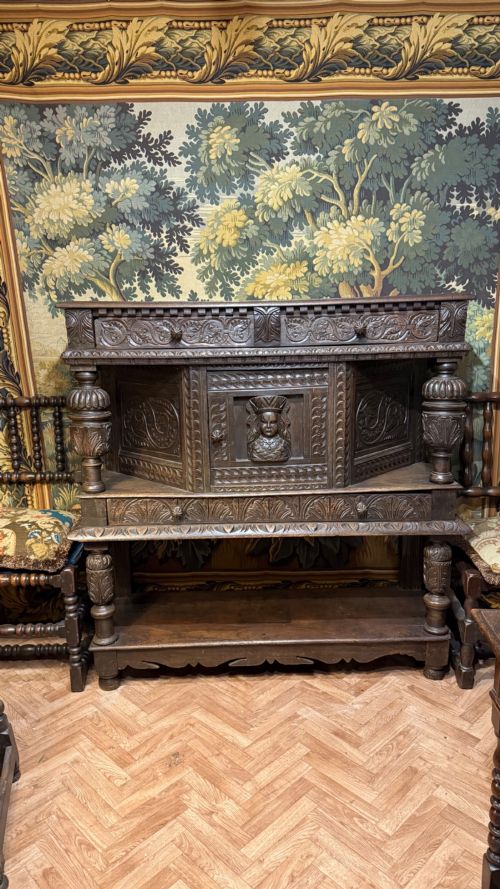
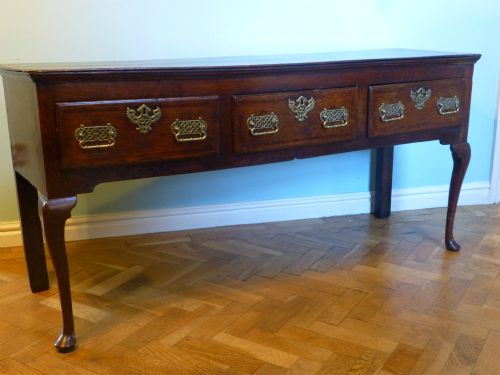


Antique English Oak Buffet
An antique English oak buffet brings centuries of solid domestic craft into a room, offering deep timber grain and practical surface space.
Antique English Oak Buffet
An antique English oak buffet encompasses heavy timber storage furniture designed for serving food and displaying household silver or ceramics. When you search for an antique English oak buffet, you encounter sturdy pieces that evolved from early court cupboards and dresser bases into dedicated dining room sideboards.
The selections span from seventeenth-century provincial workshops to Victorian revival iterations, showing shifts in domestic utility over generations. Many examples combine lower cupboards with open potboards or upper shelving tiers intended for everyday tableware.
Regional variations appear across the centuries, ranging from restrained Georgian potboard bases to heavily carved Victorian servers featuring mirror backs or dumb waiter formats. These forms reflect the changing social rituals of English dining rooms from the Jacobean era onward.
What varies in quality
Quality rests heavily on the integrity of the timber and the depth of the original surface patination accumulated over centuries of use. Pieces retaining their early boarded tops, uncompromised structural pegs, and untouched hardware command greater regard among collectors.
The refinement of the hand-carving and the balance of proportions distinguish standard provincial utility pieces from high-status commission work. Later revivals vary according to how faithfully the workshop adhered to seventeenth-century construction methods rather than relying solely on surface ornamentation.
Listings span periods from the sixteenth century to the Edwardian era, incorporating materials such as leaded glass, brass, elm, and pollard oak.
The Antique English Oak Buffet Glossary
- Potboard
- An open lower shelf built into the base of a dresser or buffet for storing earthenware and heavy kitchen vessels. This open platform distinguishes many eighteenth-century country pieces from closed cabinets.
- Court cupboard
- A heavy seventeenth-century storage piece featuring an upper section recessed above a wider lower cupboard, often supported by turned pillars. These early forms served both display and secure storage functions.
- Patina
- The deep surface sheen and mellow colour developed by aged timber through decades of handling, wax application, and environmental exposure. A genuine untouched patina forms a primary metric of age and preservation.
- Dumb waiter
- A tiered serving stand or multi-shelved sideboard designed to hold dishes close to the dining table without requiring servant attendance. Victorian iterations often incorporated carved details like green man motifs.
- Pollard oak
- Timber harvested from trees that were pollarded, producing burl growths with highly figured, mottled grain patterns. Cabinetmakers utilised these decorative veneers during the nineteenth century for visual impact.
Antique English Oak Buffet: Frequently Asked Questions
How do I date an oak buffet?
Dating relies on examining construction methods, tool marks, and hardware types used within the framework. Hand-pegged joints, hand-carved panels, and the absence of modern mechanical fasteners typically indicate earlier periods.
Secondary woods used in drawer linings and backboards also provide clues. Comparing the joinery style to known examples from the seventeenth or eighteenth centuries helps confirm the period.
What is the difference between a buffet and a dresser?
A buffet focuses primarily on serving food and providing enclosed storage surface area beneath a flat top. Dressers traditionally incorporate upper plate racks or shelving tiers designed specifically for displaying ceramic plates.
Over centuries, terminology overlapped as regional makers adapted forms to domestic needs. Many listings use sideboard, buffet, and dresser interchangeably depending on the presence of upper tiers.
How should I care for antique oak furniture?
Maintain stable indoor humidity levels and keep wooden surfaces away from direct heat sources to prevent timber splitting. Regular dusting with a soft, dry cloth preserves the finish without requiring heavy polishes.
Apply a traditional beeswax sparingly once or twice a year to nourish the dry wood fibres. Avoid silicone-based sprays that can penetrate the grain and damage the historic patina.
Why does the colour of antique oak vary?
Natural oak darkens over centuries through oxidation, exposure to light, and the continuous application of protective waxes. Differences in the original soil chemistry where the tree grew also influence the baseline hue of the timber.
Restoration history plays a role, as some pieces retained their original finish while others underwent stripping or re-polishing in later eras.