




Iron Red Japanese Porcelain
Iron red japanese porcelain brings striking colour and intricate painted detail to interiors, offering collectors centuries of skilled ceramic artistry.
Iron Red Japanese Porcelain
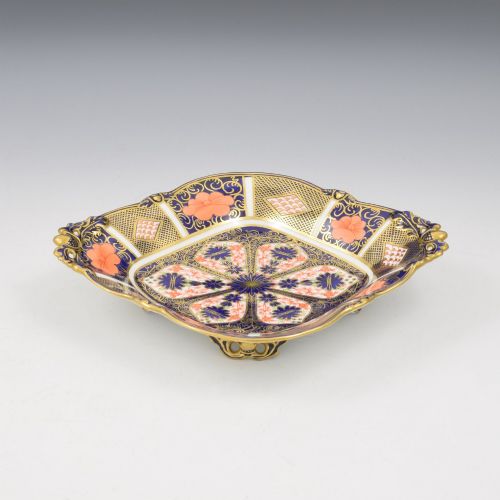
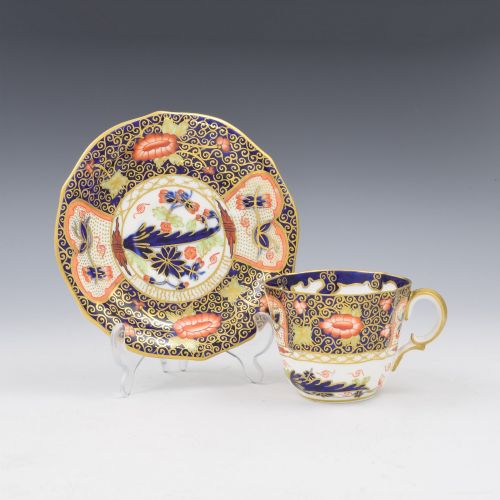
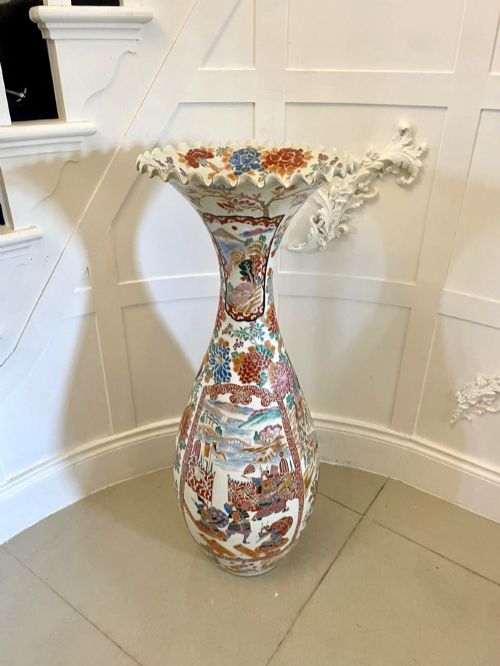
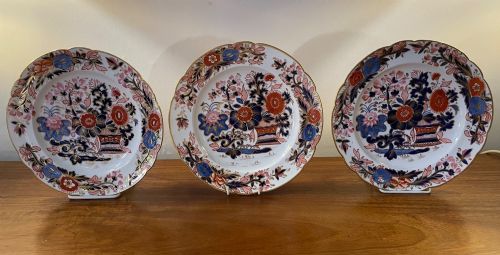
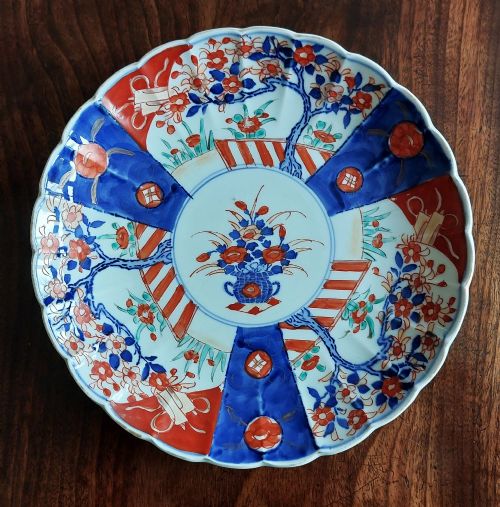
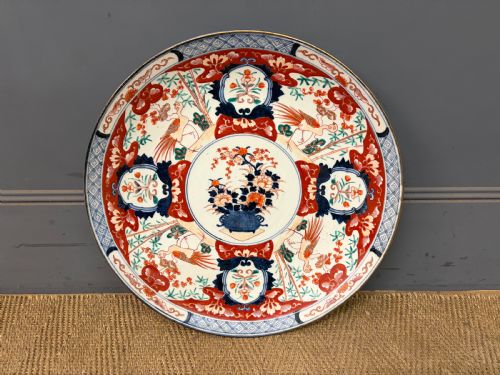
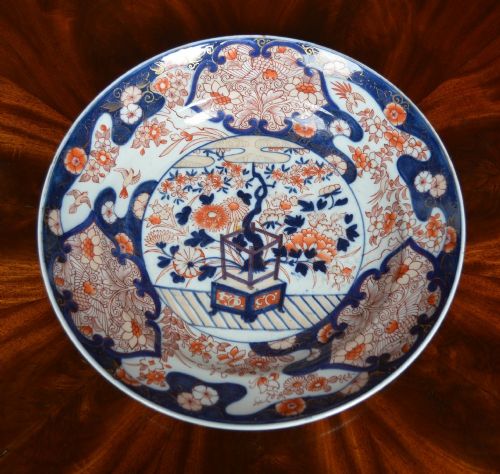
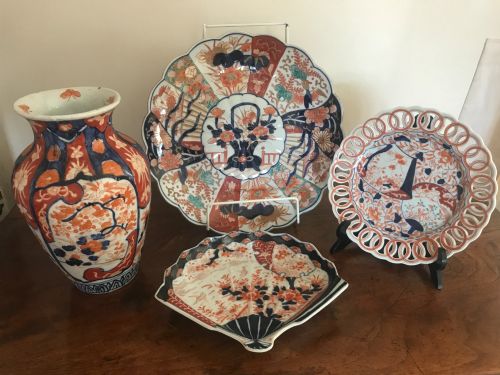
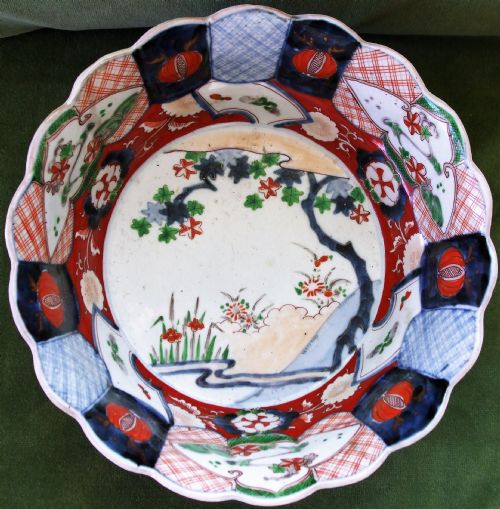
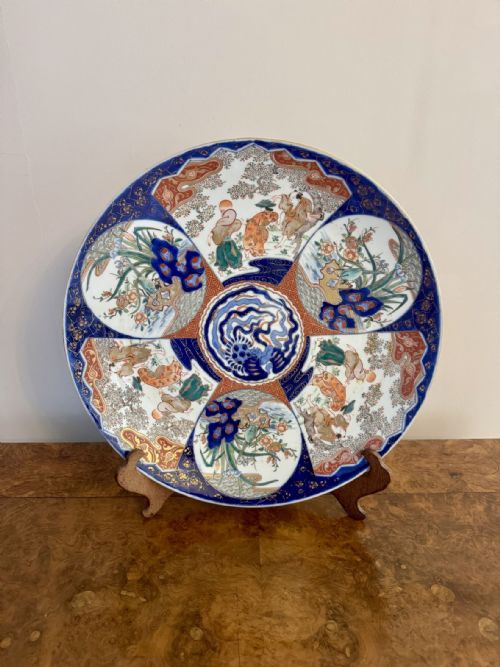
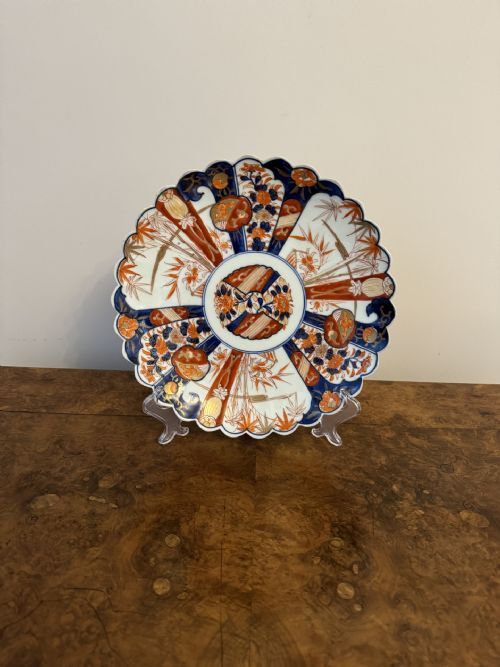
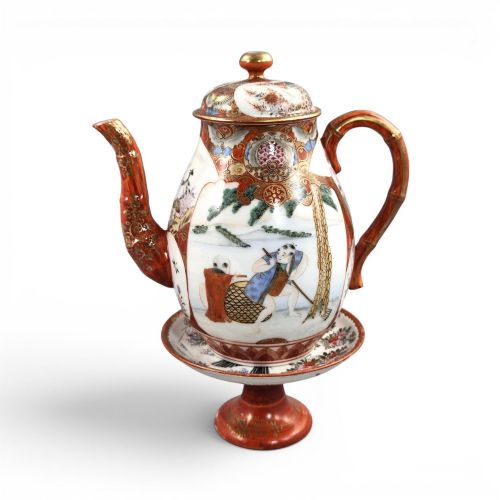
When you search for iron red japanese porcelain, you encounter a selection spanning the 19th century, Meiji period, and early 20th century. The forms available on this page include decorative plates, large chargers, floor standing vases, bowls, and teacups. These items reflect traditional Japanese ceramic styling, particularly Japanese Imari and Kutani aesthetics.
The objects vary from single decorative dishes to pairs and larger garnitures of shaped vases. Most examples date from the Meiji period around 1900, alongside earlier 19th-century productions. Collectors primarily encounter hand-painted floral and bird designs upon porcelain bodies.
How they were made
The manufacture relies upon porcelain shaped into plates, bowls, and vases, often featuring scalloped edges or hexagonal profiles. Artisans applied overglaze enamel and iron red pigments alongside gold leaf, gilding, and gilt highlights. Hand-painted motifs of exotic birds, dragons, and floral scenes define the surface decoration.
Firing techniques achieved the characteristic palette associated with Japanese Imari and Kutani wares. The integration of gold leaf and overglaze enamel required multiple firings to fix the metallic and coloured pigments securely to the porcelain surface.
Exotic birds and mythical dragons frequently survey rooms from within the iron red and gilt borders of these plates.
What varies in quality
Quality rests upon the crispness of the hand-painted decoration and the balance of the iron red and gilt pigments across the porcelain body. Superior examples display precise brushwork in floral and bird motifs, with well-preserved gold leaf and vibrant enamel colours. Lesser pieces show heavier, less refined application of paint and simpler forms.
The complexity of the object shape also influences the standing of a piece, with hexagonal plates, scalloped edges, and large floor vases demanding greater skill from the potter. Condition of the overglaze enamel and gilding remains central to the overall standard of each item.
The Iron Red Japanese Porcelain Glossary
- Imari
- A style of Japanese porcelain decorated in underglaze blue, iron red, and gold. It originated in the town of Arita and became widely exported during the Edo and Meiji periods.
- Kutani
- A style of Japanese porcelain known for bold colours, particularly iron red and gold, depicting figurative, floral, and bird designs. Production centres in Ishikawa prefecture.
- Meiji Period
- The era in Japanese history lasting from 1868 to 1912, characterised by extensive opening to Western trade and highly detailed decorative arts.
- Charger
- A large decorative plate or dish intended for display on a wall, cabinet, or table rather than for practical dining use.
- Overglaze Enamel
- Coloured glass decoration applied over a fired and glazed ceramic body, then fixed with a lower-temperature secondary firing.
Iron Red Japanese Porcelain: Frequently Asked Questions
What is iron red japanese porcelain?
Iron red japanese porcelain refers to ceramic items decorated with a distinctive rust-red pigment, often combined with underglaze blue and gold.
These pieces typically date from the 19th century and the Meiji period, encompassing plates, bowls, and vases.
How were these plates used?
Many large plates and chargers served as decorative display dishes rather than functional tableware.
Smaller dishes and bowls were utilised for dining or presentation, while garnitures and vases formed ornamental centerpieces in rooms.
How do I date Meiji period porcelain?
Meiji period porcelain dates between 1868 and 1912, aligning with the reign of the Meiji Emperor. Items from this era frequently exhibit refined hand-painted bird and floral motifs.
Stylistic shifts and materials such as overglaze enamel and gold leaf help narrow the production period.
Where should I display large chargers?
Large chargers and decorative plates suit wall mounting or placement on specialised display stands on surfaces.
Their detailed iron red and gilt patterns make them focal points in living spaces and cabinets.