


19th Century Kutani Porcelain
These 19th century kutani porcelain pieces bring Japanese Meiji period artistry to a room, offering rich enamel decoration and traditional forms that collectors prize.
19th Century Kutani Porcelain
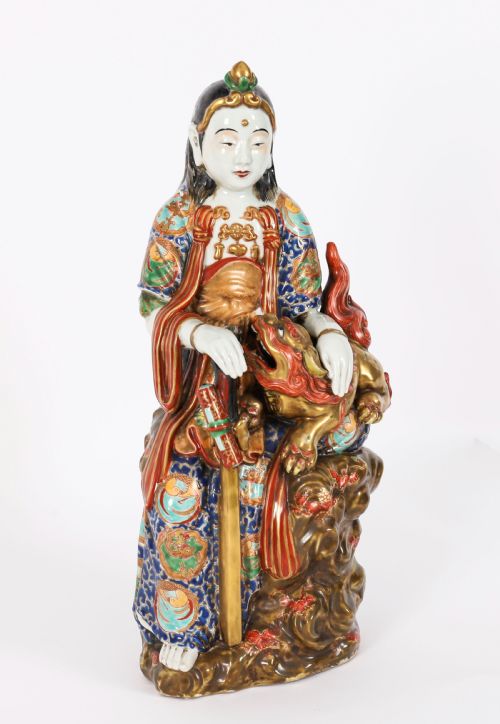
When you search 19th century kutani porcelain, you encounter a distinct group of Japanese ceramics dating primarily from the Meiji period, spanning dates like 1870, 1880, and 1890. The selection on this page centres heavily on vases, pairs of vases, and decorative plates, alongside figurative works such as Guanyin sculptures and Kannon figures.
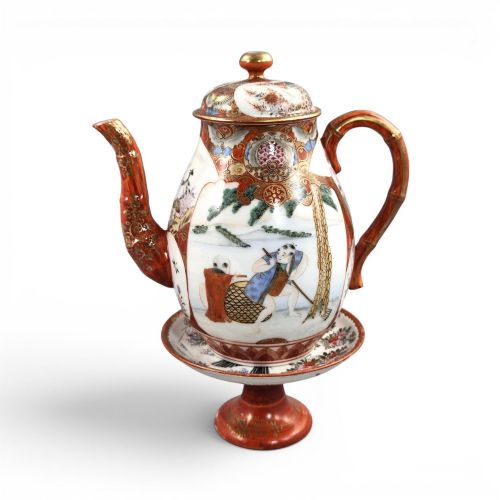
The objects frequently appear adapted for modern use, seen in the numerous pairs of porcelain lamps listed alongside traditional vessels and teapots. Formats range from large cylindrical shapes and flared neck vessels to smaller decorative plates adorned with house sparrow motifs and lion handles.
How they were made
Makers shaped these items from porcelain, applying polychrome enamel and gold leaf to create the characteristic vibrant surface decoration. Many examples incorporate moriage technique, building up thick layers of enamel to produce a raised, textured effect.
Certain pieces integrate additional components of brass, fabric, and wood, particularly in the stands supplied with vases and teapots, or in the fittings of pieces converted into lamps.
Recorded dates on this page span the Meiji period, specifically noting the years 1870, 1880, and 1890 alongside the wider 19th century.
What varies in quality
The refinement of the hand-painted enamel and the precision of the gold leaf application define the upper tier of these ceramics. Superior items display meticulous detail in figures like Kannon and elaborate elements such as lion handles.
Scale and proportion also influence the standing of a piece, with large pairs of cylindrical or flared neck vases demonstrating greater ambition in kiln work and decoration than standard vessels.
The 19th Century Kutani Porcelain Glossary
- Meiji Period
- The era in Japanese history spanning from 1868 to 1912, which encompasses the dates of all listed items. This period saw a surge in porcelain production for export.
- Moriage
- A ceramic technique where slip or enamel is piped onto the porcelain body to create a raised, tactile design. It is frequently seen on 19th century vases.
- Polychrome Enamel
- Multi-coloured glass-based decoration fused to the porcelain surface during firing. It provides the bright palette characteristic of these wares.
- Guanyin
- A revered figure often depicted in porcelain sculptures and figurines. These representations reflect traditional iconography from the era.
- Gold Leaf
- Extremely thin sheets of beaten gold applied to the porcelain decoration for embellishment. It highlights specific details on plates and vases.
19th Century Kutani Porcelain: Frequently Asked Questions
What is 19th century kutani porcelain?
It comprises Japanese ceramic wares produced during the 1900s, specifically associated with the Meiji period. The category includes vases, plates, teapots, and figures decorated with enamel and gold.
These pieces are recognised by their distinct colour palettes and traditional Japanese motifs, ranging from figurative sculptures to large decorative vessels.
How do I identify a Meiji period piece?
Meiji period items date between 1868 and 1912, aligning with the dates recorded for these ceramics. Look for specific stylistic indicators such as polychrome enamel and moriage decoration.
Many listings also specify production years like 1870, 1880, or 1890, helping to narrow down the exact decade of manufacture.
Were these porcelain lamps made originally?
Many lamps listed are period conversions created by adapting existing vases with electrical fittings. This was a common practice for incorporating antique ceramics into Western interiors.
Pairs of vases frequently show evidence of this dual use as both decorative vessels and functional lighting.
How should I display a Kutani vase?
Large vases and pairs work well on sturdy wooden stands or tables where their height and painted details remain visible. Many pieces come with designated stands.
Placing them away from direct foot traffic protects the delicate enamel and gold leaf surfaces from accidental impact.