
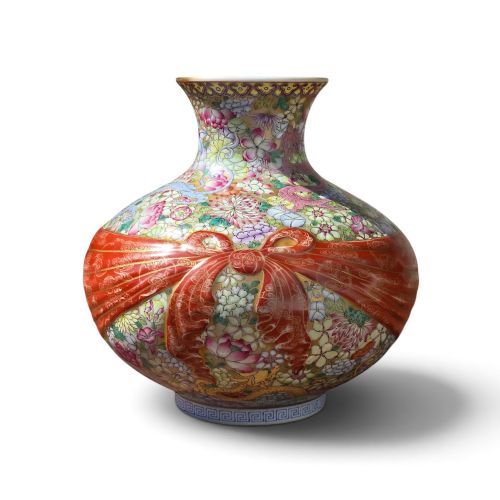
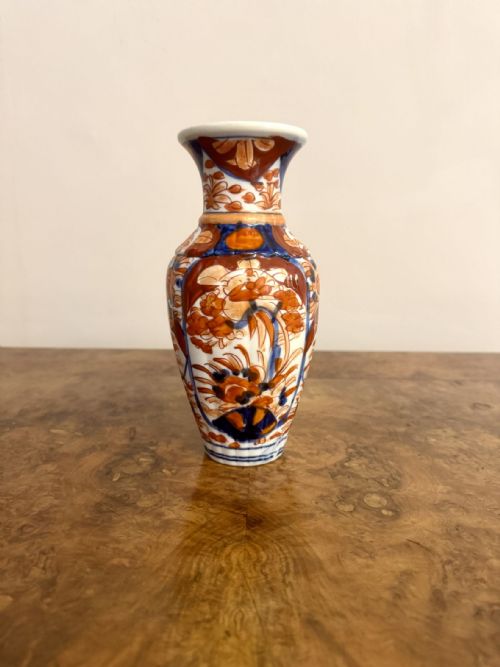
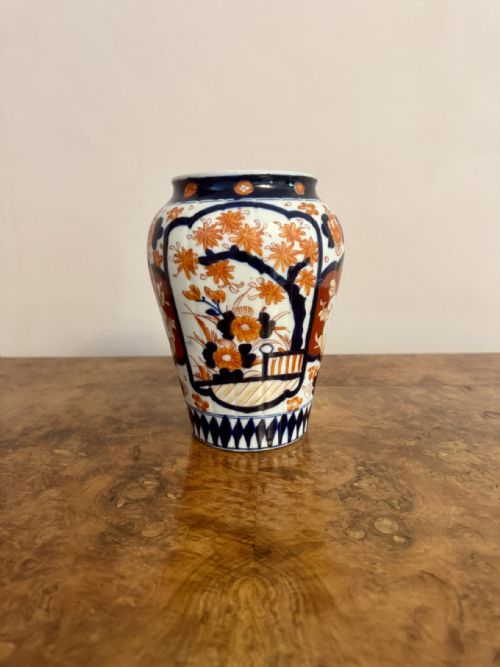


Iron Red Floral Vase
These iron red floral vase examples bring rich Japanese Imari and Chinese porcelain traditions into your home.

Iron Red Floral Vase
An iron red floral vase combines deep cobalt blues with striking iron red pigments and gilt highlights on porcelain. When you search for this phrase, you encounter vessels ranging from compact decorative jars to large nineteenth century garniture sets.
The selections on this page draw heavily from Japanese Meiji period workshops and Chinese late Qing to early Republic production. Edo period and seventeenth century Arita pieces also appear alongside Edwardian examples.
Vessels feature diverse forms including fluted bodies, shaped profiles, and lidded jars. Each piece demonstrates the enduring cross-cultural appeal of traditional East Asian ceramic decoration.
How they were made
Potters shaped fine porcelain clay on the wheel before applying underglaze cobalt blue and overglaze enamel colours. Artisans then added iron red pigments and gold leaf details by hand.
Firing in kilns set the durable glaze and bonded the metallic gilding to the ceramic surface. Many works incorporate detailed hand-painting featuring ribbon-wrapped motifs, dragons, and floral patterns.
Current listings span periods from the 17th century through the Edwardian era, featuring porcelain, enamel, gold leaf, and glaze materials.
What varies in quality
Execution of the hand-painted floral motifs and enamel work dictates the visual impact of each vessel. Crisp cobalt lines and precisely applied iron red and gilt details elevate a piece.
The complexity of the form also distinguishes individual vessels, from simple cylindrical profiles to fluted bodies and matching garniture trios. Intricate secondary elements like dual dragons or ribbon-wrapped designs require advanced skill.
The Iron Red Floral Vase Glossary
- Imari
- A style of Japanese porcelain originating from the port of Arita, traditionally characterised by a palette of underglaze blue, iron red, and gold. This aesthetic heavily influences many nineteenth century decorative vases.
- Enamel
- A decorative glass-like substance fused to the porcelain surface through firing. It provides the vibrant red and complementary colours found across floral designs.
- Gilding
- The application of gold leaf or gold paint to ceramic surfaces. This technique highlights rims, motifs, and handles.
- Arita
- The Japanese town central to porcelain production since the early seventeenth century. Kilns in this region produced many pieces traded globally.
- Garniture
- A set of three or more matching vases designed to be displayed together on a mantelpiece or sideboard. These matched groups create a balanced decorative display.
Iron Red Floral Vase: Frequently Asked Questions
How do I clean an iron red floral vase?
Dust the surface gently with a soft, dry cloth to prevent accumulation. Avoid abrasive materials and liquid cleaners that might disturb delicate overglaze enamels and gilding.
Keep the vessel away from direct sunlight to preserve the vibrancy of the iron red pigments over time.
Where were these ceramic vases made?
These vessels originate primarily from Japanese kilns in regions like Arita during the Meiji and Edo periods. Chinese workshops from the late Qing to early Republic eras also contributed similar decorative styles.
Trade routes distributed these wares widely across Britain during the nineteenth and early twentieth centuries.
What is an Imari vase?
An Imari vase follows a distinct decorative tradition utilising cobalt blue, iron red, and gold highlights on white porcelain. The style developed in Japan and gained immense popularity throughout Europe.
Such pieces often feature dense floral and geometric patterns covering the ceramic body.
How do I date an antique porcelain vase?
Examine the style of the hand-painted motifs, the composition of the porcelain body, and any associated glaze characteristics. Meiji period pieces often display distinct artistic flourishes compared to earlier Edo examples.
Construction details and finishing techniques on the base offer further clues to the period of origin.