

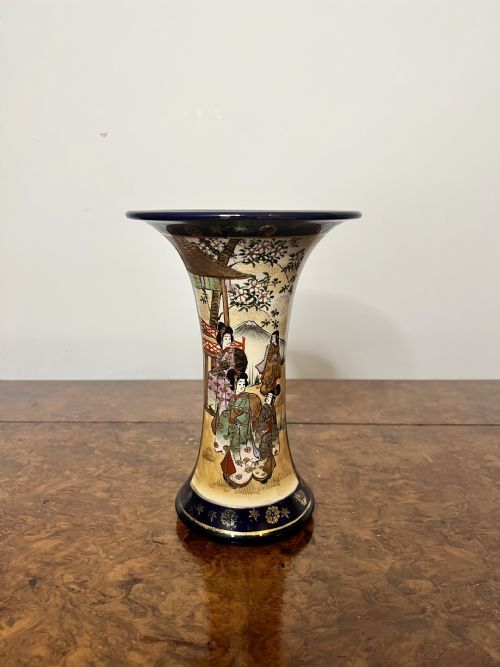


Vintage Japanese Porcelain Vase
These vintage japanese porcelain vase selections bring centuries of skilled kiln work and rich hand-painted decoration straight to your mantelpiece.
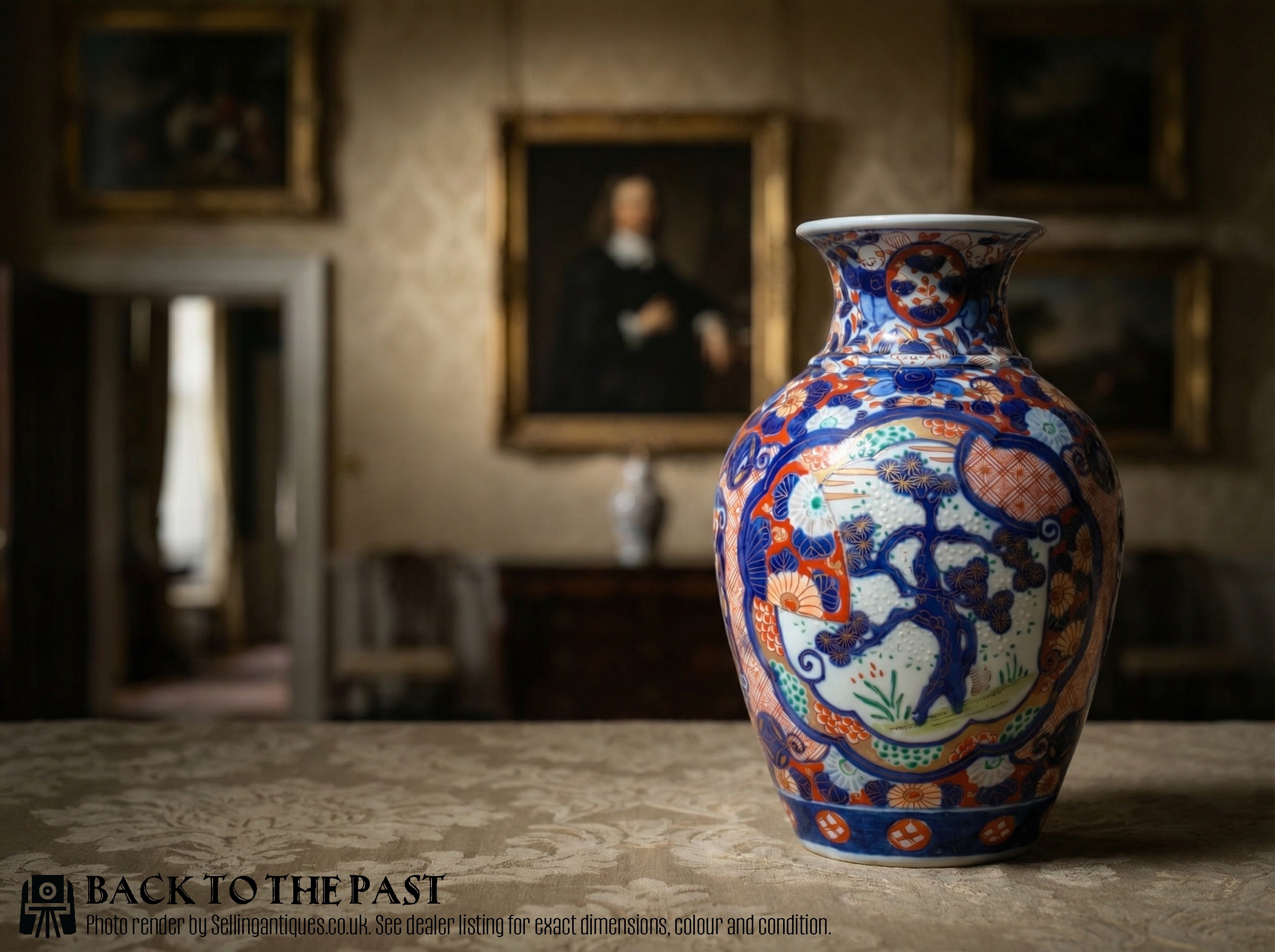
Vintage Japanese Porcelain Vase
A vintage japanese porcelain vase represents a tradition of ceramic artistry spanning from the Edo and Meiji periods into the twentieth century. These vessels appear in forms ranging from slender neck bottles and ginger jars to large floor standing pieces and matching pairs.
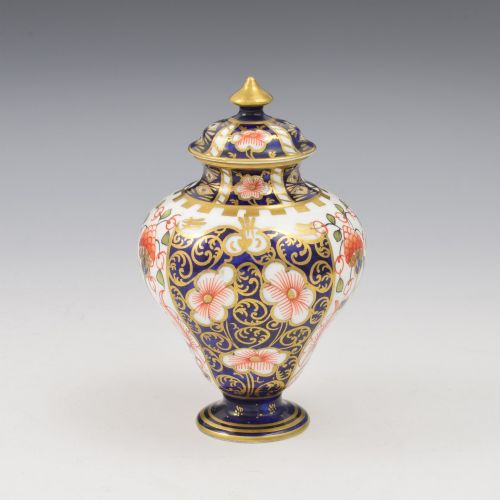
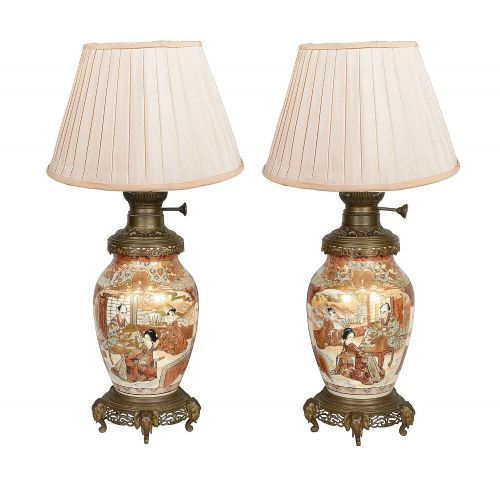
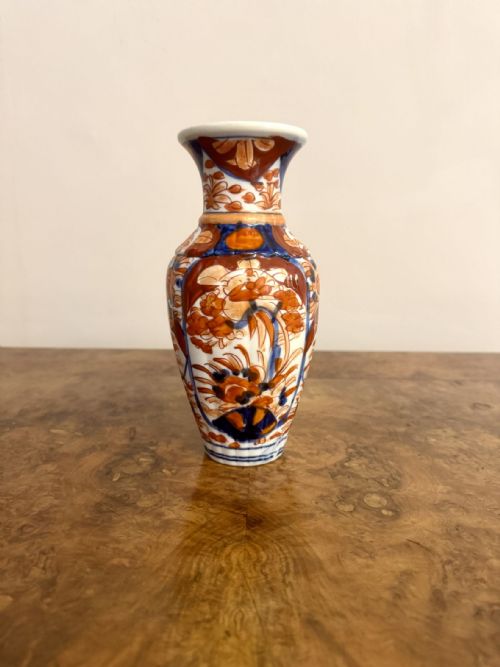
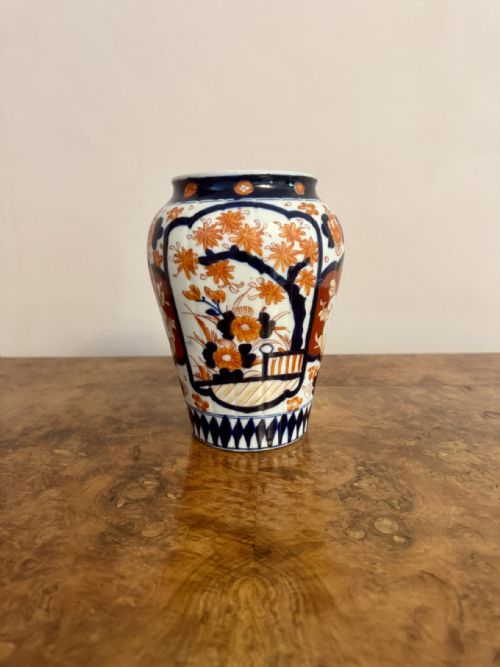
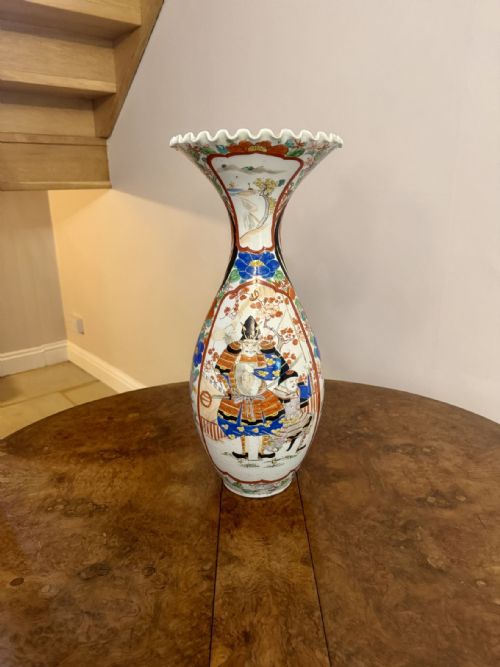
The selections on this page centre heavily on Imari wares with their distinctive blue and red iron decoration, alongside Satsuma earthenware and Kutani porcelain. Many examples date from the nineteenth century, reflecting the global reach of Japanese craftsmanship during that era.
How they were made
Potters shaped fine porcelain and earthenware by hand or on the wheel before applying detailed underglaze blue and overglaze enamel colours. Artisans frequently integrated gold leaf highlights to accentuate intricate figural processions and geometric panel designs.
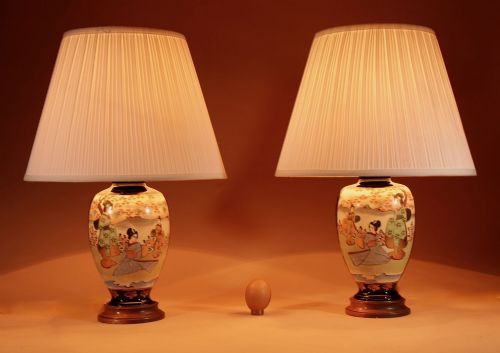
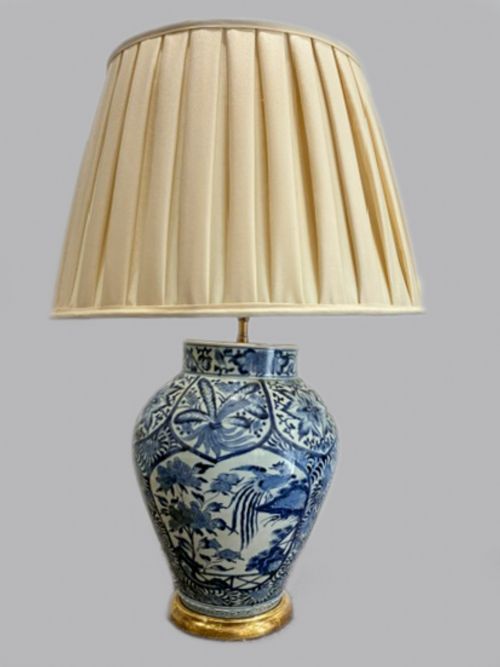
Certain vessels underwent secondary conversions into table lamps, adapting traditional forms for domestic illumination while retaining the original ceramic bodies.
Listings feature traditional forms from the seventeenth to the twentieth century, spanning Imari, Satsuma, and Kutani styles.
What varies in quality
The distinction between standard commercial output and superior studio work lies in the precision of the hand-painted detail and the depth of the enamel palette. Pieces bearing identifiable signatures or attributed to noted workshops command greater attention from collectors.
Proportion and glaze consistency also dictate value, with heavier potting and balanced forms representing the upper tier of period production.
Chosei·Hattori
The Vintage Japanese Porcelain Vase Glossary
- Imari
- A style of Japanese porcelain featuring a tripartite palette of underglaze blue, iron red, and gilt highlights. These wares were traditionally exported from the port of Imari.
- Satsuma
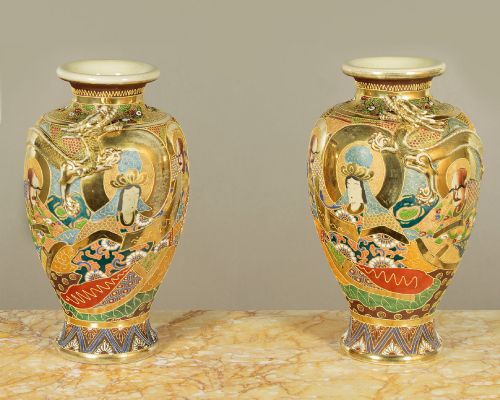
- A type of Japanese earthenware characterised by a pale, ivory crackle-glaze finished with polychrome enamel and gilt decoration. Originating in Satsuma Province, it became widely produced for export during the Meiji period.
- Kutani
- Japanese porcelain known for bold pictorial designs, often incorporating rich greens, purples, yellows, and extensive gold work. The style originated in Kutani kilns.
- Ginger jar
- A ceramic vessel with a broad body and domed cover, originally designed for storing spices but frequently utilised purely for decorative display.
- Meiji Period
- The era of Japanese history spanning from 1868 to 1912, noted for a surge in decorative arts produced for international markets.
Vintage Japanese Porcelain Vase: Frequently Asked Questions
How do I identify Imari porcelain?
Imari porcelain is readily identified by its distinctive colour scheme, which relies primarily on deep underglaze blue combined with rich iron red and supplementary gold leaf.
Designs often incorporate floral motifs, panels, and intricate brocade patterns covering the ceramic surface.
Are Satsuma vases porcelain?
Satsuma wares are actually earthenware rather than true porcelain, possessing a characteristic creamy, finely crackled glaze.
This absorbent body provided an ideal canvas for the dense enamel and gilt figural scenes applied by Meiji period artists.
What is a garniture?
A garniture is a matching set of three or more vases or jars designed to be displayed together on a mantelpiece or sideboard.
These coordinated sets became particularly popular for export during the late nineteenth century.