







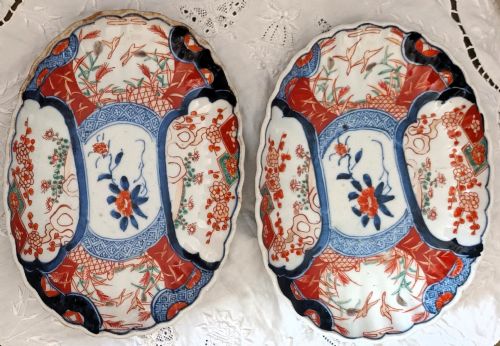
Imari Floral Plate
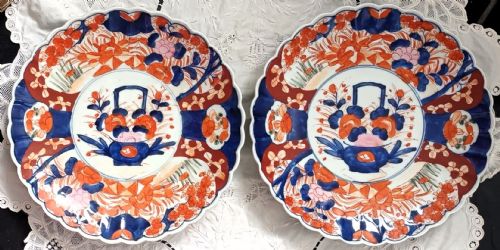
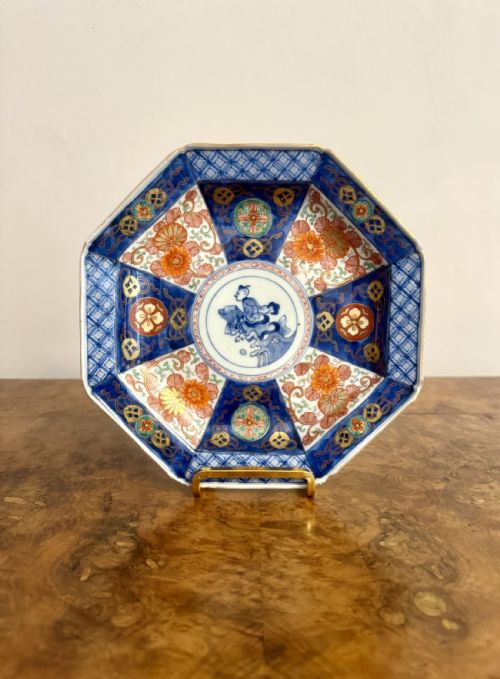
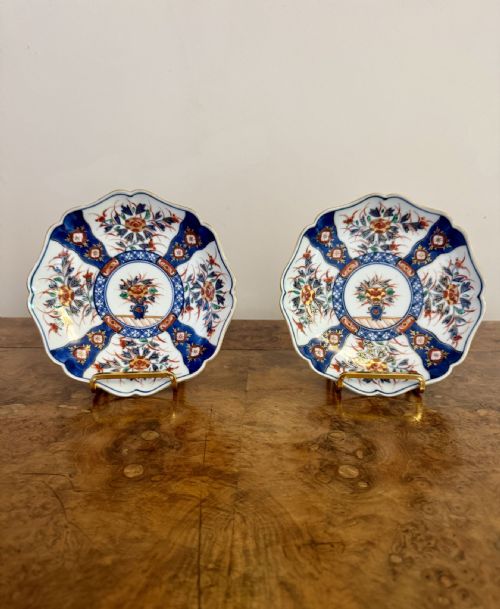
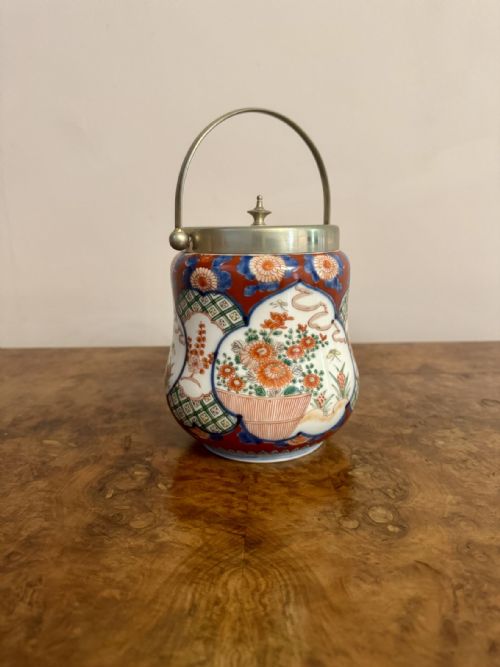
An imari floral plate brings together rich cobalt blue and rust-red enamels on porcelain, offering a striking display for any room.
Imari Floral Plate
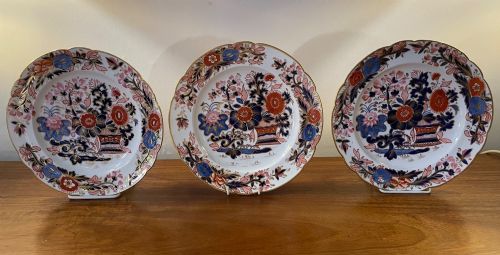
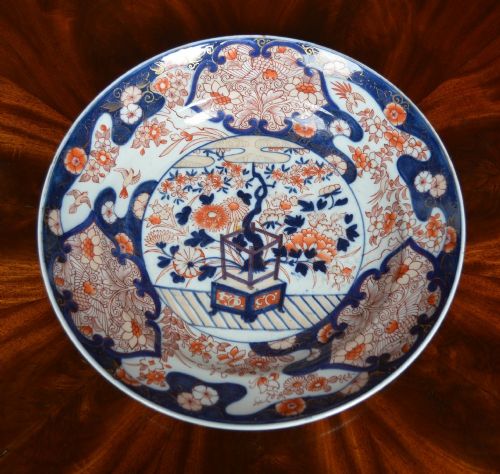
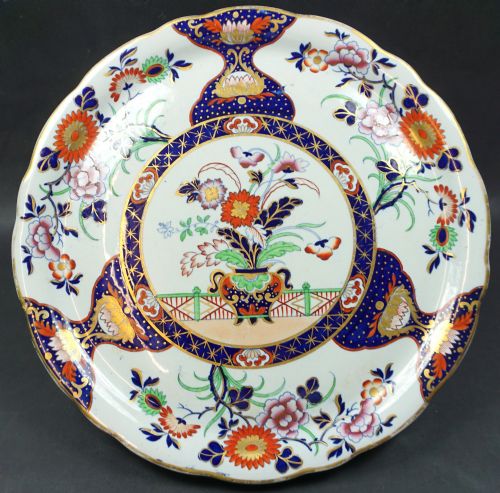
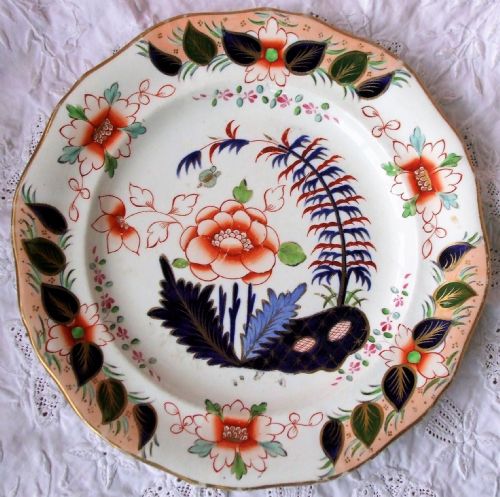
An imari floral plate is a decorative ceramic piece defined by its distinctive palette of blue, iron red, and gilt highlights. These items appear primarily in Japanese forms from the Meiji period and the nineteenth century, alongside English interpretations produced by Staffordshire potteries.
Buyers frequently encounter large chargers and scalloped dishes alongside standard dining plates. Japanese Arita wares dominate the selection, bringing intricate floral and bird motifs executed in traditional porcelain.
English variations in ironstone also populate the market, often adopting the characteristic palette under designations like the Japan pattern. These pieces range from solitary display chargers to matched sets of service plates.
Materials and Manufacture
Potters constructed these objects using hard-paste porcelain or dense ironstone ceramic bodies. Artisans shaped the clay on a wheel or pressed it into moulds, creating smooth surfaces or shaped edges such as scalloped and hexagonal profiles.
Decoration relied on underglaze cobalt blue painting combined with overglaze enamel colours and gold leaf highlights. Firing the pieces multiple times fixed the deep blue pigment beneath the glaze before layering the vibrant red and gilding on top.
Listings feature porcelain and ironstone plates spanning the eighteenth century through the Meiji period and Victorian era.
Evaluating Quality
The precision of the hand-painted brushwork dictates the refinement of the piece, separating standard production wares from finer examples. Crisp detailing in the floral motifs and controlled application of the enamel colours indicate superior artisan skill.
The richness and preservation of the gilding and overglaze pigments also determine the grade of the item. Pieces maintaining vibrant metallic leaf and deep cobalt tones without heavy rubbing represent the higher tier of surviving examples.
Hicks & Meigh·John Davenport of Longport·Masons
The Imari Floral Plate Glossary
- Imari palette
- A distinctive decorative scheme utilising underglaze blue, iron red, and gold. This specific colour combination originated in Japan and was later copied by European factories.
- Charger
- A large decorative plate intended for display on a wall or sideboard rather than for dining use. These substantial vessels often showcase the most elaborate painted compositions.
- Ironstone
- A heavy, durable type of earthenware patented in the nineteenth century. English makers utilised this robust ceramic material to produce strong tablewares with imari designs.
- Meiji period
- A historical Japanese era spanning from eighteen sixty-eight to nineteen twelve. Many of the decorative porcelain plates available originate from this time of prolific export.
- Scalloped edge
- A decorative rim shaped into a series of continuous curves. This styling appears frequently on both Japanese porcelain dishes and English earthenware plates.
Imari Floral Plate: Frequently Asked Questions
How were imari floral plates originally used?
Many of these pieces served as functional tableware for dining or serving food in wealthy households. Larger chargers were primarily intended for decorative display on sideboards or walls.
Over time, collectors shifted smaller plates into display roles to protect the delicate overglaze enamels and gold leaf from daily wear.
How do I distinguish Japanese imari from English copies?
Japanese examples typically utilise fine porcelain bodies with hand-painted motifs executed in rich cobalt and iron red. The paste and weight differ noticeably from the heavier ironstone used by nineteenth-century English potteries.
English pieces often carry maker marks specific to Staffordshire firms, whereas Japanese export items from the Meiji period rely on distinctive decorative styles rather than western factory stamps.
Can I use antique plates for daily dining?
Using these antique ceramics for everyday meals is generally discouraged due to the age of the materials and the risk of damaging the overglaze enamels. Hand washing is essential to preserve the delicate gilding and painted details.
Displaying them on plate stands or hanging them securely allows you to enjoy the visual impact without risking structural harm to the ceramic.
How can I tell the period of a plate?
Dating relies on examining the characteristics of the ceramic body, the style of the hand-painted motifs, and any factory marks on the reverse. Nineteenth-century pieces often exhibit heavier construction and distinct ironstone properties.
Meiji period Japanese works display characteristic floral and bird compositions executed in traditional palettes, distinguishing them from earlier eighteenth-century Chinese export interpretations.