



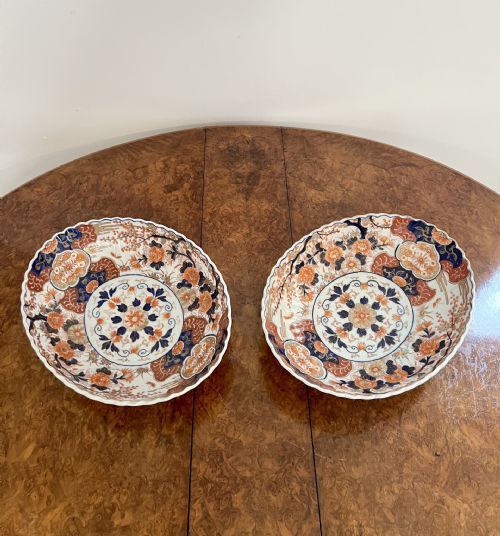


Large Imari Charger Dish
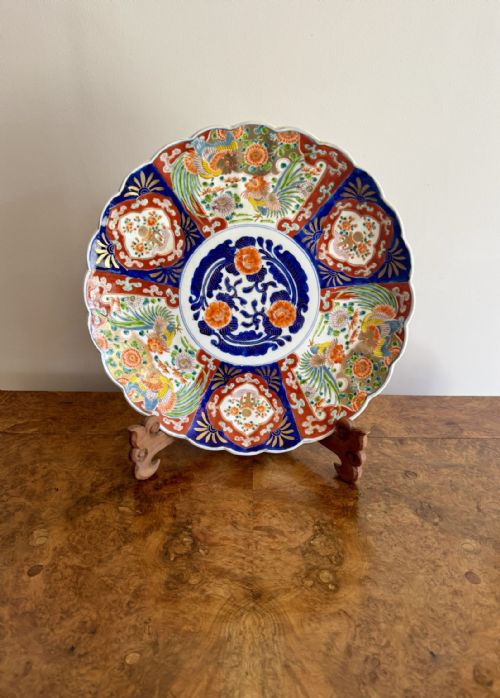
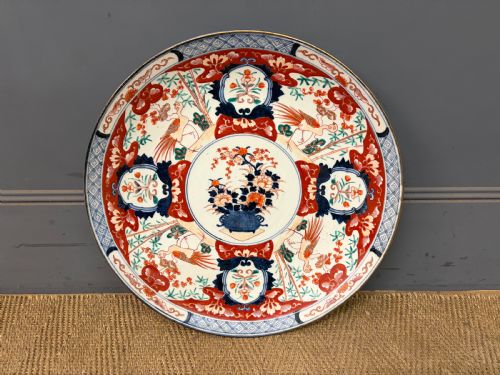
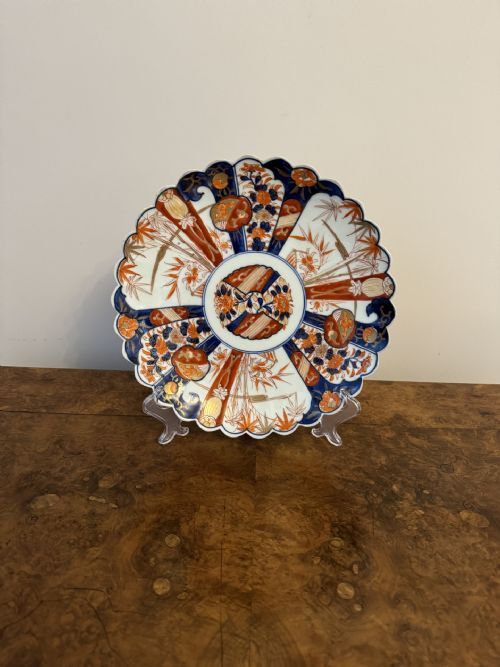
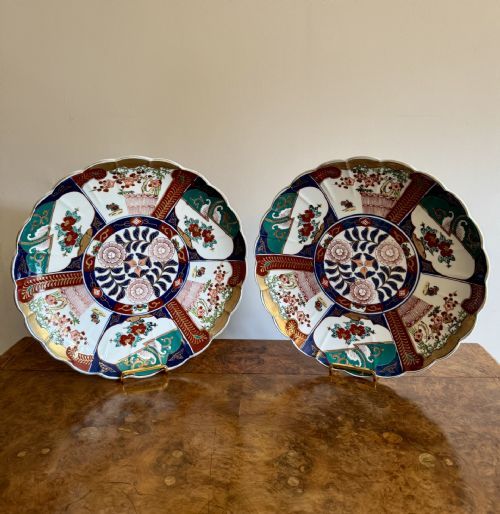
A large imari charger dish brings rich cobalt blue and iron red porcelain into a room with striking presence.
Large Imari Charger Dish
When you search for a large imari charger dish, you encounter expansive ceramic platters and bowls that span from the Edo and Meiji periods through the nineteenth century and into the early twentieth century. These pieces originate primarily from Japanese kilns, notably Arita, carrying the traditional aesthetic of the region into Western homes during the Victorian and Edwardian eras.
The items listed here arrive most frequently as chargers, wide plates, and scalloped bowls measuring up to massive diameters. Many display circular or square formats decorated with intricate patterns intended for display on walls, cabinets, or fruit display arrangements.
While the majority of pieces date from the late nineteenth century around eighteen hundred and ninety to nineteen hundred, occasional examples reach back to the seventeenth century or extend into the nineteen twenties. Buyers find both single display chargers and matched pairs depicting traditional motifs like the Seven Lucky Gods or koi carp.
How They Were Made
Potters shaped these ceramics from fine porcelain bodies before applying cobalt pigment beneath the glaze to create the foundational blue designs. Artisans then fired the pieces at high temperatures to set the durable underglaze base.
Following the initial firing, decorators added rich overglaze enamels in iron red, green, and black alongside gold leaf and gilding. A second, lower-temperature firing fused these vibrant surface colours and metallic accents to the glazed porcelain.
Several pieces preserve the stern gaze of the Seven Lucky Gods and the fierce scale of swimming koi carp across their wide porcelain faces.
What Varies in Quality
The visual strength of a large imari charger dish depends on the precision of the hand painting and the crispness of the cobalt pigment against the white porcelain ground. Stronger examples exhibit finely controlled brushwork in the scrolling foliate borders and figural scenes rather than rushed or muddy application.
The richness of the overglaze enamels and the preservation of the gold leaf or gilding dictate the overall impact of the piece. Chargers with deeply saturated iron red and intact metallic highlights command greater attention than those with extensive surface rubbing.
The Large Imari Charger Dish Glossary
- Imari
- A style of Japanese porcelain decorated in underglaze blue, iron red, and gold, named after the port from which it was shipped to Europe. This palette defines the visual identity of these large plates and chargers.
- Charger
- A large decorative plate utilised traditionally for display on a sideboard or wall rather than for serving food at the table. These substantial pieces dominate a room through sheer scale.
- Arita
- The Japanese town and surrounding valley where the primary kilns producing this porcelain operated. Potters here developed the technical mastery seen in these historic wares.
- Meiji Period
- The era in Japanese history spanning from eighteen sixty-eight to nineteen twelve, which encompasses a large proportion of the decorative chargers available on this page. Pieces from this time reflect a flourishing export market.
- Underglaze
- Pigment applied to the unfired ceramic body before the application of a glassy coating and subsequent high-temperature firing. Cobalt is the most common underglaze colour found on these wares.
Large Imari Charger Dish: Frequently Asked Questions
How were large imari charger dishes used historically?
These large ceramic platters served primarily as decorative display pieces on sideboards, walls, and tables rather than for everyday dining. Wealthy households utilised them to add colour and exotic pattern to formal interiors.
In Victorian and Edwardian homes, they functioned as striking focal points in dining rooms and drawing rooms. Some specific forms also served as fruit display plates.
How do I hang a large charger on the wall?
Hanging a heavy porcelain charger requires a secure, non-scratch spring wire hanger designed to distribute the weight evenly across the rim. Ensure the wall fixing is anchored securely into solid masonry or a stud.
Check the diameter of the dish carefully before purchasing a hanger to guarantee a snug and safe fit. Avoid wire styles with sharp metal prongs that might chip the enamel edge.
How do I date a nineteenth century imari piece?
Dating these ceramics relies on stylistic cues, potting techniques, and the character of the blue pigment and enamel colours. Pieces from the late nineteenth century often display dense, confident Meiji period brushwork.
Earlier examples from the seventeenth or eighteenth centuries show heavier bodies and different potting characteristics associated with early Arita production. Comparing the specific floral and figural motifs helps narrow the decade of manufacture.